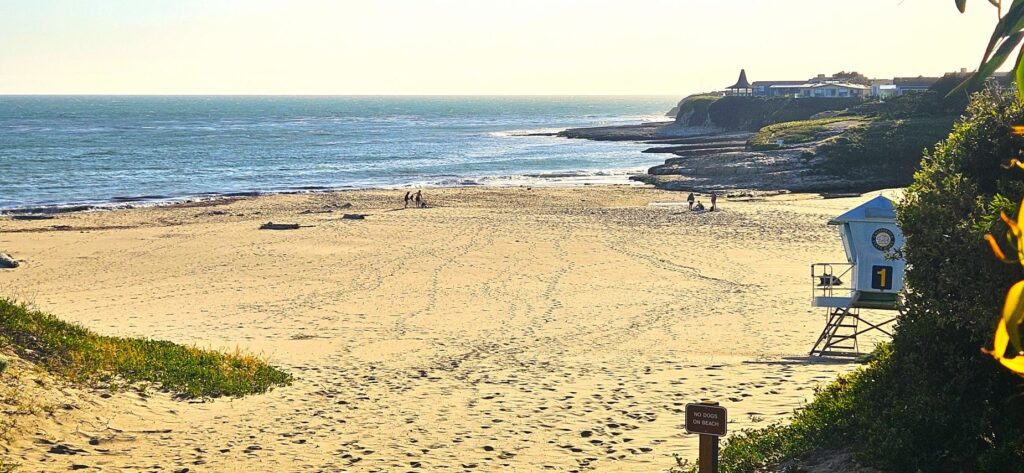
Scotts Valley, California

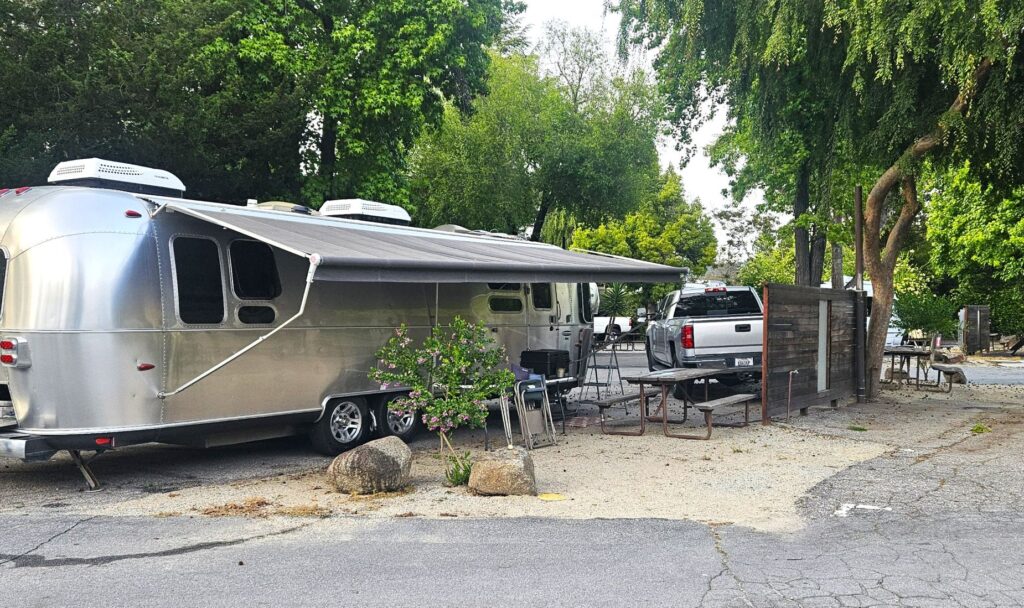
In the spring of 2025, we stayed in Santa Cruz Ranch Campground in Scotts Valley, California, for the first time. It’s a smaller campground than we’re used to, tucked away in the redwoods but in the city limits. Most of the campers seemed to be permanent residents of the park. In spite of that, it was a nicely maintained park.

Santa Cruz Ranch Campground

Nearby in Felton, CA, was Henry Cowell Redwoods State Park where we visited one late afternoon. There are several California state parks scattered along the northern coastline for the preservation of the giant redwoods. Redwoods thrive in the coastal foggy climate.
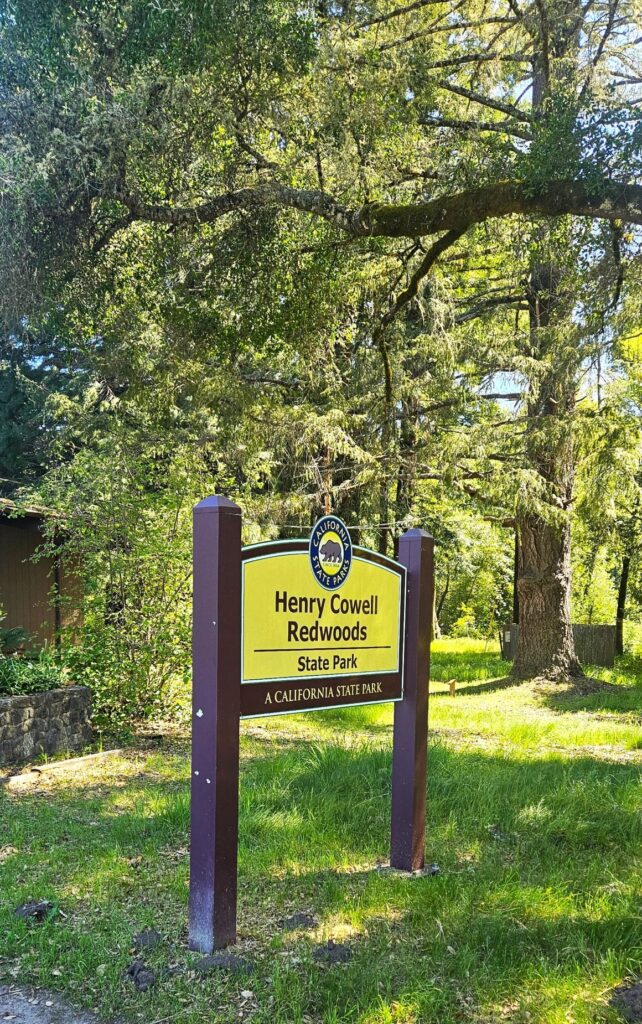
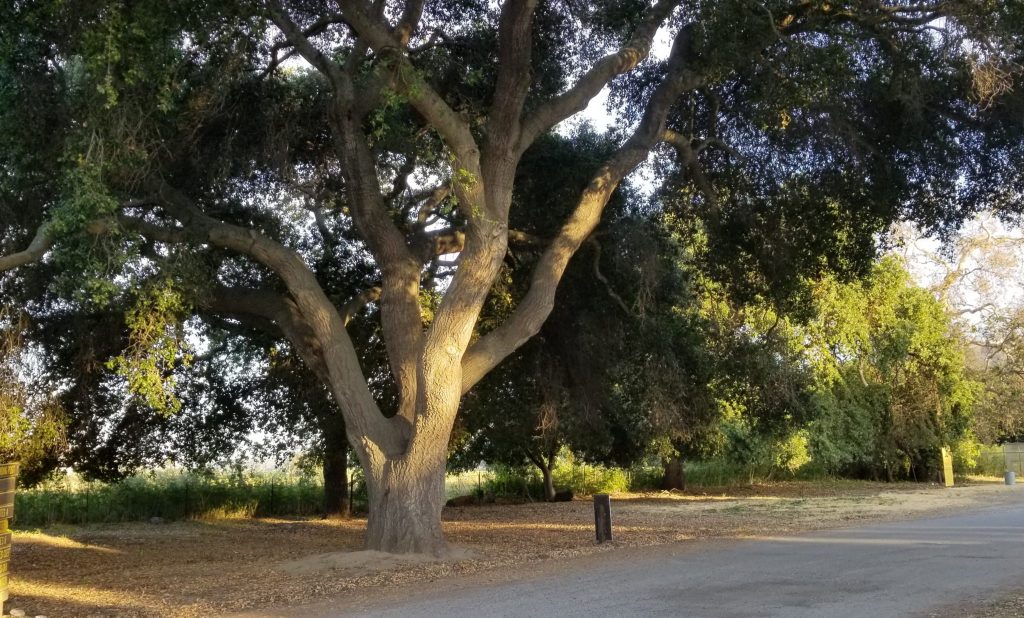
Oak trees by the entrance of Henry Cowell Redwoods State Park.

We stopped at the visitor center first before walking the .8 mile Redwood Grove Loop Trail. The late afternoon was the perfect time for a nature walk.

Redwood Grove Loop Trail

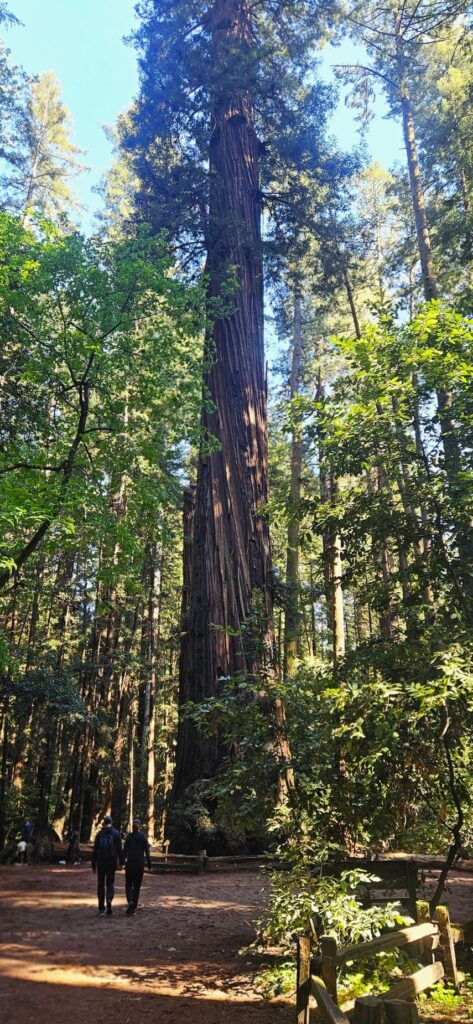
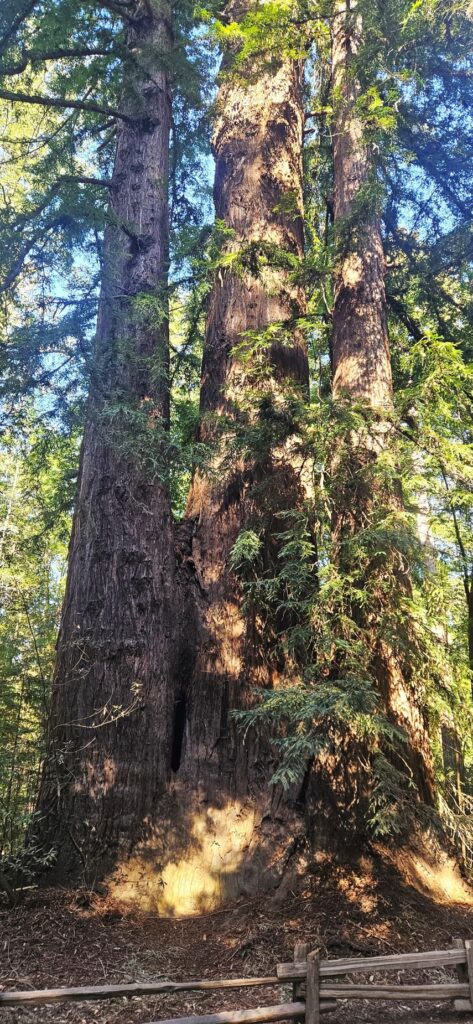
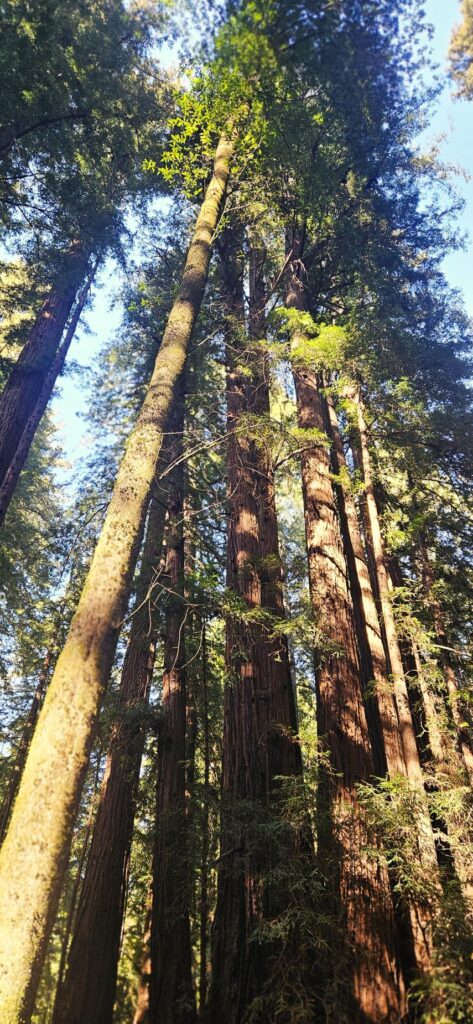
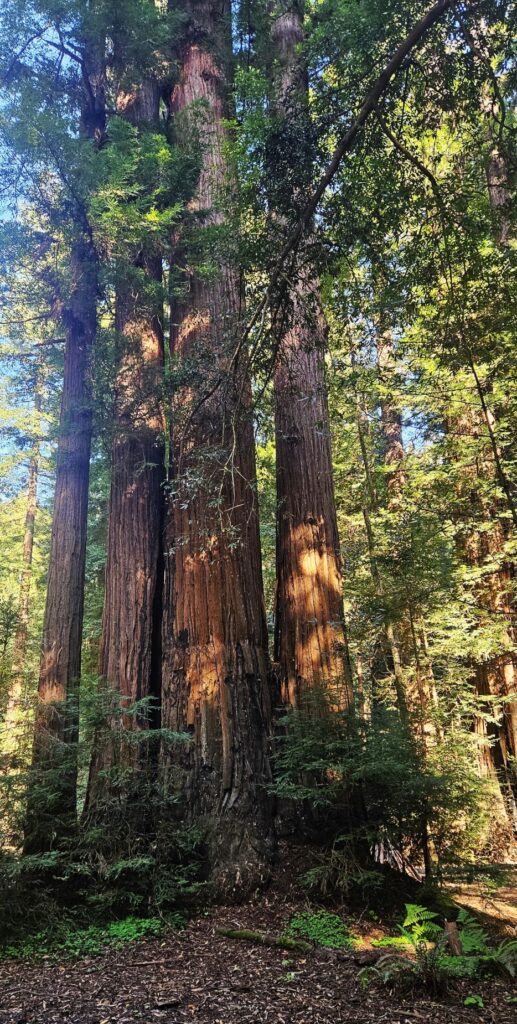
This trail highlights a grove of redwood trees estimated to be anywhere from 1,400 to 1,800 years old.

A Redwood tree may use up to 500 gallons of water a day. Forty percent of that water they can absorb from coastal fog.

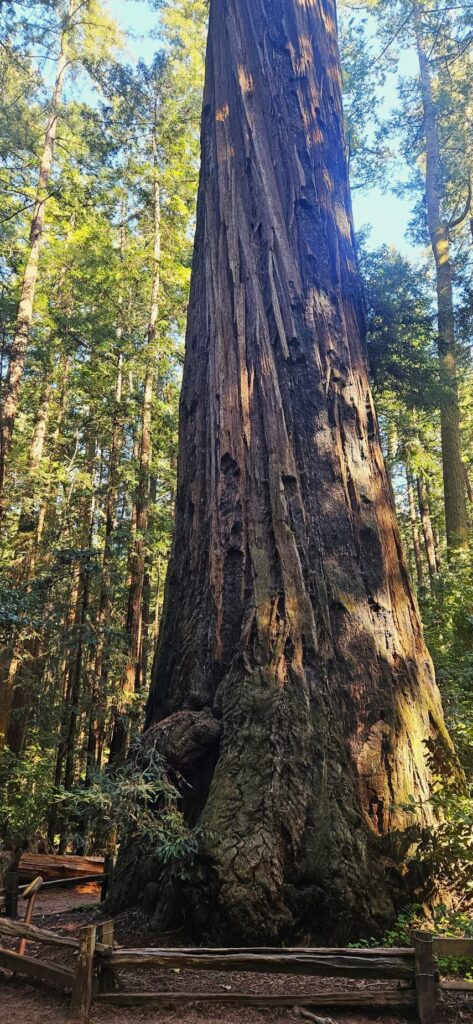
The largest tree in the park is roughly 277 feet tall and estimated to be 1,500 years old.

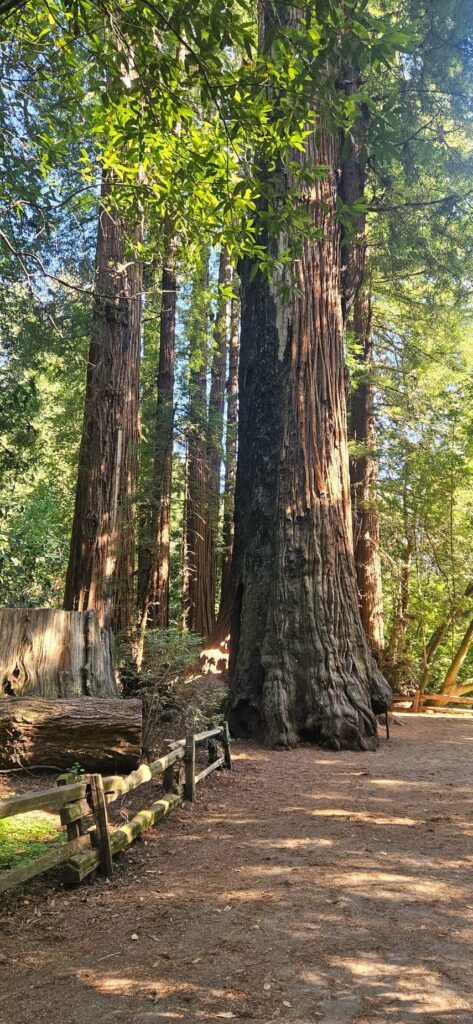
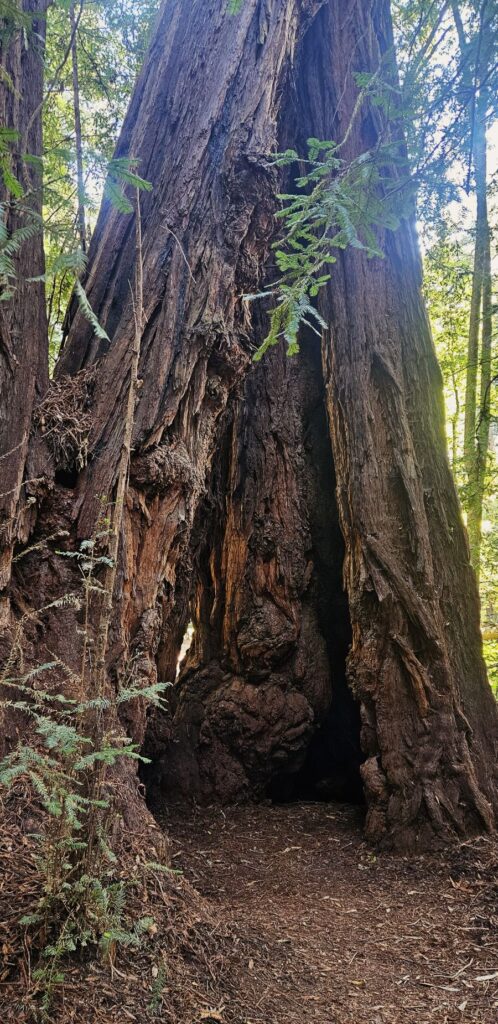
During our walk, we explored the inside of this massive tree. Redwoods are surprisingly resistant to fire damage. In fact, it stimulates their growth. The layer of bark that transports water and nutrients to the tree is only a couple of cells thick and lies just beneath the bark. For this reason, the trees can withstand having their centers burned out, forming large caverns. Yet the tree itself continues to live and grow.

The Henry Cowell Redwoods State Park is over 4,000 acres. The redwoods cover approximately 40 acres.
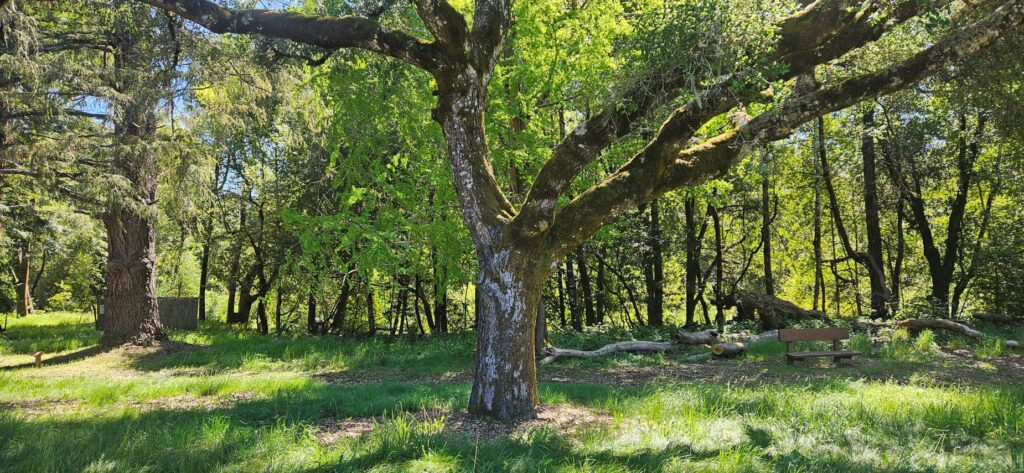
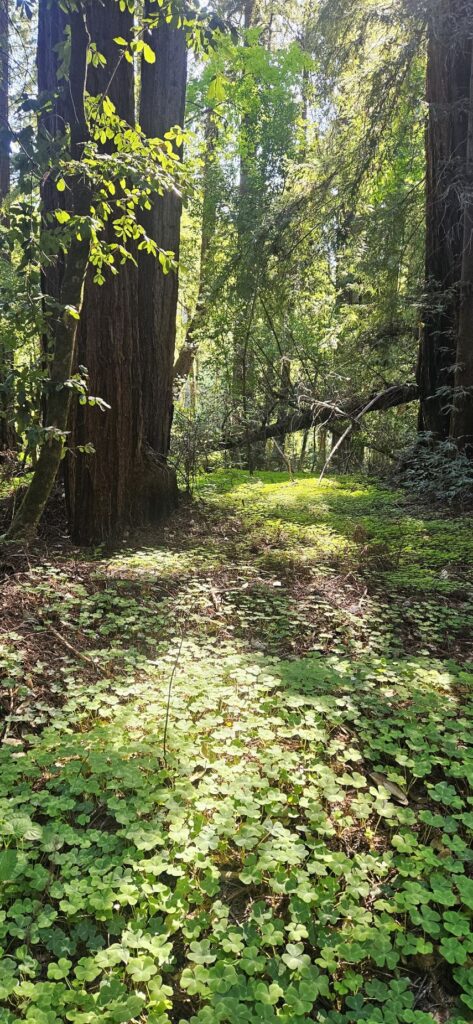
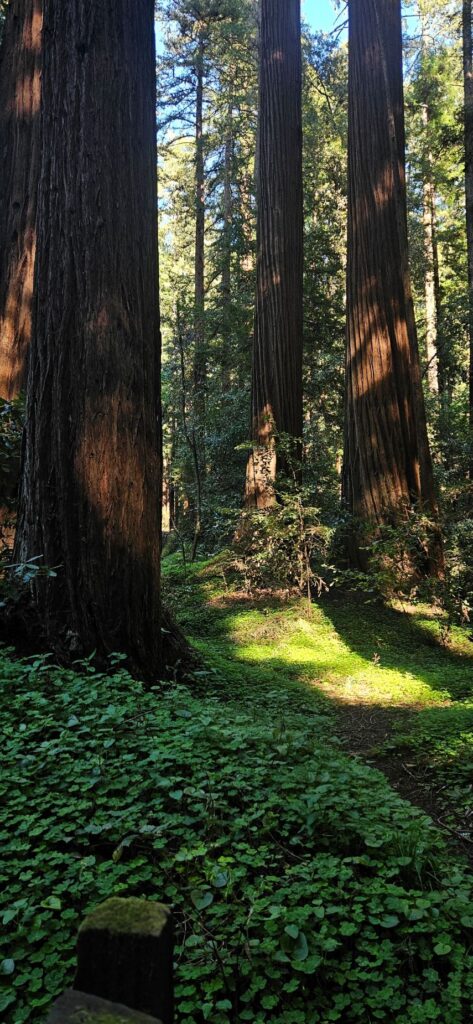
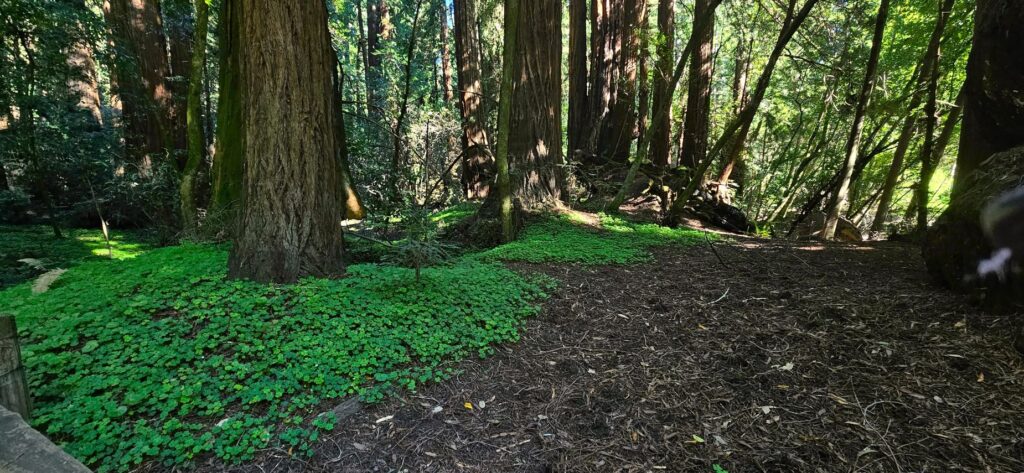
The late afternoon sun made for a beautiful walk through the grove of trees.
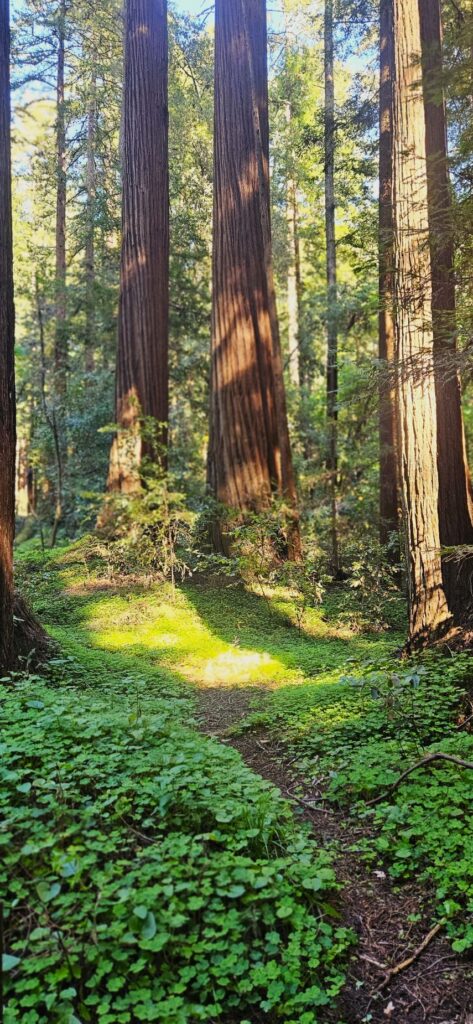
The redwood trees have shallow root systems that pull hundreds of gallons of water daily from the surrounding soil. They also absorb water through their specialized “axial” leaves that act like sponges, allowing a single large tree to absorb up to 14 gallons of water from the air in just one hour.

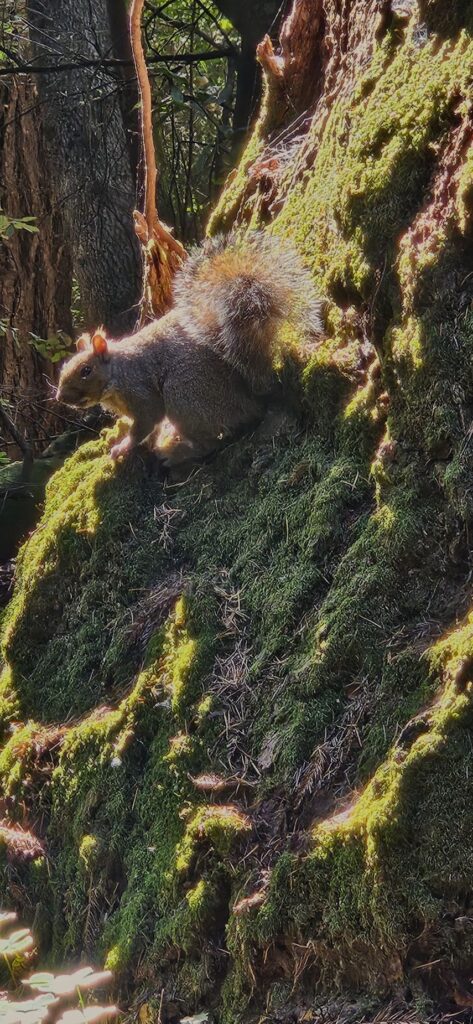
This squirrel didn’t seem to mind us as we walked by. He remained motionless, letting me get his picture.

Redwoods are highly saturated with tannin which acts as a natural flame retardant. It is also the reason for the deep reddish color of the tree bark. It also protects them from insects and disease.
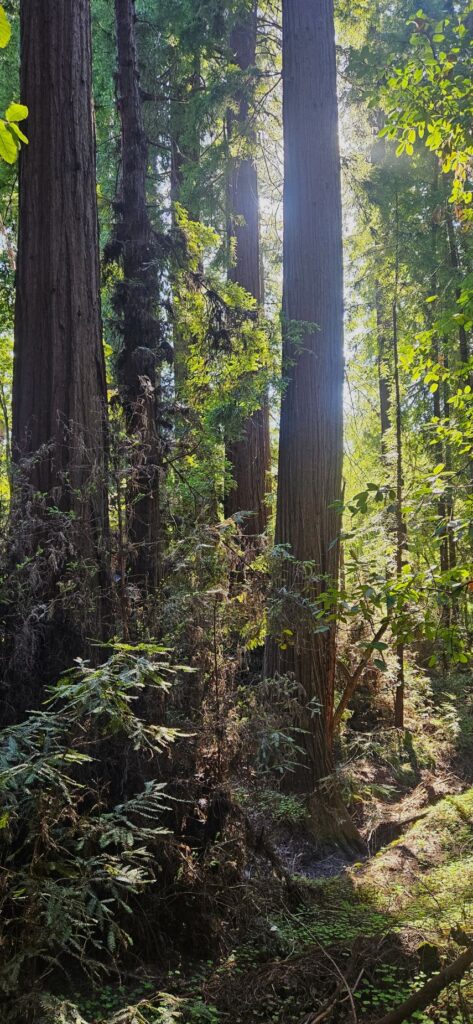
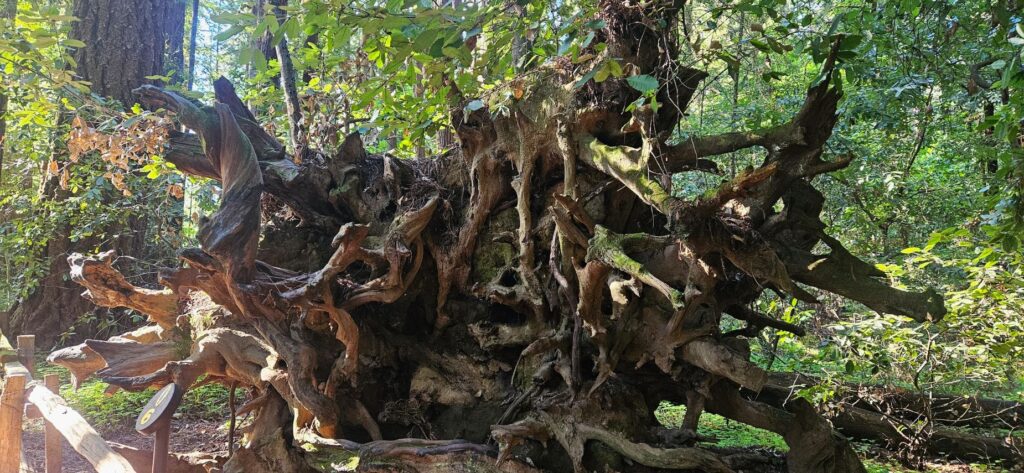
Woody growths at the tree’s base called burls are stimulated by fires. The trees can grow entirely new trunks from these burls. This is why you may see a ring or circle of trees which are called “fairy rings.”
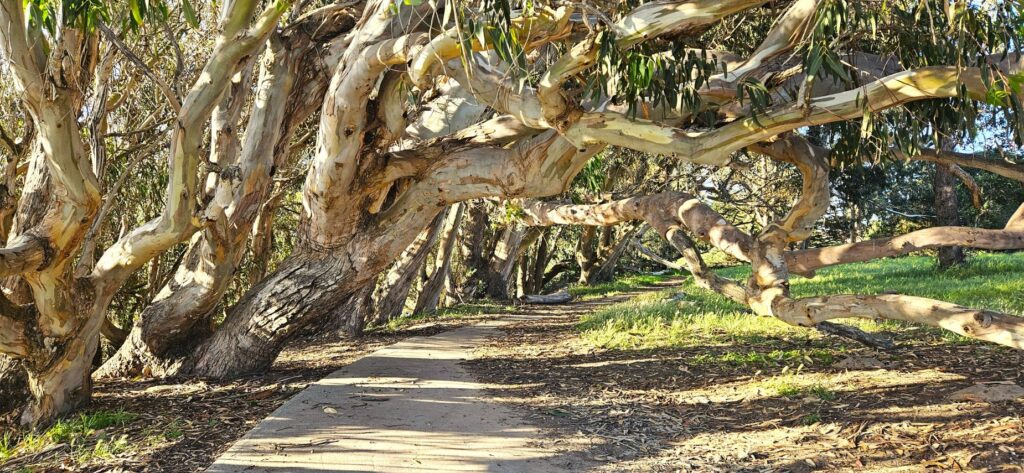
Another afternoon we took a drive to Natural Bridges State Beach. Located near the town of Santa Cruz, it is a 65-acre park with a natural bridge on the beach and a eucalyptus grove which is home to thousands of butterflies during the months of October through early February.
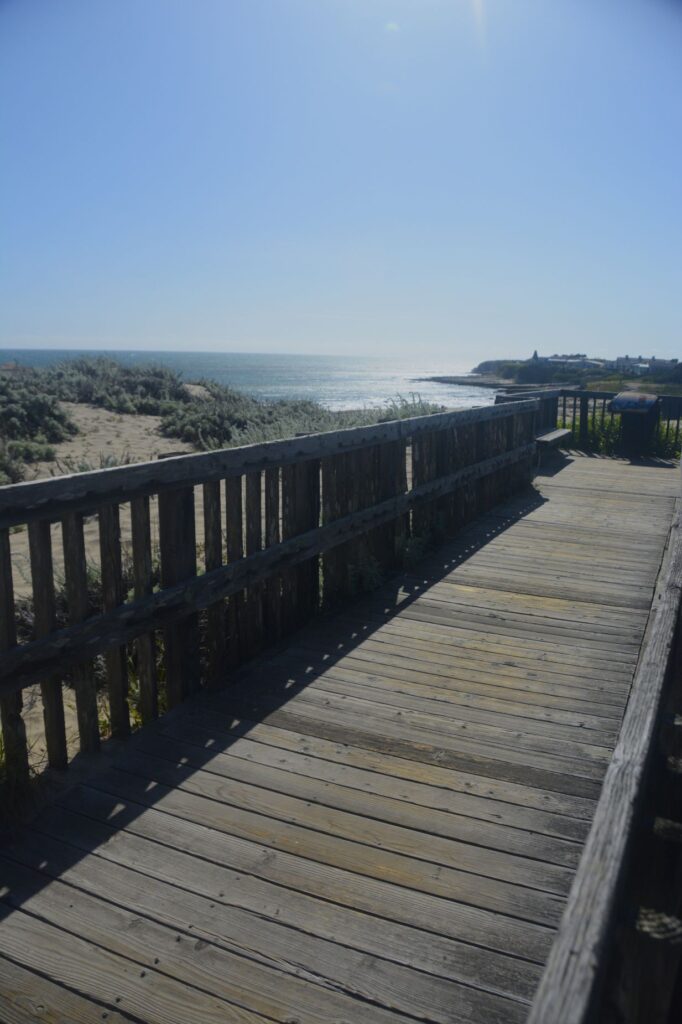
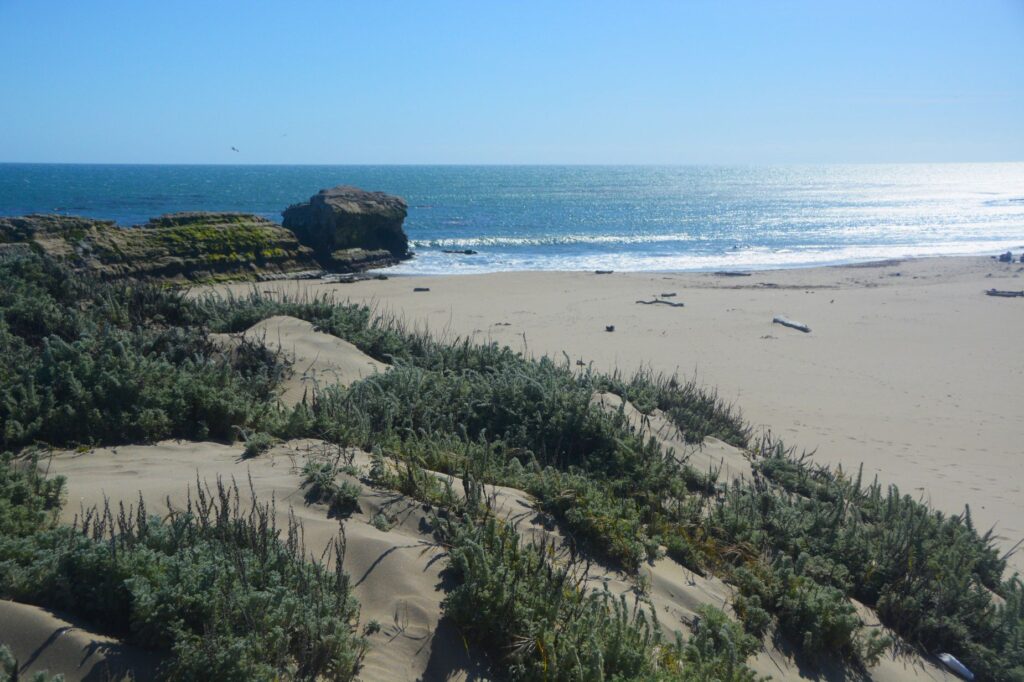
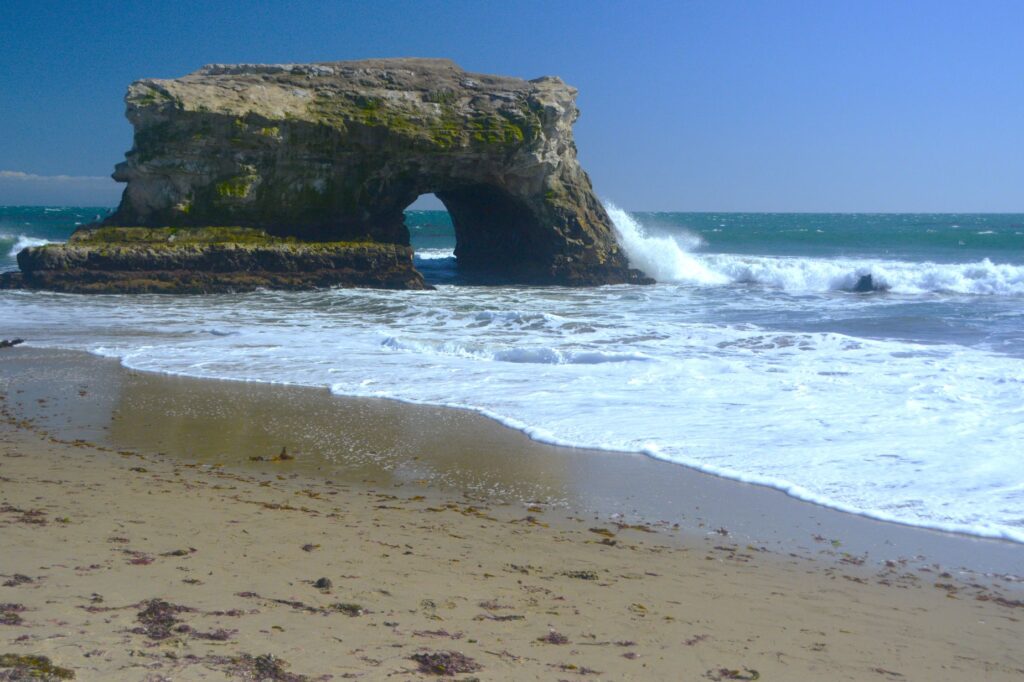
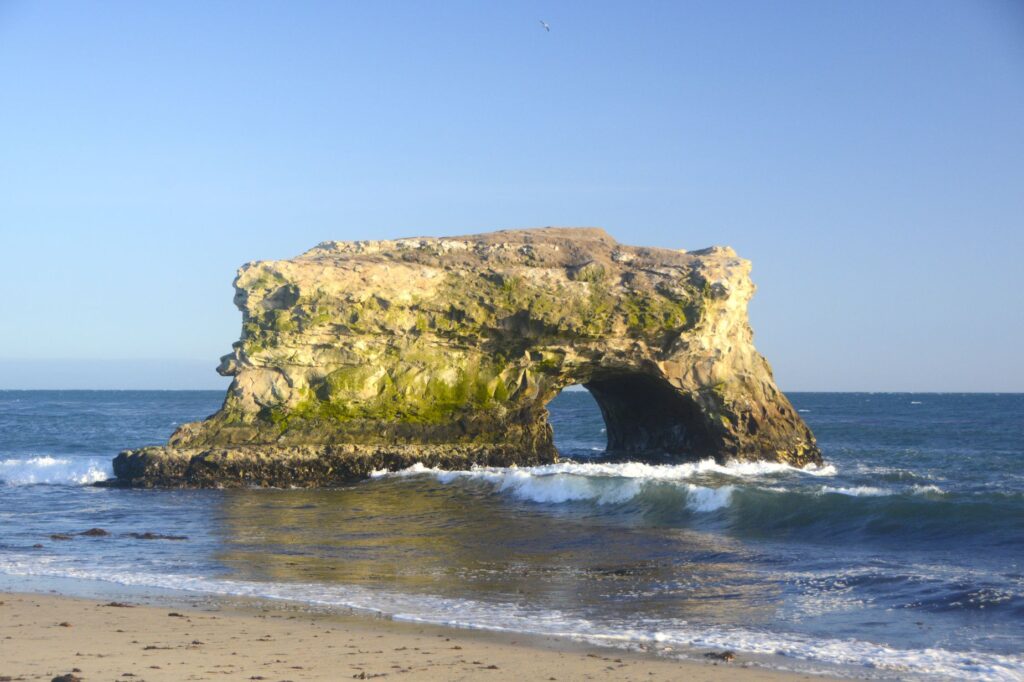
The bridges were formed from mudstone. The mudstone was eroded by wind and sea, jutting out into the ocean.

There were originally three arches. The outermost one collapsed around 1905. The inner arch (connecting these two rocks) collapsed during a storm in 1980. What is left today is the middle arch.
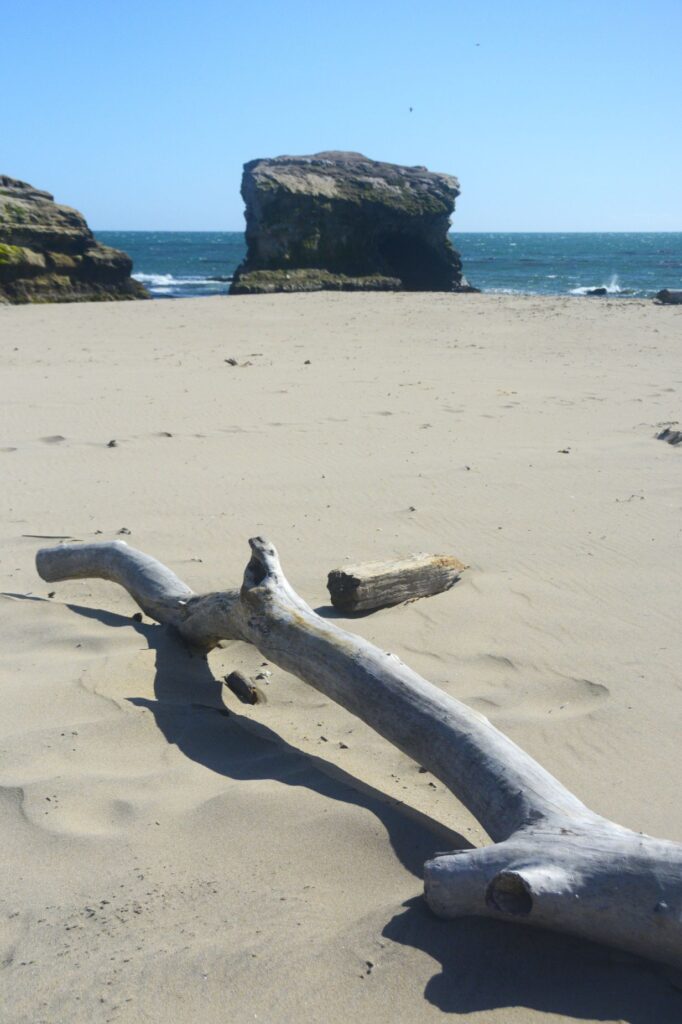
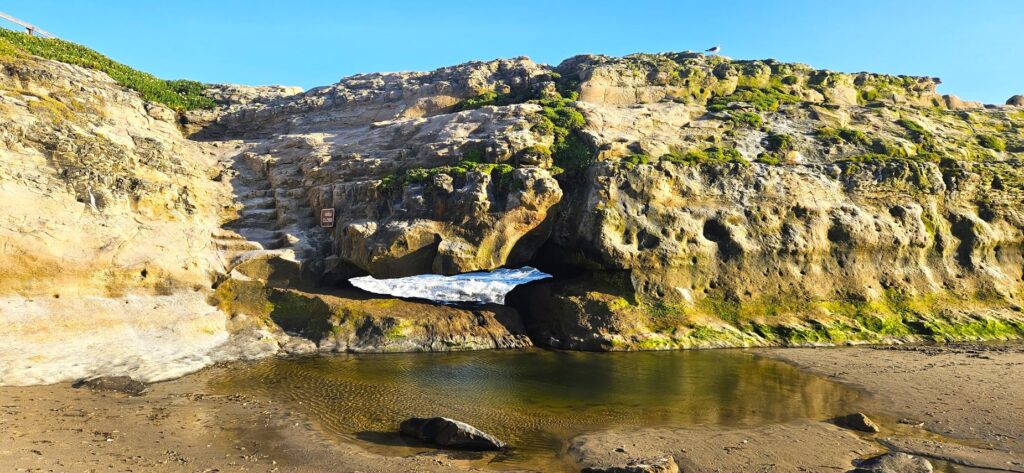
There’s also this hole in the rock here. I guess this is not considered an arch.

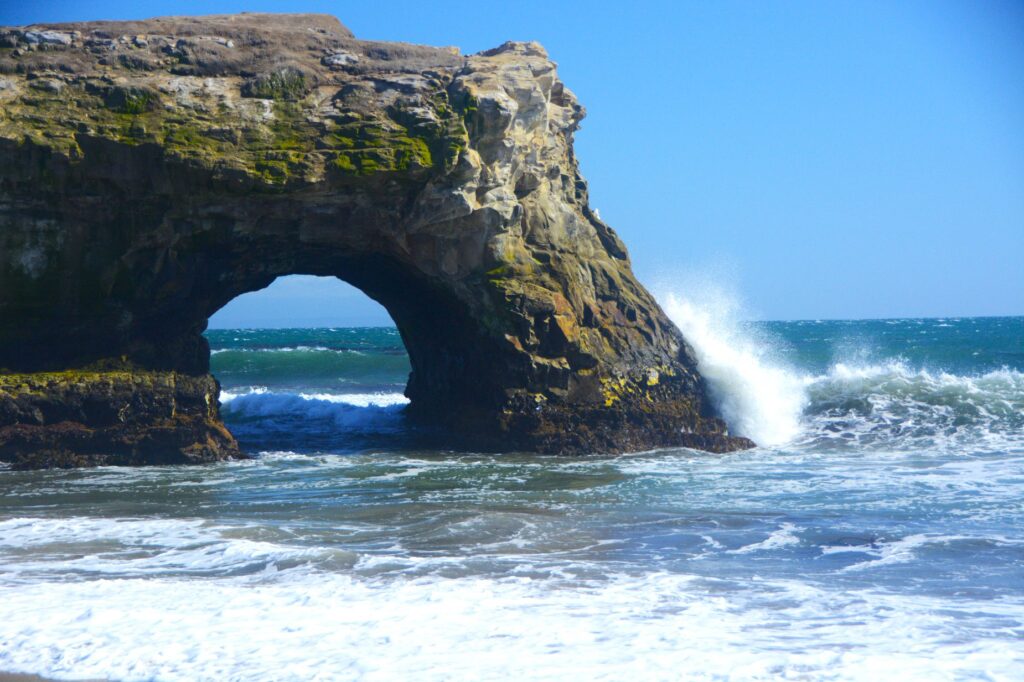
This is the middle arch. It was once connected to the land by the inner arch which is now washed away.
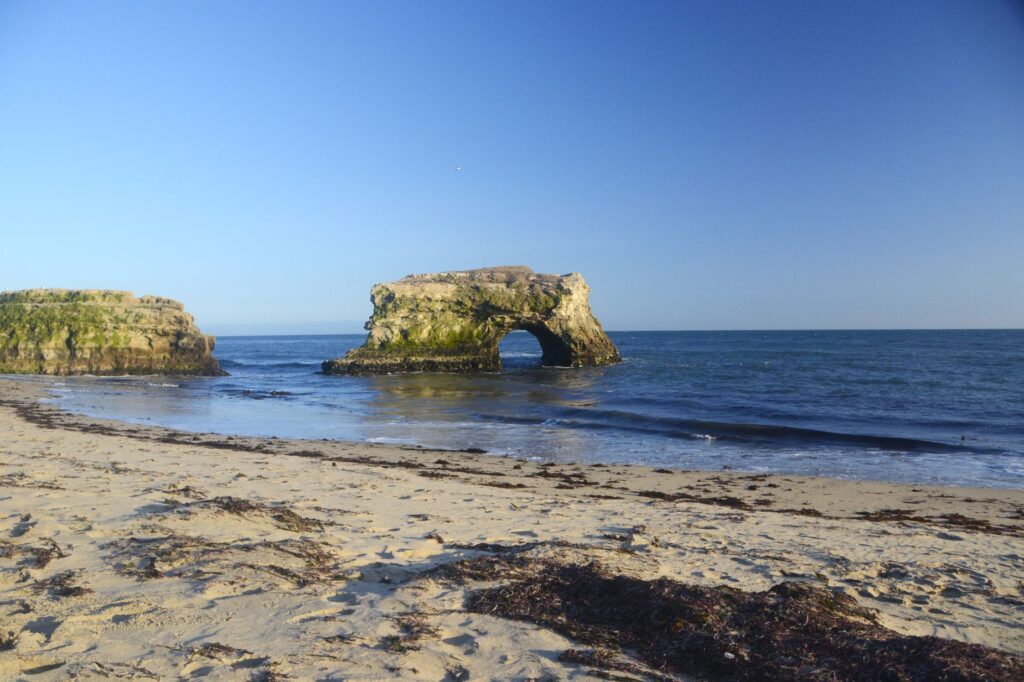
Someday this arch probably will collapse into the ocean. Just look at how the waves beat against it.

An estimated 150,000 butterflies migrate 2,000 miles to Natural Bridges State park during the cold winter months from northwestern United States and Canada. Monarchs settle in groves along the coasts of California and all the way south to Baja California. At Natural Bridges State Beach they can find shelter from wind along with food and water. The butterflies form clusters in the trees by intertwining their legs among the branches. They look like a clump of leaves. This is how they protect each other from cold winter winds and rains.

We didn’t get to see any butterflies when we were there, but maybe we will in the future.

“Mightier than the thunders of many waters,
    mightier than the waves of the sea,
    the Lord on high is mighty! Psalm 93:4″
On the way to California

June 16, 2020

We were stuck in Tucson, AZ, for the pandemic lock down of 2020. As the heat started spiking into triple digits, we sought a cooler place to spend our time while waiting to get into California to visit family and take care of our annual dental, vision and doctor appointments.

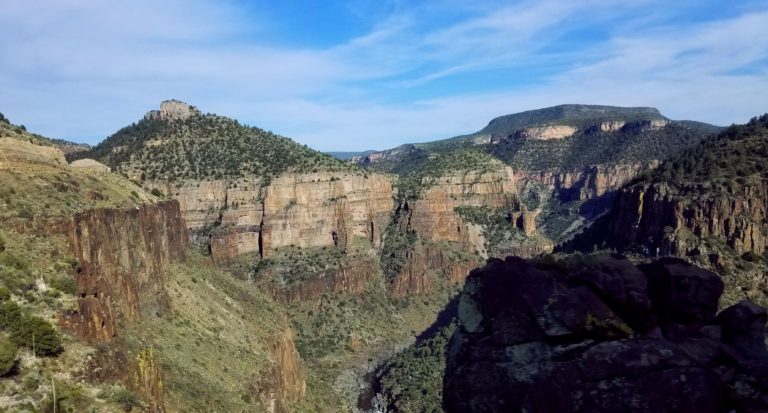
Show Low, AZ, at an elevation of 6,300 feet was where we took our maiden voyage in our first little RV.  We knew it would be much cooler there, so we called up our favorite RV park and found out they were just opening for the summer. The drive from Tucson to Show Low was absolutely beautiful, with red rock canyons and twisty-armed saguaros.

On the way to Show Low from Tucson on Hwy 77

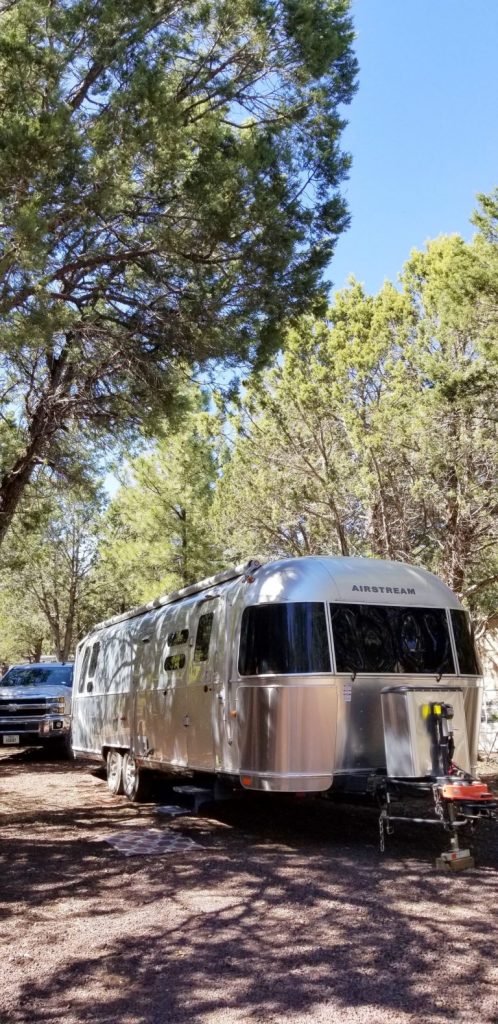
Our campsite in Show Low, AZ

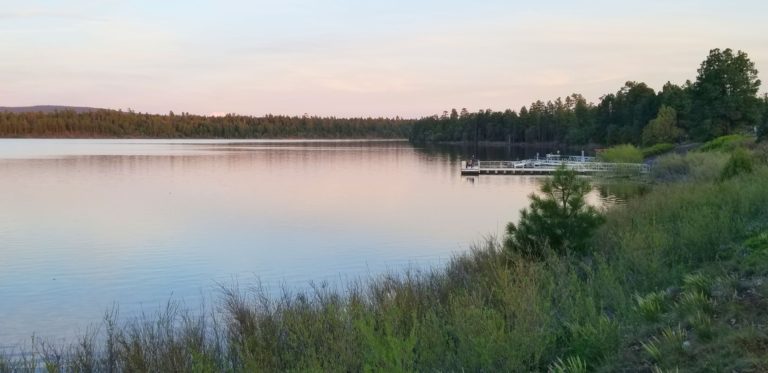
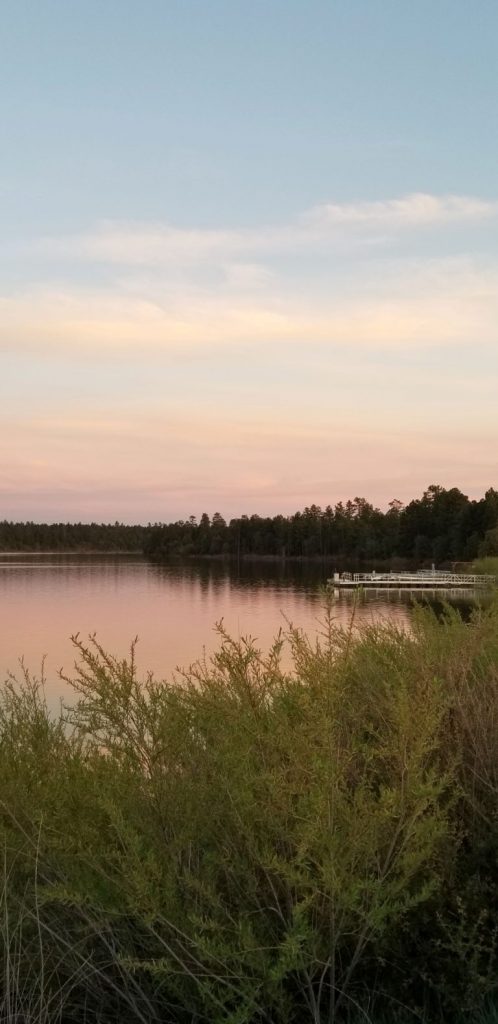
We stayed in Show Low for 2 weeks at Waltner’s RV Resort. We loved the quiet and convenience of the location. While we were there, we took a few drives to look around the area. One evening we went to see Show Low Lake that was only a couple of miles from our campsite. The sunset was magical.

Show Low Lake

Show Low Lake

We had seriously considered Show Low as a permanent location when we settle down someday, but we changed our minds after spending two weeks there in spring. In short: cedar trees! Ray has a serious allergy to the pollen from the cedar trees and Show Low has plenty of them. He had a very severe reaction to the cedar trees in Texas when we were there in the winter. Show Low wasn’t as bad, but he was glad to leave the area to get back to feeling normal.

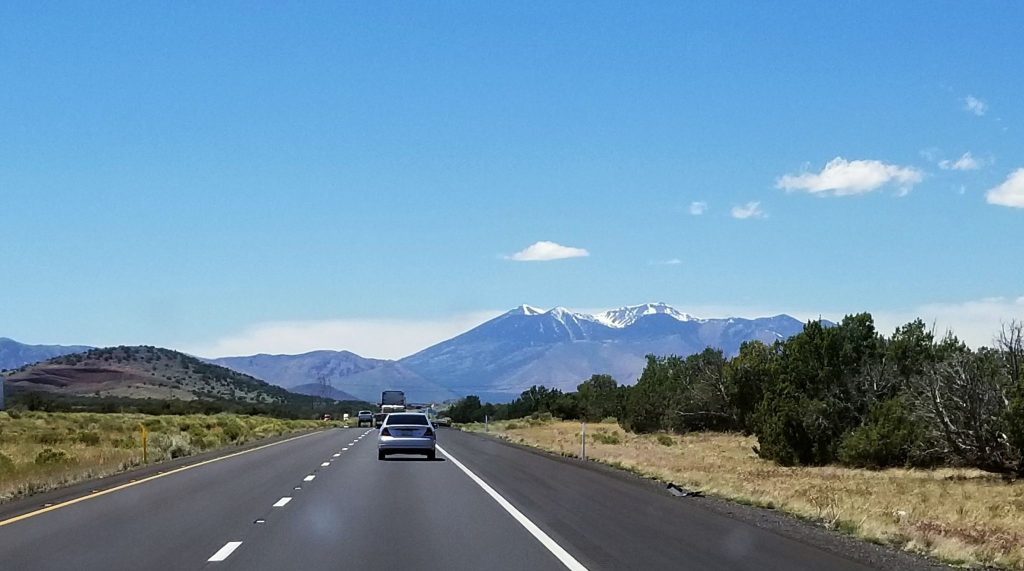
From Show Low, we drove west and stayed a couple of nights in Flagstaff, AZ, Bullhead City, AZ, and then in Tehachapi, CA, before finally arriving at our Thousand Trails campground in San Benito, California. Here are some scenes along the way.

Driving into Flagstaff,  Humphreys Peak looms in the distance

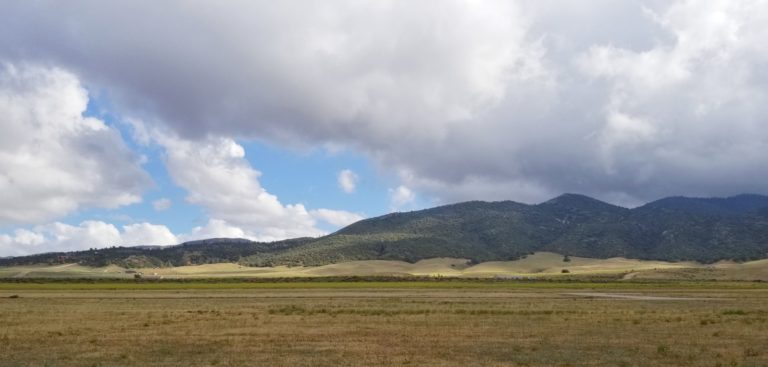
Tehachapi, California

Mountain Valley RV Park in Tehachapi is a nice campground next to an airport for glider flights. The above photo is looking across the landing strip at the hills in the background. Tehachapi is an elevation of nearly 4,000 feet. So it is generally cool and windy. In fact, you will see many wind generators on the hills around Tehachapi.

Our next campground was a Thousand Trails Campground near Hollister, CA. It’s a few miles outside the tiny town of Paicines. Situated on a natural preserve, we observed many different kinds of wildlife, including ground and tree squirrels, wild pigs, deer and rabbits.

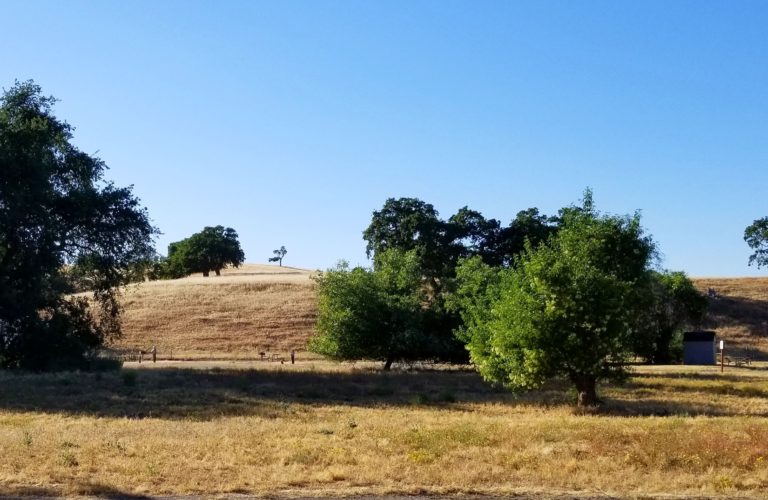
Our view at San Benito Campground, Paicines, CA

San Benito Campground

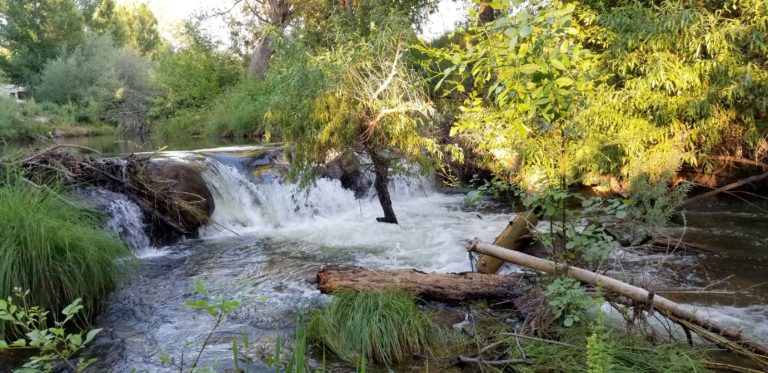
We moved to Oakhurst for a week to be closer to all our doctor appointments. We had reservations at an Escapees park, but they closed their office by noon. We weren’t aware of this, since most RV parks are open until at least 4 p.m.  We had to quickly find another spot which turned out to be in a better location. It was right along the Fresno River in the middle of Oakhurst. In all the years we lived in that area, I never knew there was a river right through the middle of Oakhurst. We even had our own waterfall. The river was right behind our campsite at High Sierra RV Park.

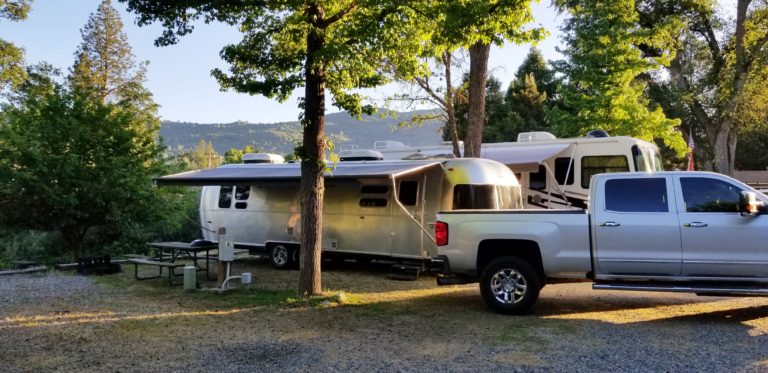
Our campsite by the Fresno River

Waterfall near our campsite, Oakhurst, CA

The Thousand Trails campground in Oceano, CA, was not accepting anyone into the park outside their county (San Luis Obispo). We had arranged to stay in Paso Robles for a few days because it’s located near our kids and grandkids. It happens to also be in San Luis Obispos county, so we were in luck. When we made our reservations with Pacific Dunes RV Ranch in Oceano, we were able to say that we were coming from within the county!

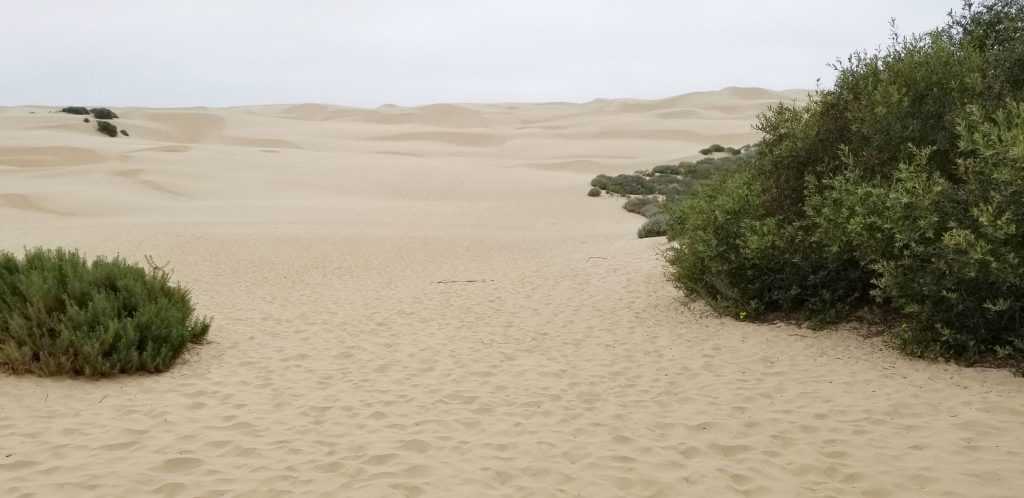
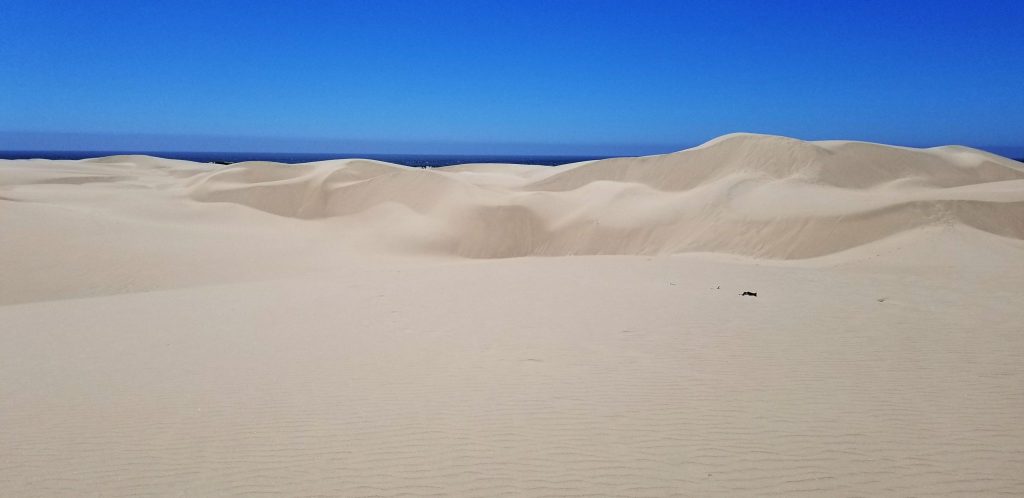
Oceano is right along the beach. However, it is called Pacific Dunes for a reason. I was looking forward to spending long walks on the beach and being in the cool ocean breeze. On my first attempt to walk to the beach, I hiked up the first hill of dunes and this is what I saw.

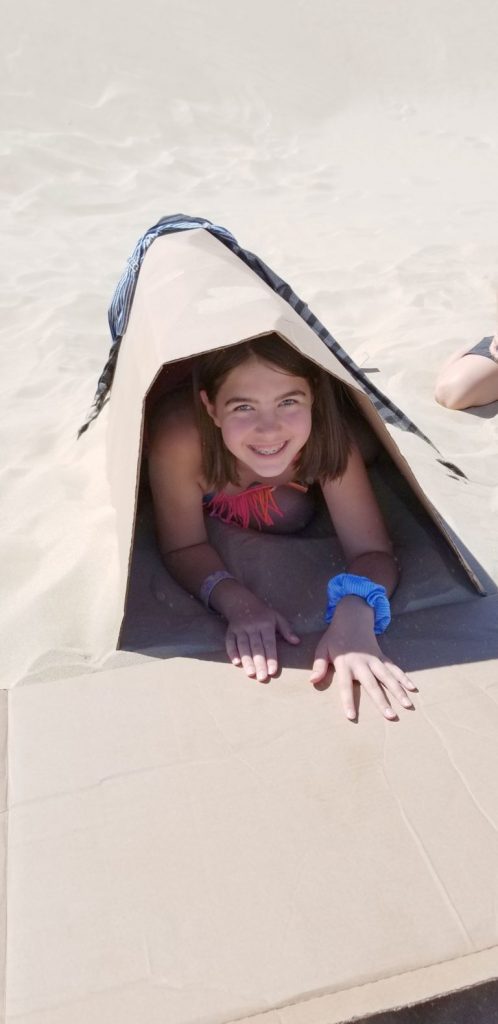
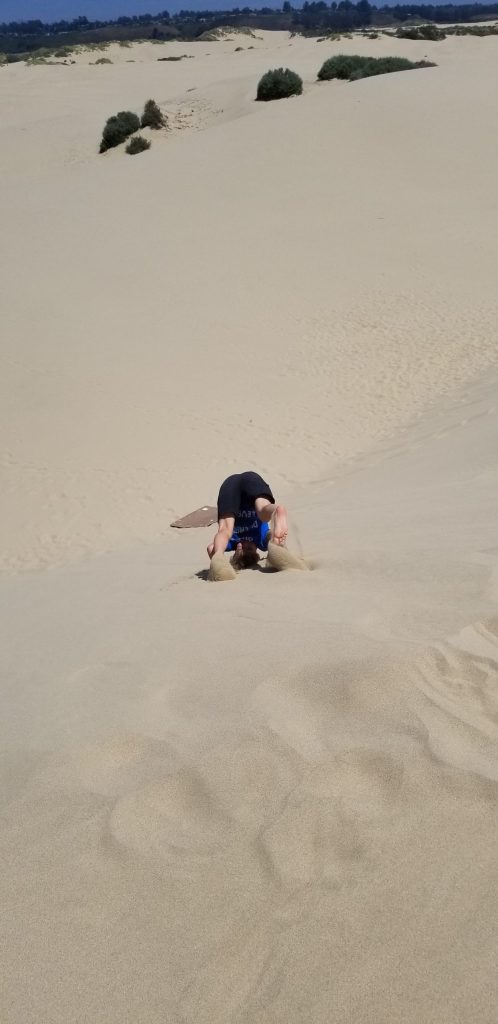
I didn’t walk on the beach, but I decided to make the best of it. I remember having a great time with our kids years ago when we went to White Sands New Mexico. So I invited some of my grandkids to explore the dunes with me. They found out that sliding down the dunes is not easy. But they were innovative and did somersaults, tumbled and ran down the steep dunes. The cardboard that we brought to slide on soon formed into a tent fort.

Zoey in her cardboard tent fort.

Noah tumbles down the dune

And I finally got a glimpse of the ocean from the top of a dune that day. It seemed like miles away.

The beach is far away across an ocean of dunes!

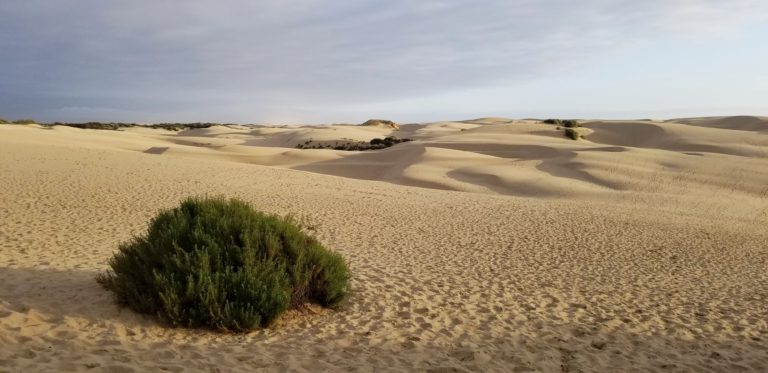
There is something beautiful about the dunes at sunset.

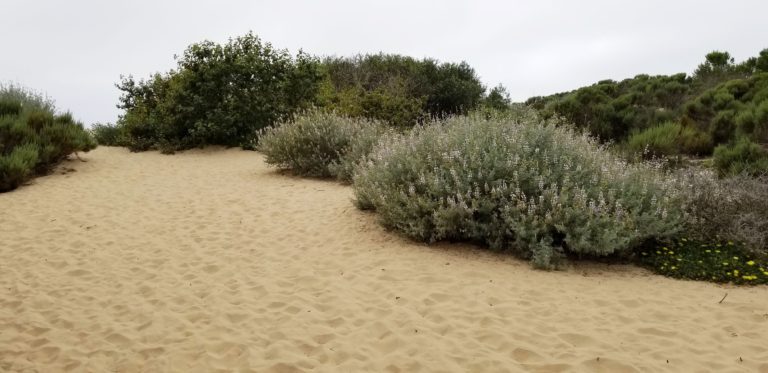
The shrubbery is also quite beautiful.

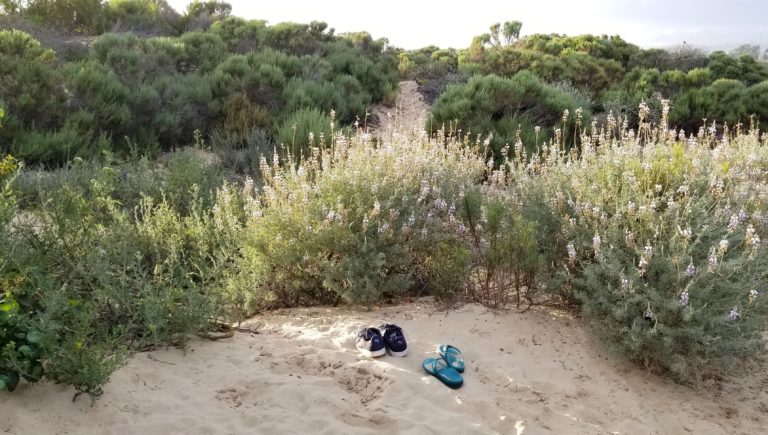
Sometimes it’s better to go barefoot

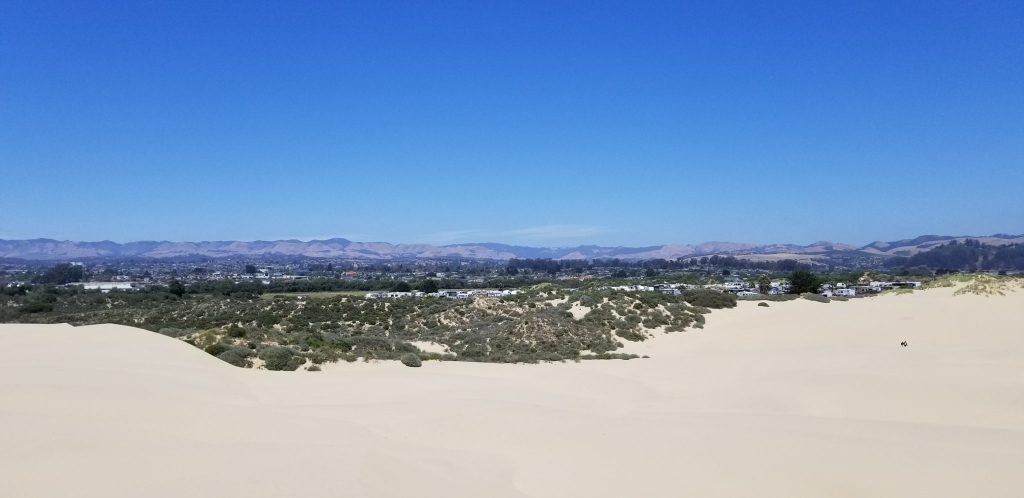
A beautiful view of Oceano and surrounding area

Though my expectations were far different from what I found, the beauty of the area was an unexpected surprise.