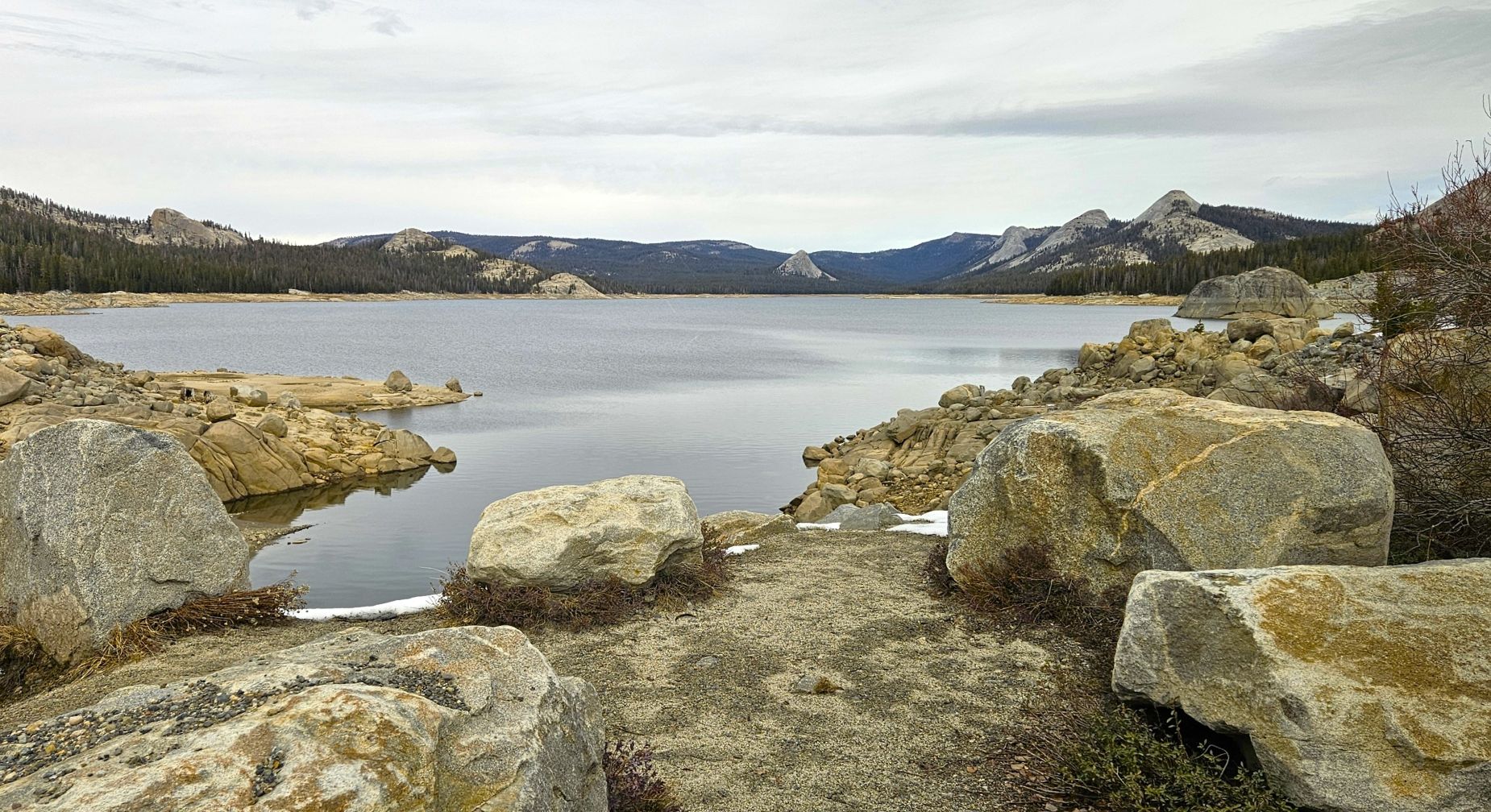
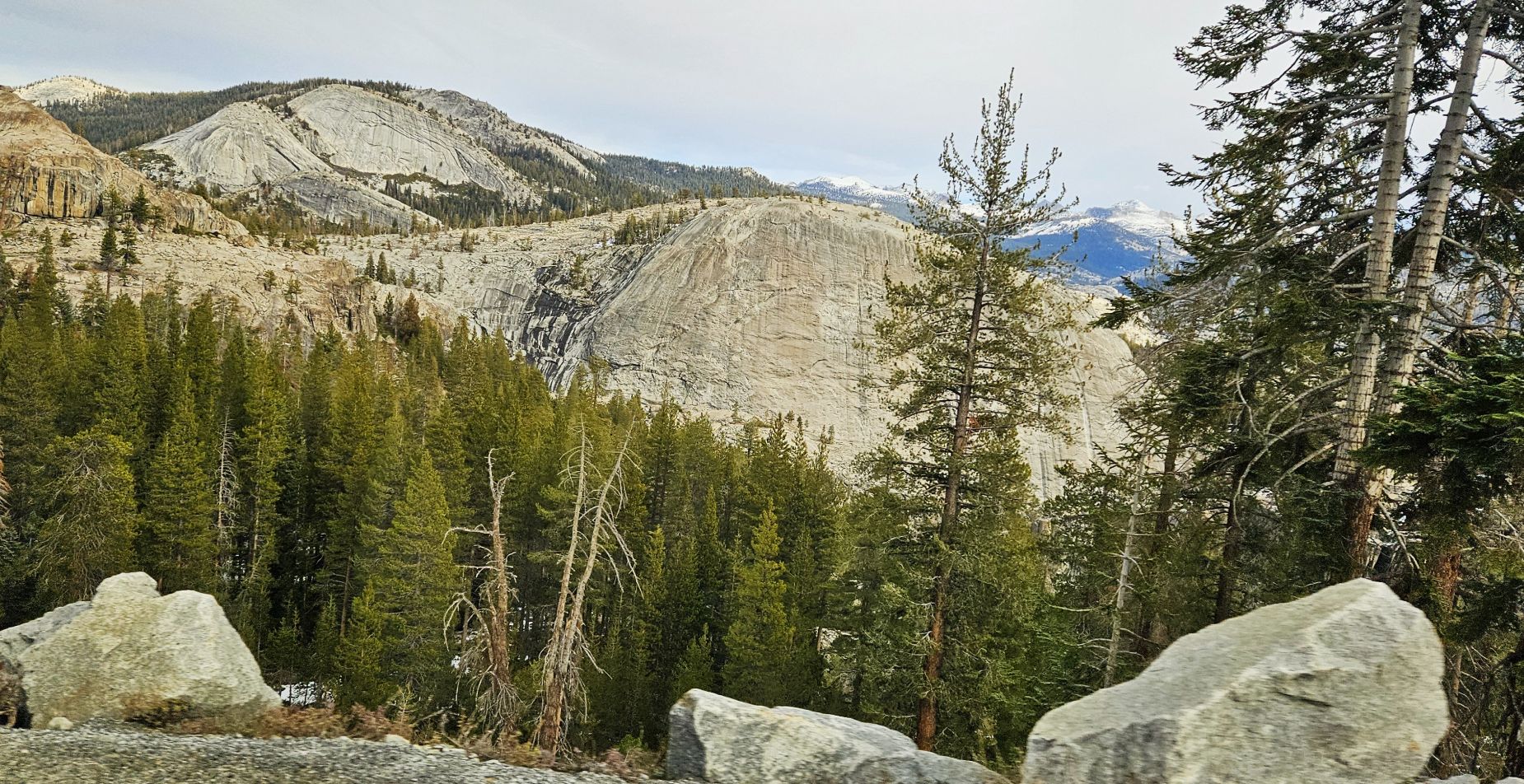
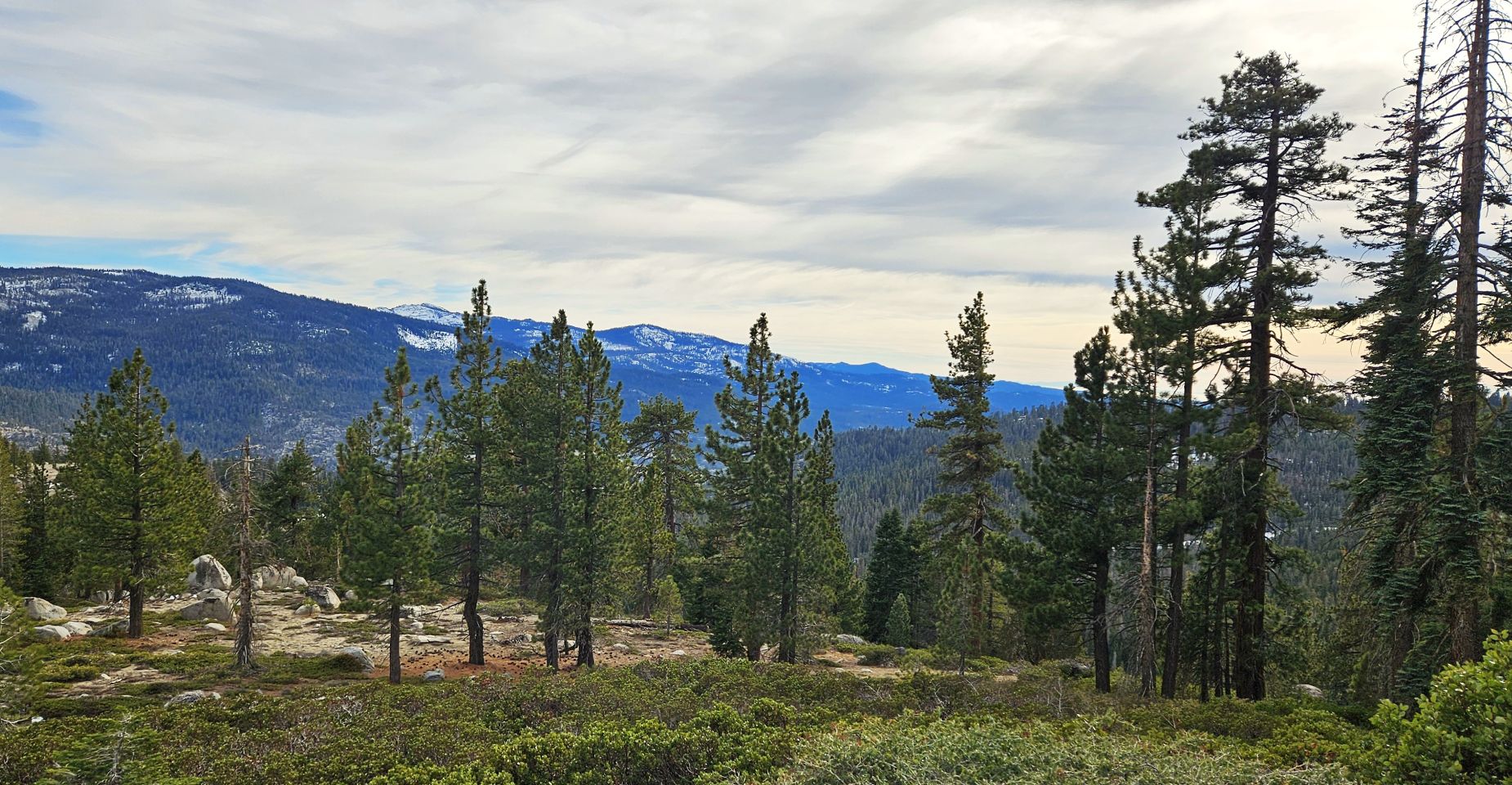
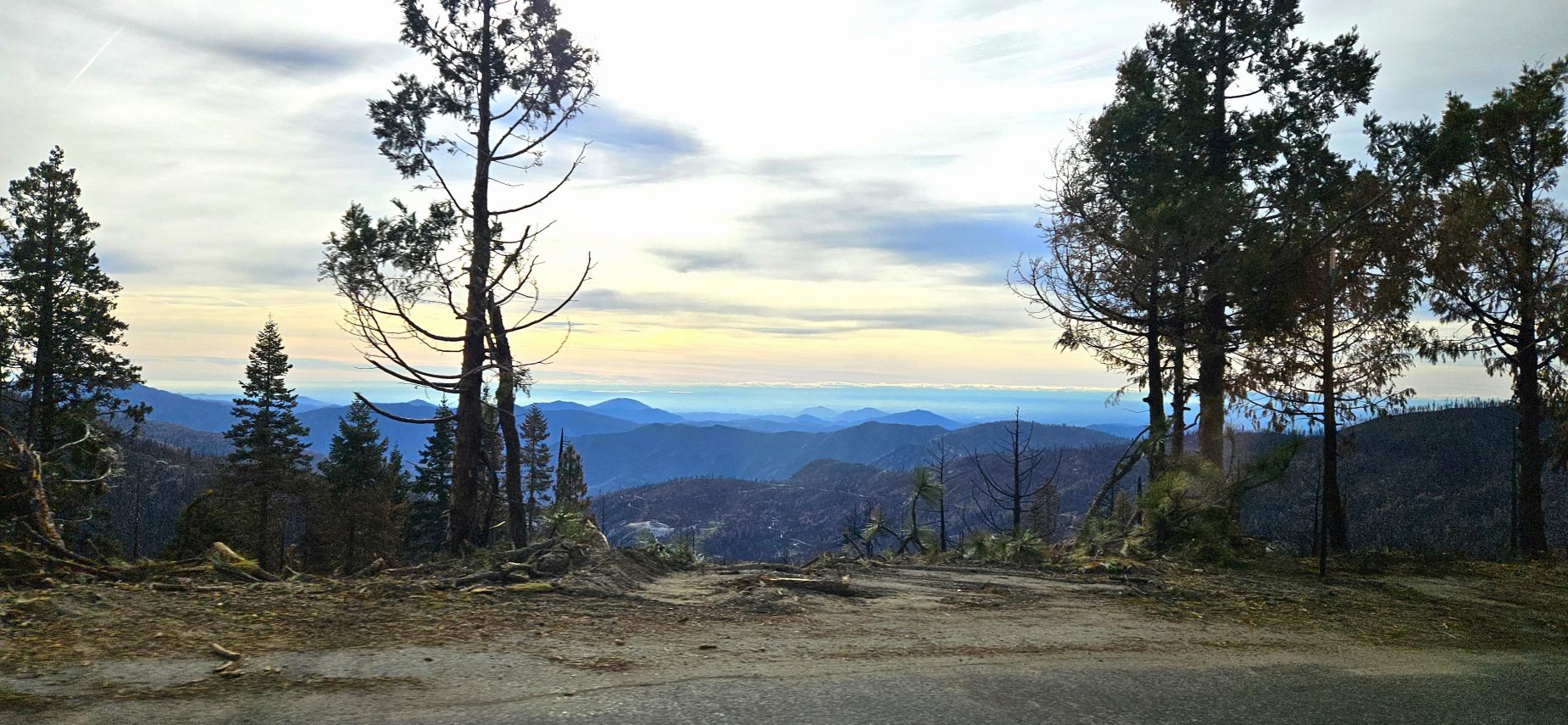
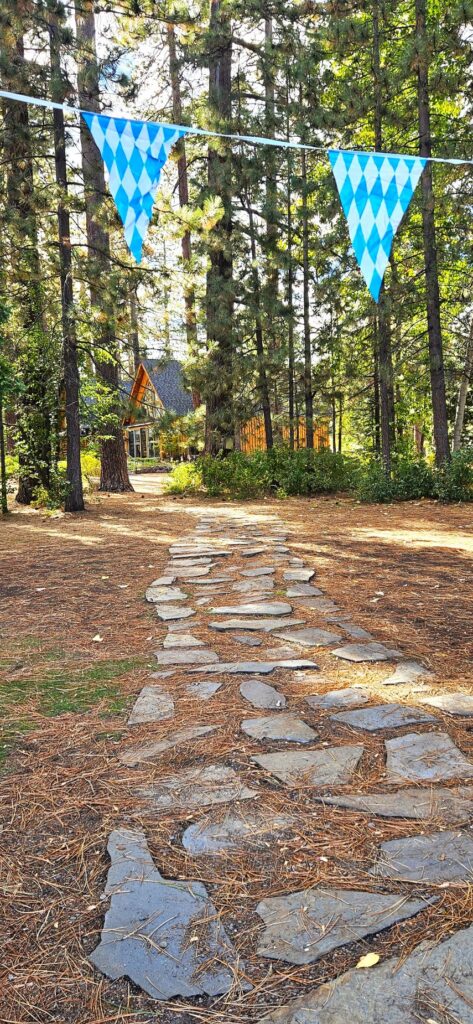
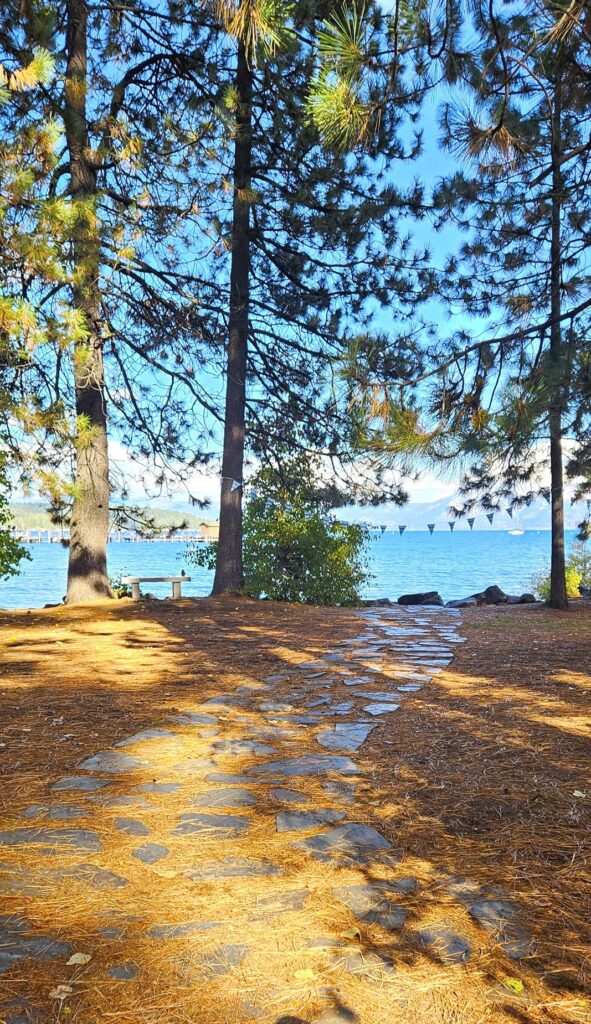
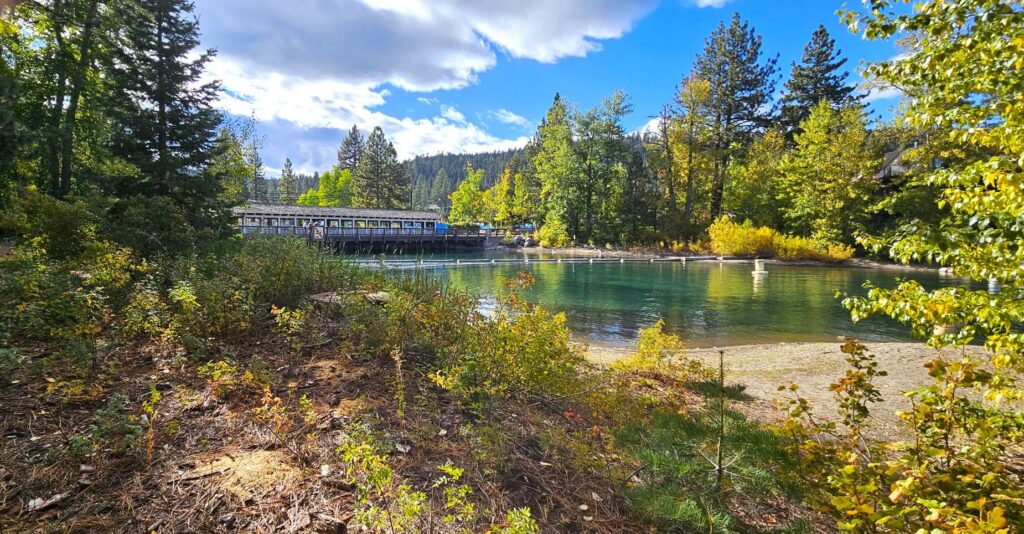
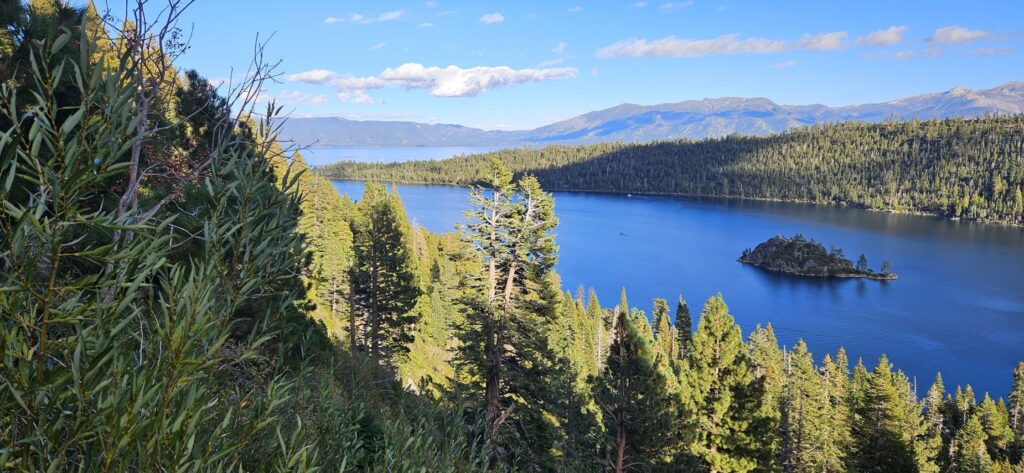
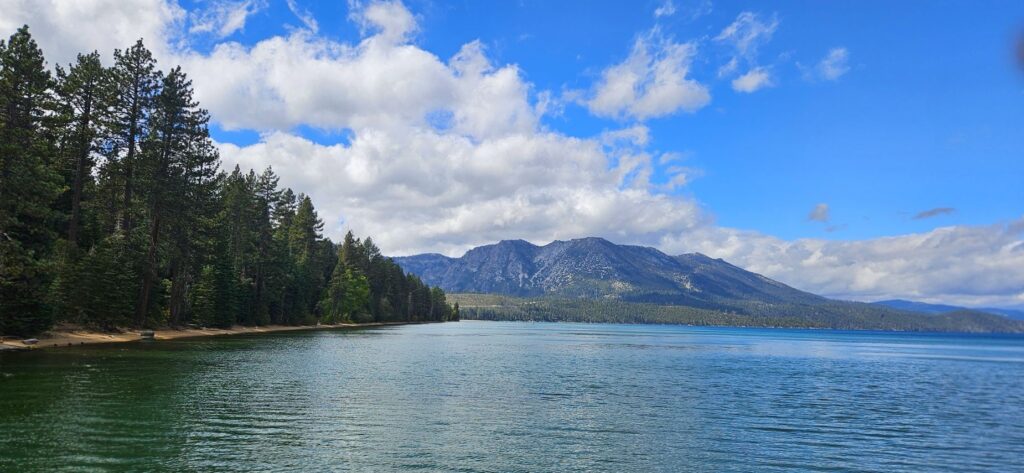
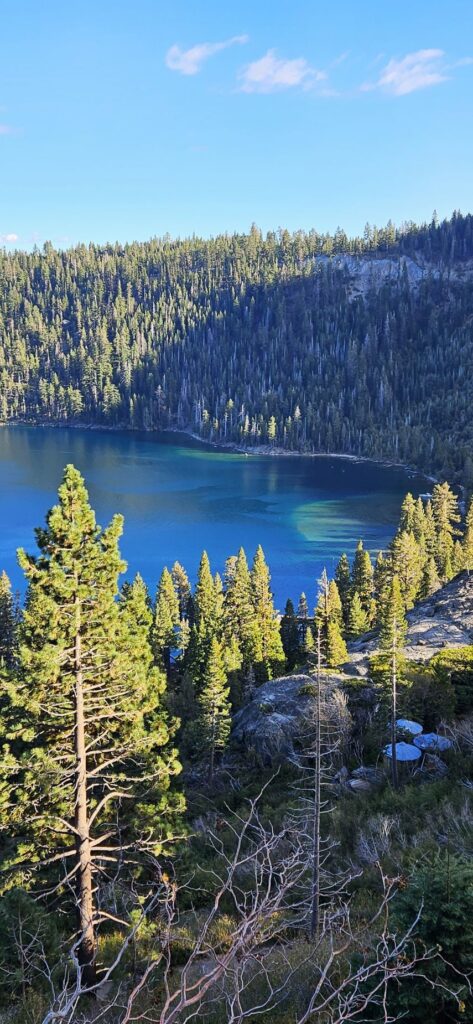
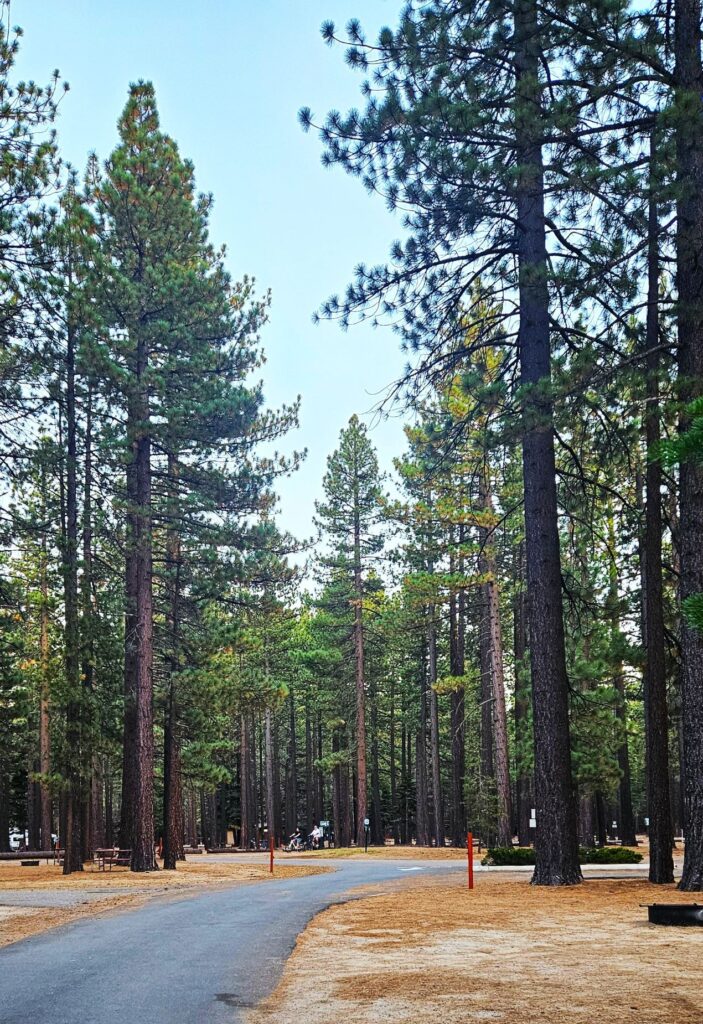
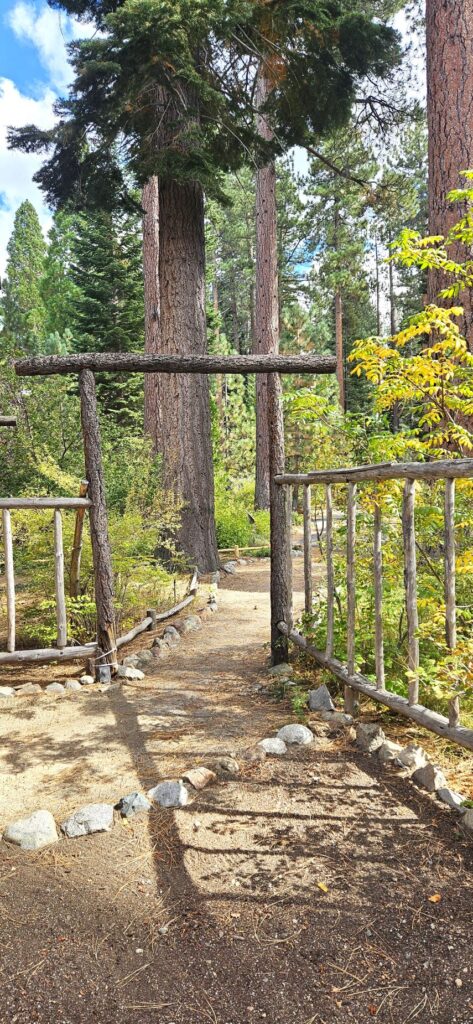
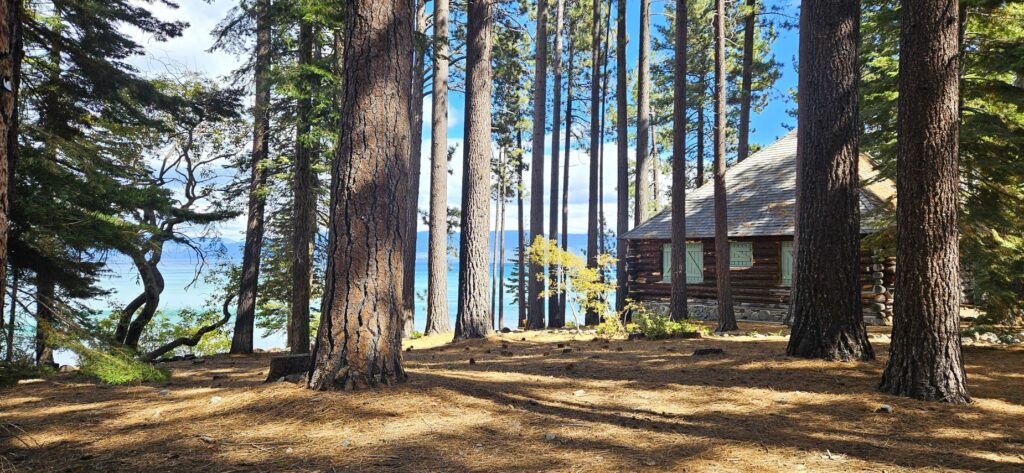
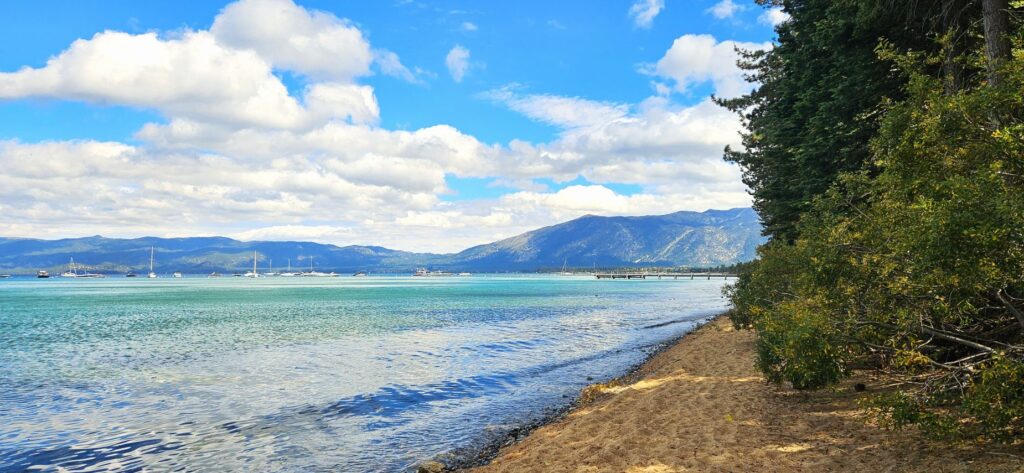
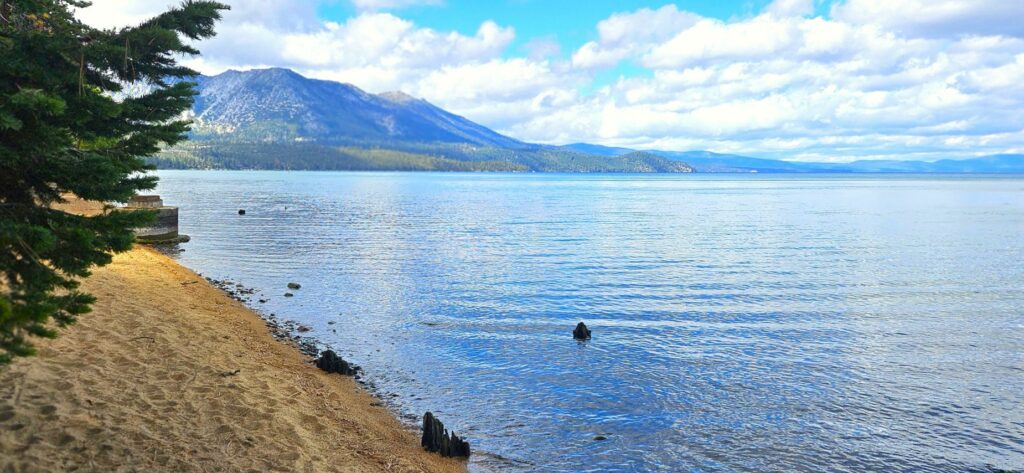
After leaving Scotts Valley, California, we made our way across the Sacramento Valley to Lake Tahoe where we spent three weeks in the tall pines. It was a little early in the season, but our campground is open year-round. Snow could still be seen on the mountains.
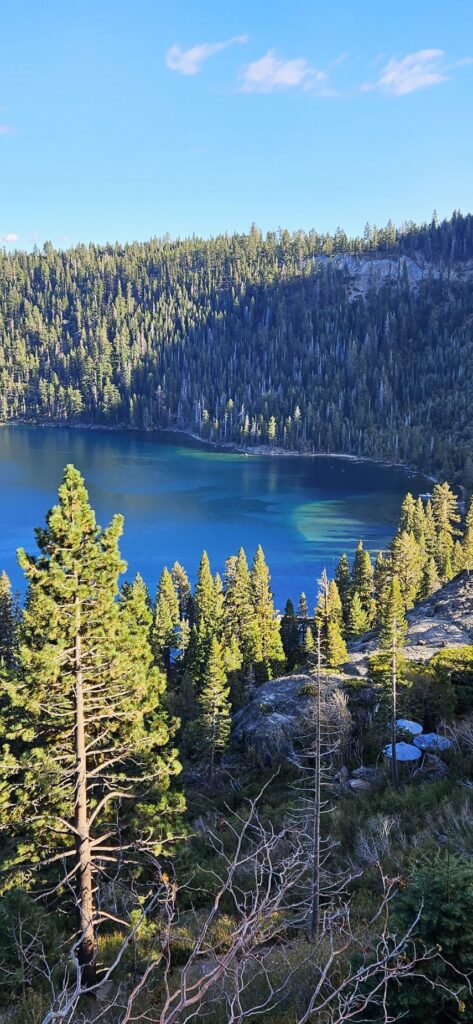
My sister came for a few days and stayed in one of the cabins in the campground. We showed her the sights, like Emerald Bay, Fanny Bridge and the grounds of the Gate Keeper’s Museum (It wasn’t open yet for the season.)
Emerald Bay at Lake TahoeFanny Bridge
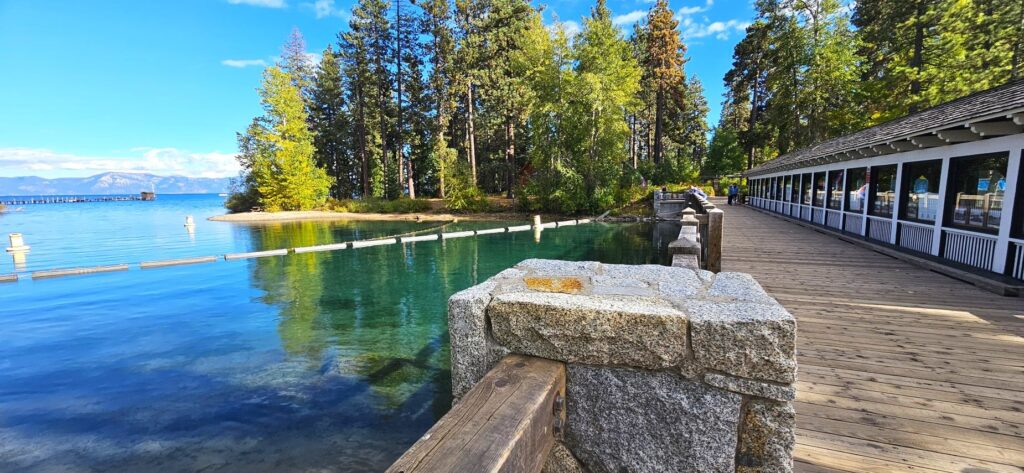
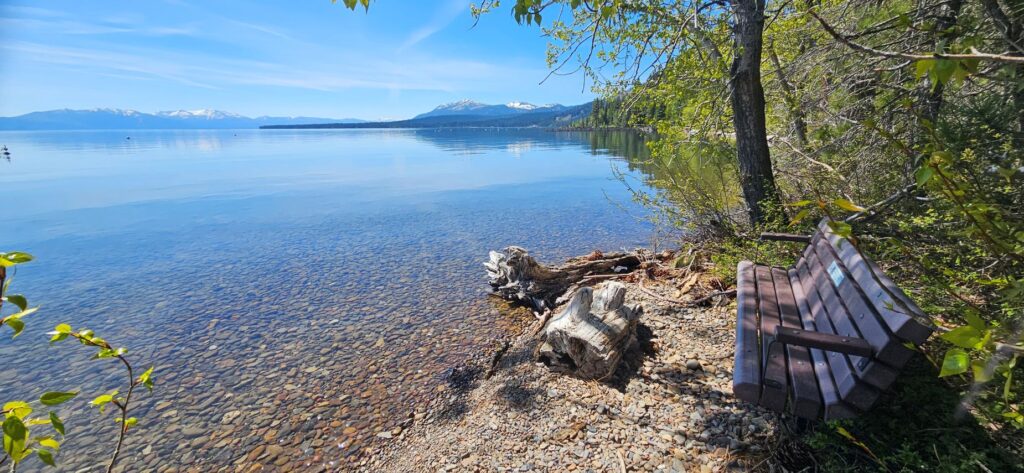
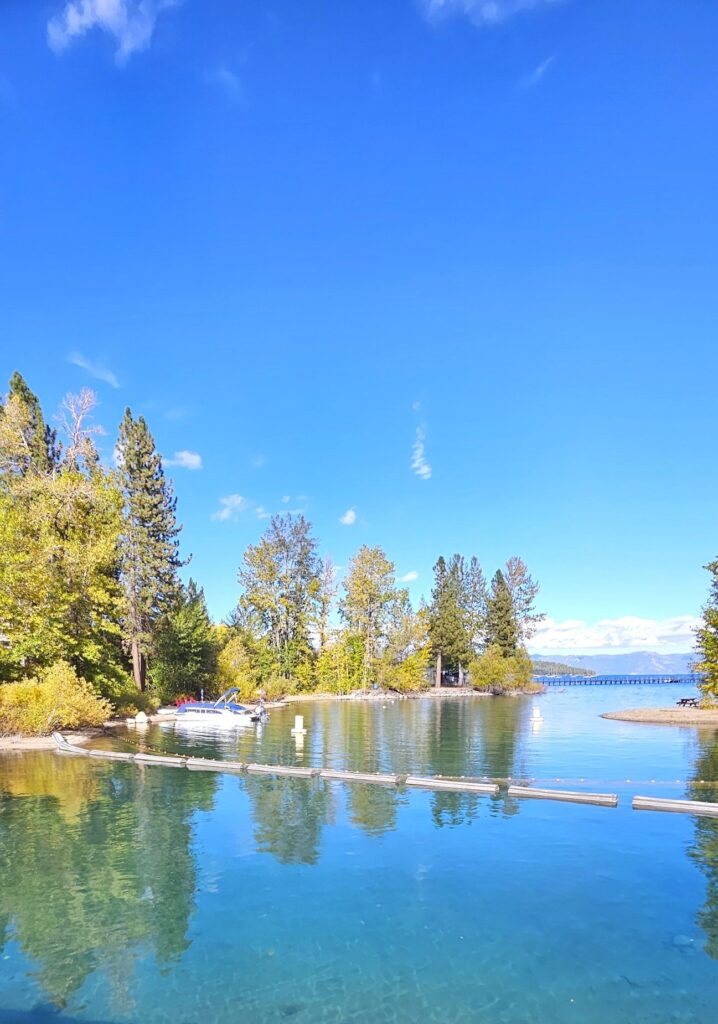
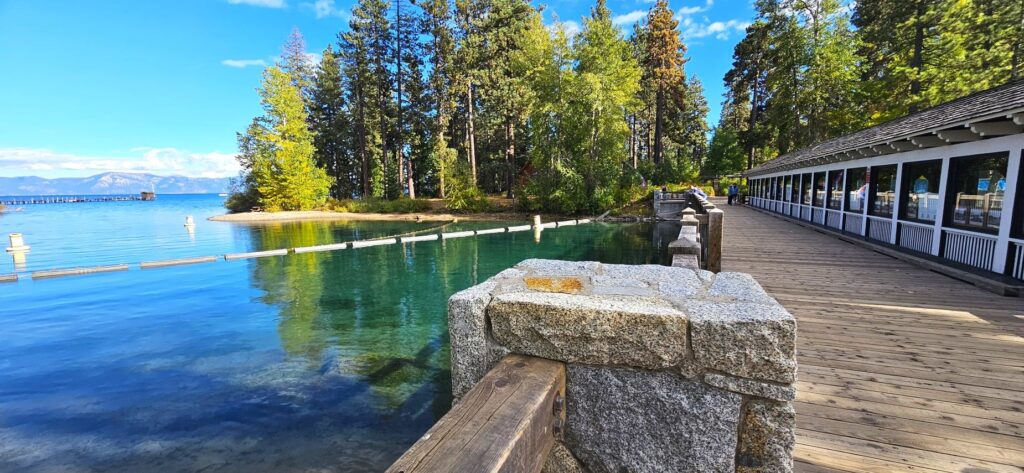
We ate a picnic lunch looking out over the lake at the Gate Keeper’s Museum grounds.
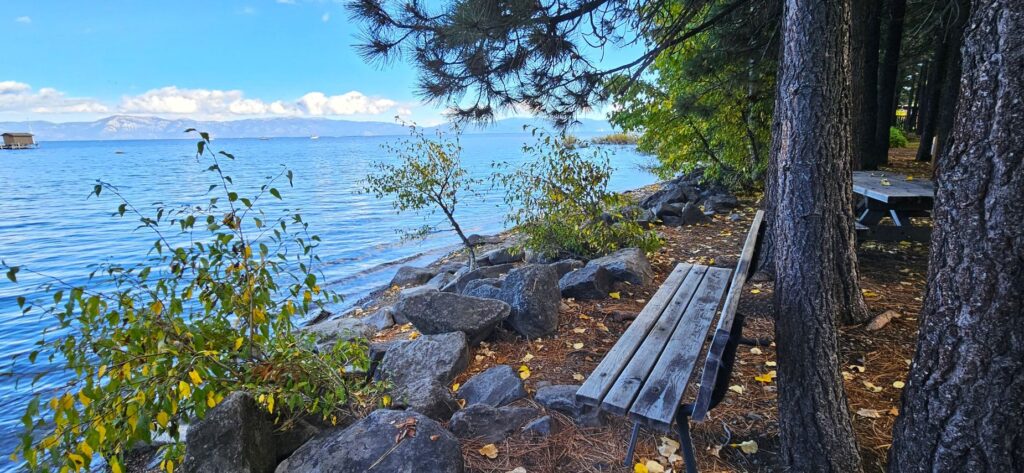
Shoreline near Gate Keeper’s Museum
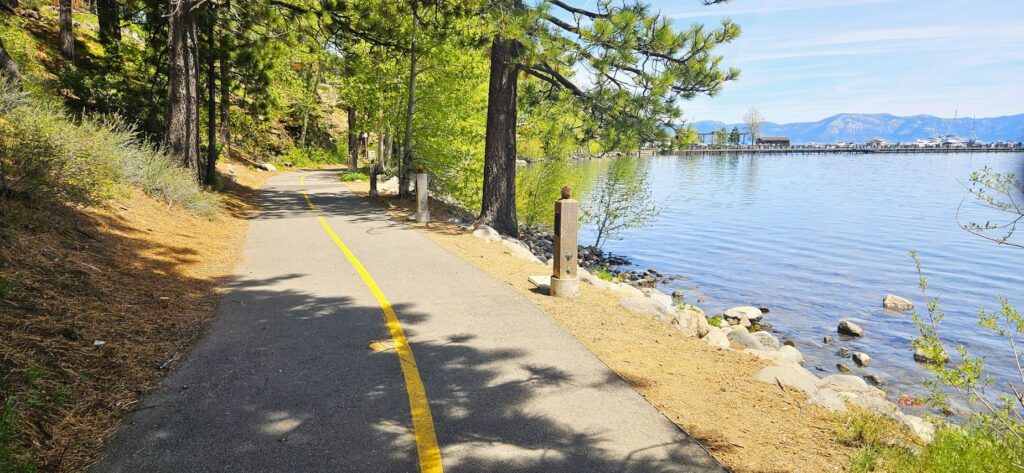
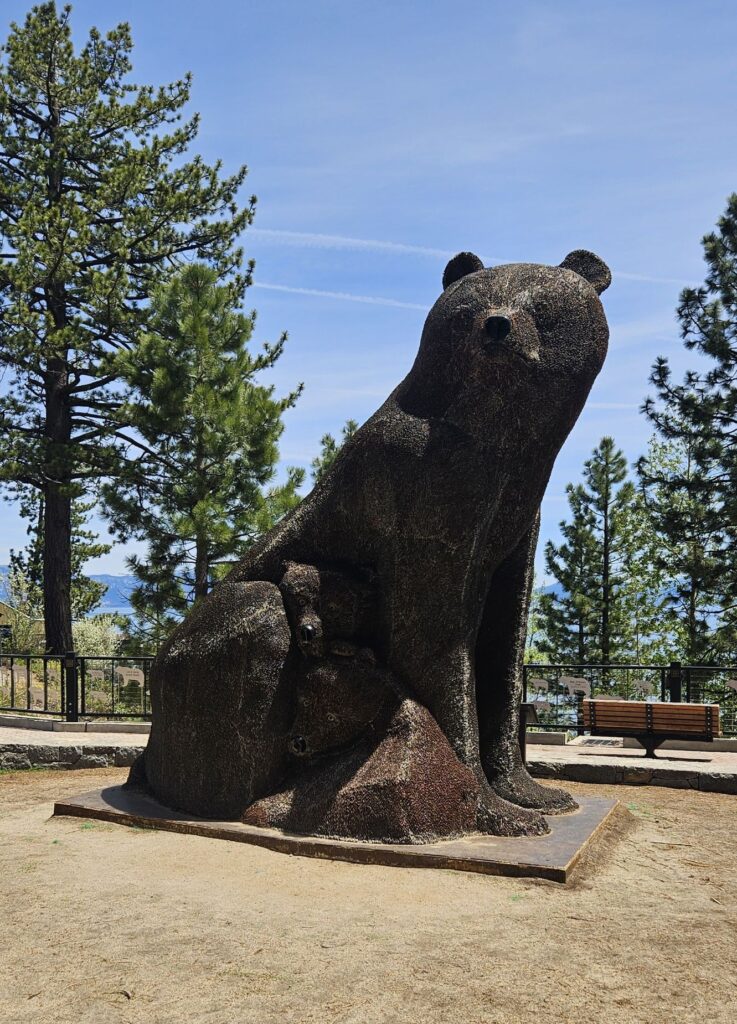
While we were in Tahoe City, we took a walk along the Lakeside Trail to see the Penny Bear, (officially named, Ursa Mater). The 12 foot tall mama bear and her cub is made of over 200,000 pennies.
Lakeside Trail, Tahoe City, CAThe Penny Bear
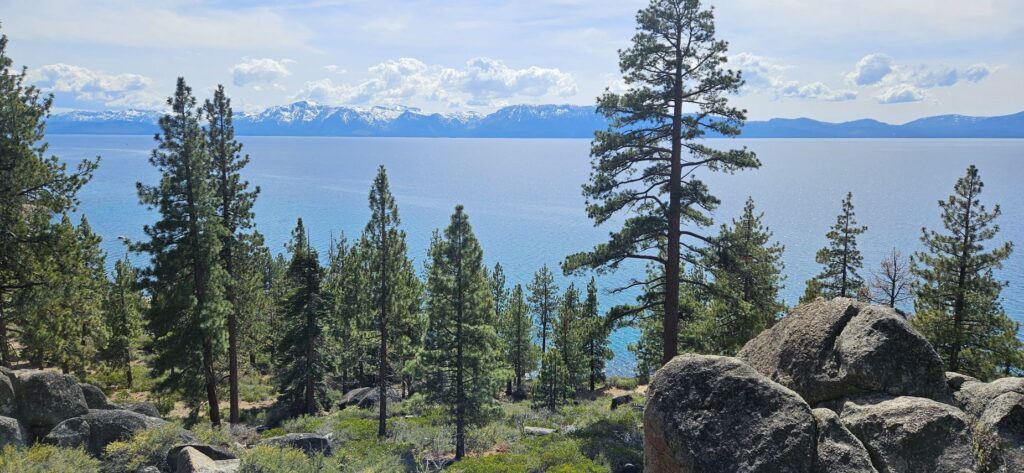
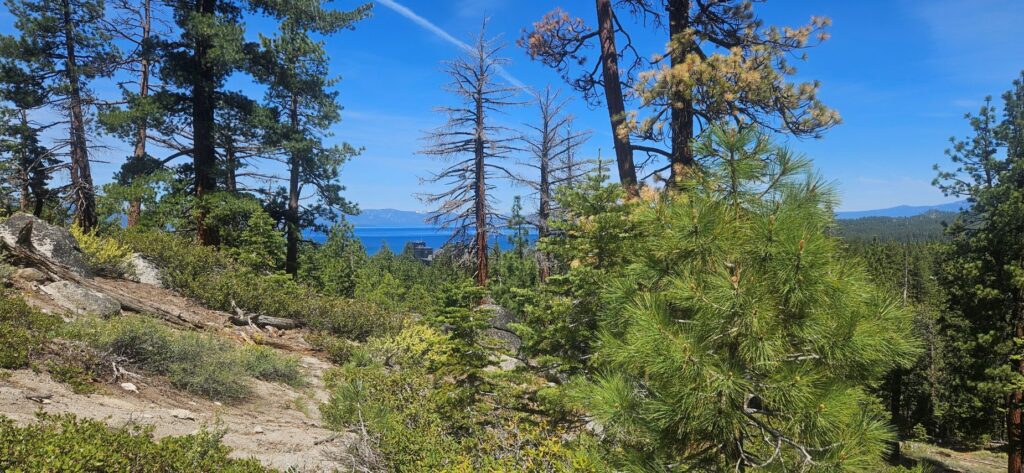
Another day, my sister and I went on a hike in Van-Sickle Bi-State Park. We didn’t make it as far as the waterfalls because it was a hot day and the trail was long and steep. But we did see views of Lake Tahoe. It is a Bi-State park because it straddles the border of California and Nevada.
View of Lake Tahoe from Van-Sickle Bi-State Park trail.
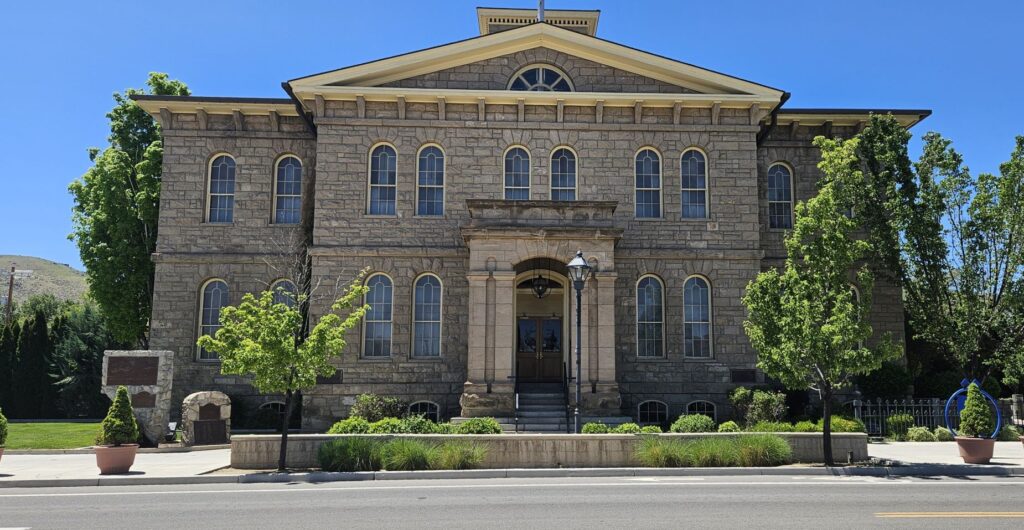
After delivering my sister to the airport in Carson City, Nevada, we took a little drive around the historic district where we saw the stone building that used to be the location of the United States Mint in Nevada. It is now the Nevada National Guard Armory.
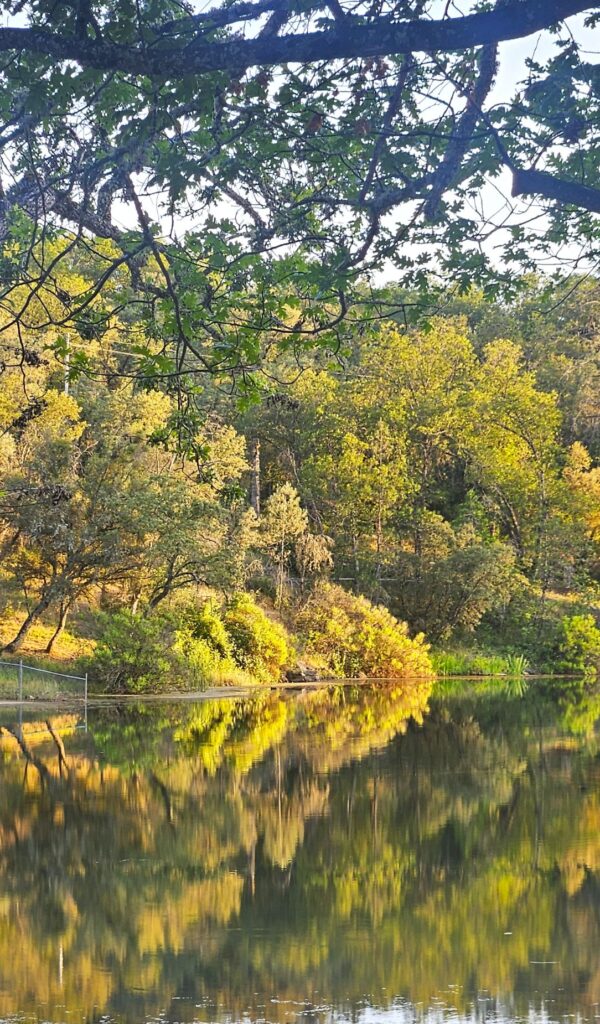
On our way back to the coast, we stayed at Oregon House Campground which was one we had never stayed at before. It is in the foothills northwest of Lake Tahoe. On my walks, I frequented the lake for some really beautiful views.
Lake of the Springs at Oregon House, California
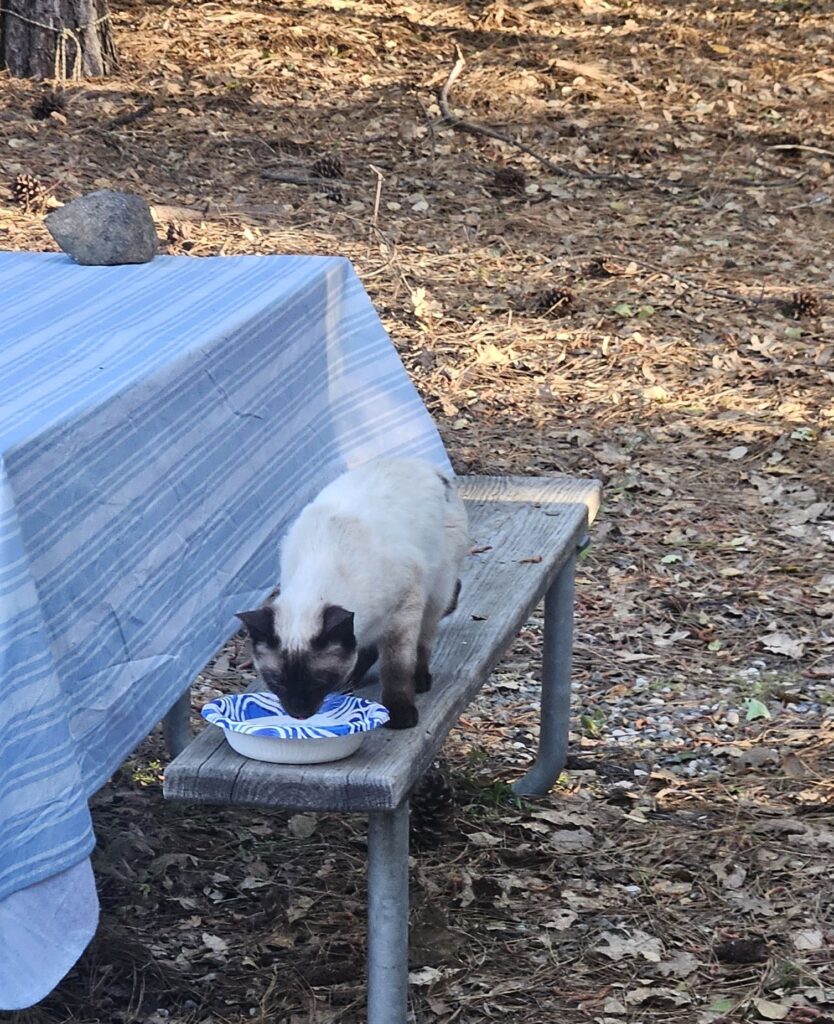
While we were there, we adopted a campground cat. We don’t have room for pets, so we enjoyed spending time with this friendly kitty. We had brief thoughts of adopting her, but decided she would prefer hunting in the woods and being free to come and go instead of being cooped up in a trailer.
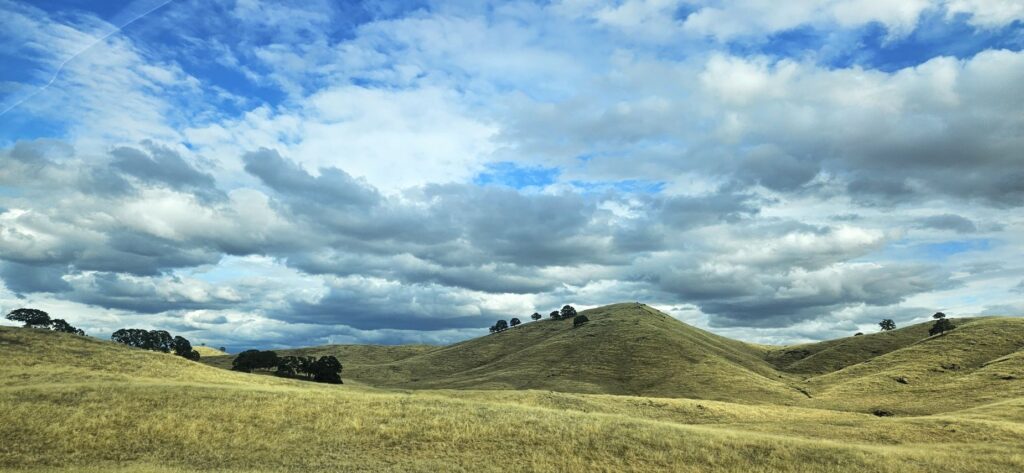
We spent nine days in Coarsegold, California, where we visited our dentist, our storage building and familiar places around our old hometown of Mariposa.
Foothills of Mariposa County
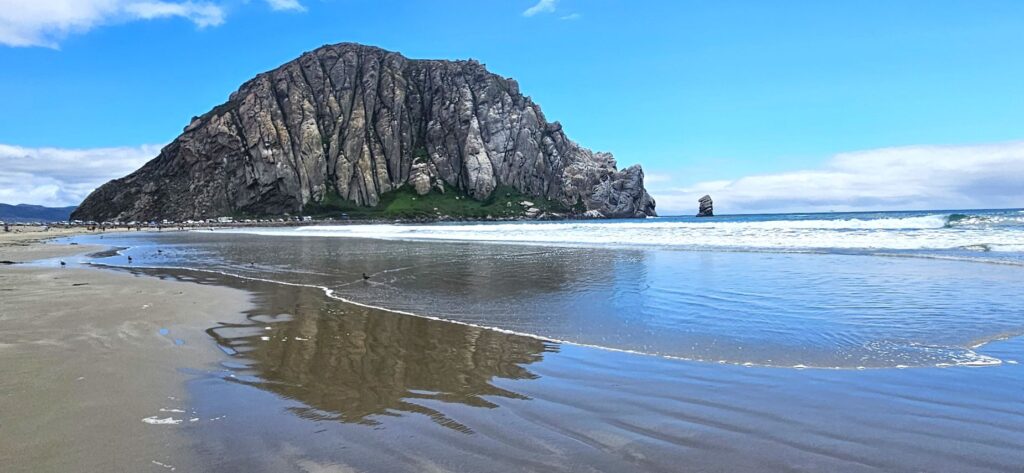
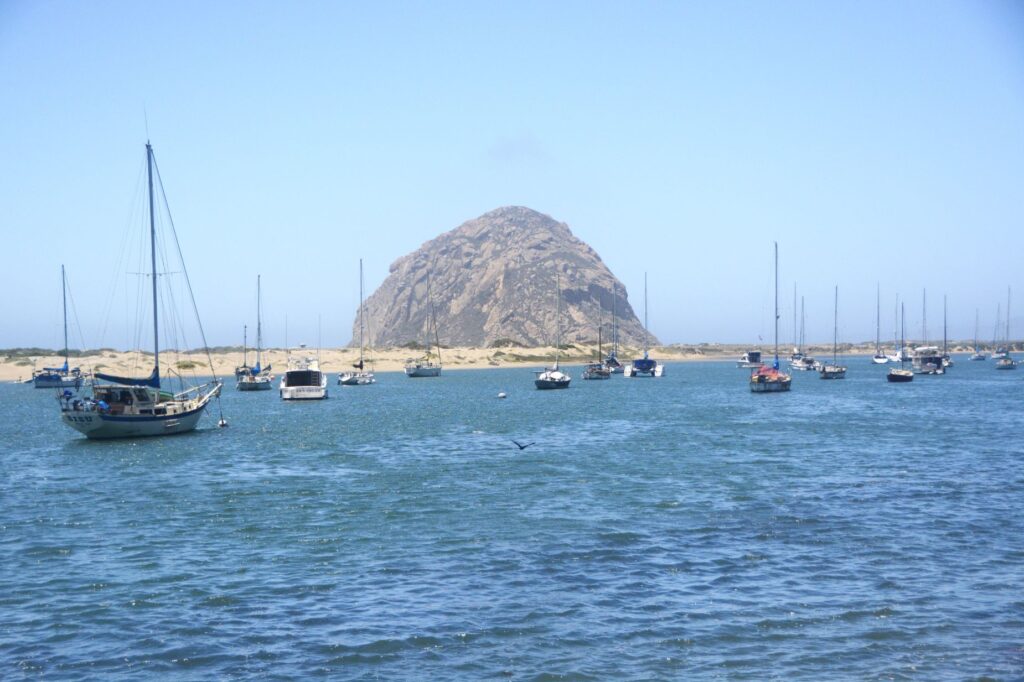
I was excited to stay in Morro Bay, California, for three days between campgrounds. We enjoyed walks on the beach, eating at Dorn’s Breakers overlooking the bay, and visits from family members who also enjoy the beauty of Morro Bay.
Morro Rock is an iconic landmark of Morro Bay, California.View of Morro Rock looking across Morro Bay harbor.
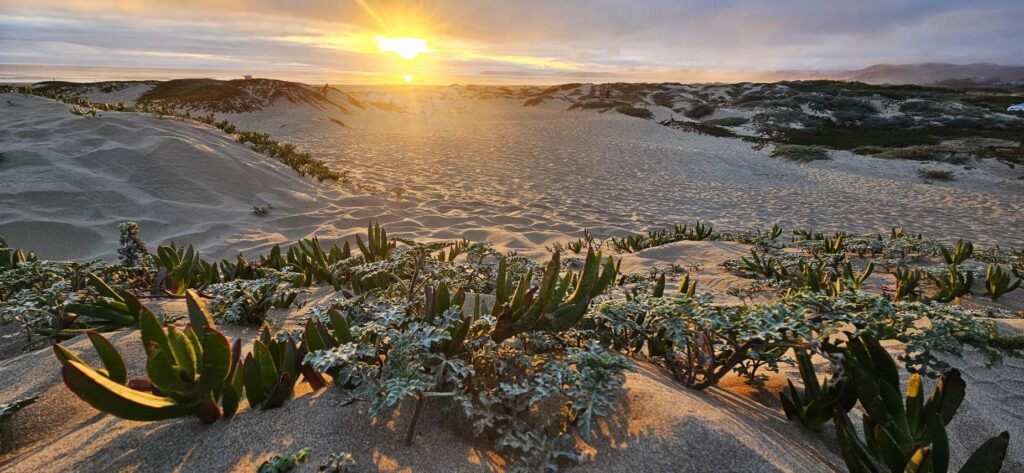
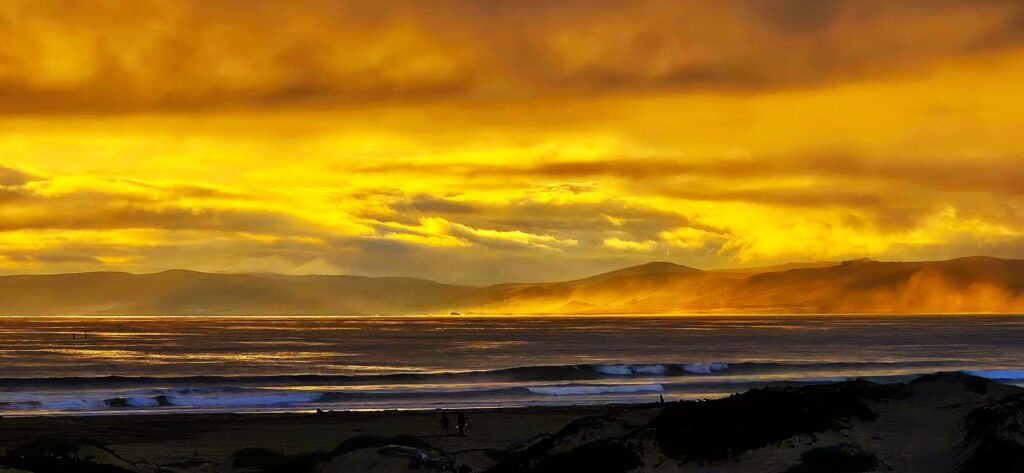
On our last evening there, I walked across the road from our campground to watch the sunset one last time.
Looking across the ocean to Cayucos and beyond from the beach at Morro Bay.
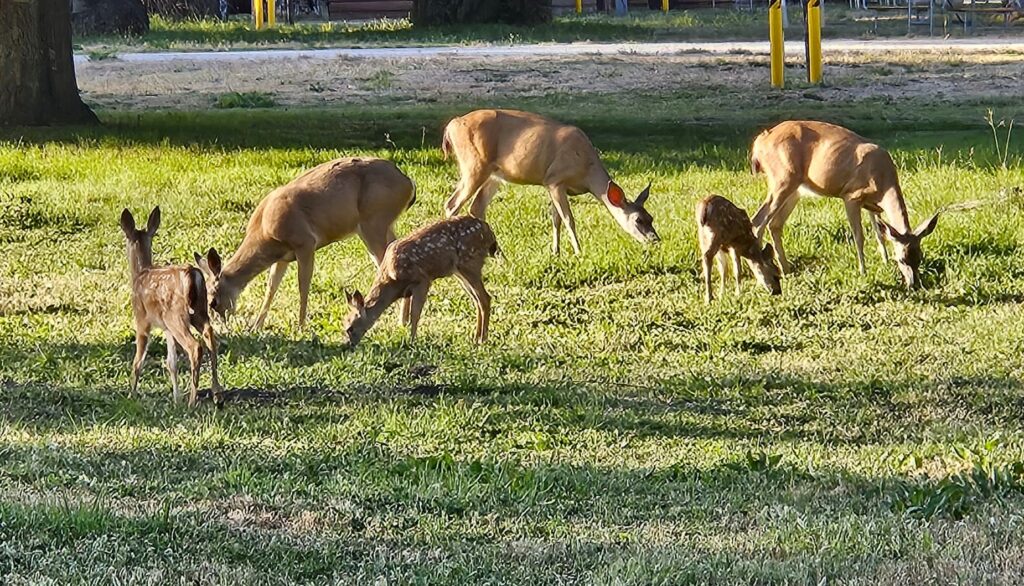
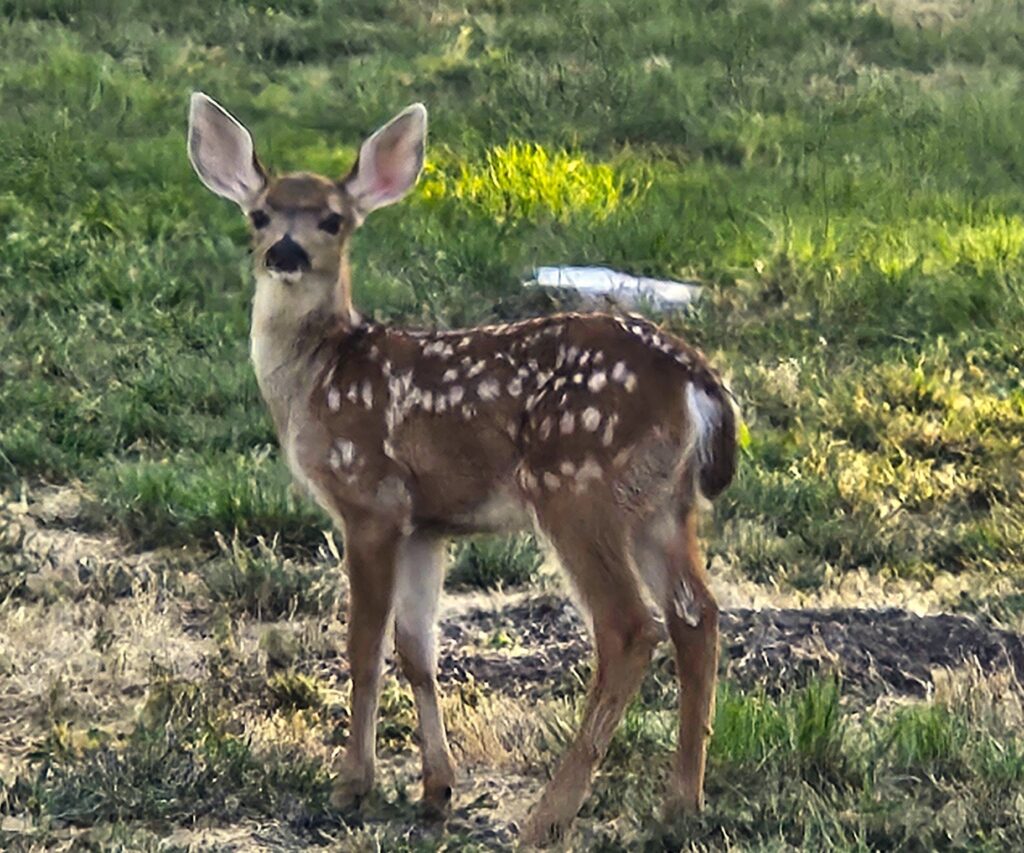
Our next stop was Paicines, south of Hollister, California. This campground is a preserve, so there’s always plenty of wildlife around. We got to see some brand-new baby deer.
One of the new babies at San Benito Campground in Paicines, CA.
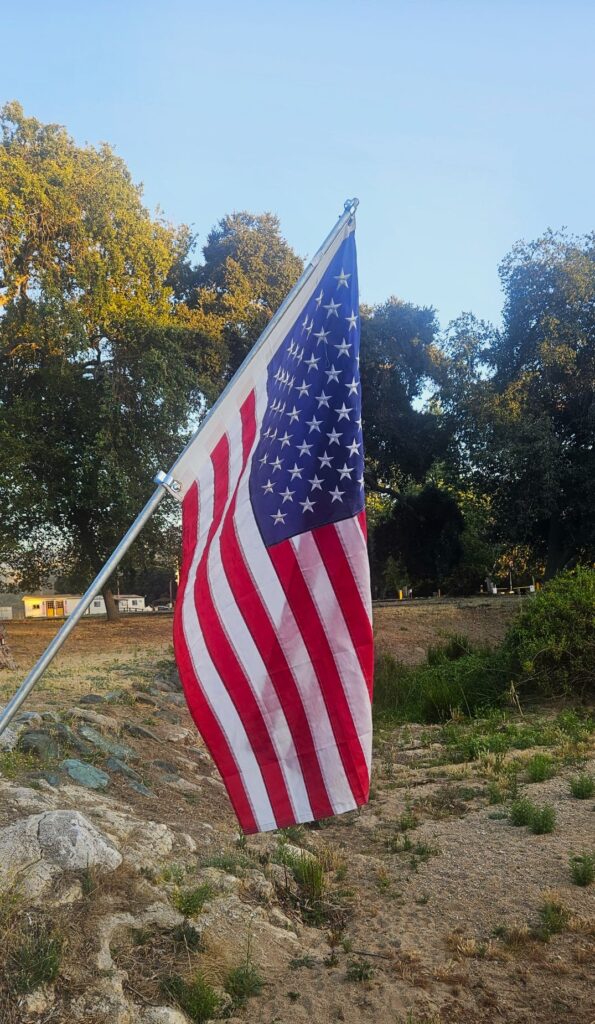
While we were there, we celebrated our nation’s 250 birthday. Happy Birthday, America!
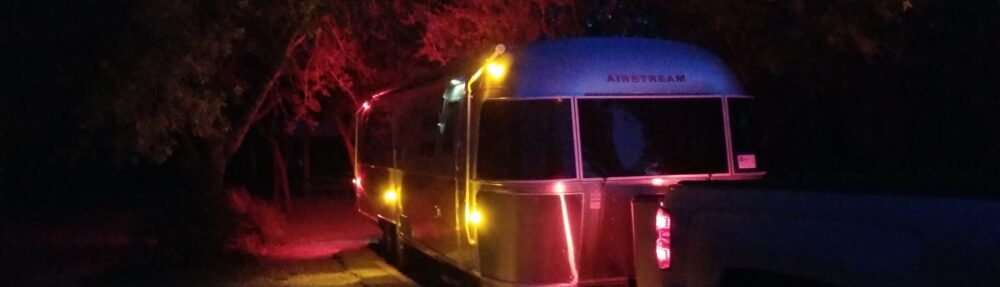
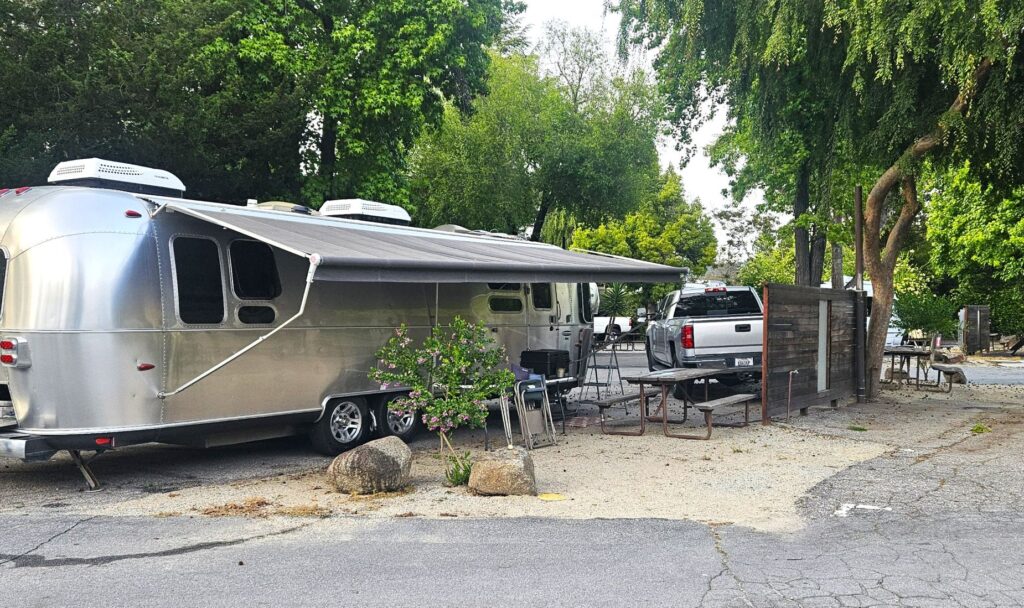
This season of travel was centered around California because of medical appointments in California. However, at this point, we decided we wanted to sell our Airstream trailer and buy a new Arctic Fox trailer. The trailer was being held for us in Portland, Oregon. So, our next travels were going to be a fast trip up to Oregon and back.
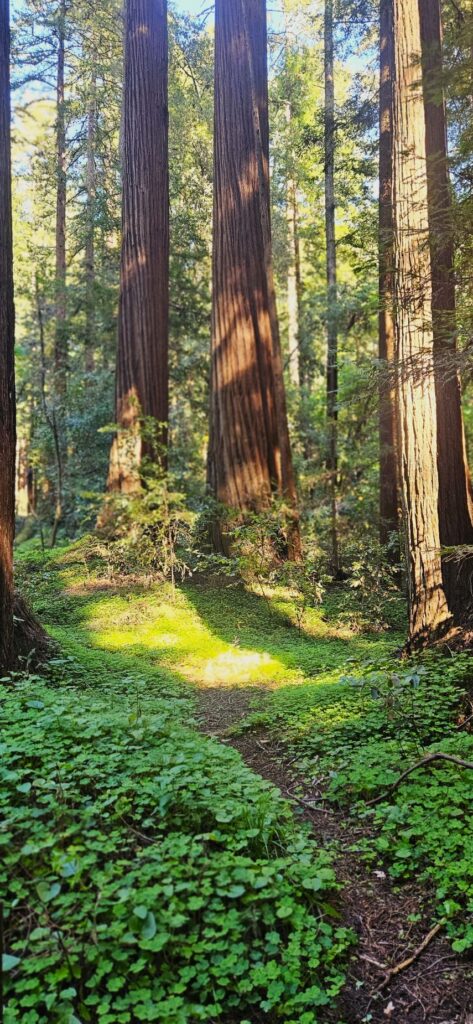
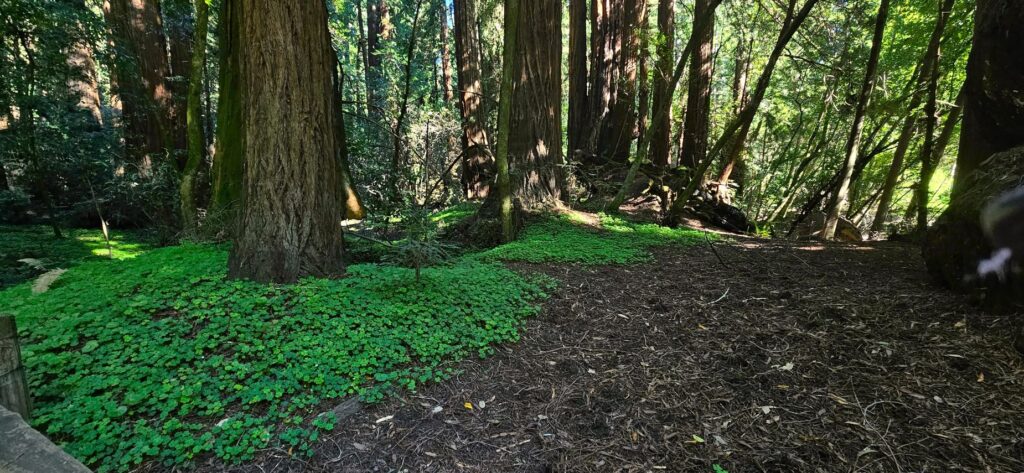
In the spring of 2026, we stayed in Santa Cruz Ranch Campground in Scotts Valley, California, for the first time. It’s a smaller campground than we’re used to, tucked away in the redwoods but within the city limits. I really like trying new places even though this one was rather tight quarters.
Santa Cruz Ranch Campground
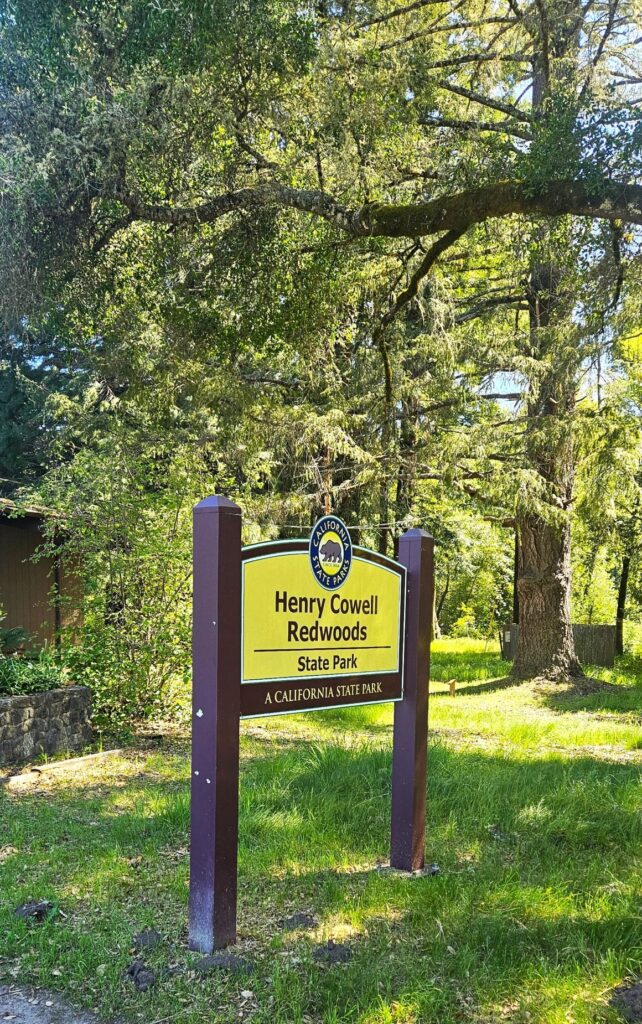
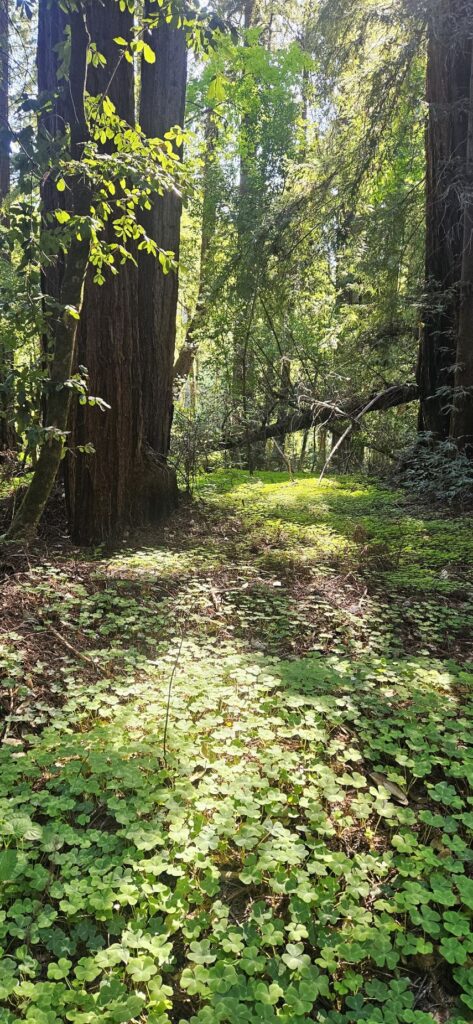
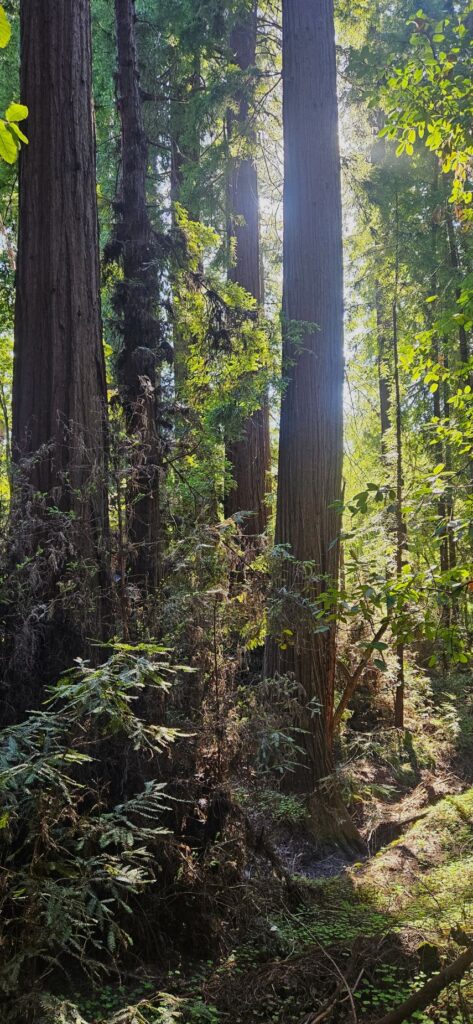
Nearby in Felton, CA, is Henry Cowell Redwoods State Park where we visited one late afternoon. There are several redwood state parks scattered along the northern coastline. Redwoods thrive in the coastal foggy climate.
The Henry Cowell Redwoods State Park is over 4,000 acres. The redwoods cover approximately 40 acres.
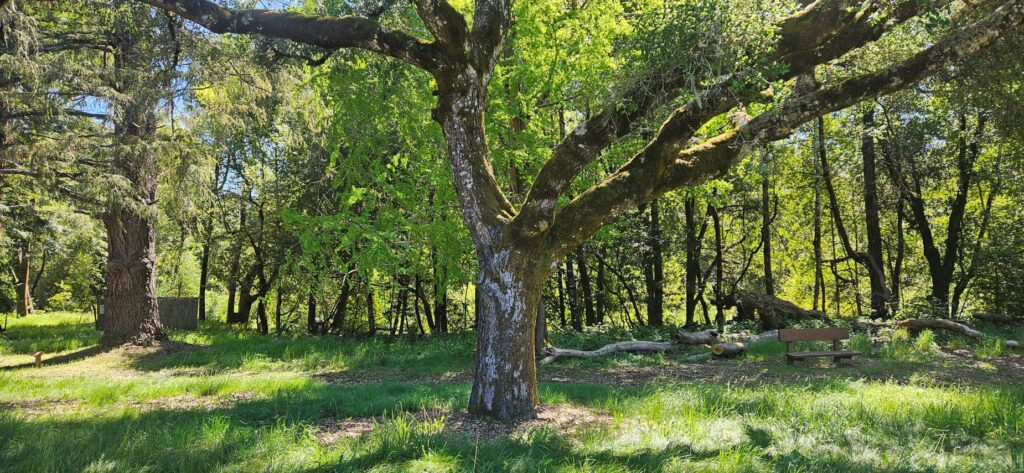
Oak trees by the entrance of Henry Cowell Redwoods State Park.
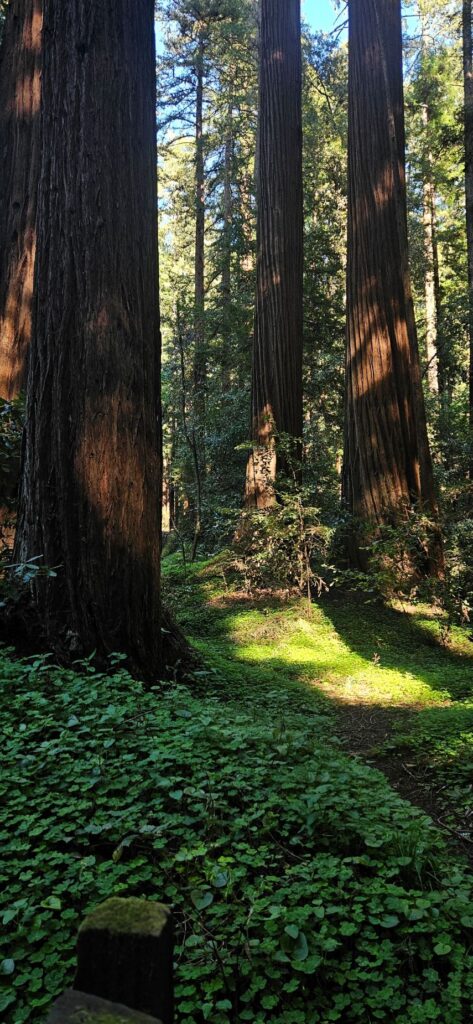
We stopped at the visitor center first before walking the 0.8 mile Redwood Grove Loop Trail. The late afternoon was the perfect time for a nature walk.
Redwood Grove Loop Trail
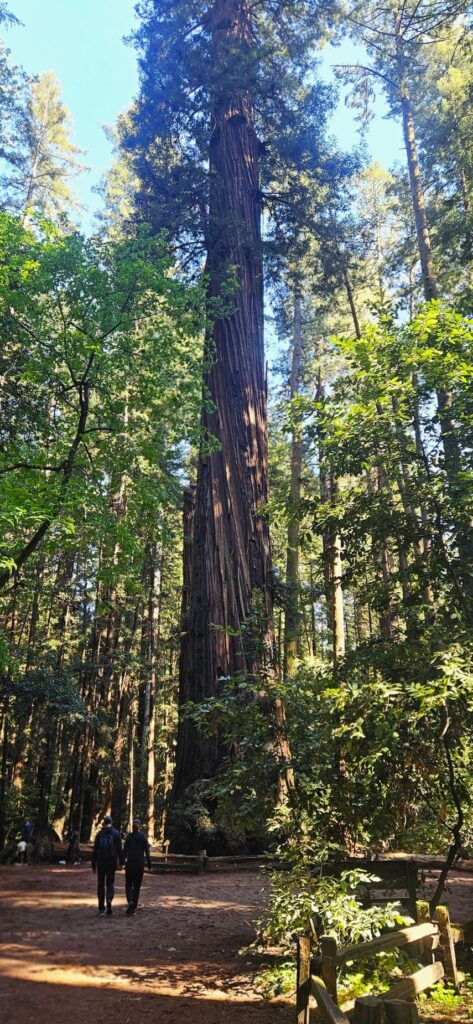
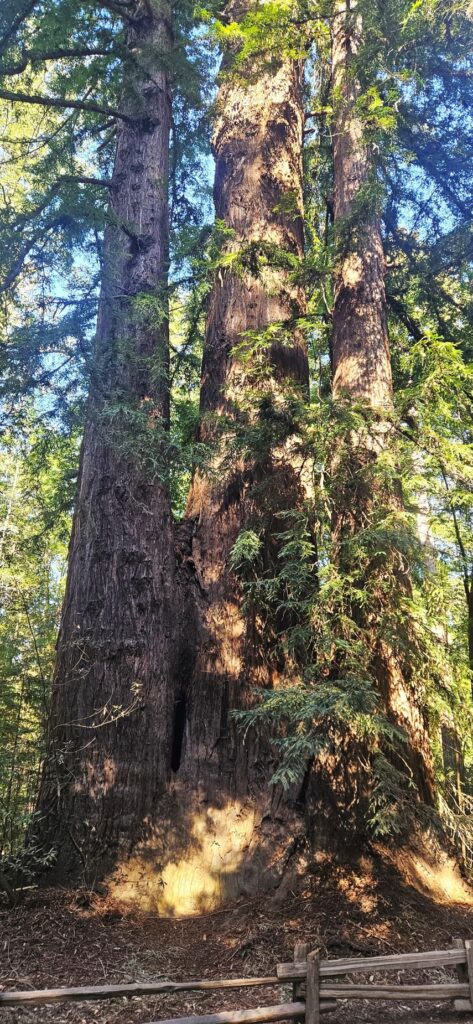
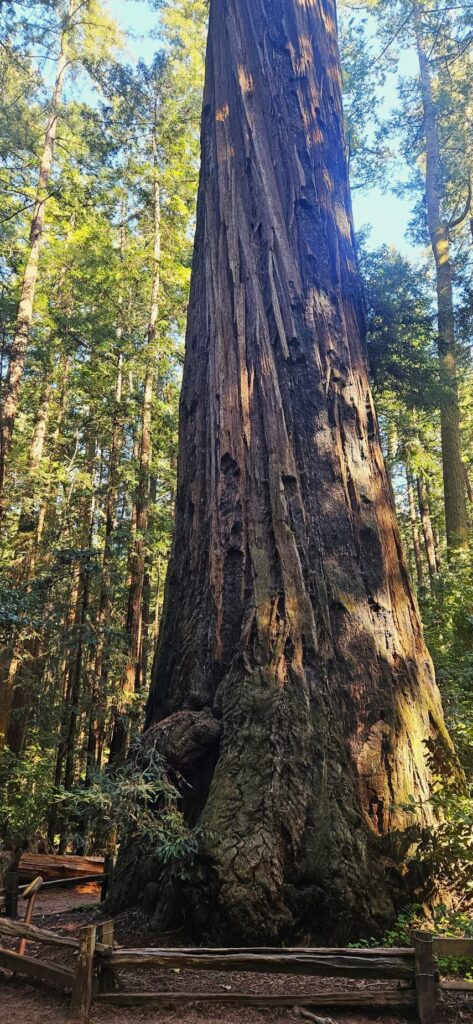
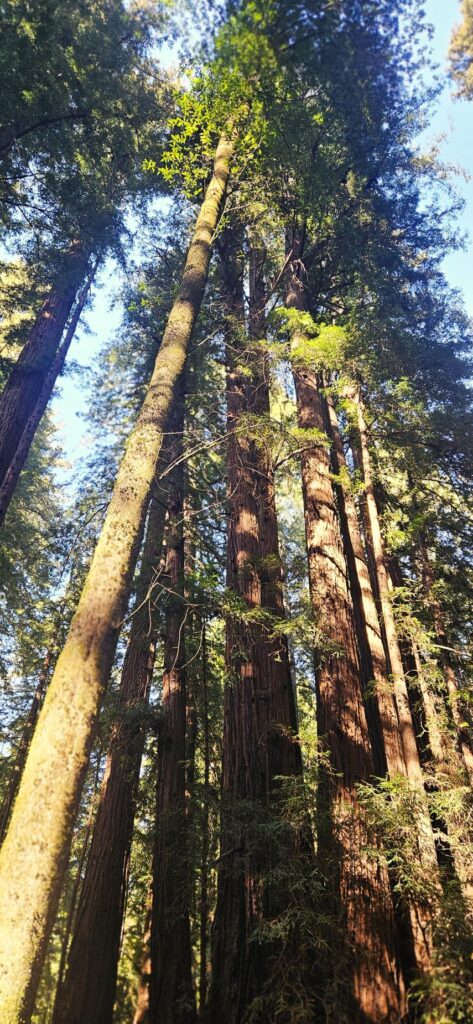
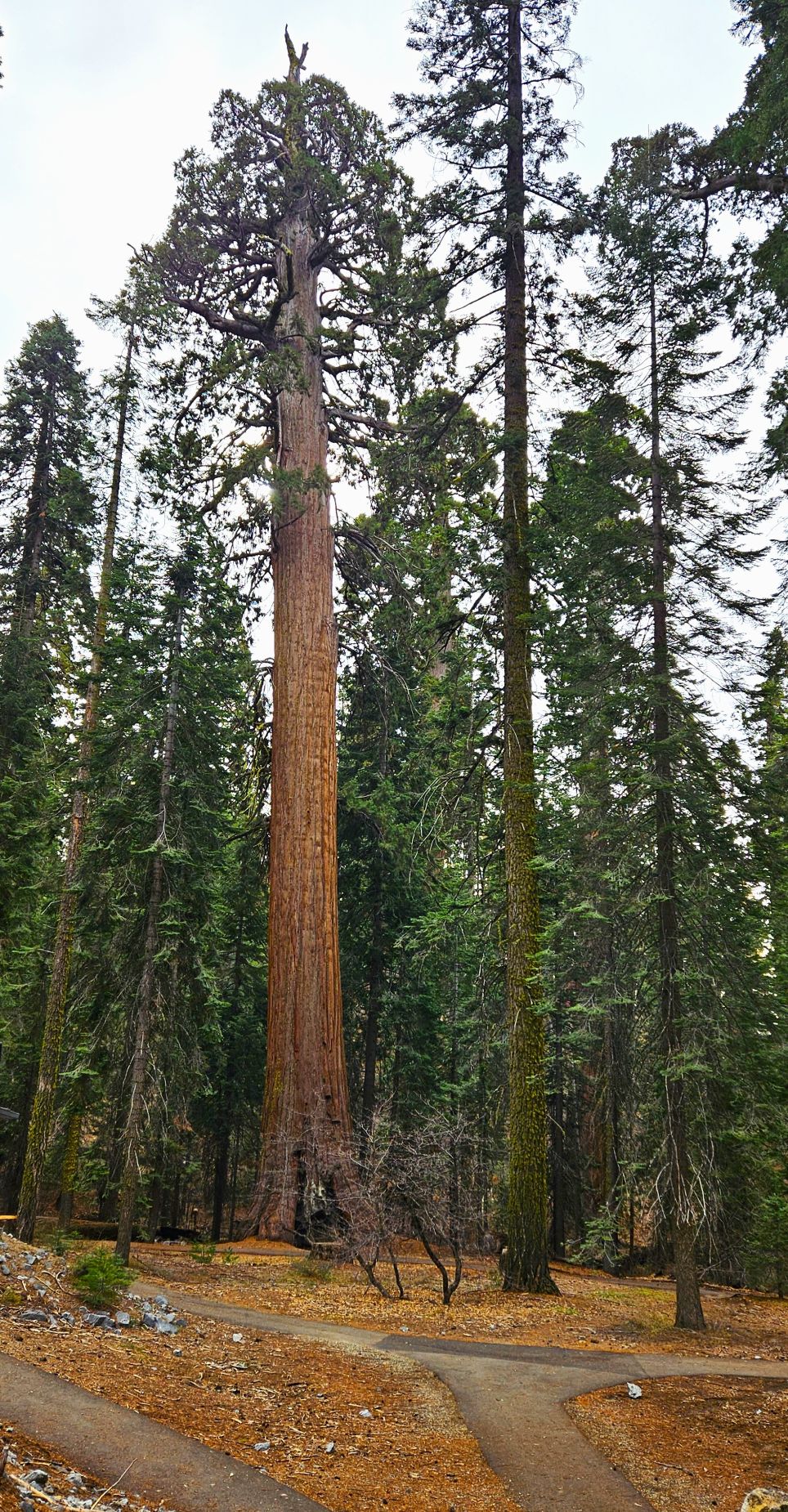
This trail highlights a grove of redwood trees estimated to be anywhere from 1,400 to 1,800 years old.
A Redwood tree may use up to 500 gallons of water a day. Forty percent of that water can be absorbed from coastal fog.
The largest tree in the park is roughly 277 feet tall and estimated to be 1,500 years old.
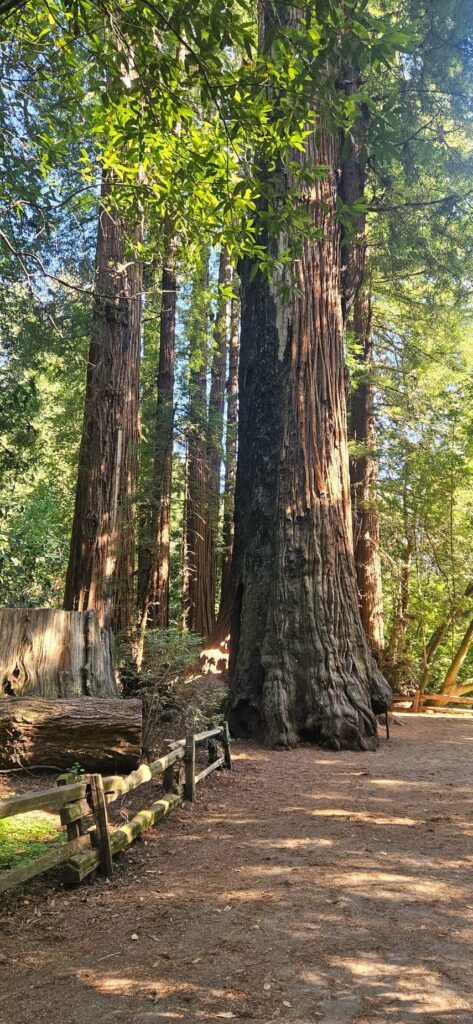
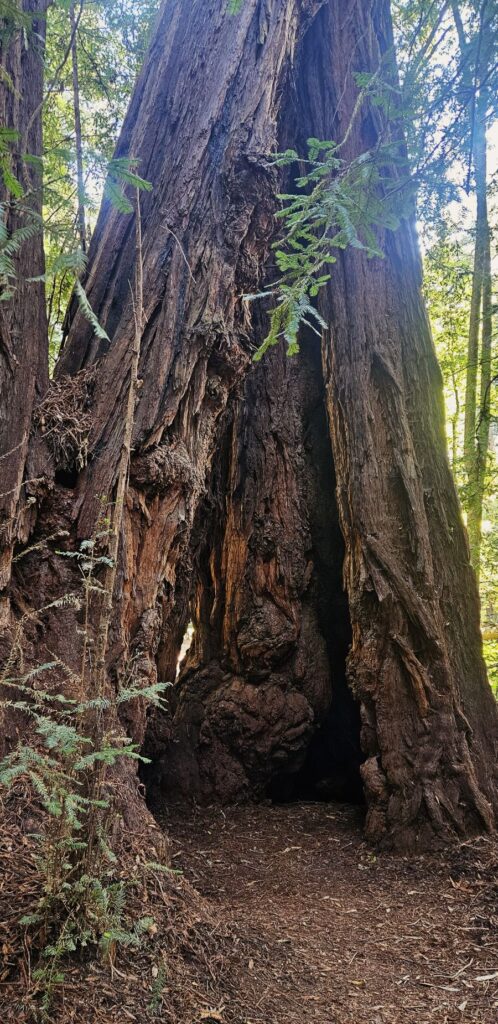
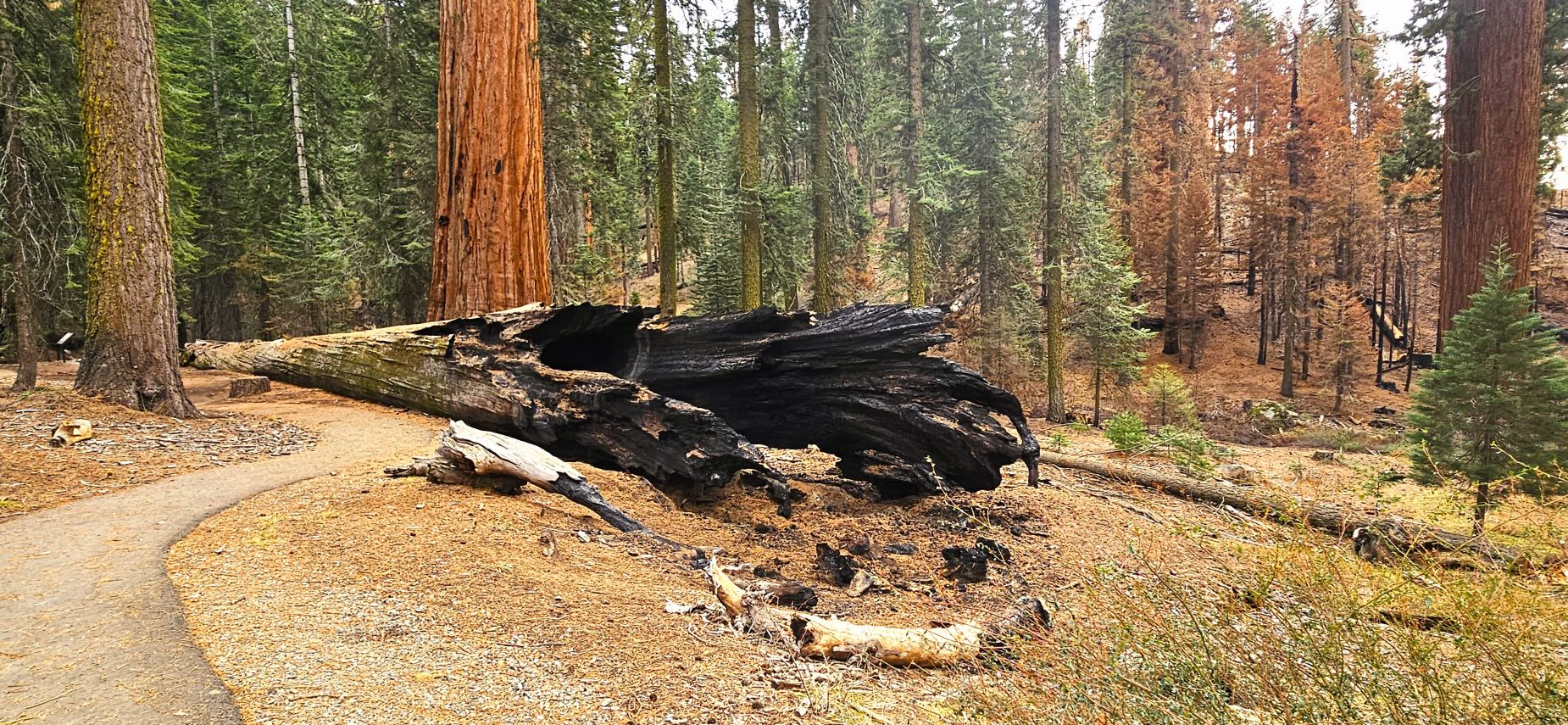
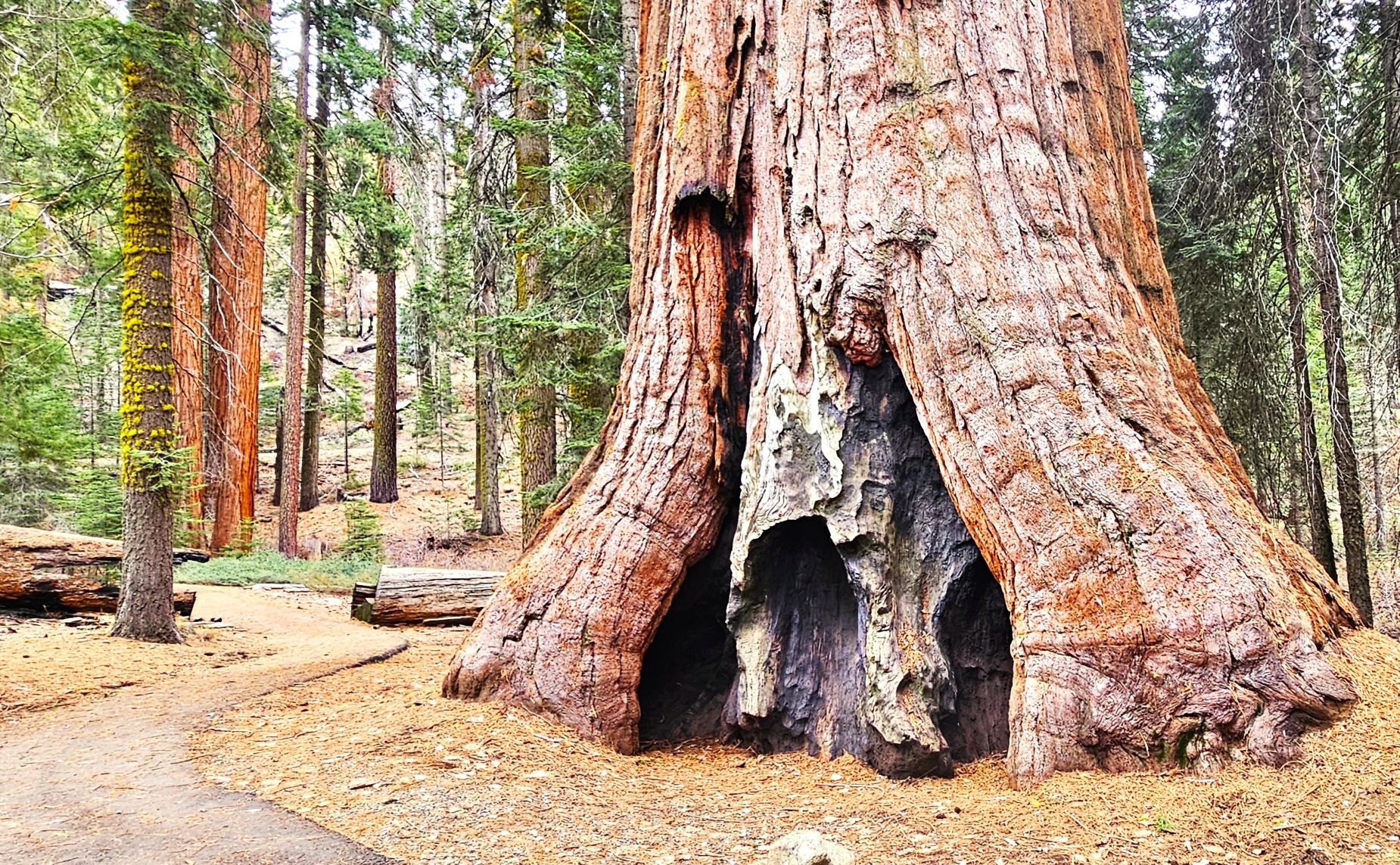
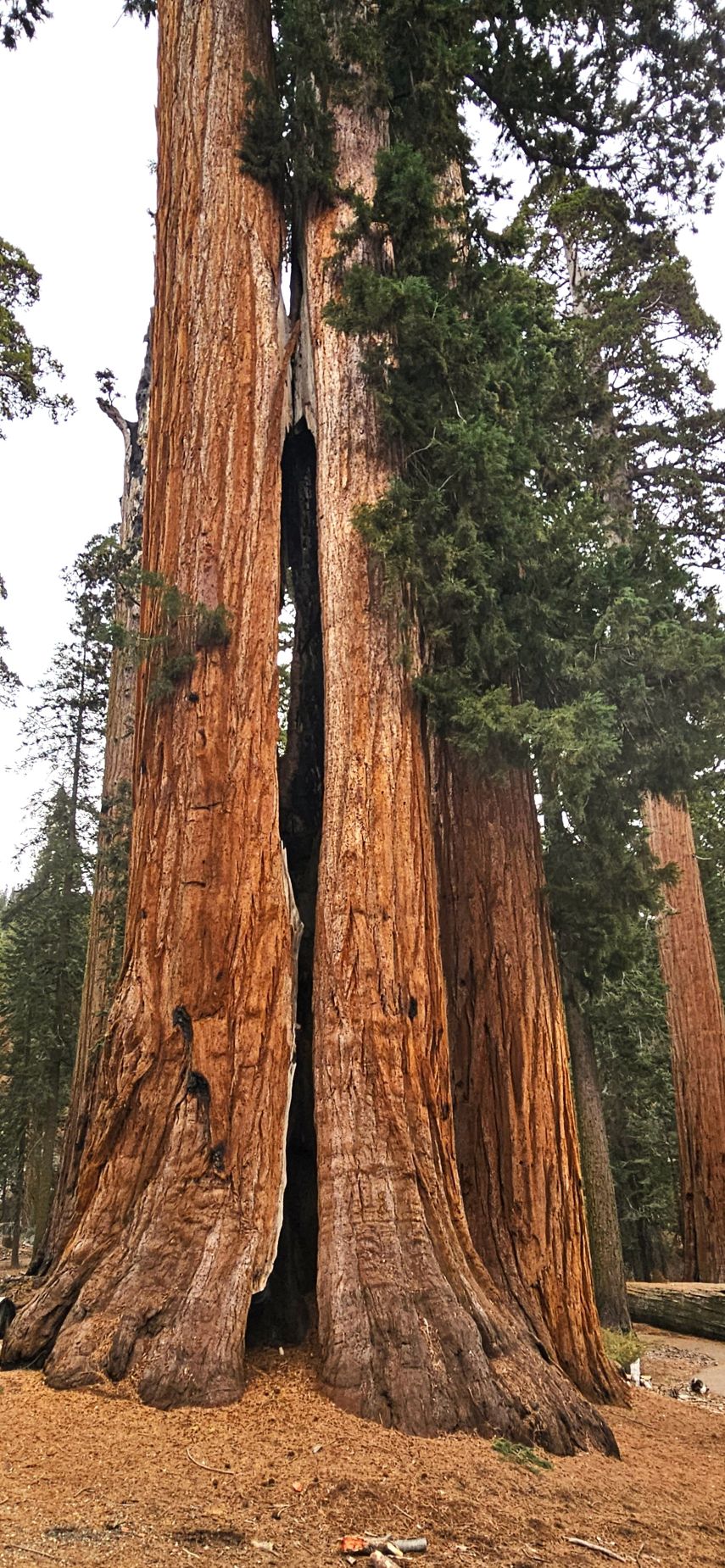
During our walk, we explored the inside of this massive tree. Redwoods are surprisingly resistant to fire damage. The layer of bark that transports water and nutrients to the tree is only a couple of cells thick and lies just beneath the bark. For this reason, the trees can withstand having their centers burned out, yet the tree itself continues to live and grow.
The late afternoon sun made for a beautiful walk through the grove of trees.
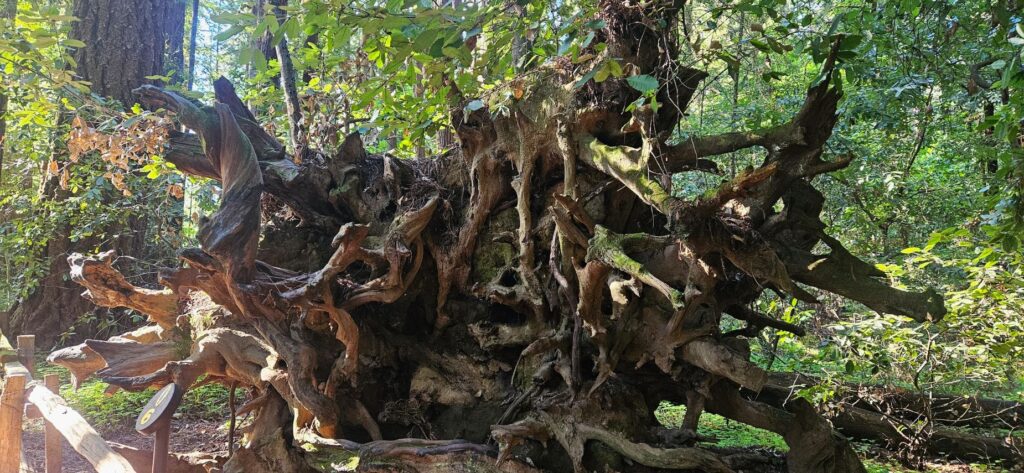
The redwood trees have shallow root systems that pull hundreds of gallons of water daily. They also absorb water through their specialized leaves that act like sponges. A single large tree may absorb up to 14 gallons of water from the air in just an hour.
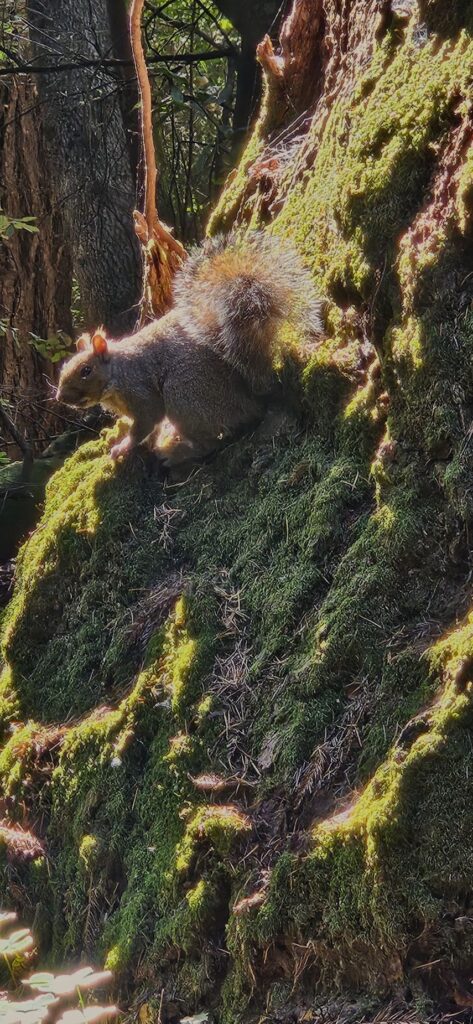
This tree squirrel didn’t seem to mind us as we walked by. He remained motionless while I took his picture.
The red color of Redwoods comes from tannin which also acts as a natural flame retardant. The tannin also protects them from insects and disease.
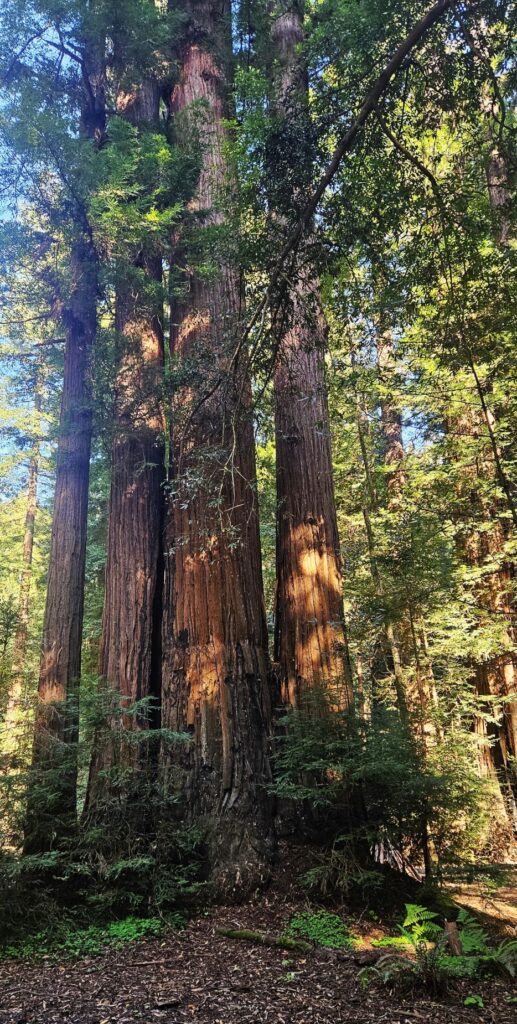
Woody growths at the tree’s base called “burls” are stimulated by fires. The trees can grow entirely new trunks from these burls. This is why you may see a ring or circle of trees which are called “fairy rings.”
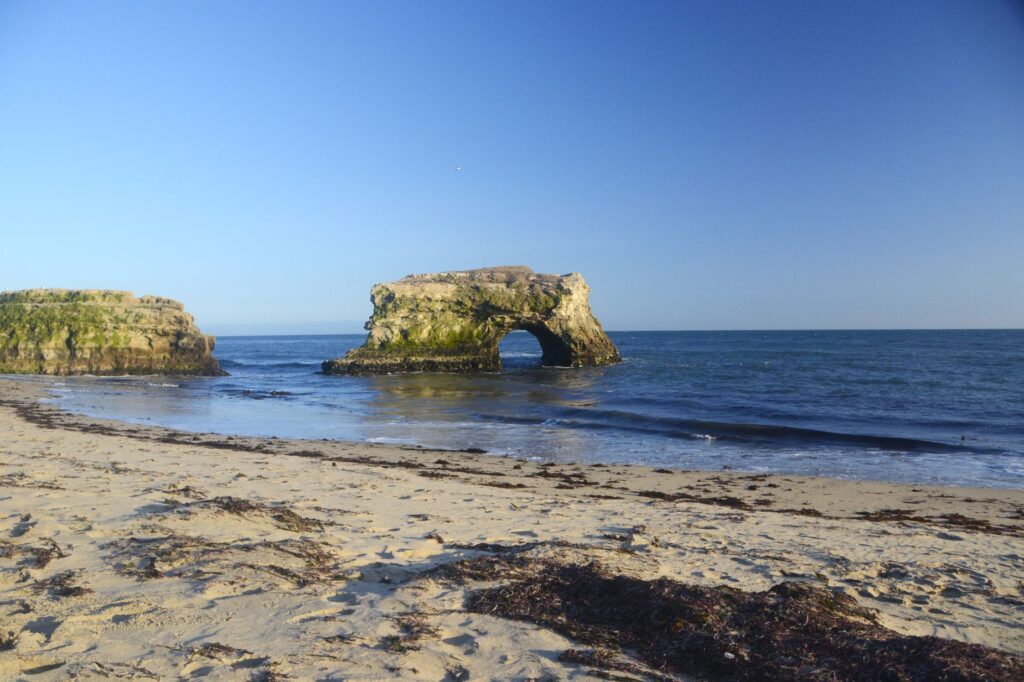
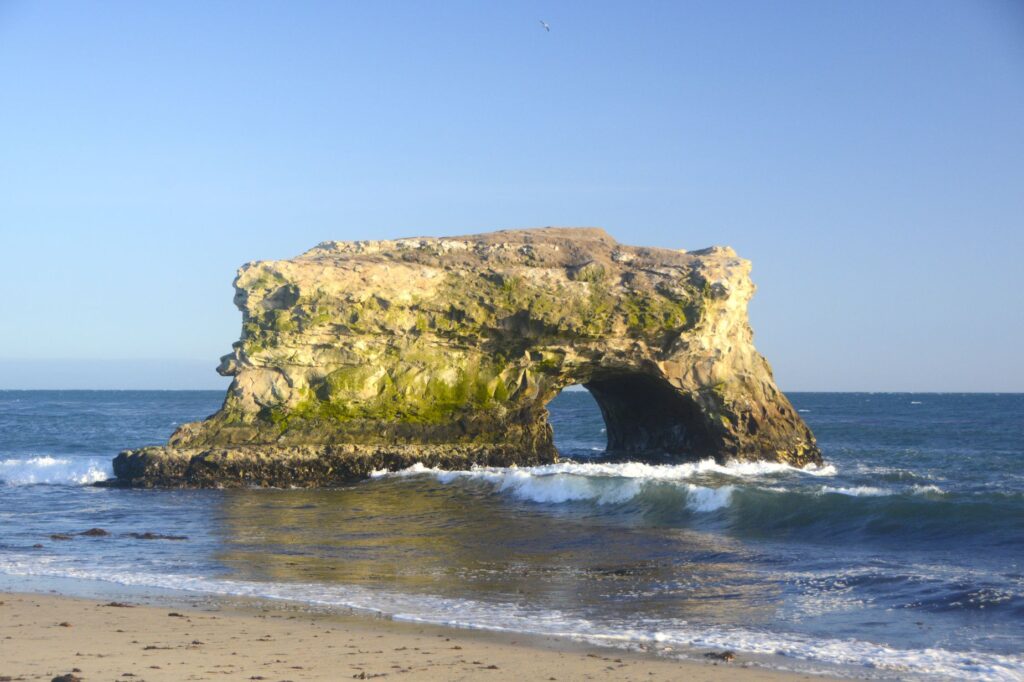
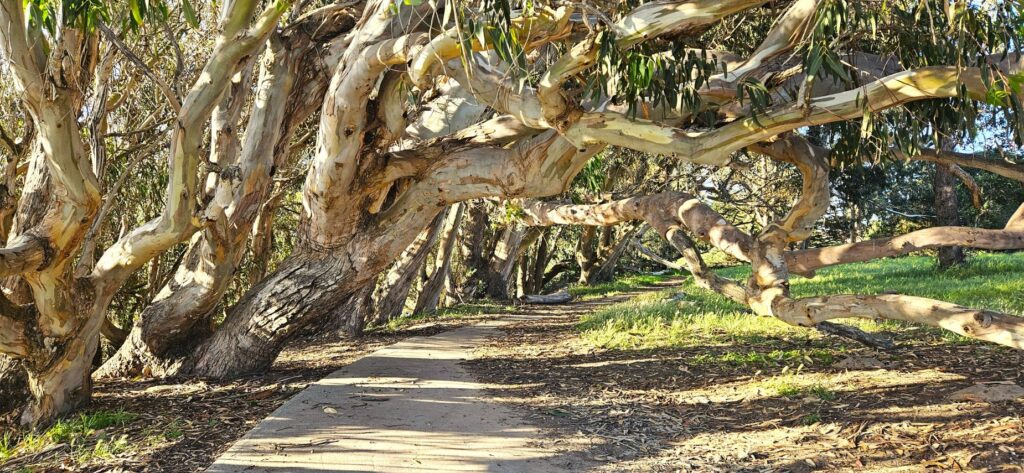
Another afternoon we took a drive to Natural Bridges State Beach. Located near the town of Santa Cruz, it is a 65-acre park with a natural bridge or sea arch on the beach and a eucalyptus grove which is home to thousands of butterflies during the months of October through early February.
The natural bridges were formed from mudstone. The mudstone, jutting out into the ocean was eroded by wind and sea.
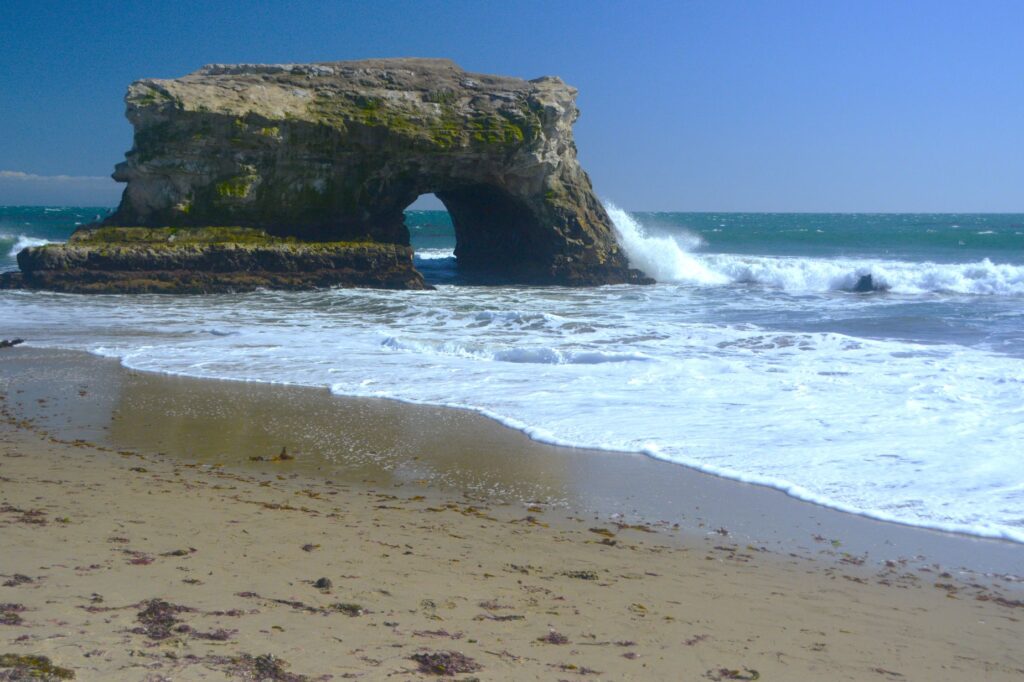
There were originally three arches. The outermost one collapsed around 1905. The inner arch (connecting these two rocks) collapsed during a storm in 1980. What is left today is the middle arch.
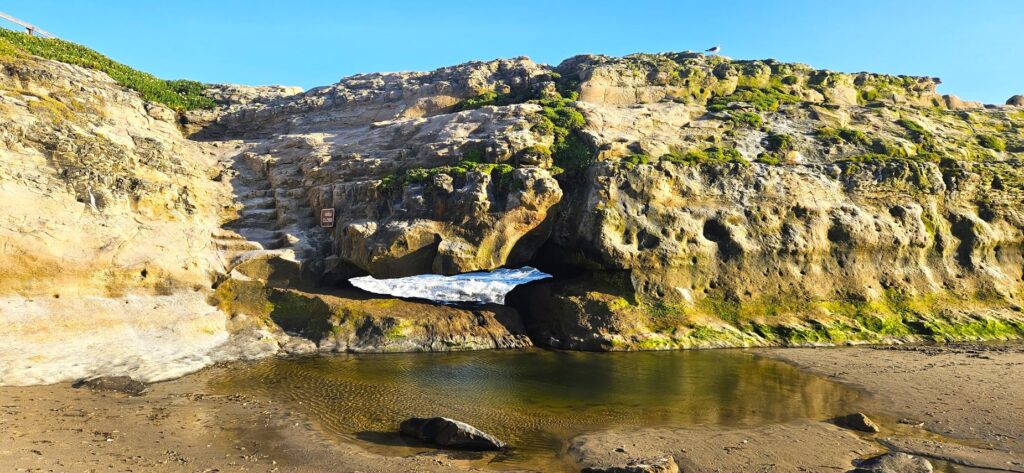
There’s also this hole in the rock here which, I guess, is not considered an arch.
The middle arch was once connected to the land by the inner arch which is now washed away.
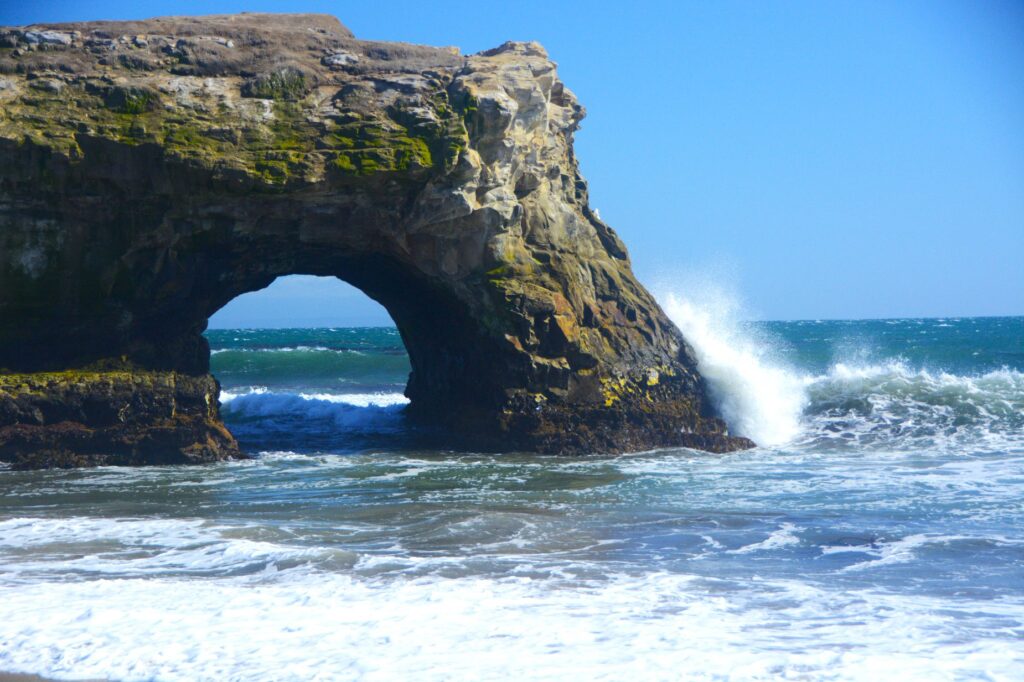
Someday this arch probably will collapse into the ocean like the others. Just look at how the waves beat against it!
Around 150,000 butterflies migrate 2,000 miles to Natural Bridges State park during the winter months from as faraway as Canada. At Natural Bridges State Beach they find shelter, food and water in the eucalyptus trees. The butterflies form clusters by intertwining their legs among the branches to protect each other from winter winds and rains.
We didn’t get to see any butterflies when we were there, but perhaps we will in the future.
“Mightier than the thunders of many waters, mightier than the waves of the sea, the Lord on high is mighty! Psalm 93:4″
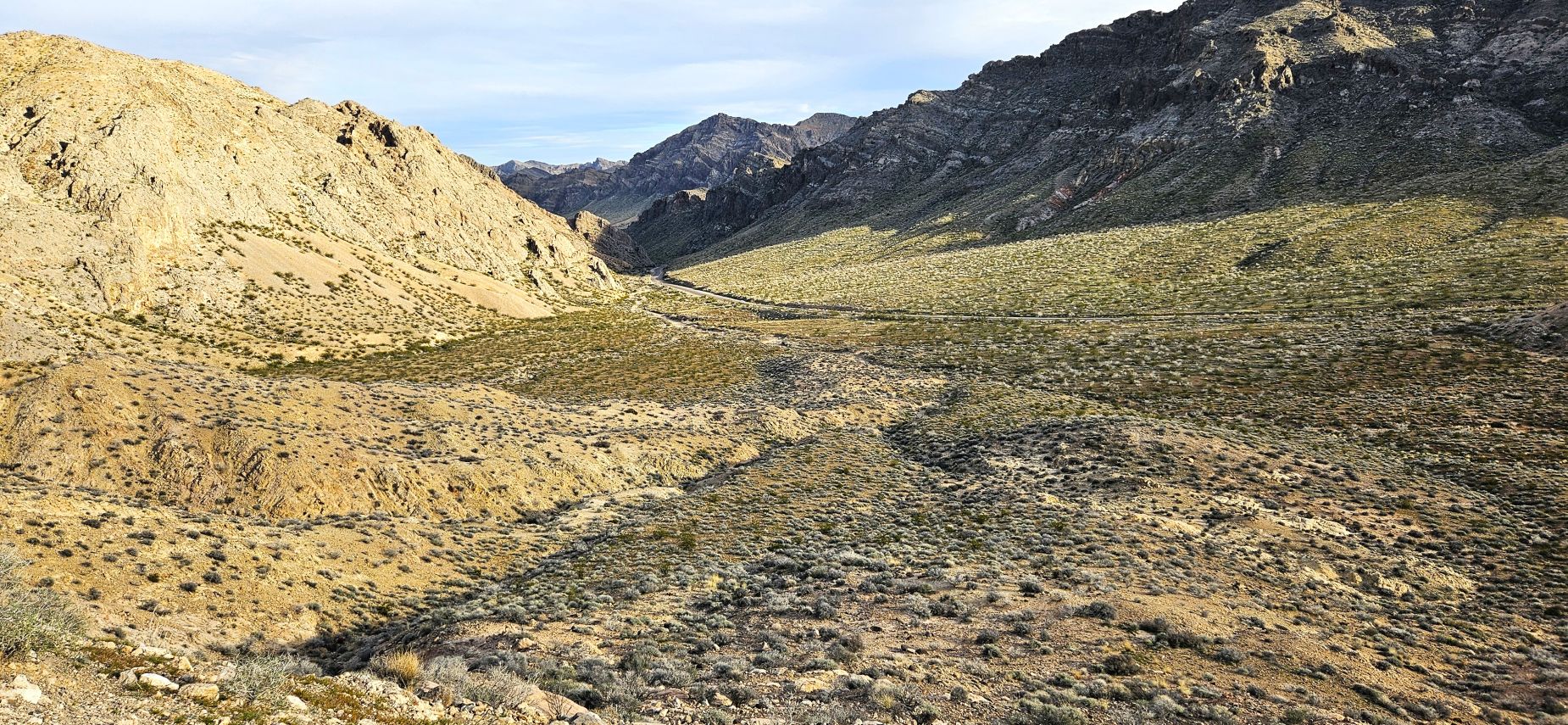
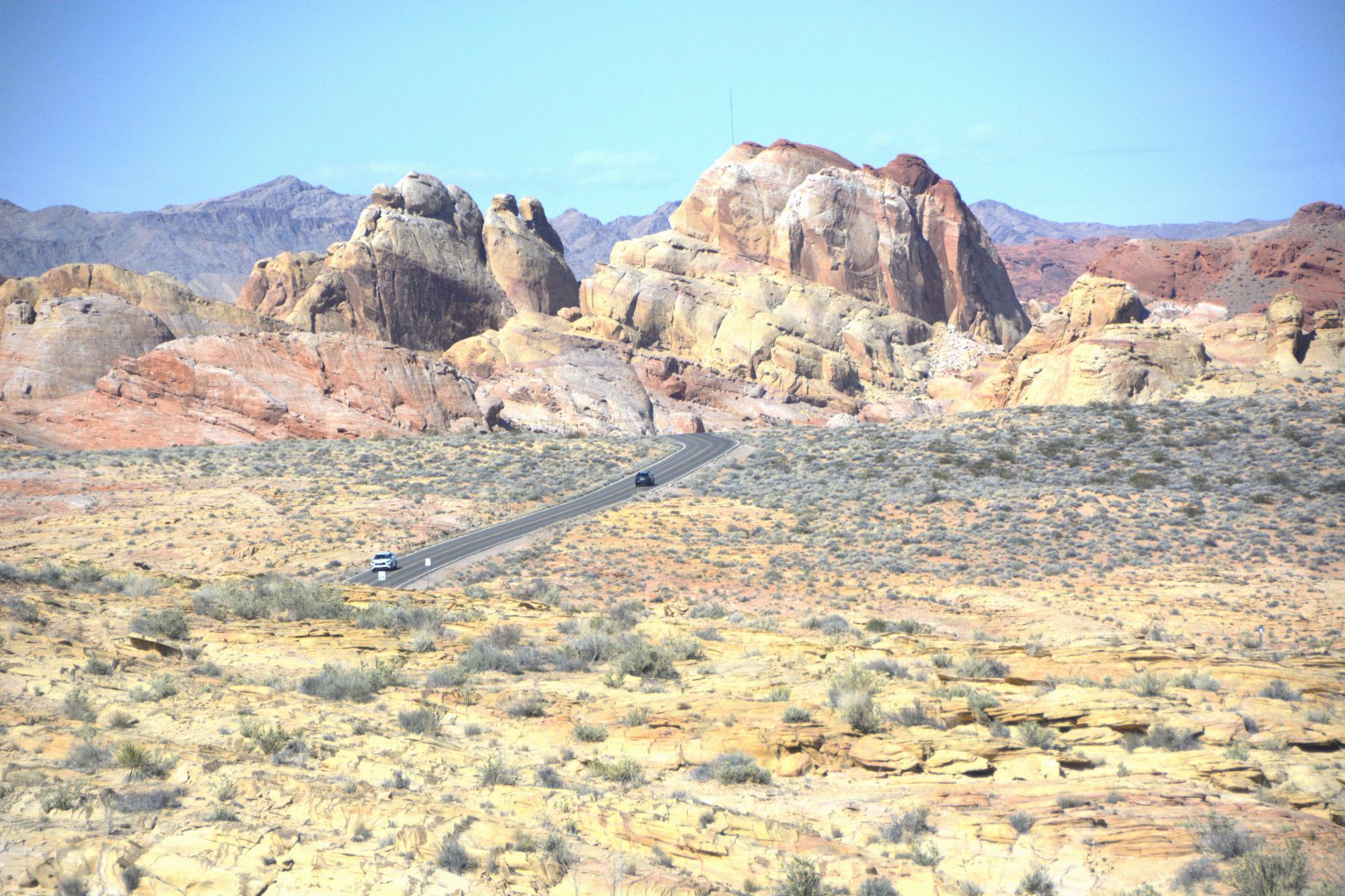
While staying in Pahrump, Nevada, we took a day trip to Valley of Fire State Park. The road into the park was very scenic, but it was quite some time before we saw red rocks.
The road on the way to Valley of Fire State Park
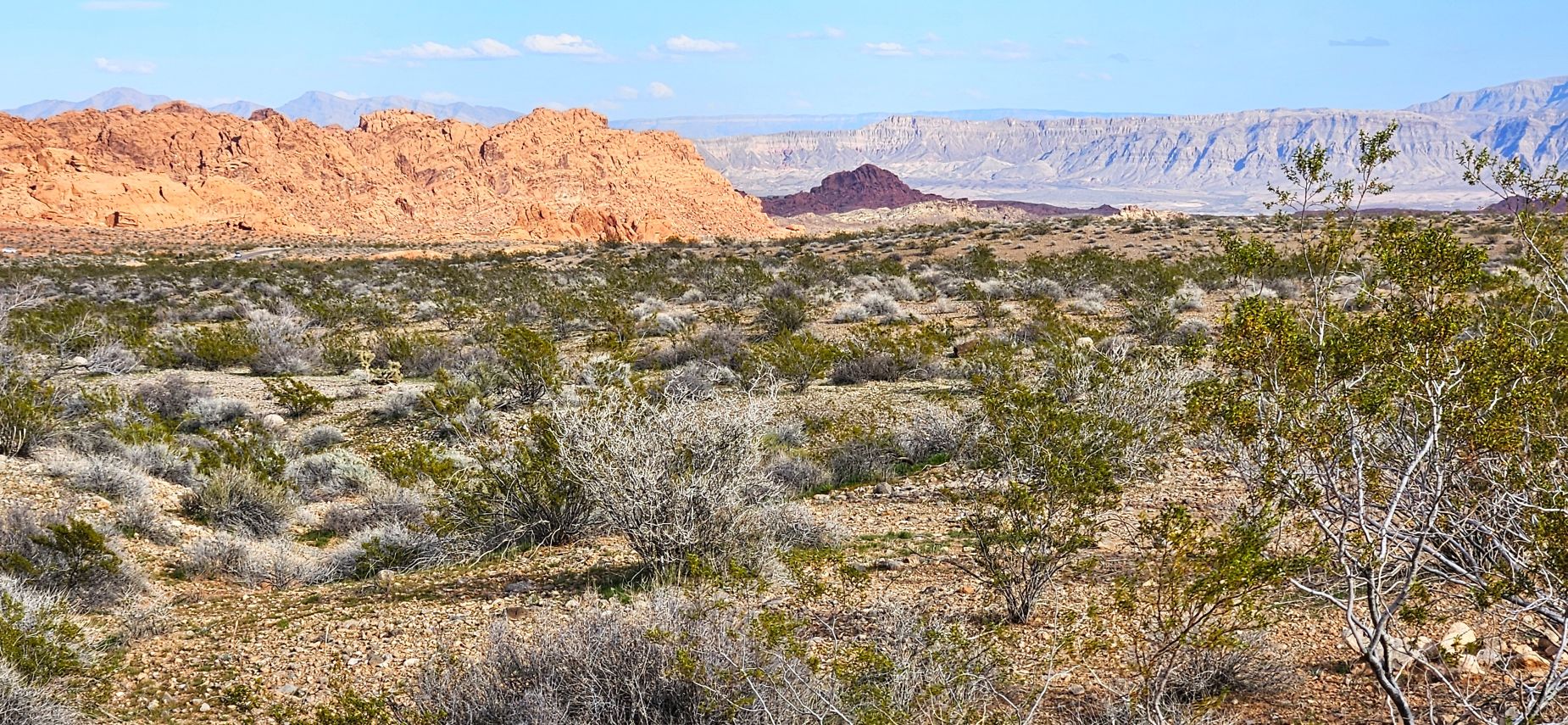
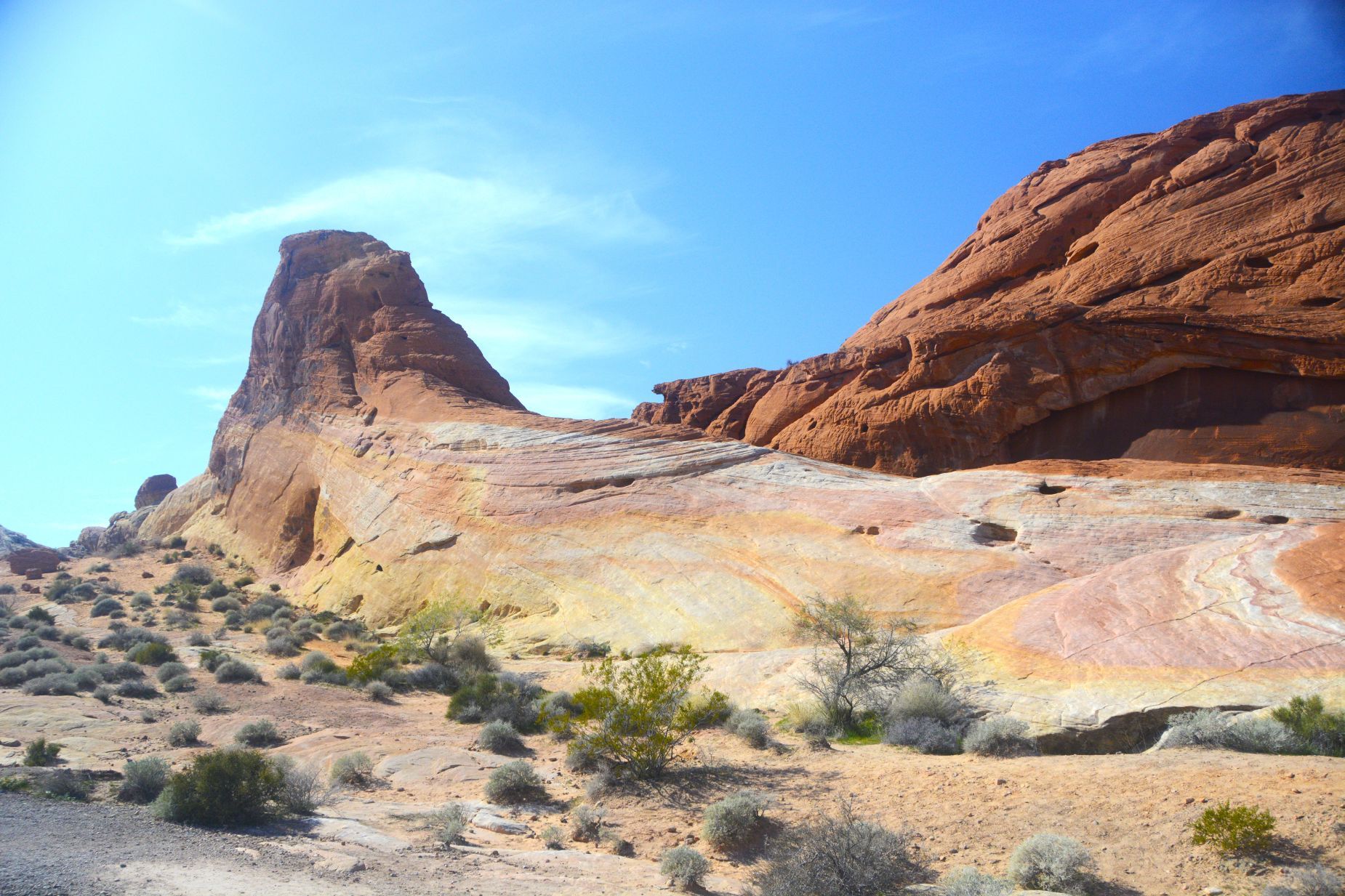
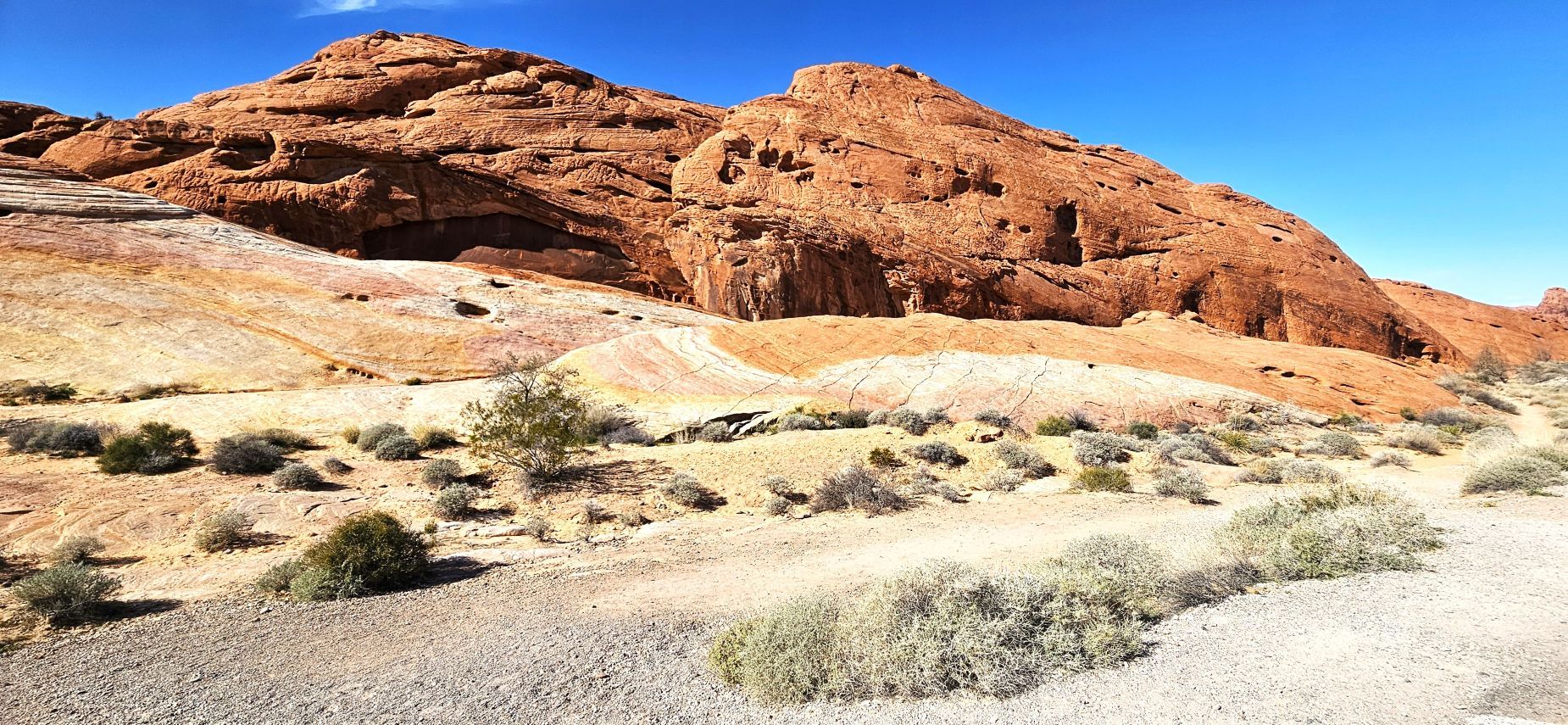
The red rocks come in varying shades of red: red, redder and really red.
Really red rocks in the distance against the lighter red rocks in the foreground.
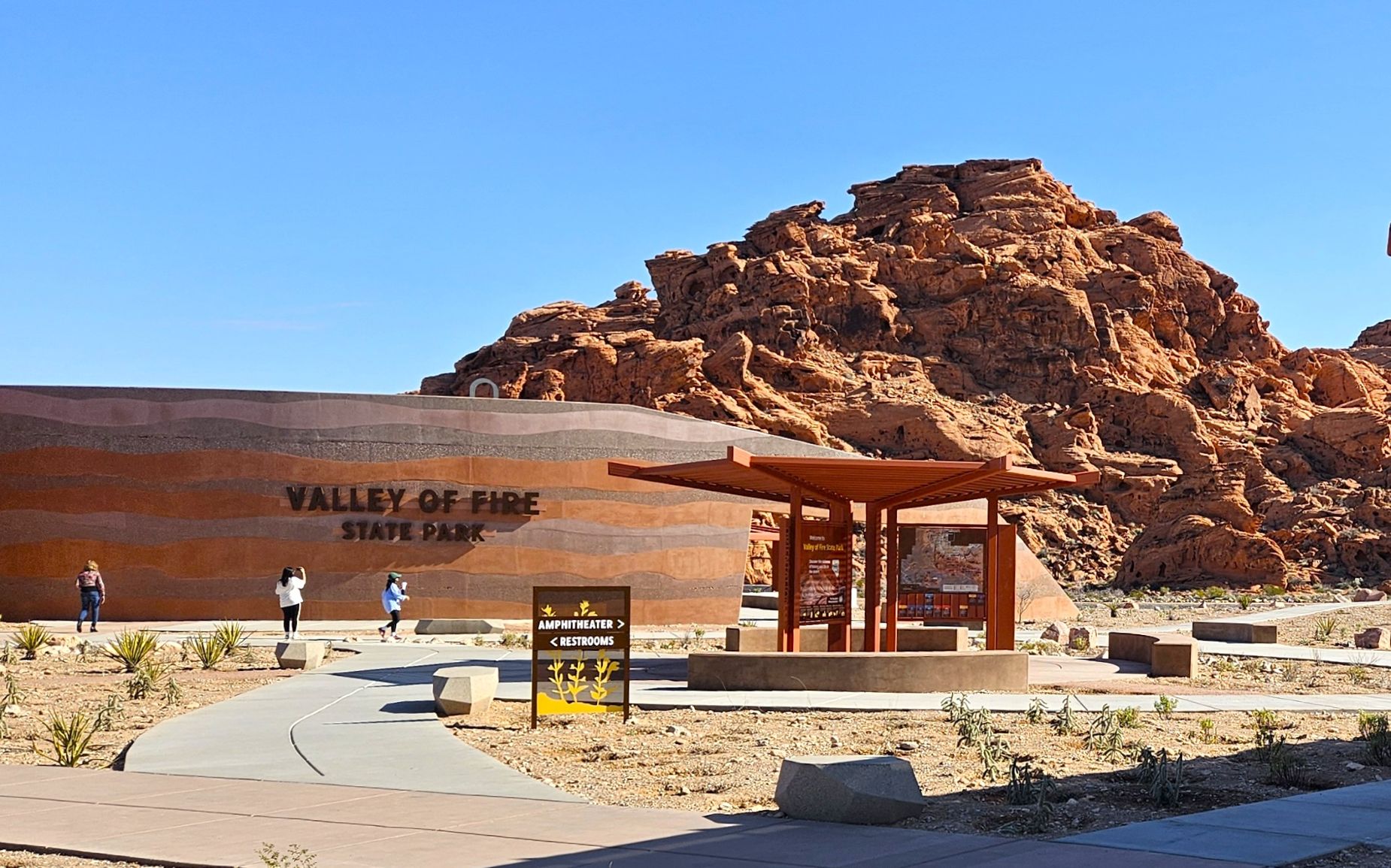
We entered the park through the west entrance. The new visitor center was fabulous with many interesting exhibits. Large windows looked out over the rocks behind the building.
Valley of Fire Visitor Center
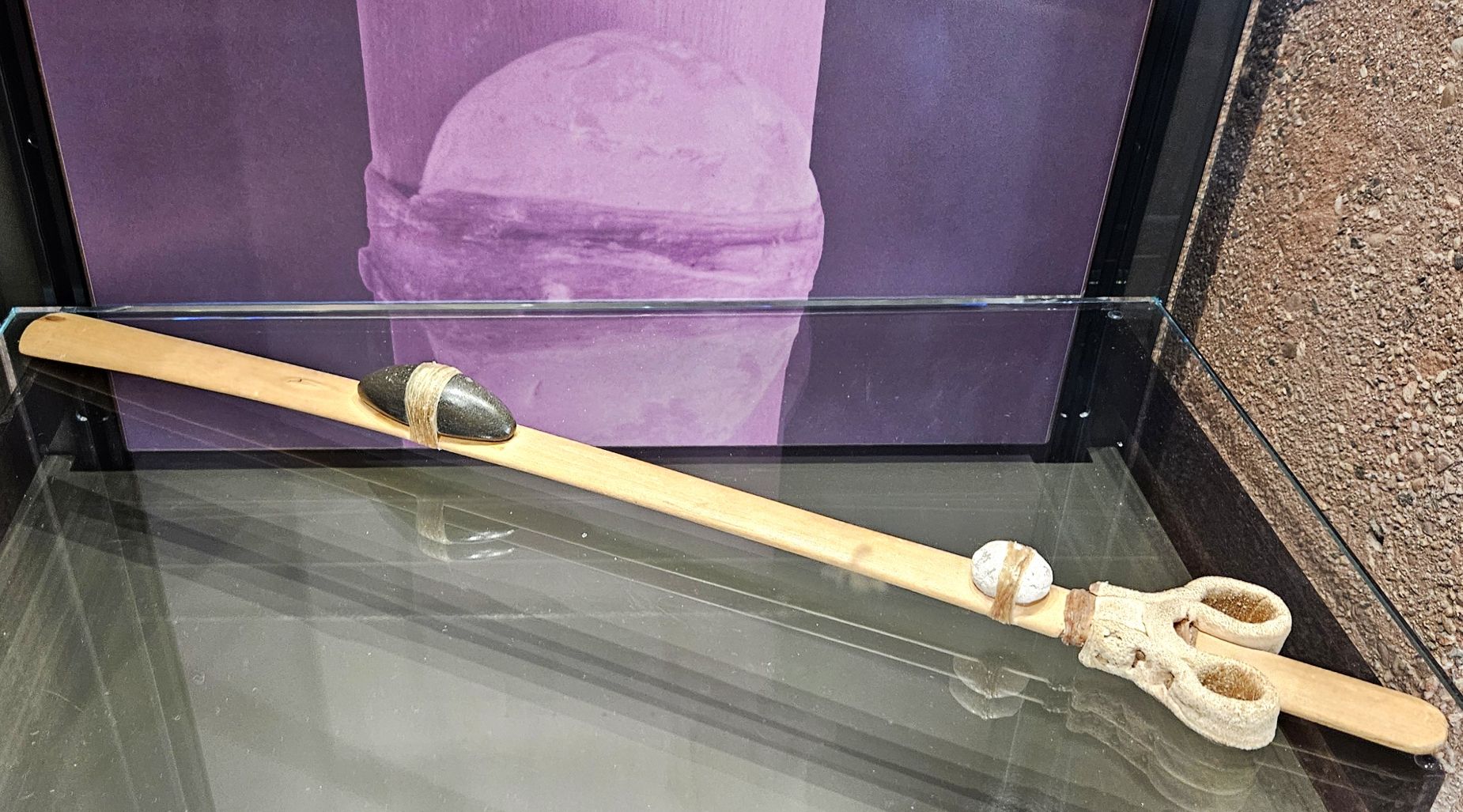
A facsimile of an atlatl (pronounced AT-lat-tuhl) was on display in the visitor center. It was used to hurl a spear or a dart. As a lever, it increased the velocity, force and distance. It was used for hunting long before the invention of the bow and arrow.
Indian Atlatl
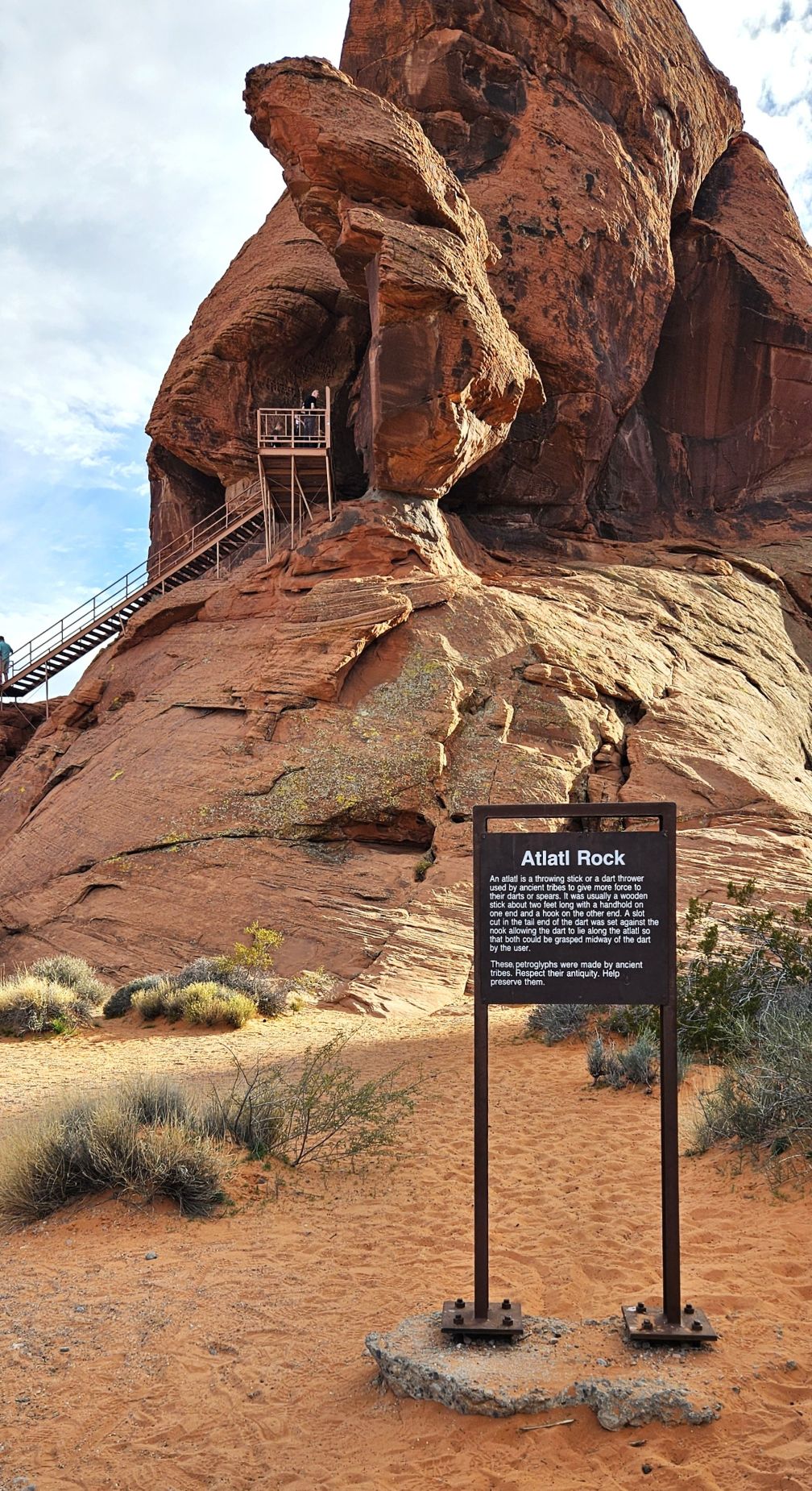
On our drive through the park, we stopped at Atlatl Rock, so named for the petroglyphs showing an atlatl. The petroglyphs were high on a wall, but a stairway led to a viewing platform.
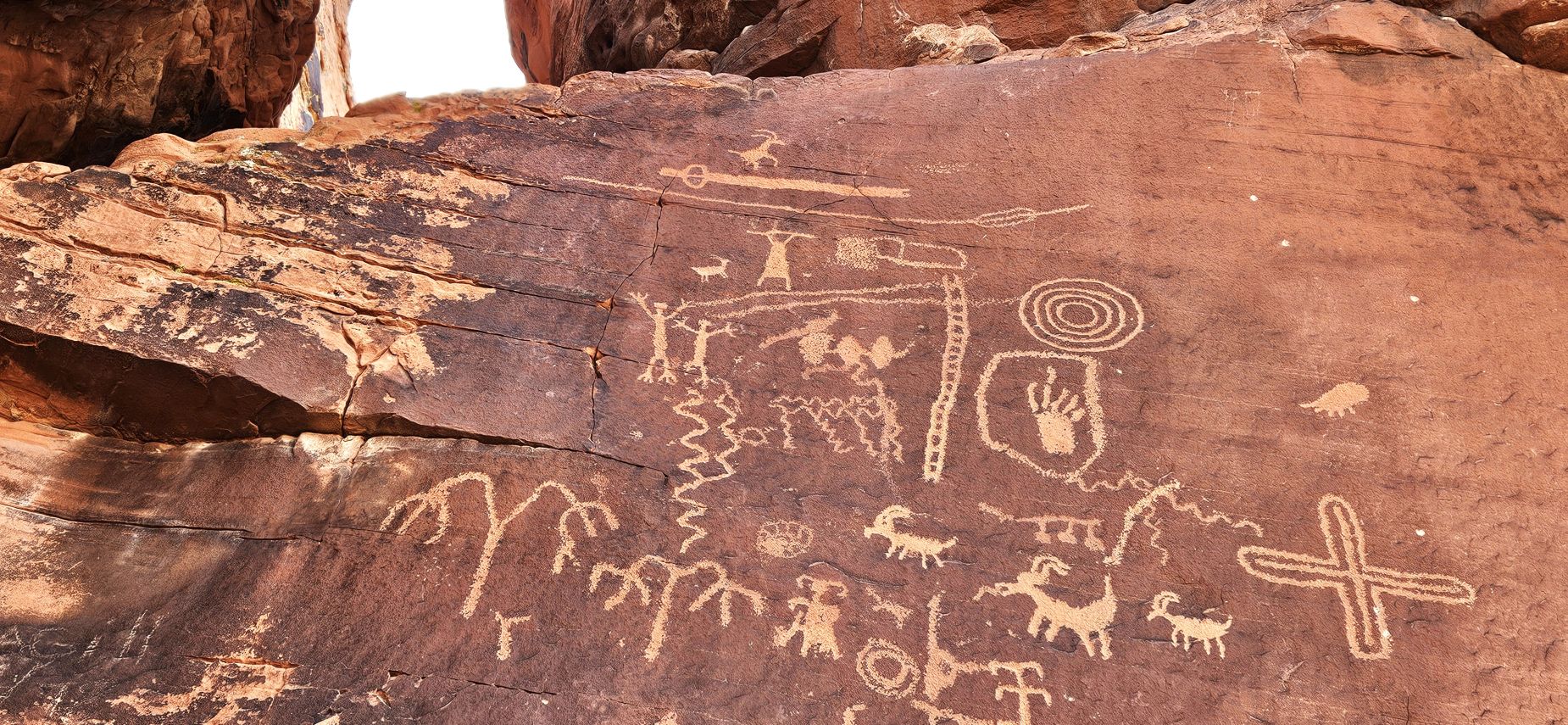
Can you see the atlatl at the top of the rock? Other symbols represent big horn sheep which were plentiful in the area. These petroglyphs are estimated to be 2,000 to 4,000 years old.
Petroglyph of atlatl at top of rock is where this rock got its name.
My first goal was to drive the White Domes Road to the Fire Wave and get there before it was too crowded. Even though we went on a weekday, it was so busy there was no place to park. I decided to save that for another time and just enjoy other places in the park. We stopped at Rainbow Vista where we ate our picnic lunch.
The rocks at Rainbow Vista are very colorful.Rainbow Vista
After lunch, I took a short hike on the Rainbow Vista Trail. I was stunned at how blue the burro bushes looked here.
Rainbow Vista Trail
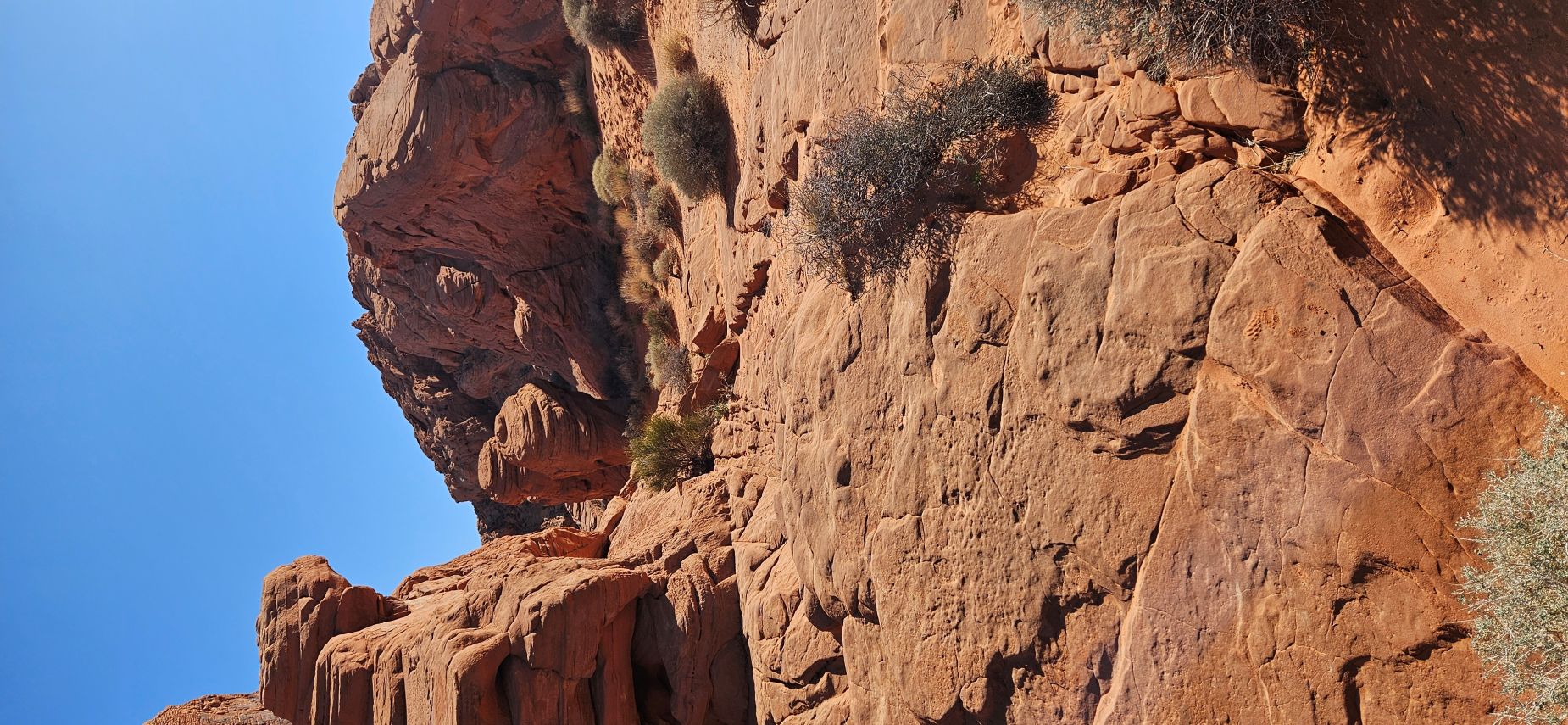
This little side valley had some interesting hoodoos and rocks.
Rainbow Vista Trail
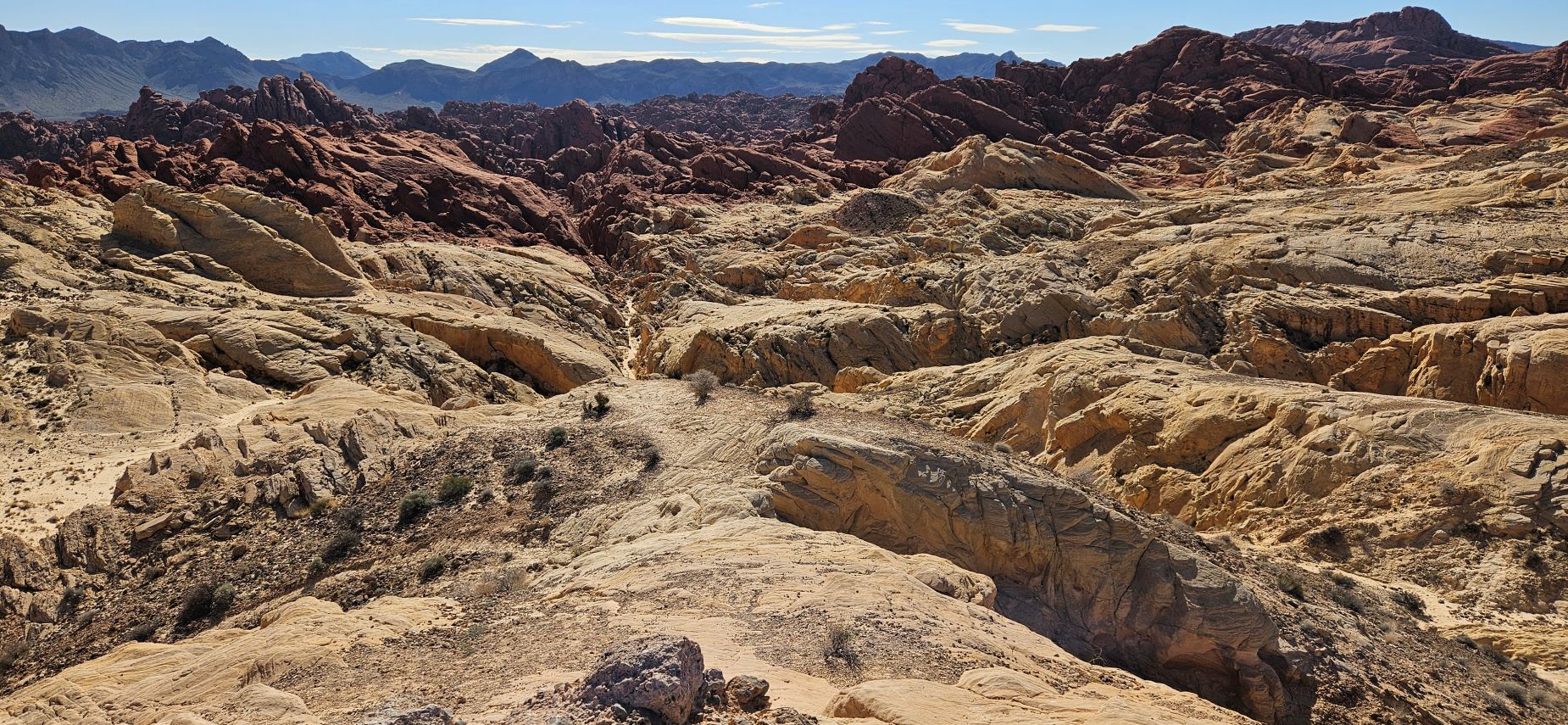
From Rainbow Vista, we drove the Fire Canyon Road to the Silica Dome Overlook. The rocks here were very jagged. A crevice divided the landscape.
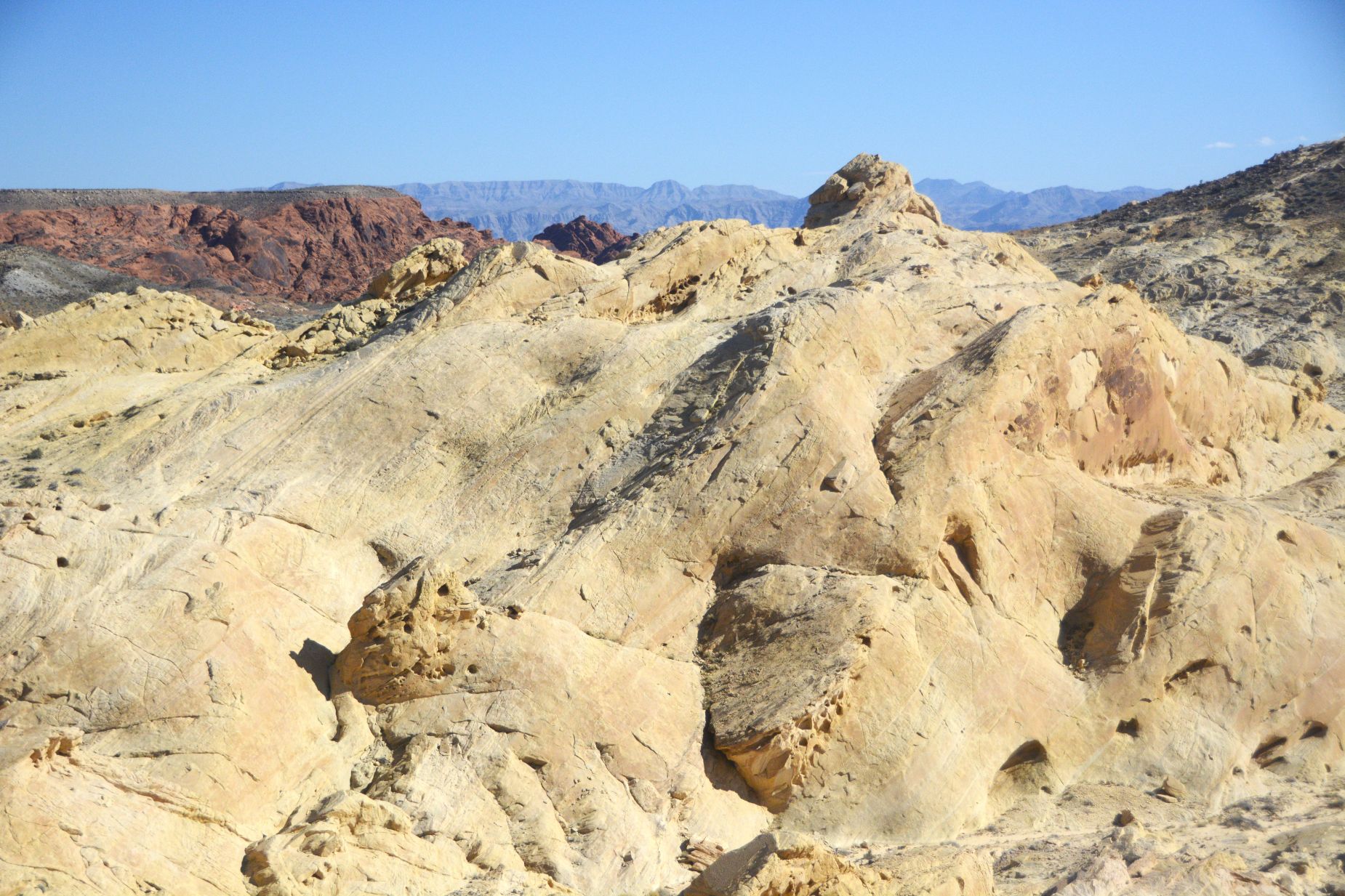
There was an overlook at the end of the road. I believe this is Silica Dome. The rocks here are a buff color in contrast to the reddish rocks found elsewhere in the park. The different colors come from the minerals in the composition of the rocks.
Silica Dome at the end of Fire Canyon Road.
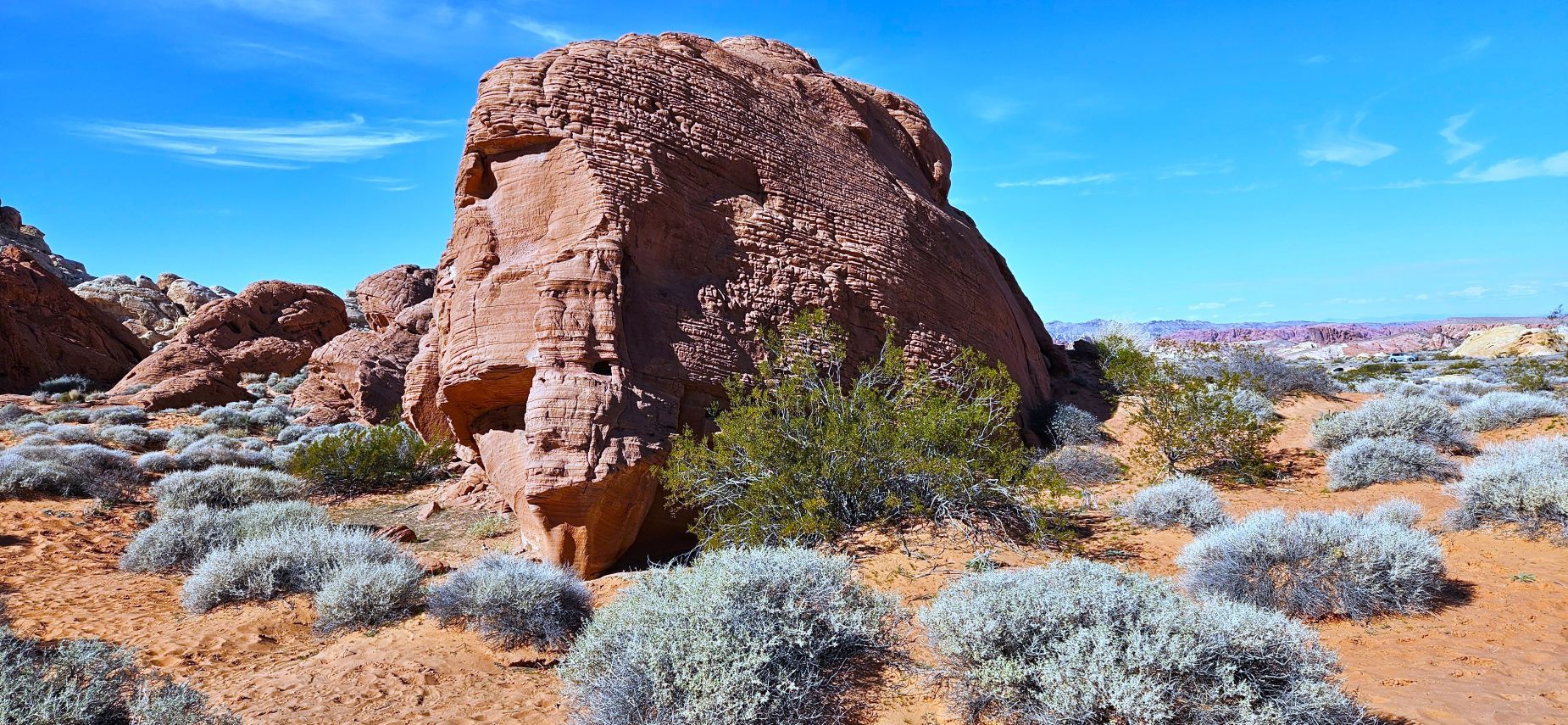
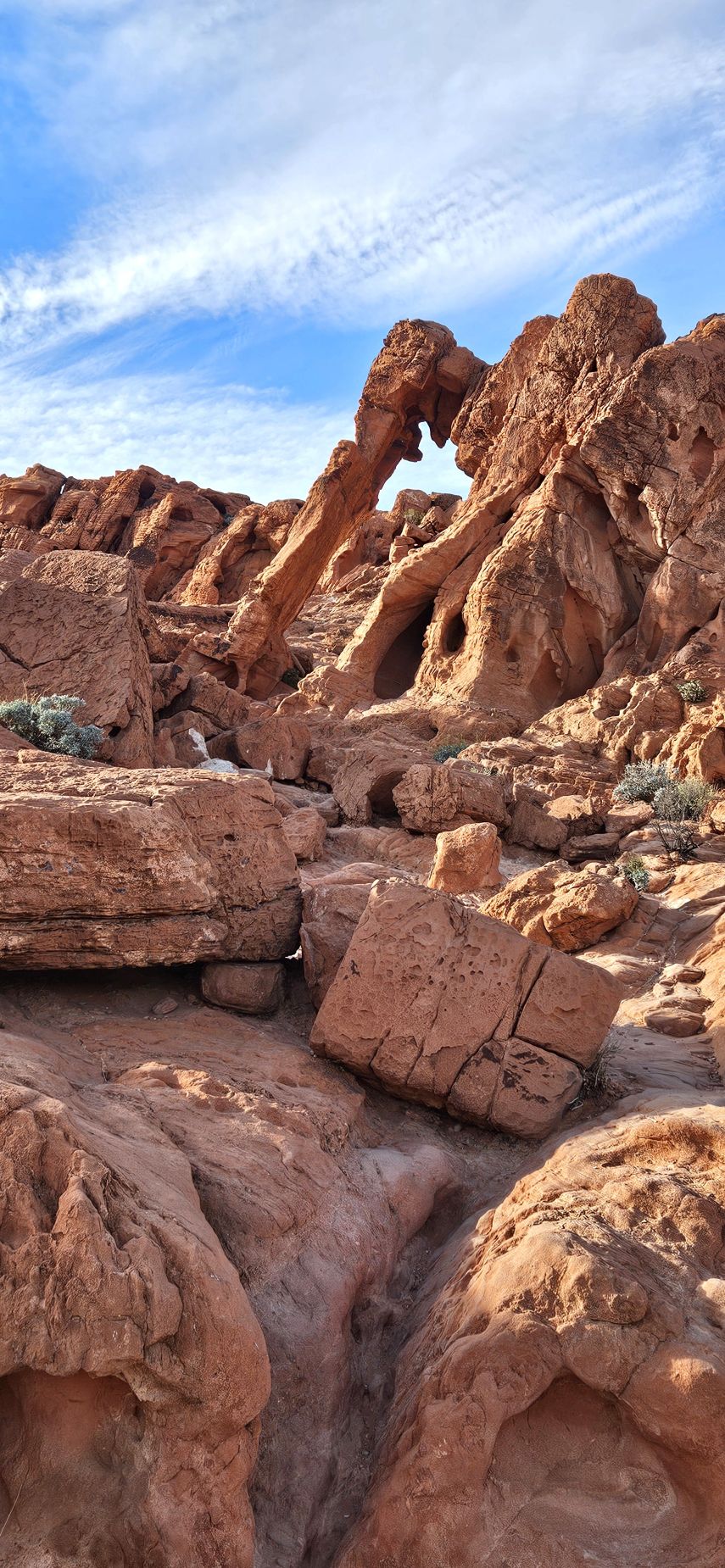
We drove back to Valley of Fire Road toward the east entrance of the park. The Elephant Rock can be seen from the roadway, but we hiked the short trail so we could get a closer look. Can you see the elephant?
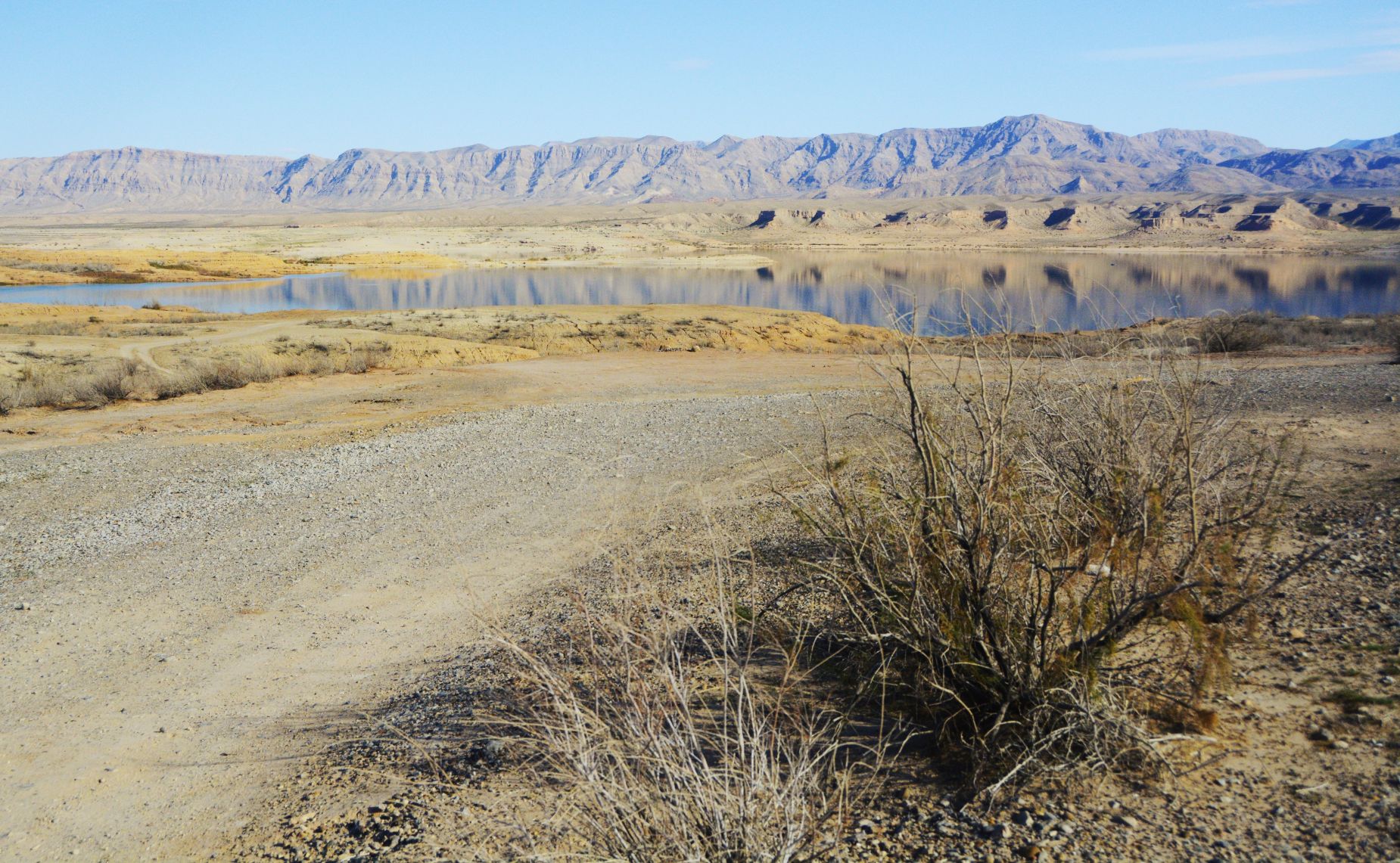
The park ends just past Elephant Rock, but we decided to drive outside the park to see Lake Mead. Surprisingly, it had a decent amount of water in it. With all the recent rains, the water levels have risen again. Lake Mead is formed from Hoover Dam on the Colorado River.
Lake Mead National Recreation Area
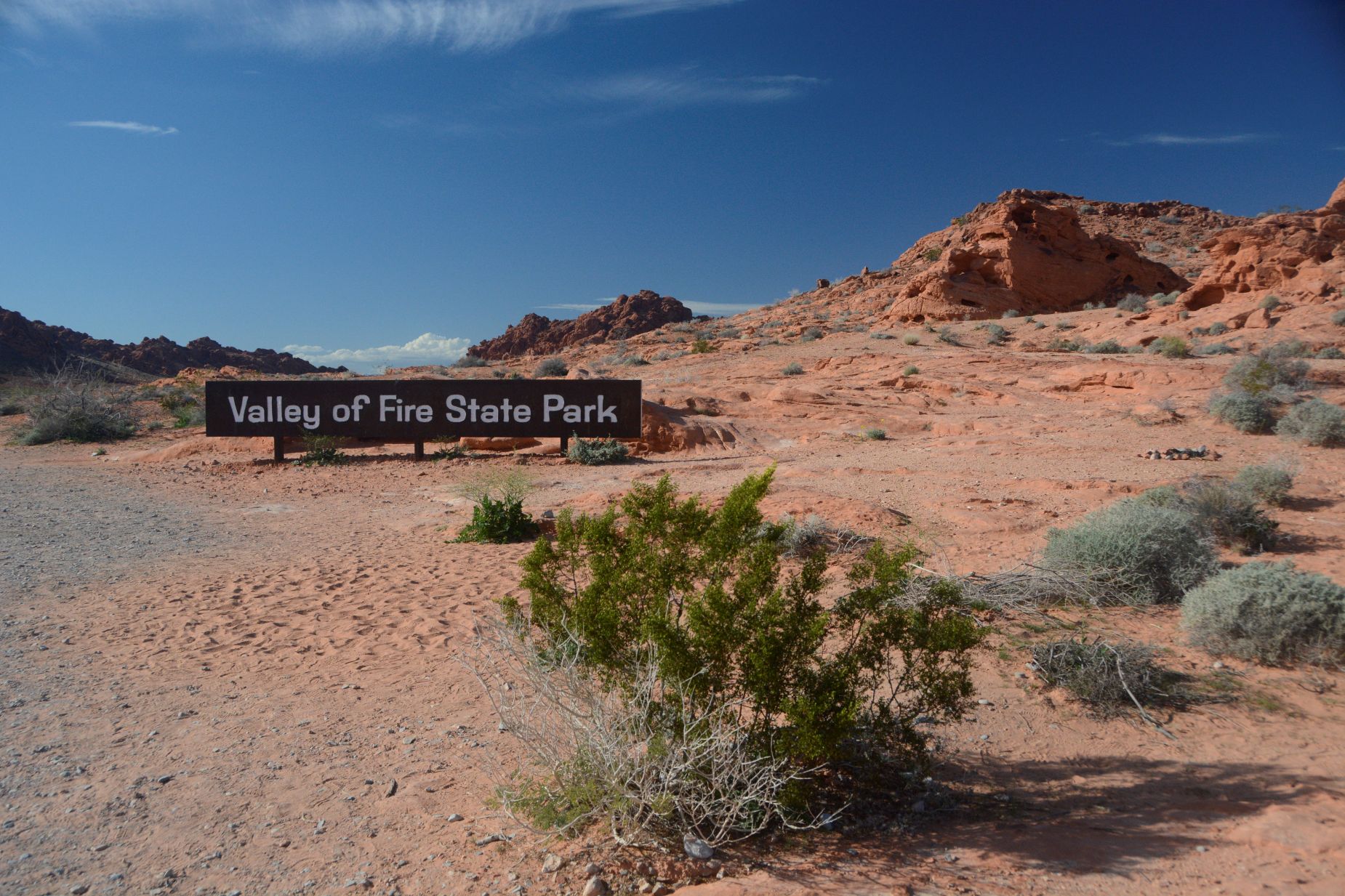
Going back into the park, I stopped to get a photo of the entrance sign which I missed on our way into the park at the other entrance.
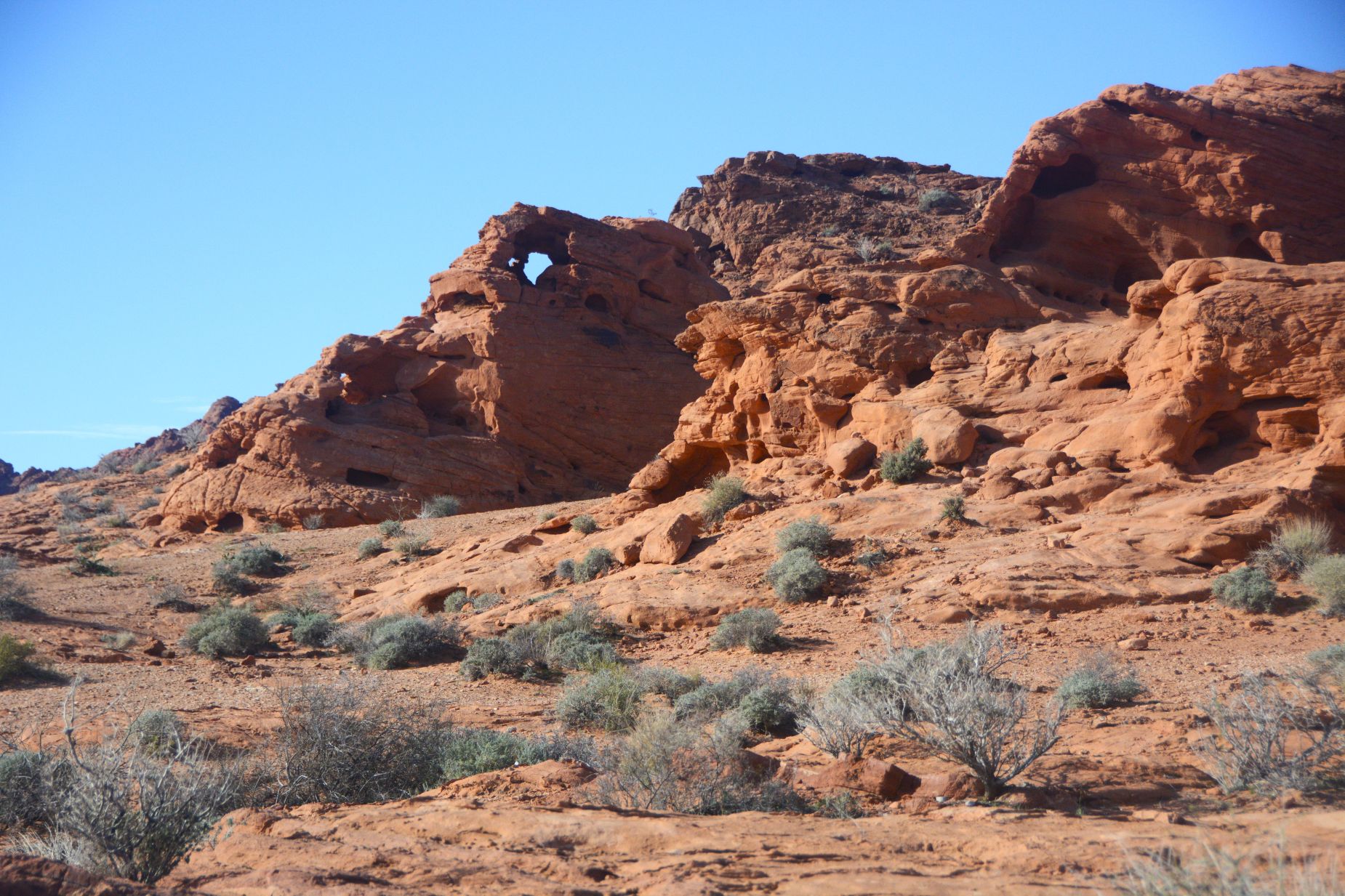
While trying to get the best angle, I spied a window in a rock.
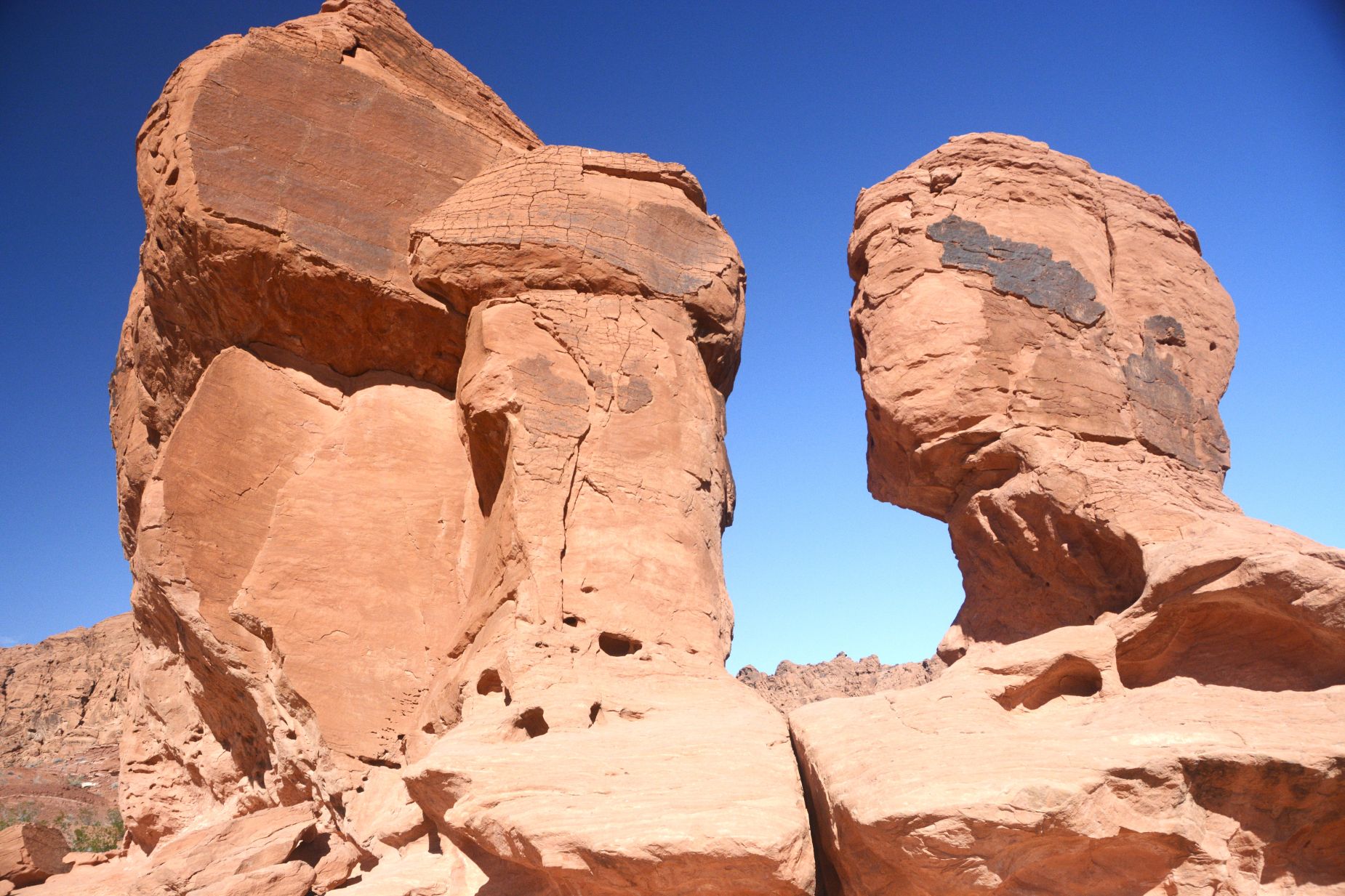
Also along Valley of Fire Road is a turnout and picnic area called Seven Sisters. Only one rock resembled a human head. You really need an imagination to see the other six sisters.
Seven Sisters
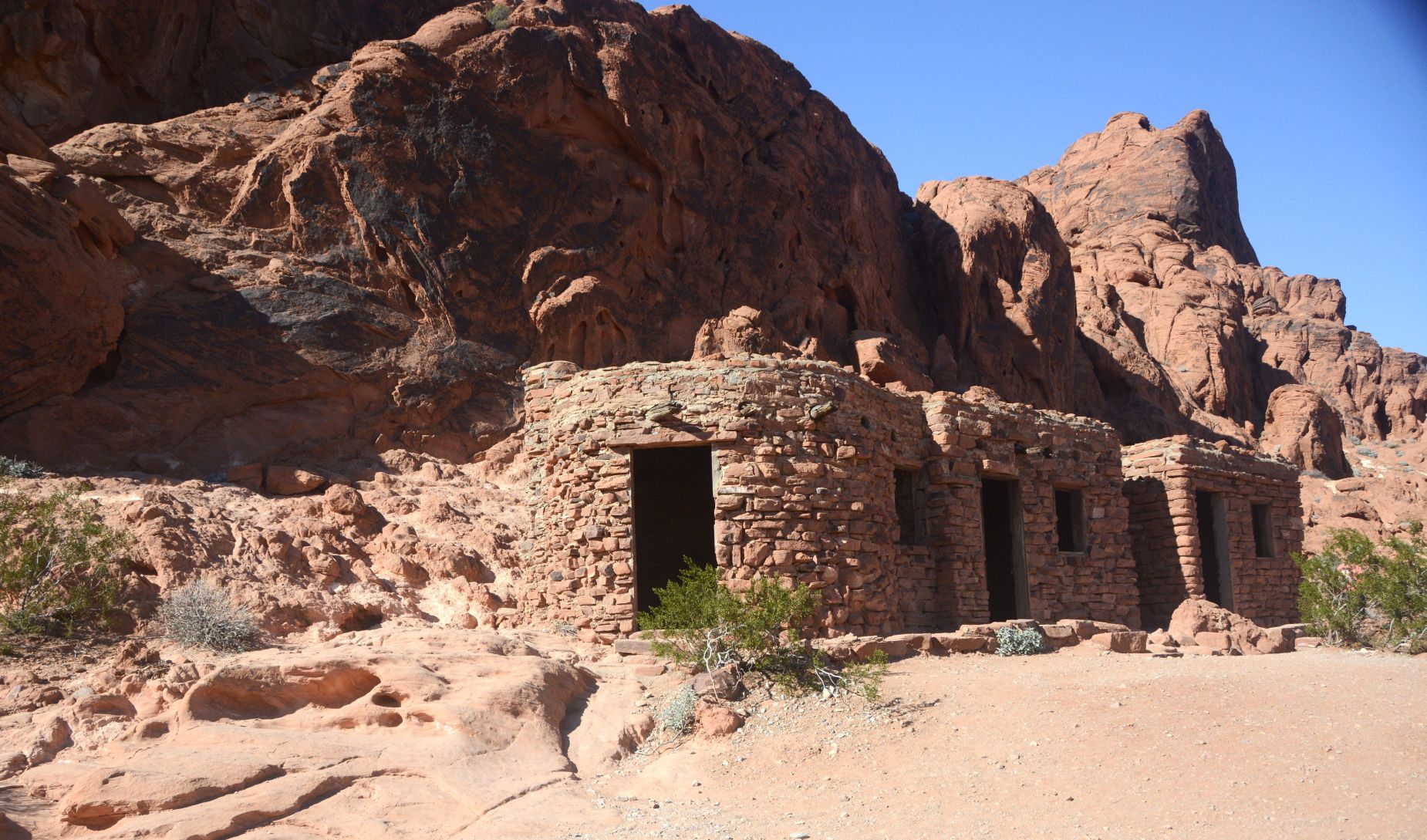
Another side road took us to The Cabins, built in 1935 by the Civilian Conservation Corps as shelters for travelers and campers. They even had fireplaces.
The Cabins built by the CCC in 1935.
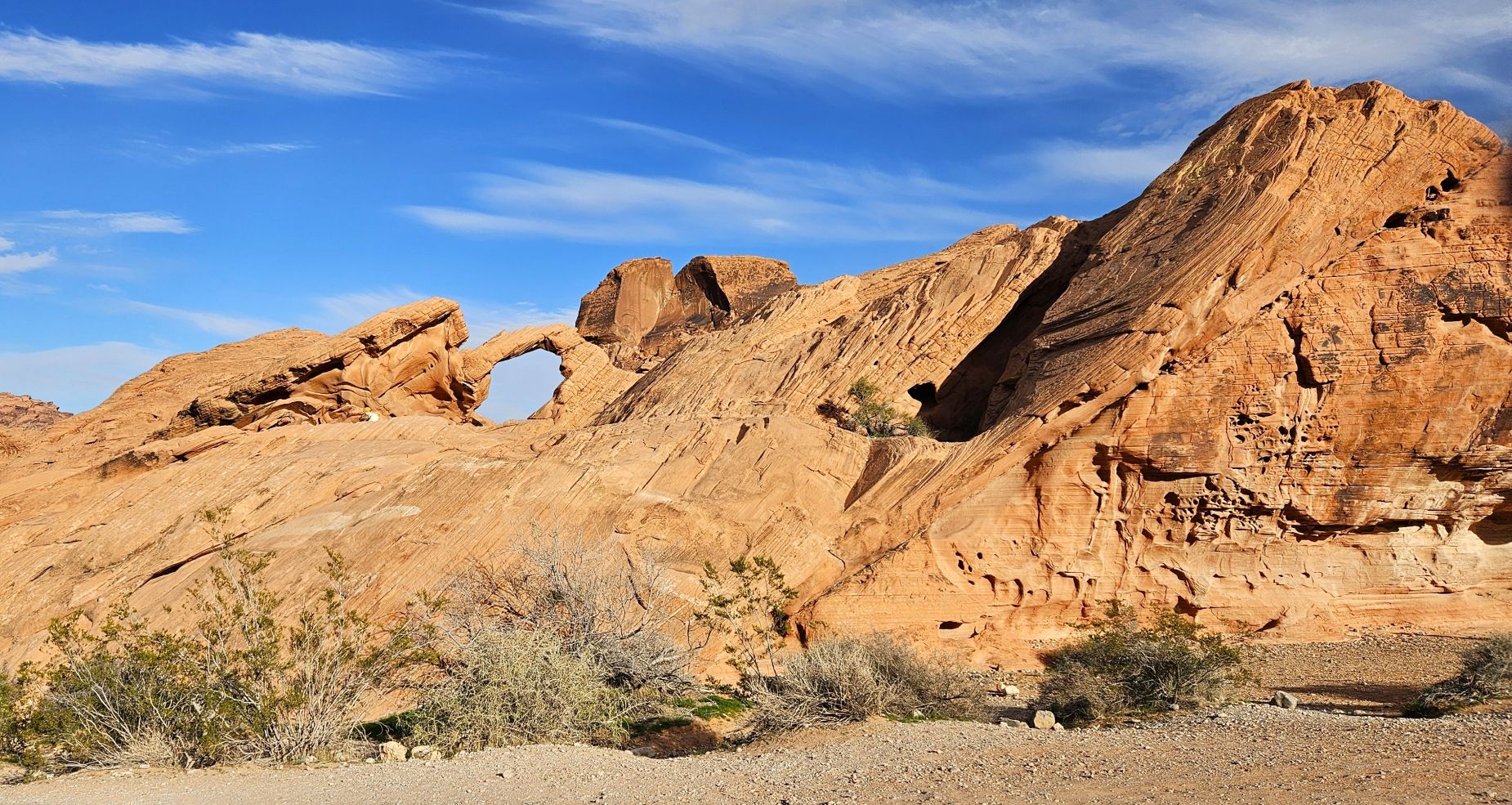
Past Atlatl Rock on a side road is a natural arch called Arch Rock. A large sign said “No Climbing on the Rocks.” So when I saw a man and woman climbing in the arch to get their Instagram photo, I ungraciously waved them off and yelled that they weren’t supposed to climb on the rocks. Am I becoming a grouchy old lady?
Arch Rock
There were other sights to see like the Beehive formations, the petrified logs and the balancing rock. Some of them required lengthy hikes in order to see them. We will have plenty to see for the next time we come.
Colorful rocks in Valley of Fire State Park
This Nevada state park was full of a variety of fascinating and beautiful scenery. Just an hour from Las Vegas, however, it quickly gets overrun with lots of visitors. Many of the trails are closed during the summer months due to extreme heat and hazardous conditions, so winter is a great time to visit. In my opinion, it’s worth seeing again.
“He is the Rock, His works are perfect, and all His ways are just. A faithful God who does no wrong, upright and just is He.” Deuteronomy 32:4 NIV
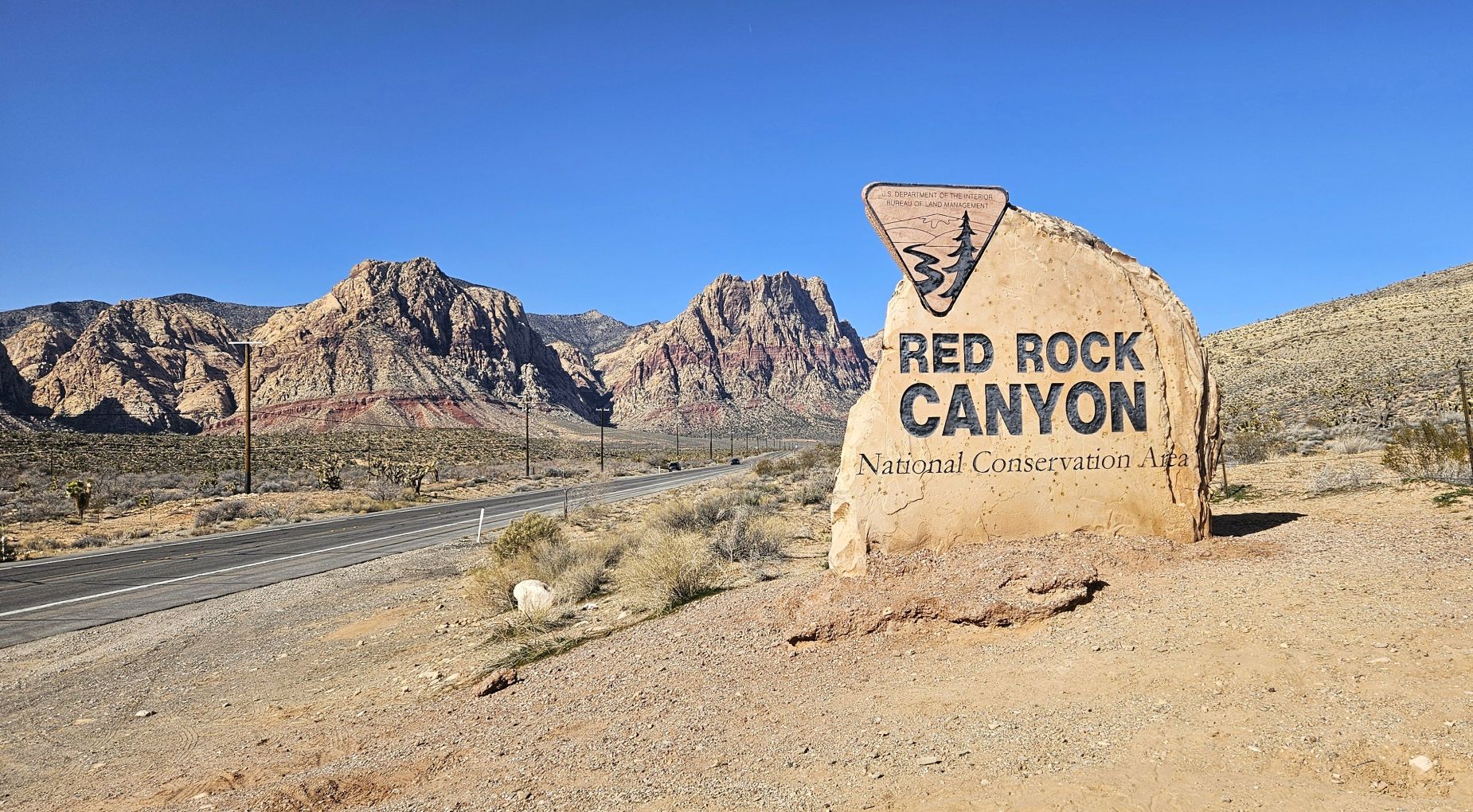
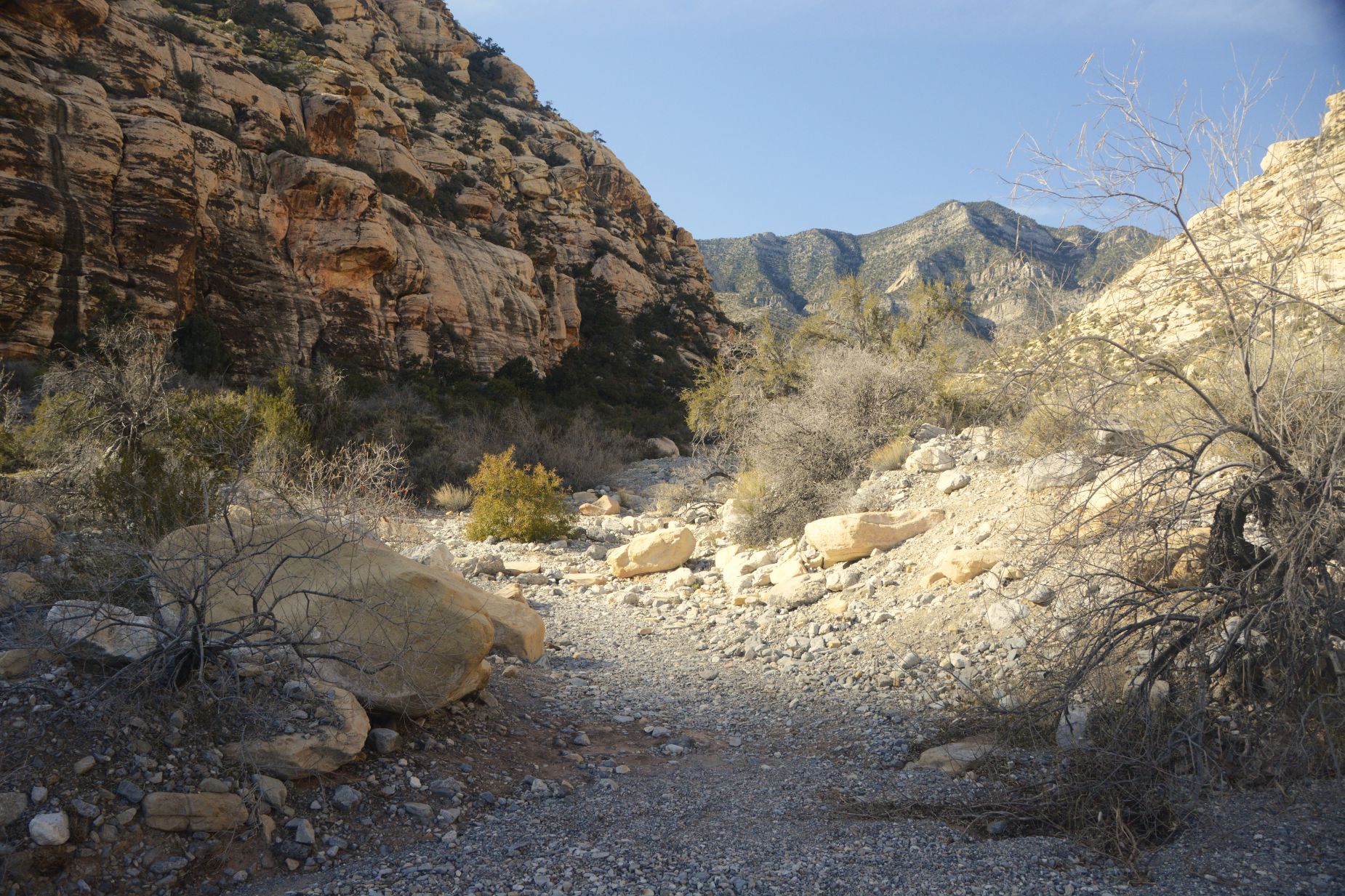
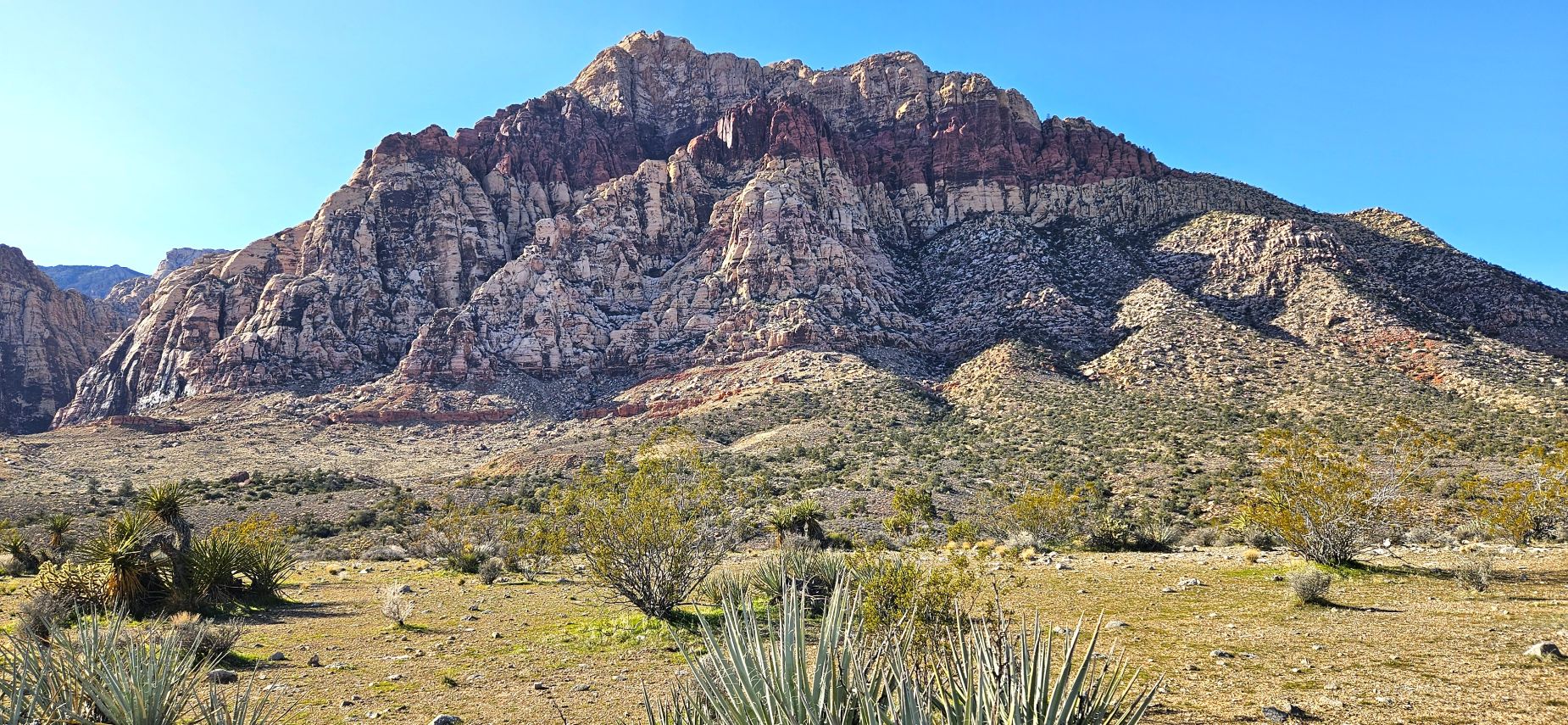
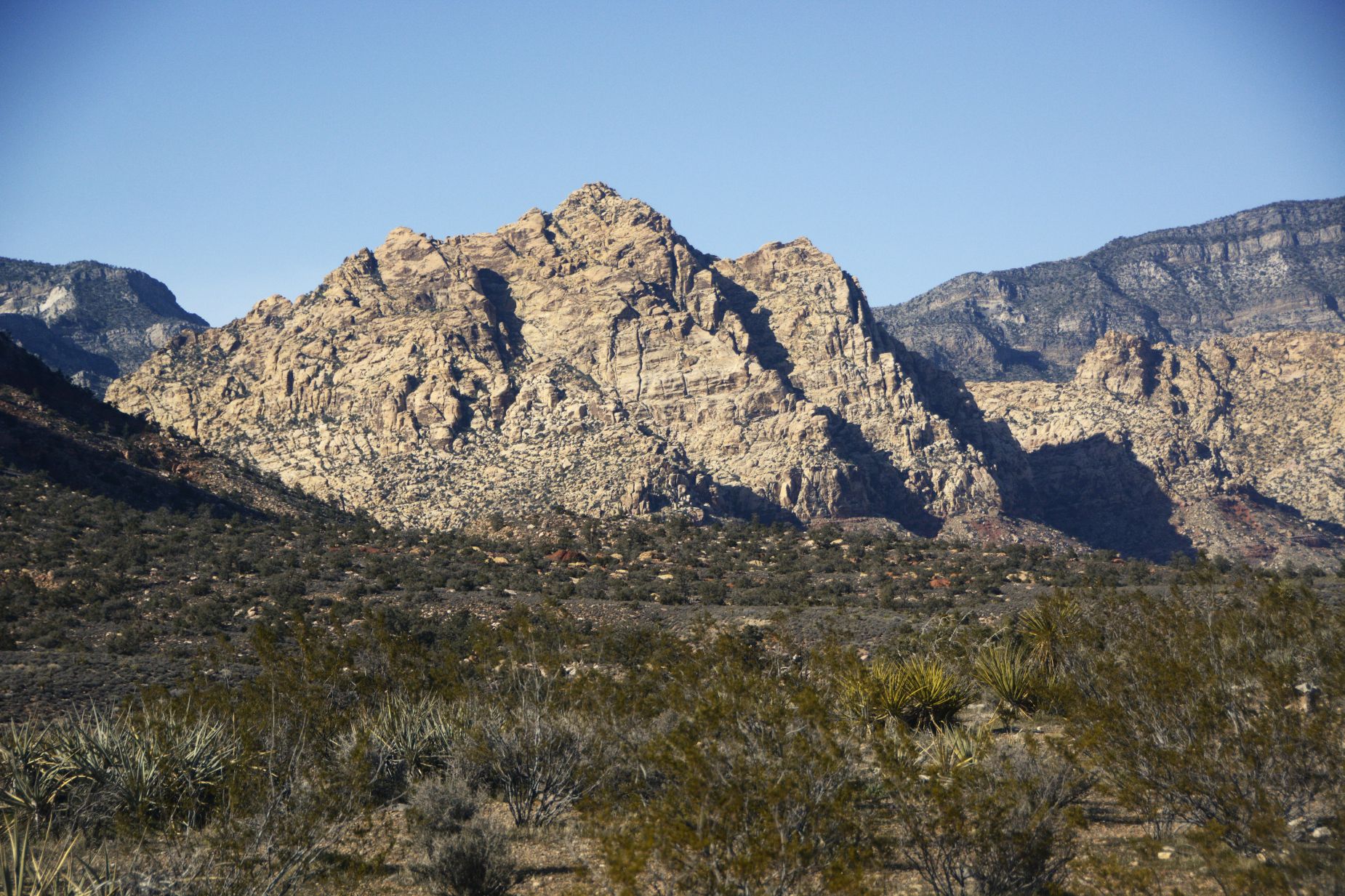
While we were staying in Pahrump, Nevada, we took a day trip to Red Rock Canyon National Conservation Area. It’s located a few miles north of Las Vegas. It has timed entry reservations, so we had to plan ahead.
We used our National Parks pass for free entrance to Red Rock Canyon National Conservation Area
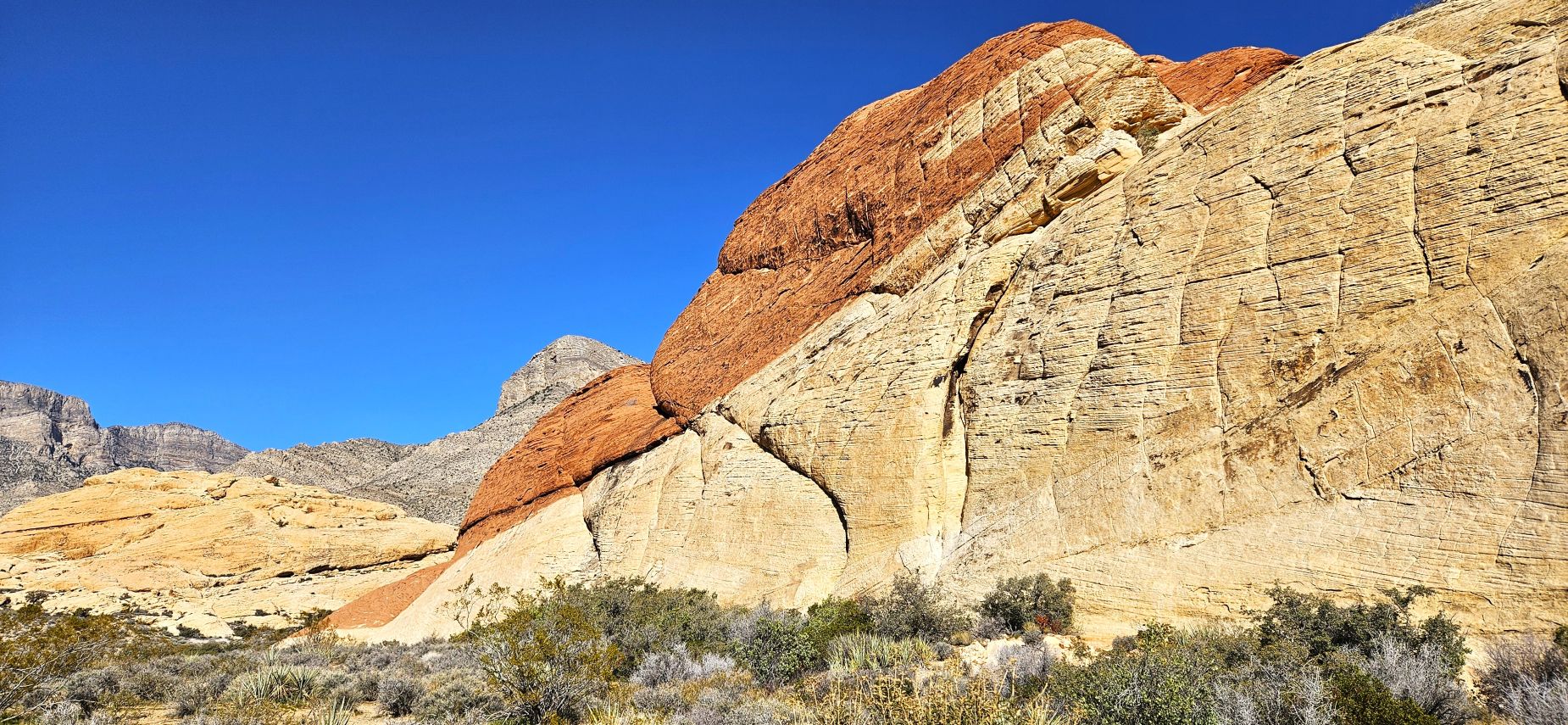
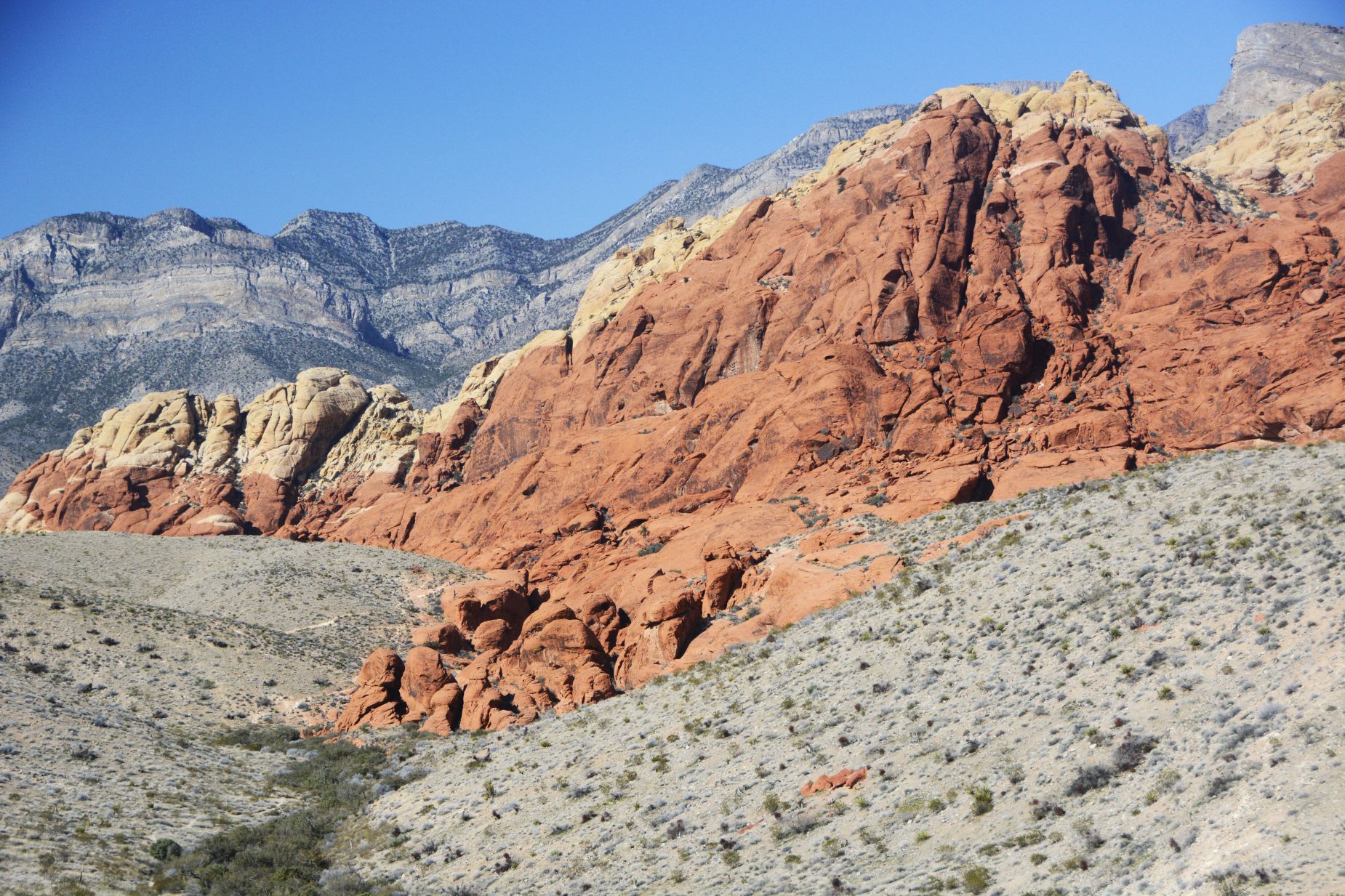
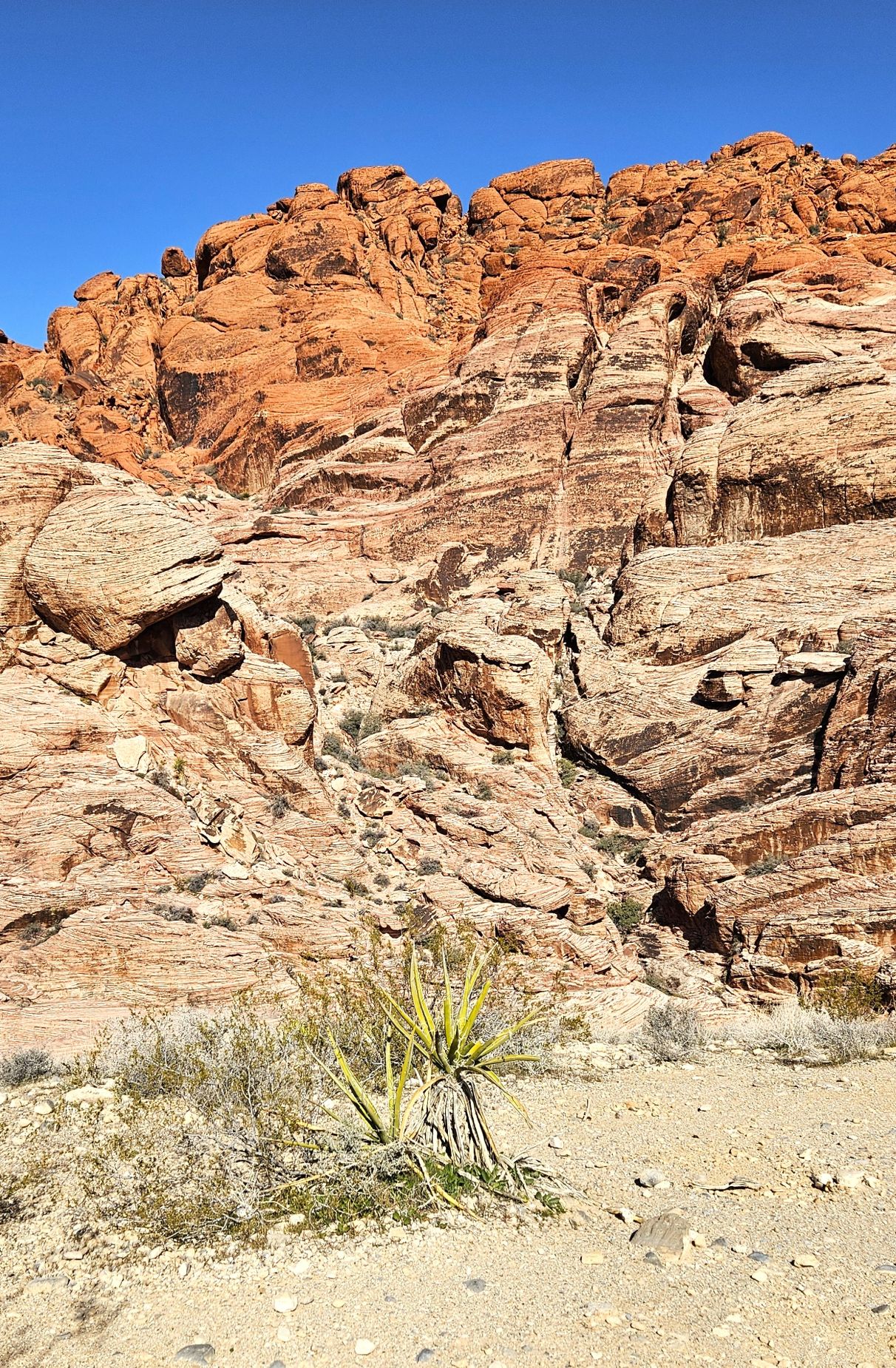
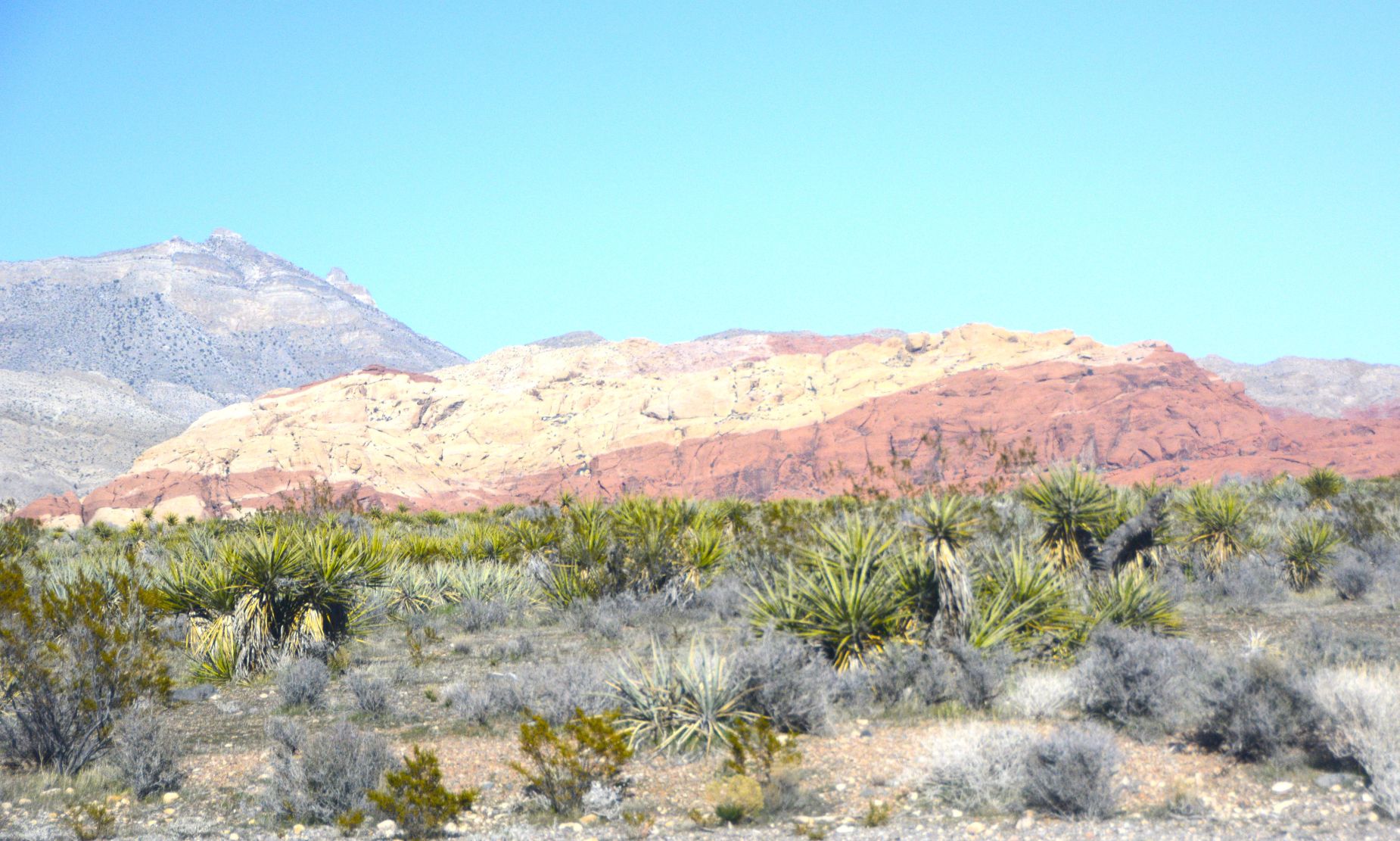
The red rocks in this area appear even redder next to the buff sandstone. The iron in the rocks causes the variations of red in the sandstone rocks.
Deep red sandstone atop a layer of buff sandstone creates a dramatic scene
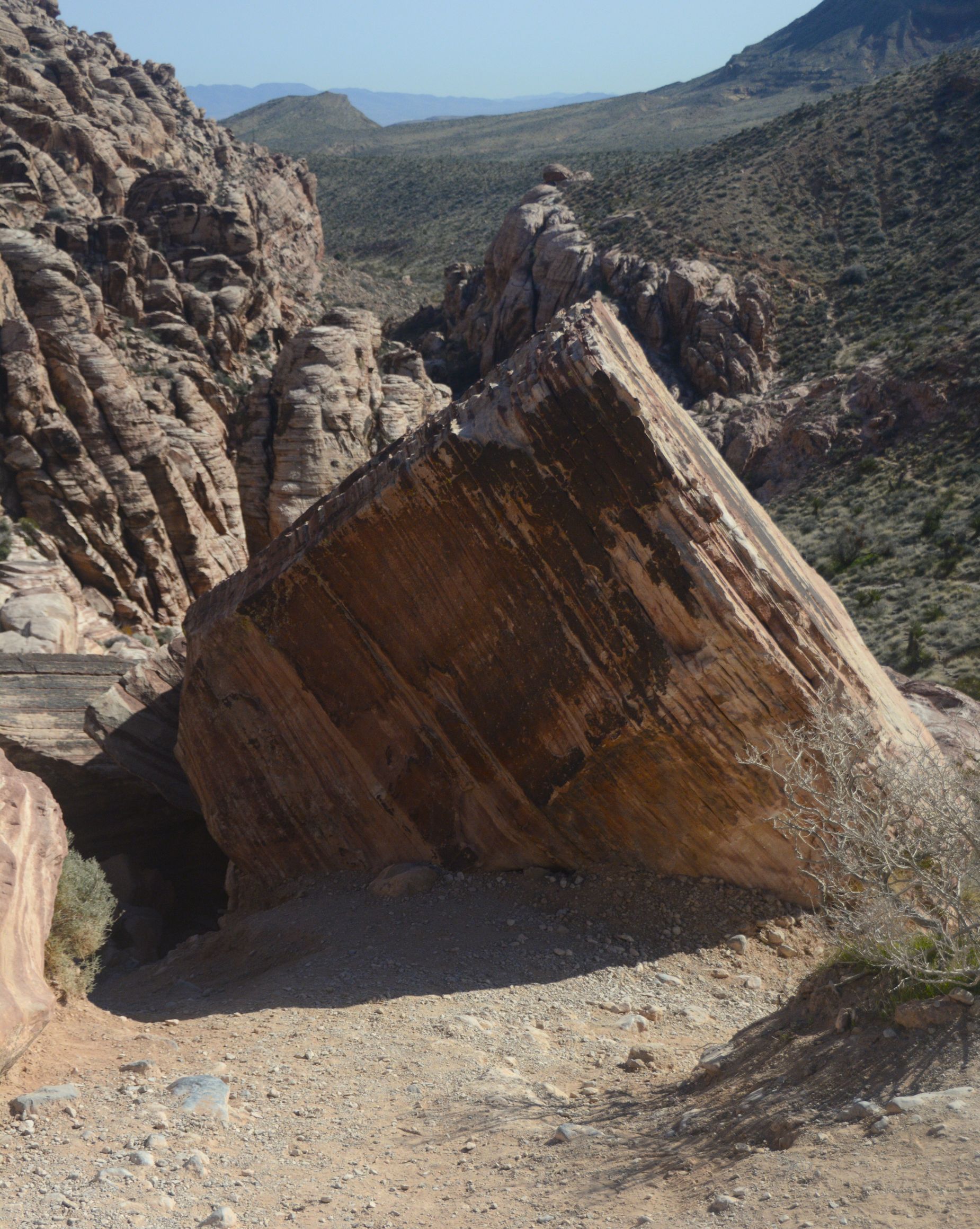
Sandstone is a sedimentary rock and is very porous allowing water to flow through it. It is susceptible to weathering by water and wind which causes holes and striations or grooves in the rock.
At our first viewpoint, I noticed this rock with grooves and a dark brown coating which is called desert varnish. Desert varnish is formed slowly on rock surfaces made up of clay minerals, manganese and iron oxides.
The dark brown on this rock is desert varnish
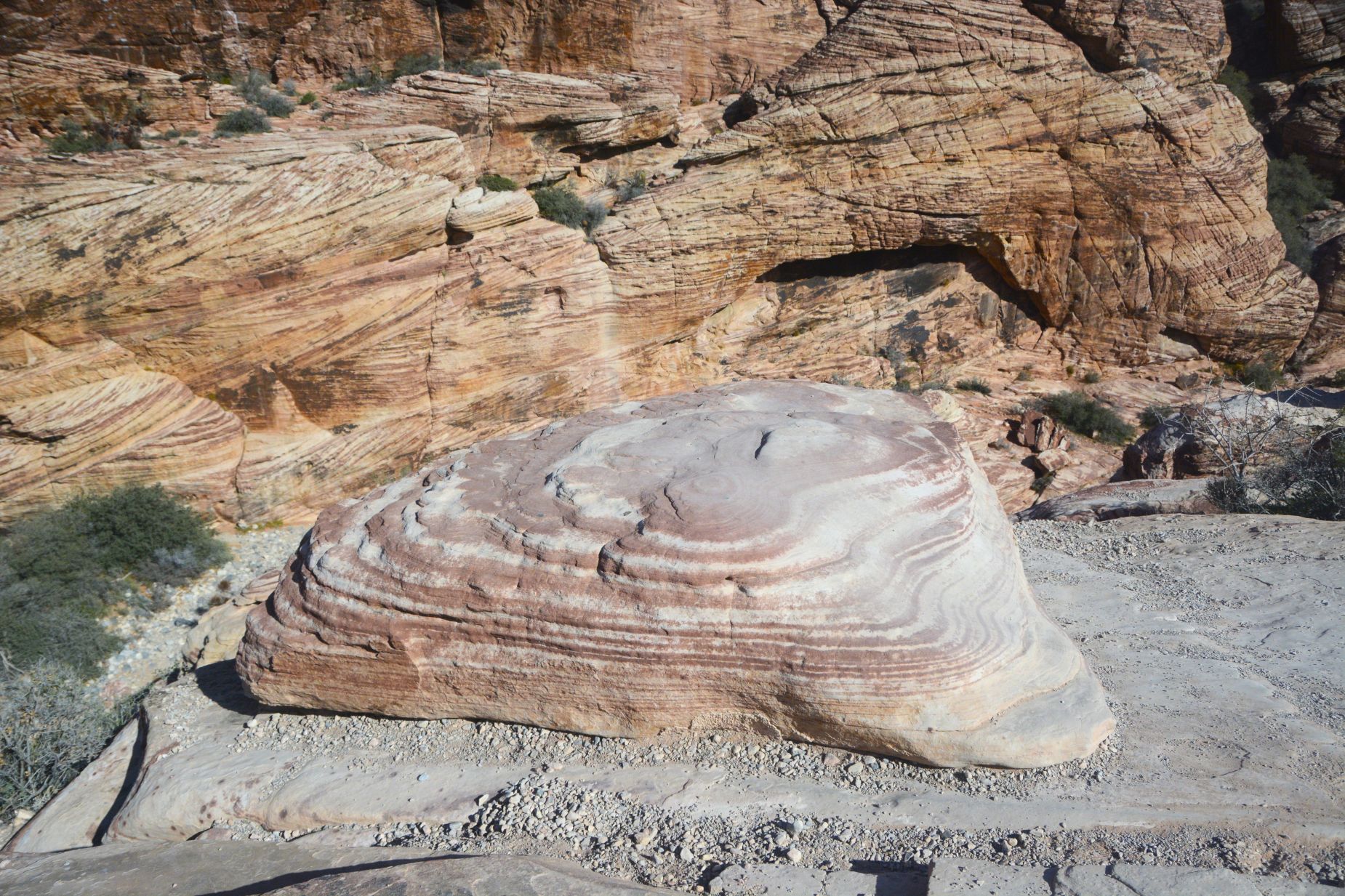
Here you can see the layers of sedimentary rock. The different colors are from various amounts of or lack of iron oxide in the composition of the rocks.
Erosion exposed the layers in this rock.
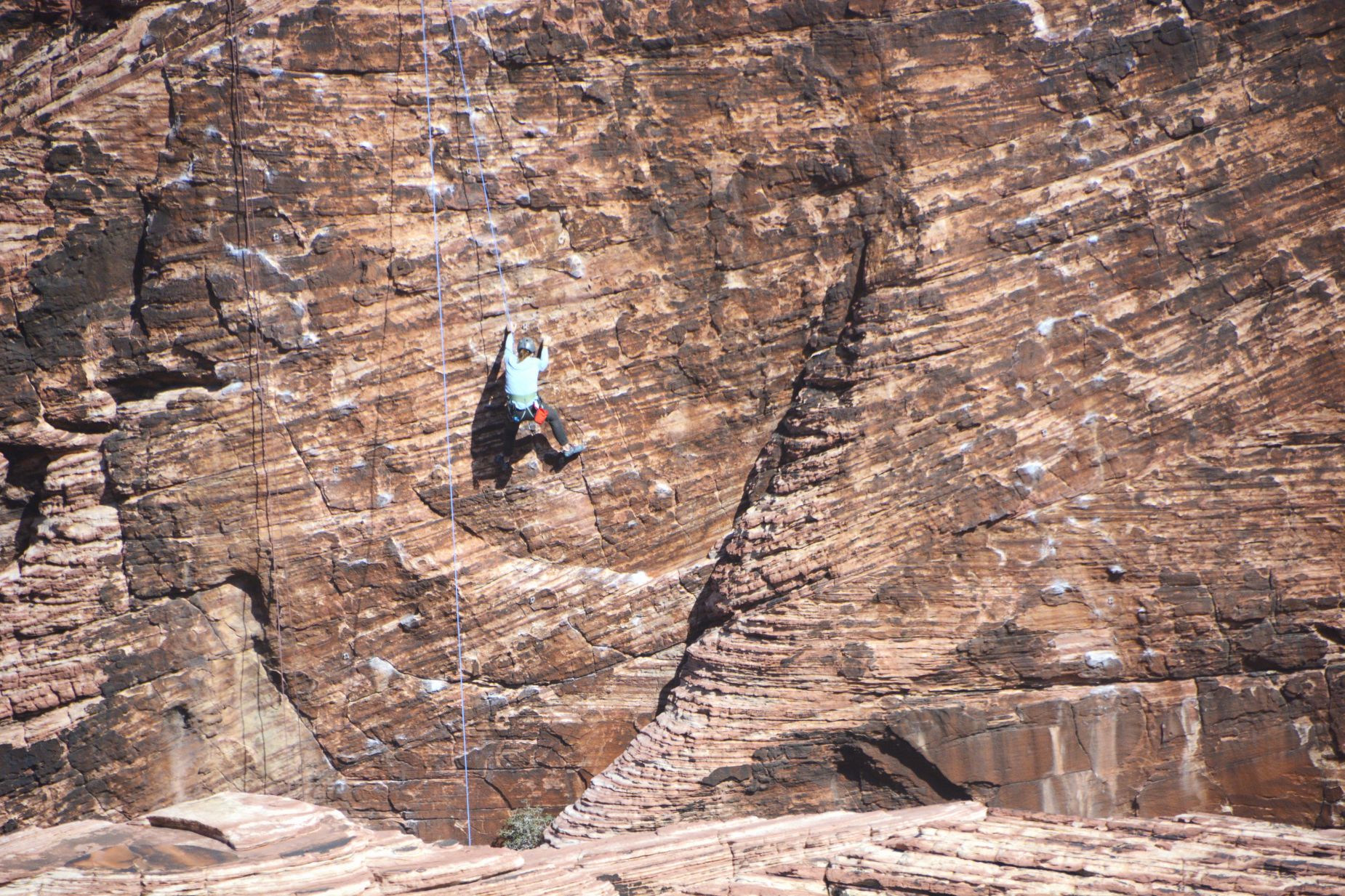
We saw a couple of rock climbers in this area.
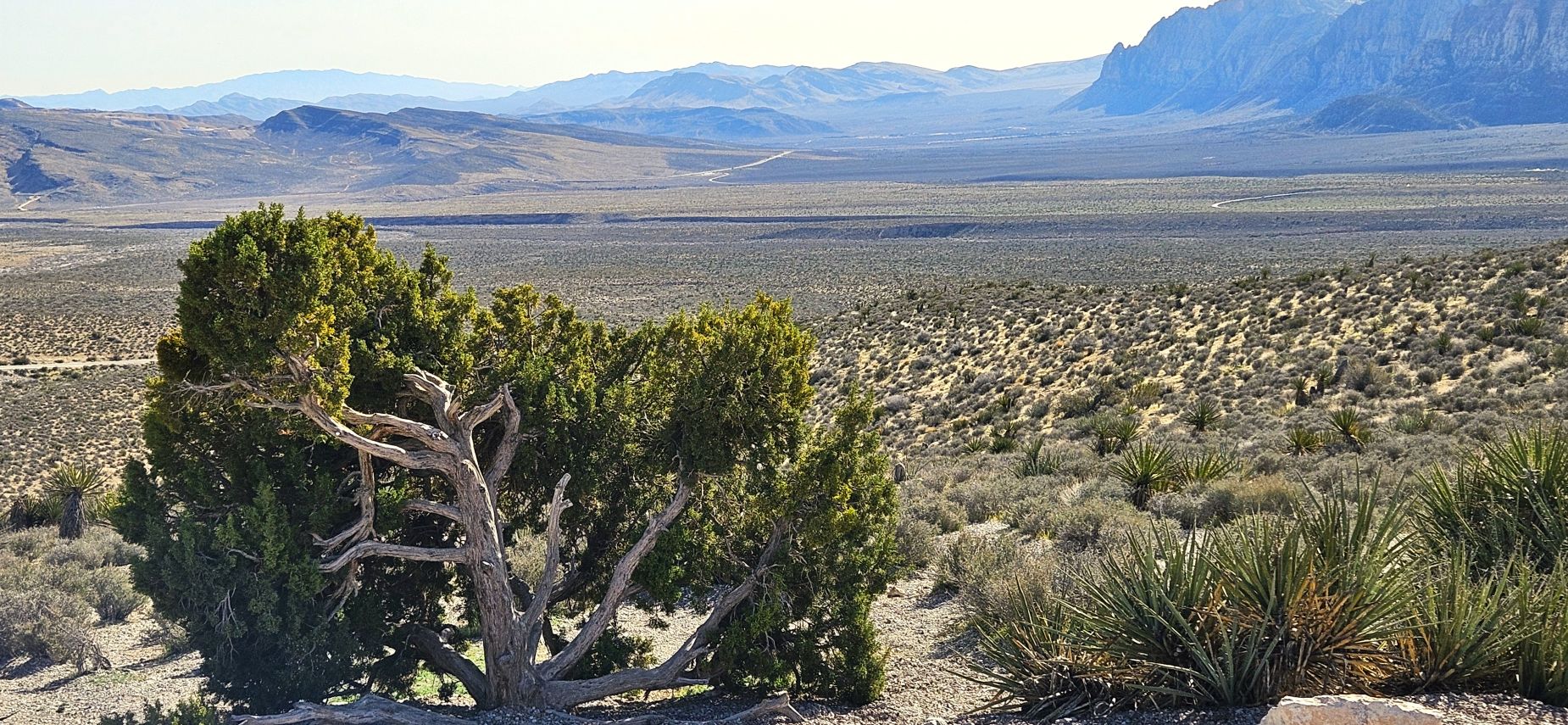
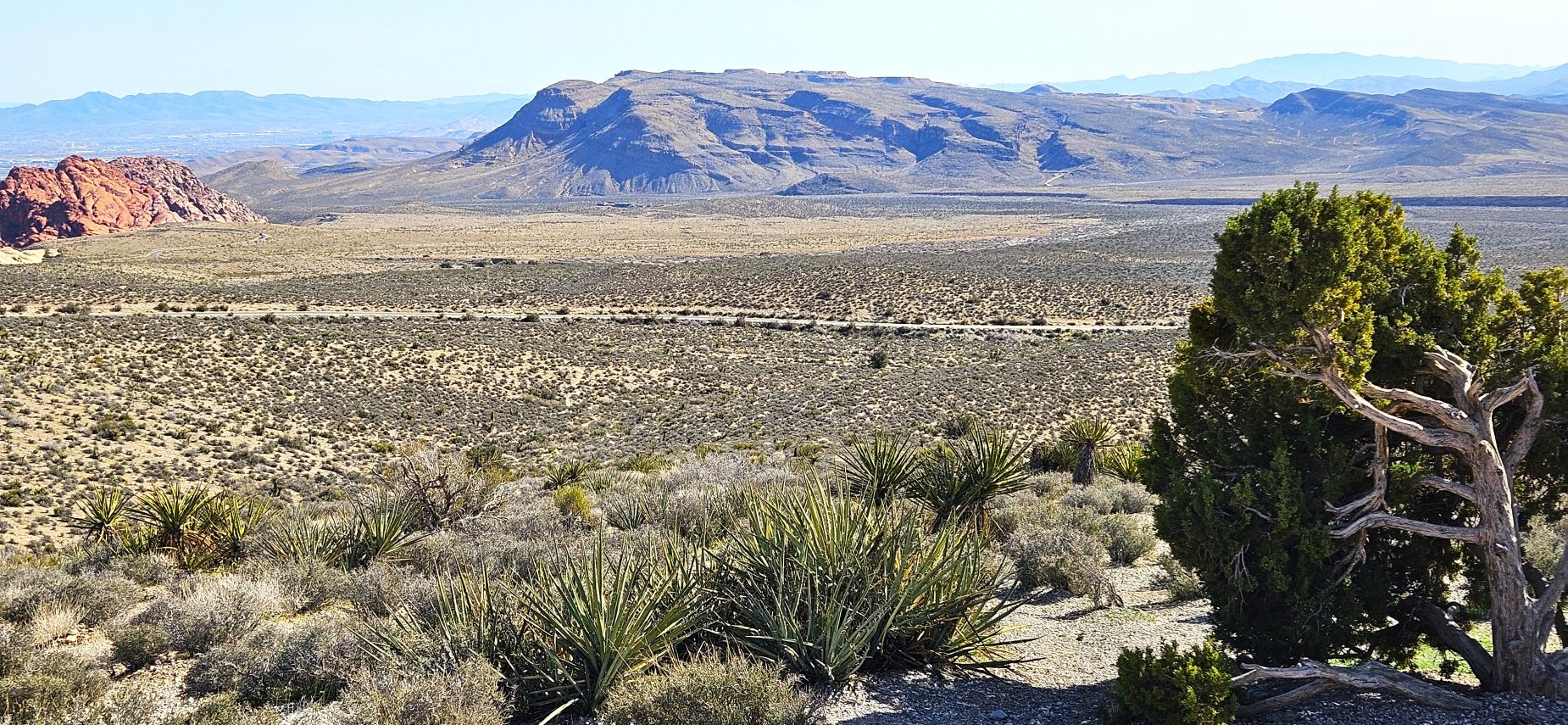
As we drove the 13-mile one-way scenic highway through the park, we got some epic views of the large valley we had just crossed.
The 13 mile one way road across the valley in Red Rock Canyon NCA
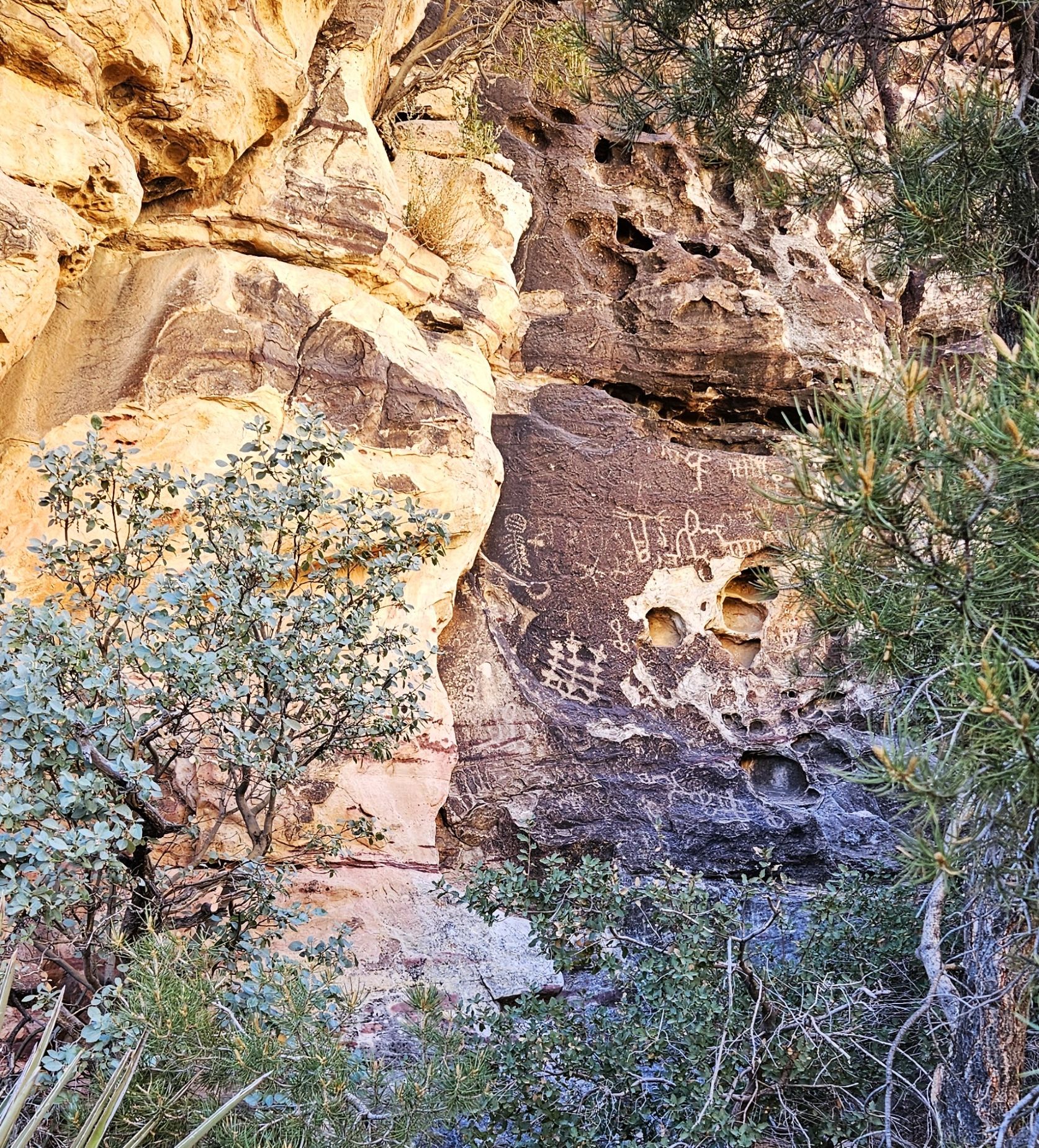
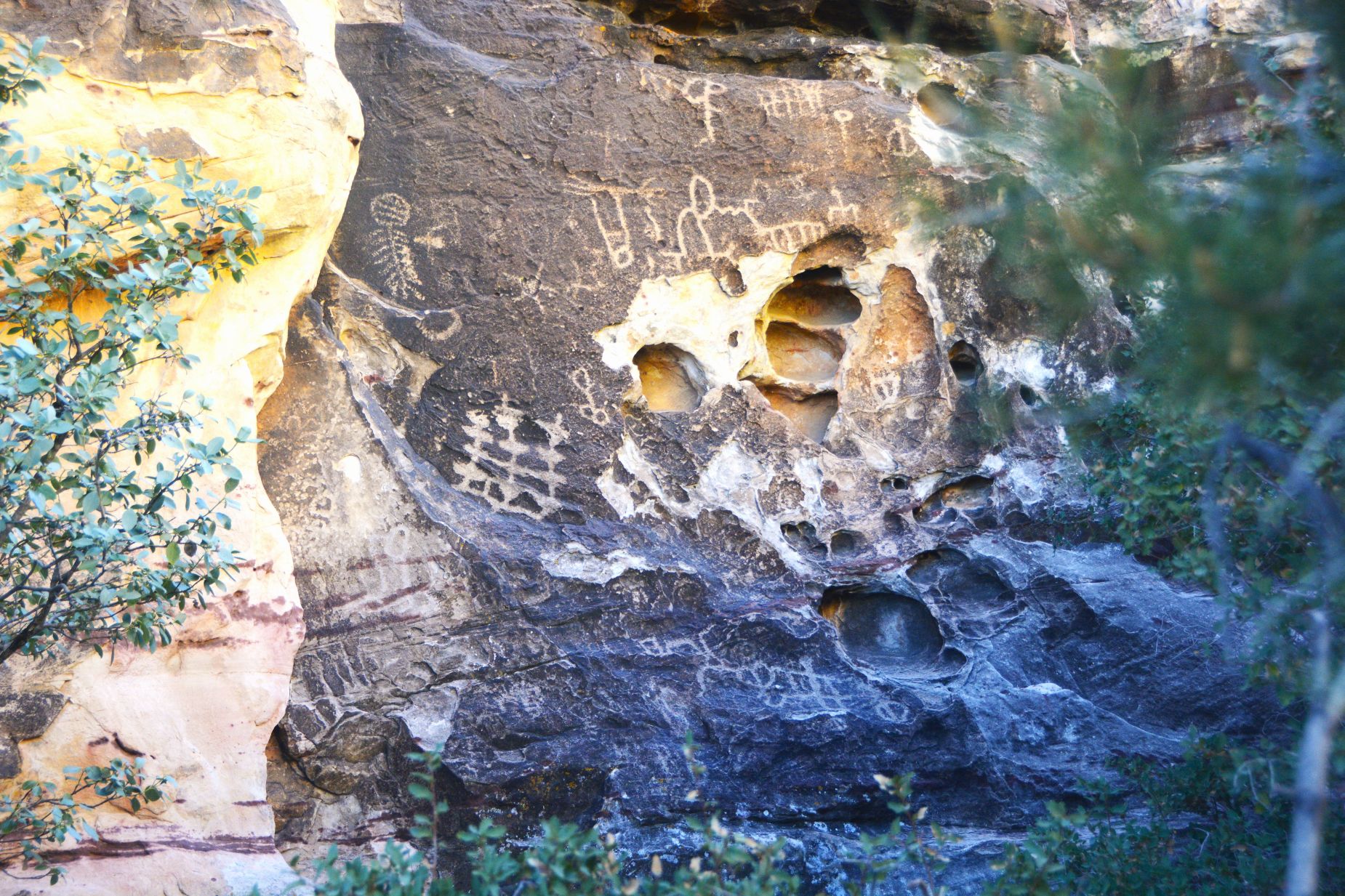
We stopped for lunch at a picnic area. Nearby was a wall with Indian petroglyphs. After lunch, I took a little hike down this trail to see the ancient Indian artwork.
Pathway to Indian Petroglyphs
It takes some imagination to figure them out.
Indian Petroglyphs
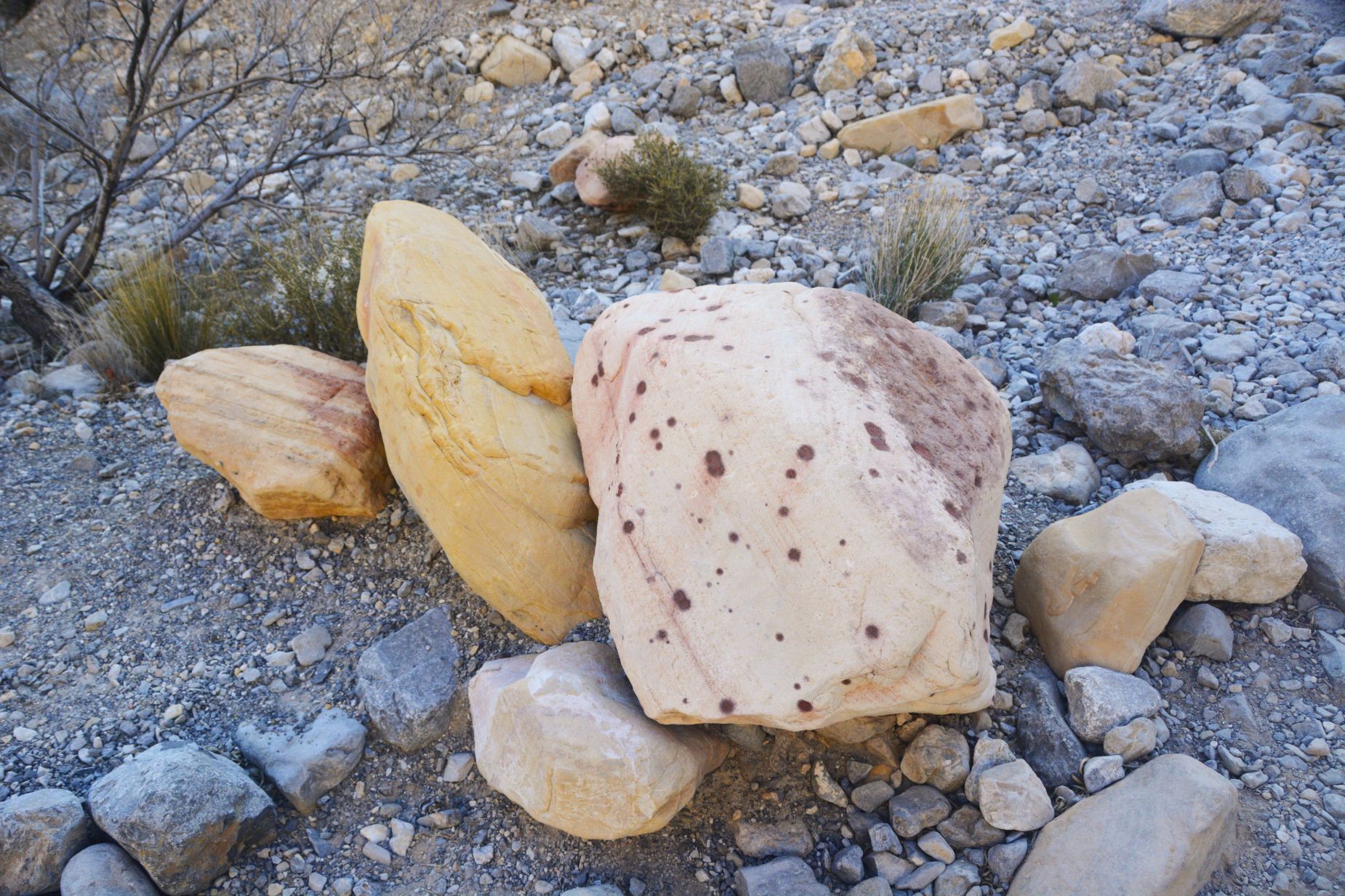
On my way back, I saw this interesting spotted rock.
As we made our way through this conservation area, we saw more beautiful scenery. Sadly, we didn’t see any Big Horn Sheep or wild donkeys.
As the afternoon sun lit up the mountains, we knew it was time to head back home. It was an hour drive to see it, but we were happy we took the time to visit this interesting and beautiful place.
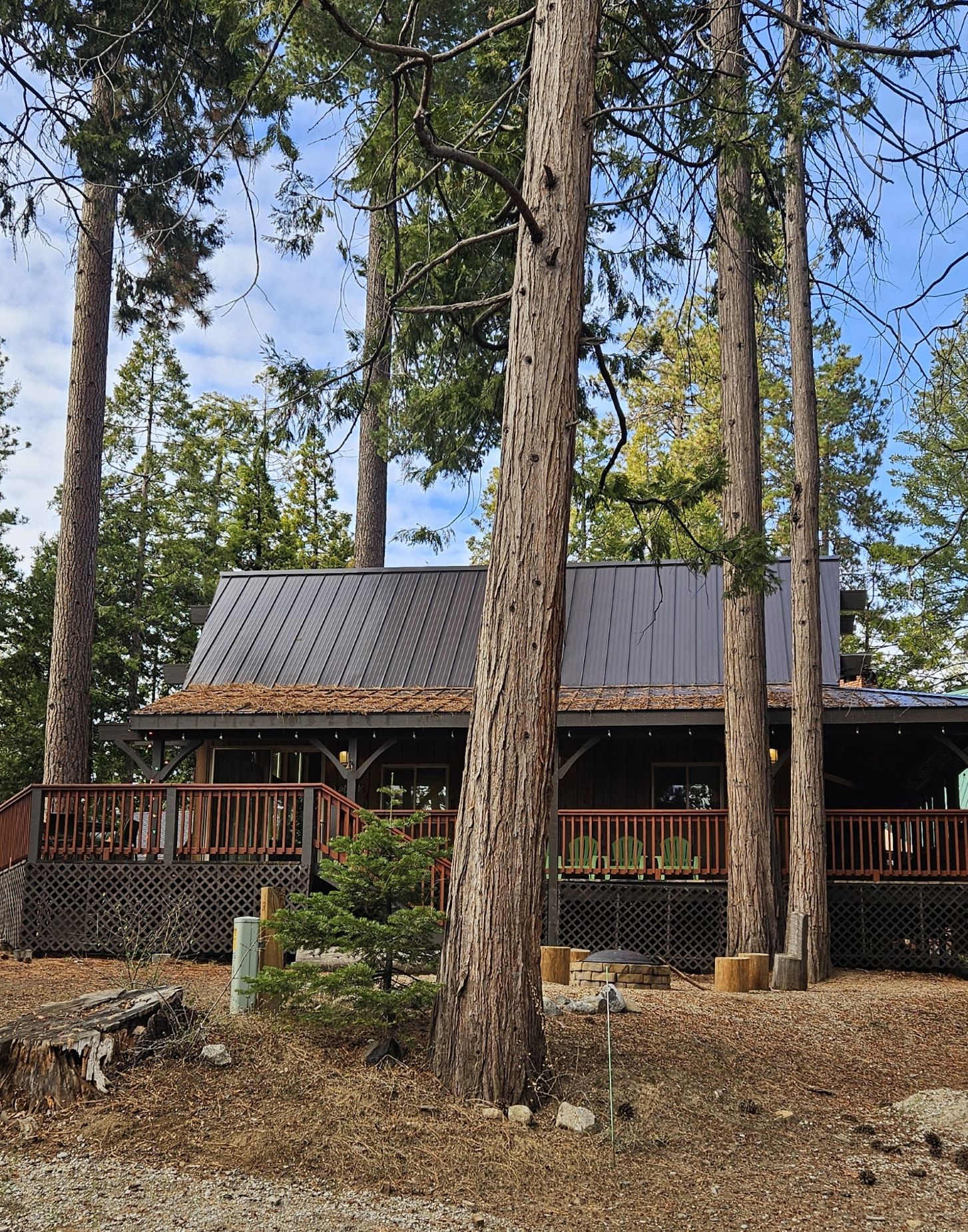
During the week of Christmas, our daughters Andrea and Candi invited us to join them and their families at a cabin rental in Shaver Lake.
Our cabin at Shaver Lake
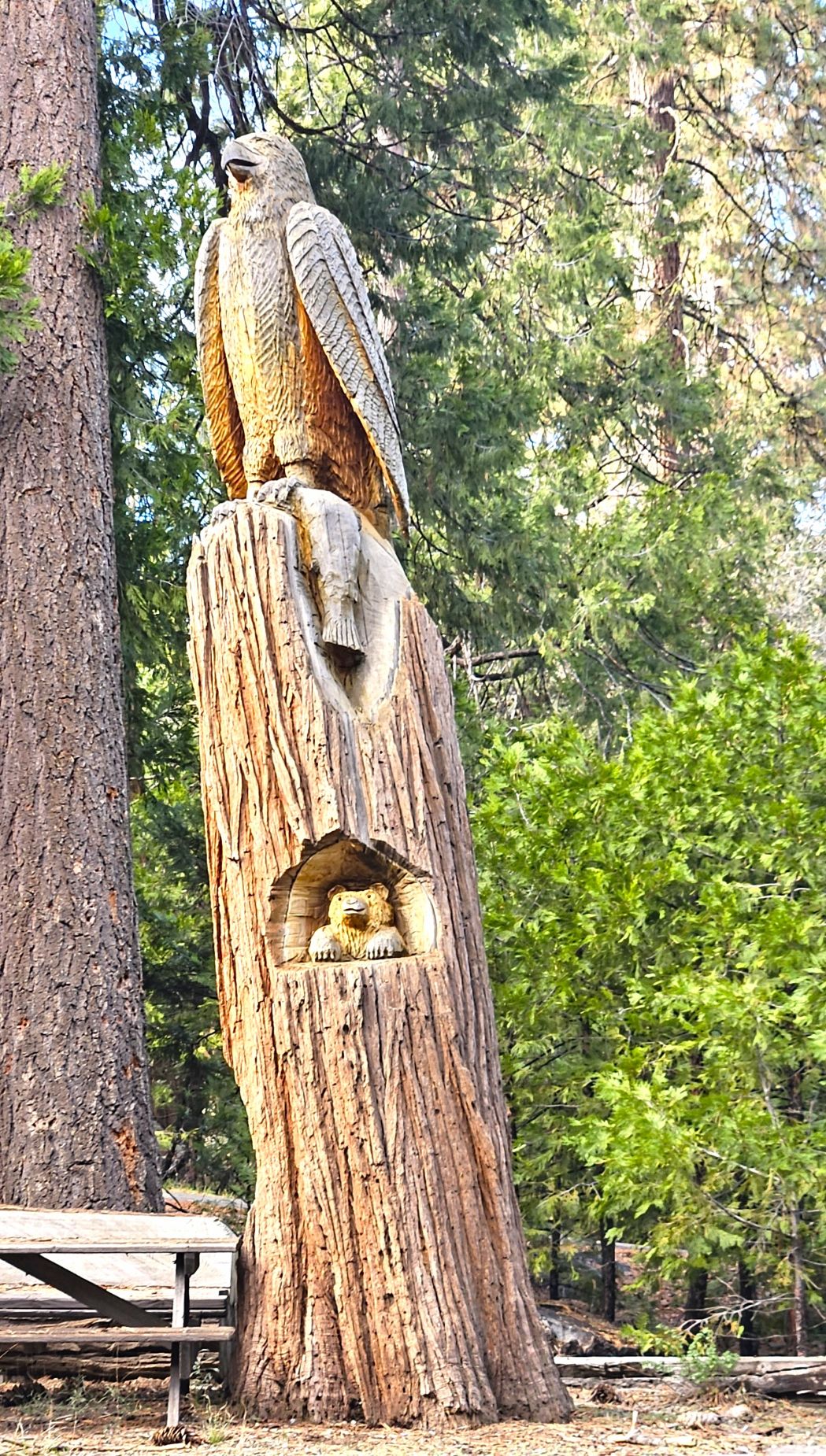
That afternoon after we arrived, we took a walk around the neighborhood and saw this tree carving at one of the nearby cabins.
It was a cold and cloudy day, but we needed some exercise. We walked to a nearby campground that was closed for the season hoping to find some snow where the grandkids and dogs could play.
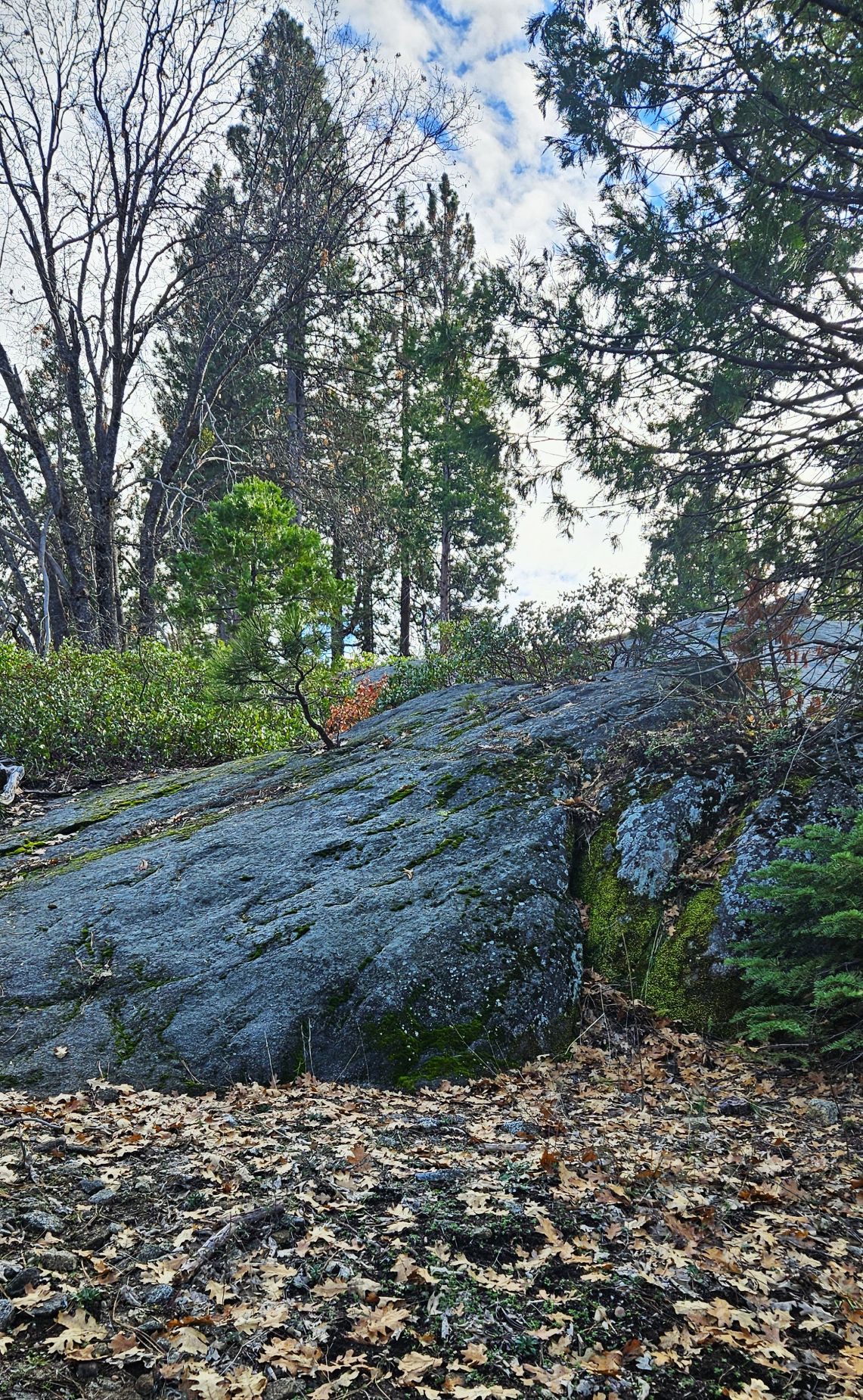
Large rock we saw on our walk.
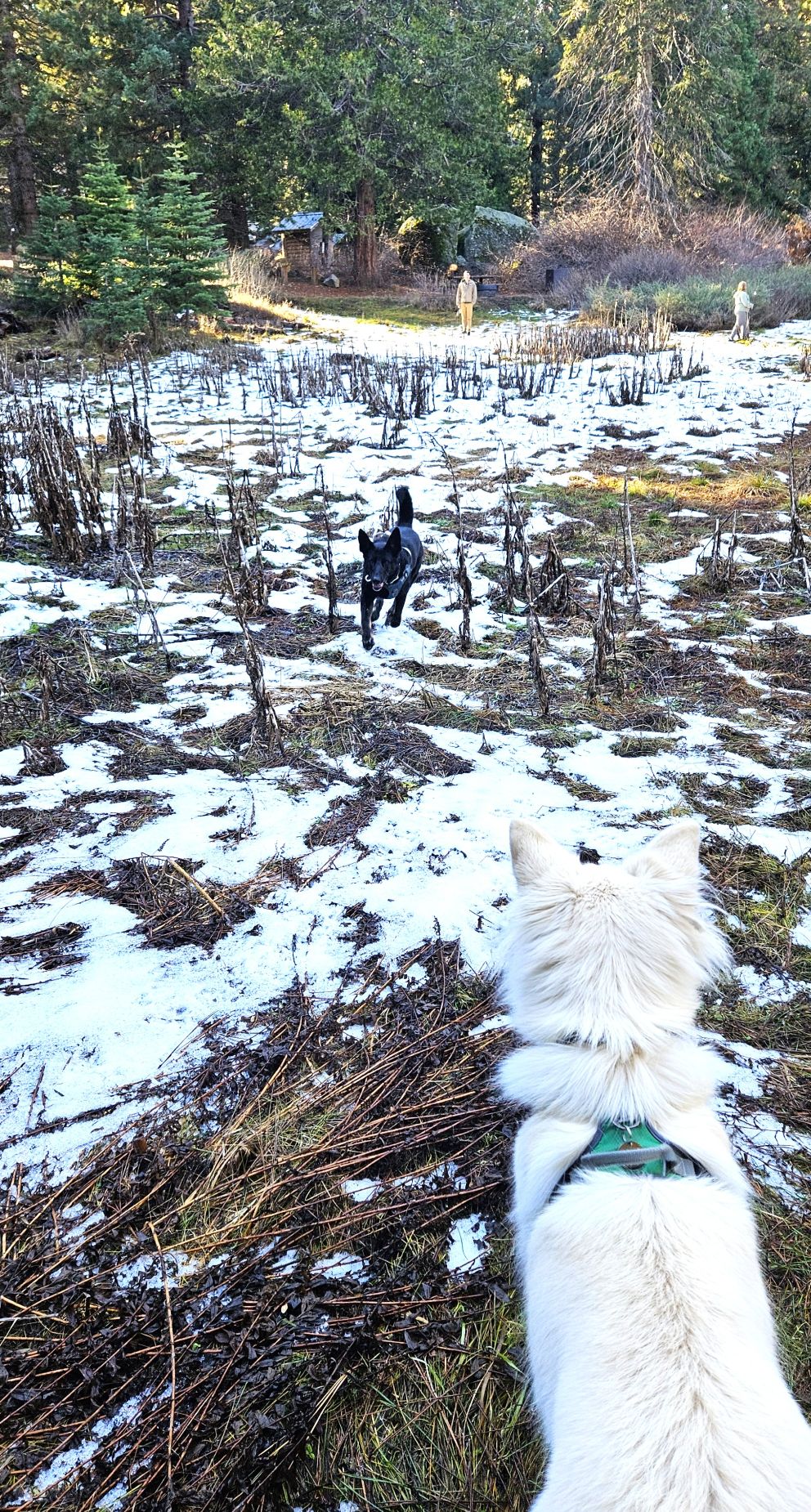
We finally found a patch of snow in a shaded meadow. Though there wasn’t much snow left, everyone had a great time.
The grand-dogs enjoyed the snow.
The late afternoon shadows told us it was time to head back to the cozy cabin and have some supper.
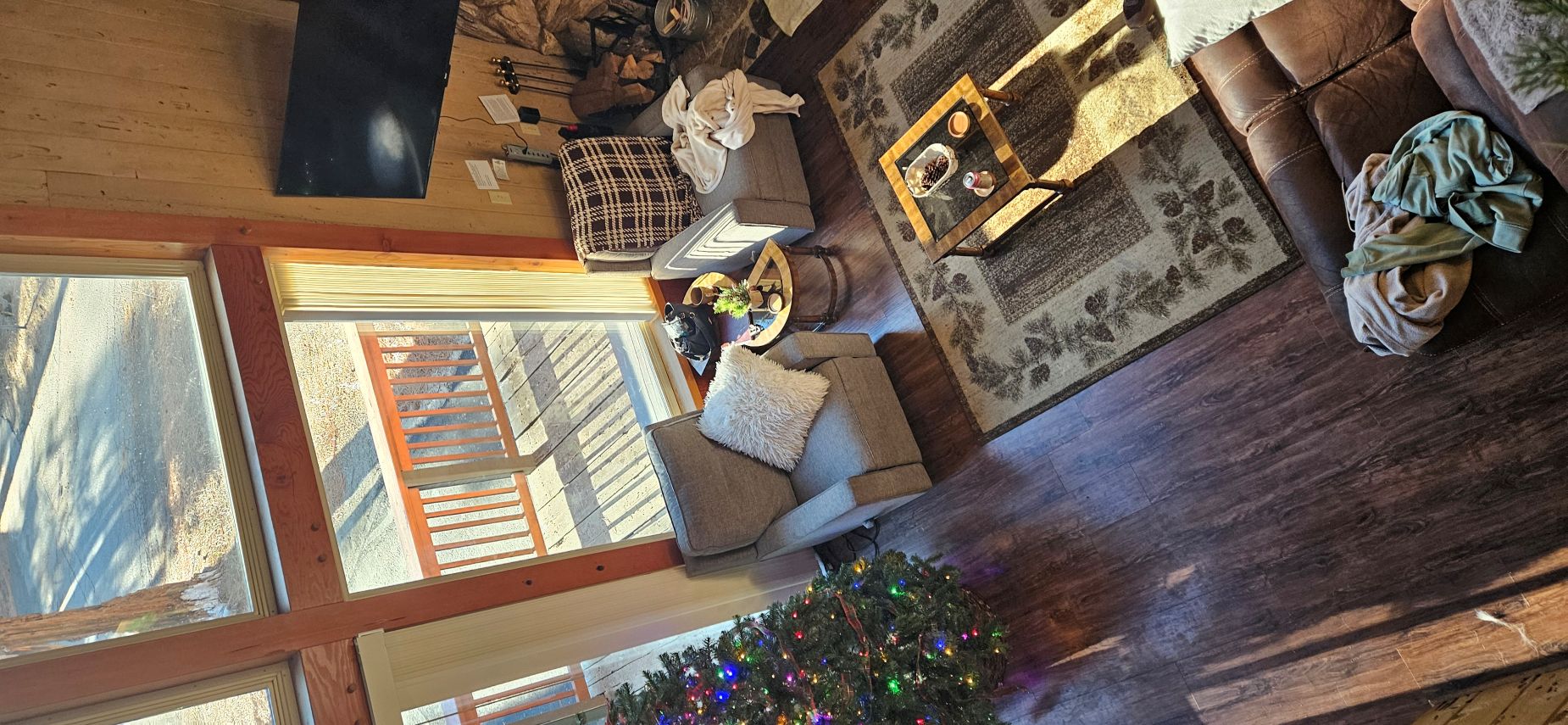
Our cozy cabin
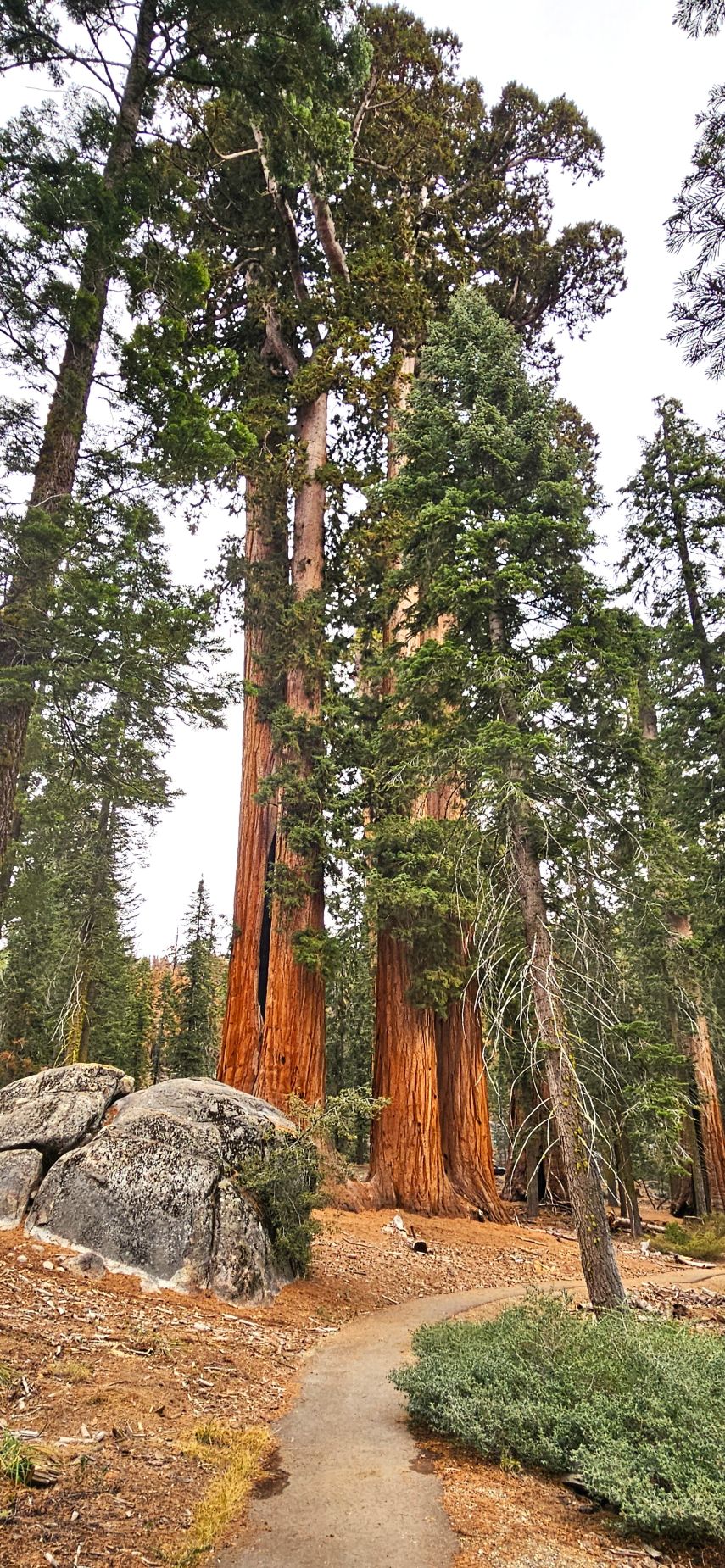
Over 30 years ago, we lived near Shaver Lake close to Wishon Reservoir. We decided to take a drive the next day to Courtright Reservoir and visit the area to see what was new. Along the way, we stopped at the McKinley Grove of Sequoias. There’s a nice new walking path with interpretive signs along the way.
A new pathway through the McKinley Grove
The Garnet Fire of August, 2025, came very close to the grove, as you can see from the burned trees in the background of the photo. Thankfully, the grove was spared and didn’t suffer any damage.
Burned trees from the fire of 2025 can be seen in the background of McKinley Grove
It’s estimated that some of these trees are around 2300 years old. Fires are actually beneficial to Sequoias in that fire is needed for their cones to release their seeds.
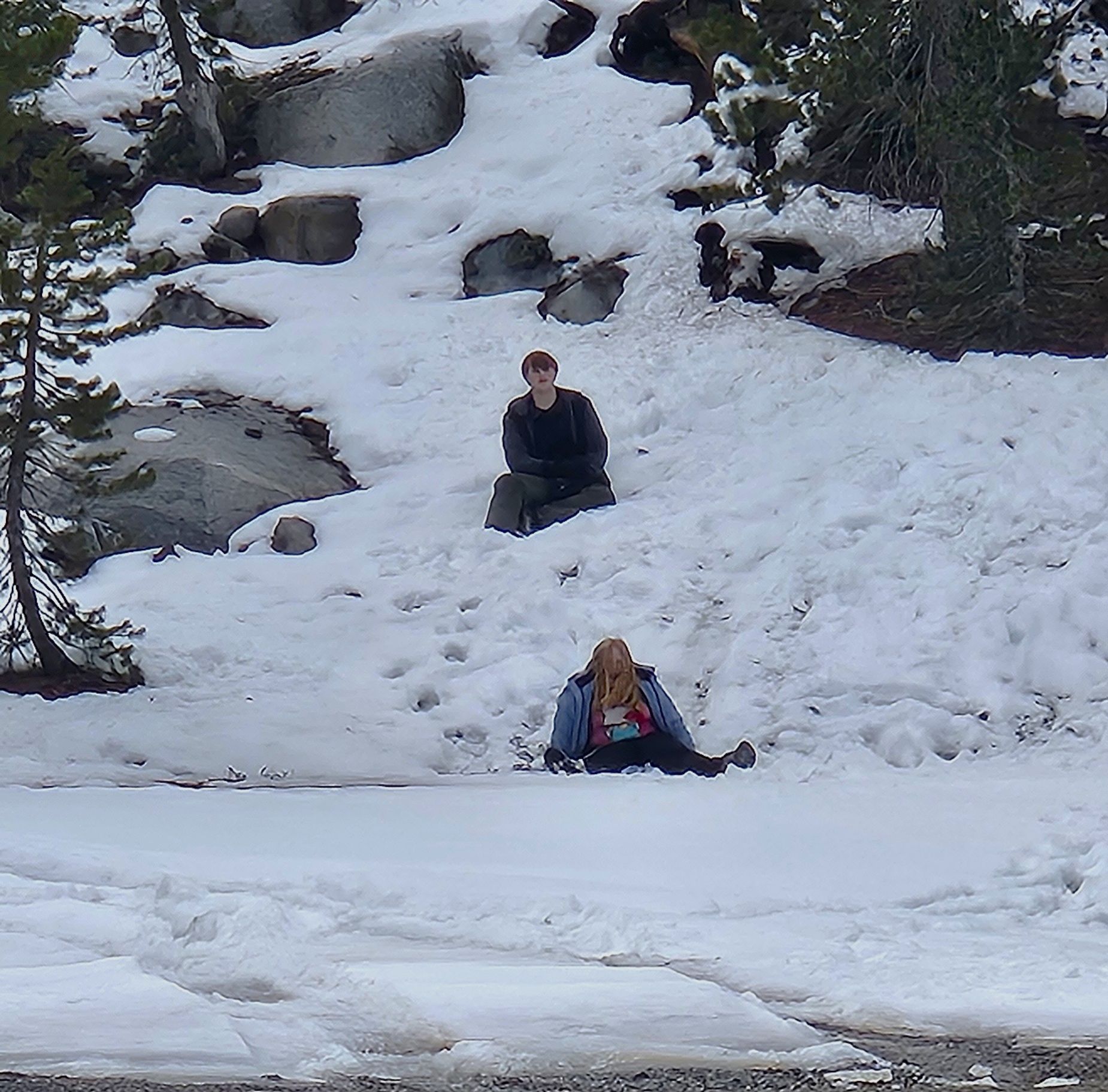
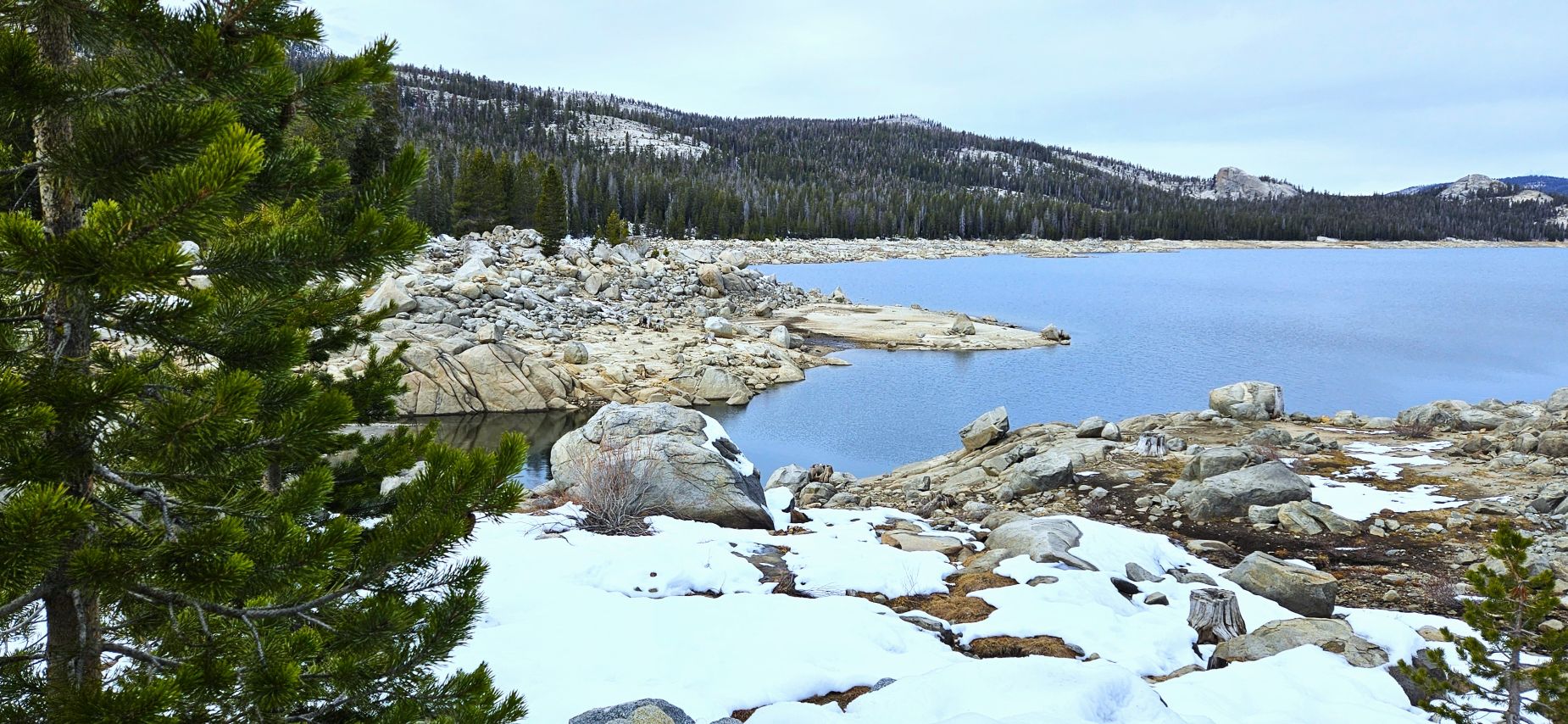
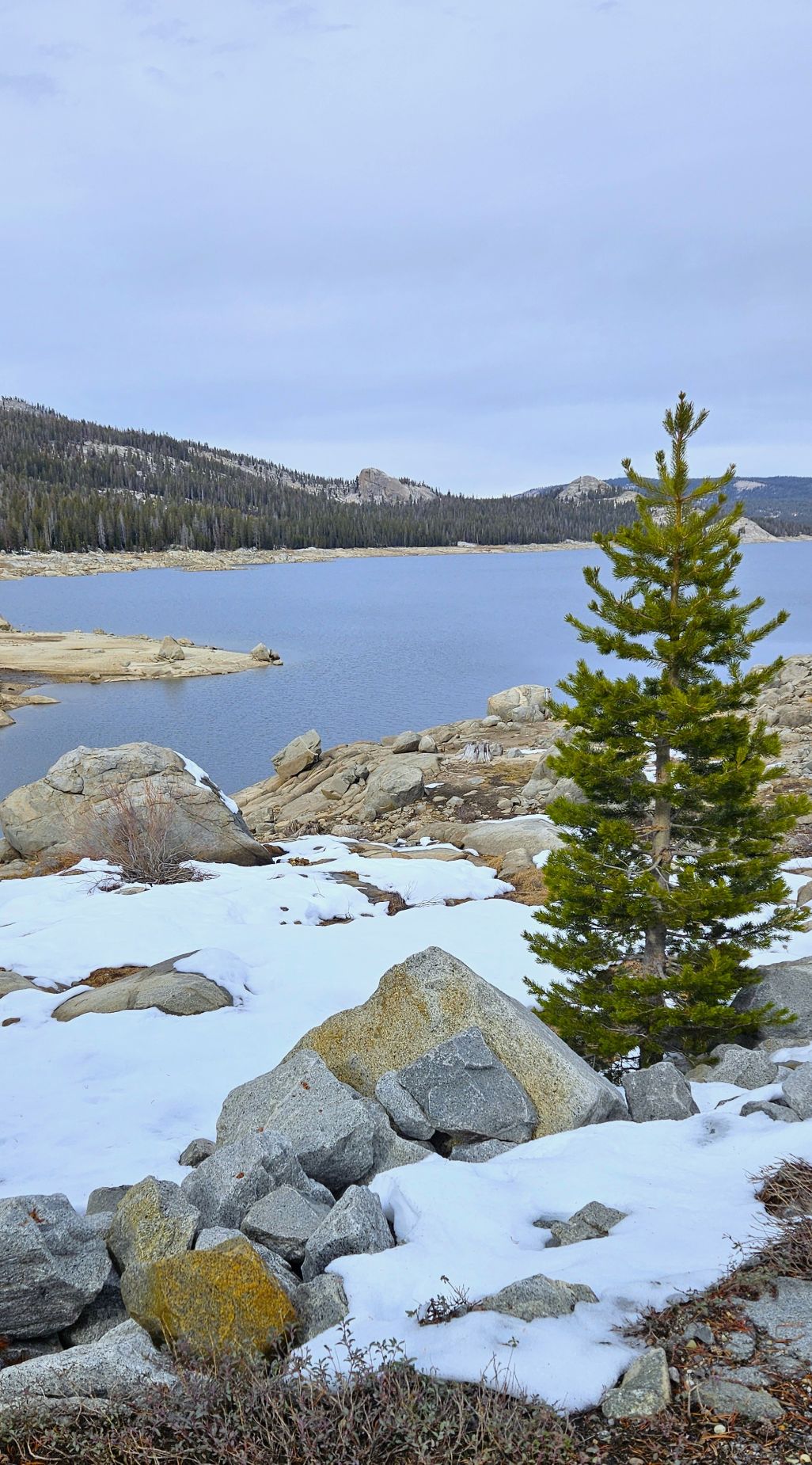
After a short break at McKinley Grove, we drove several more miles to Courtright Reservoir, the lake above Wishon Reservoir. Courtright is at a higher elevation (8200′), so we encountered more snow, to the delight of the grandkids.
Sledding in the snowCourtright Lake
After spending some time there, we headed back to the cabin, enjoying the beautiful scenery along the way.
View along Courtright Road.View toward Wishon Reservoir on Courtright Road.
The landscape where the fire burned through was much changed. Loggers had already removed many of the damaged trees and vegetation which opened up the views in many places.
Burn area on McKinley Grove Road where trees and vegetation have been removed.
We enjoyed our time at Courtright Reservoir, Sierra National Forest and Shaver Lake area visiting familiar haunts of the past with family.
Then the trees of the forest will sing for joy in the presence of the Lord; For He is coming to judge the earth. Give thanks to the Lord, for He is good; For His faithfulness is everlasting. — I Chronicles 16:33-34
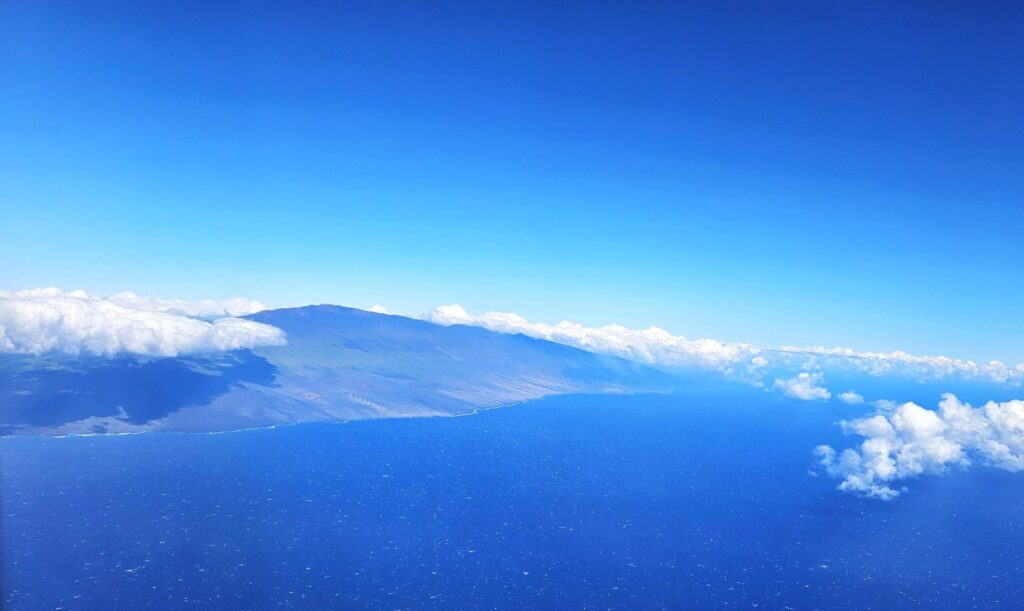
The third island we visited on our trip to Hawaii was the island of Maui. From the air we could see Haleakala Mountain where we would be driving to the summit in two days. It is a huge shield volcano over 10,000 feet high that makes up most of the island.
Maui from the air
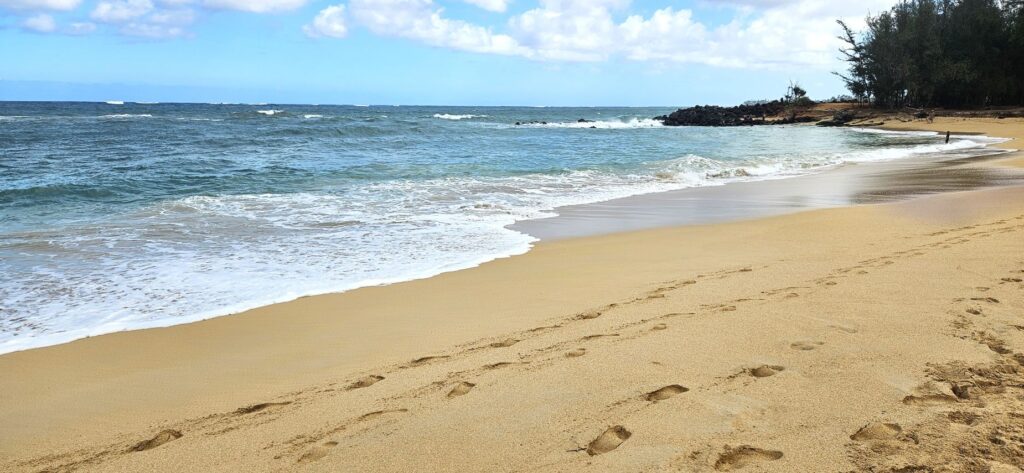
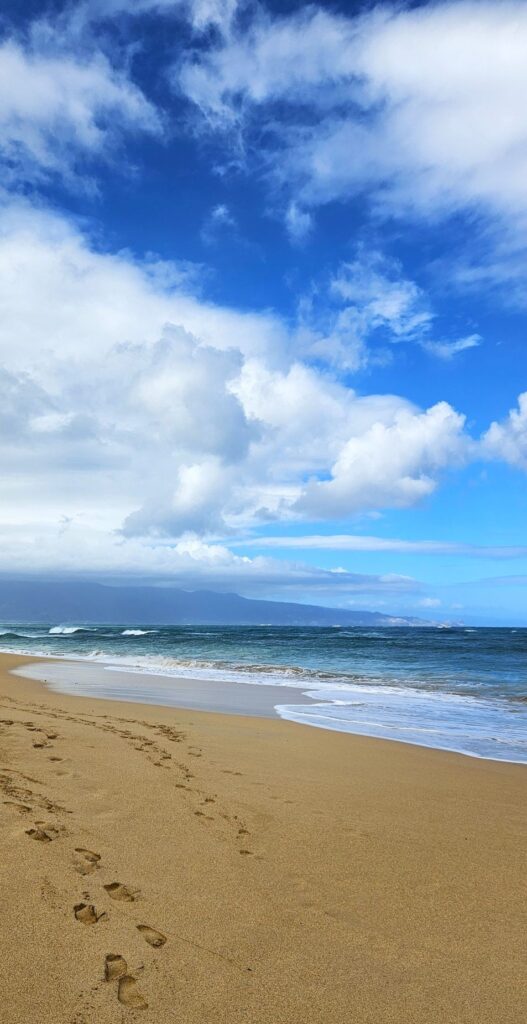
Our first full day on the island was our 50th wedding anniversary, so we decided to enjoy some time at the beach at Baldwin Beach Park. Unlike Waikiki, we had this beach mostly to ourselves.
Baldwin Beach
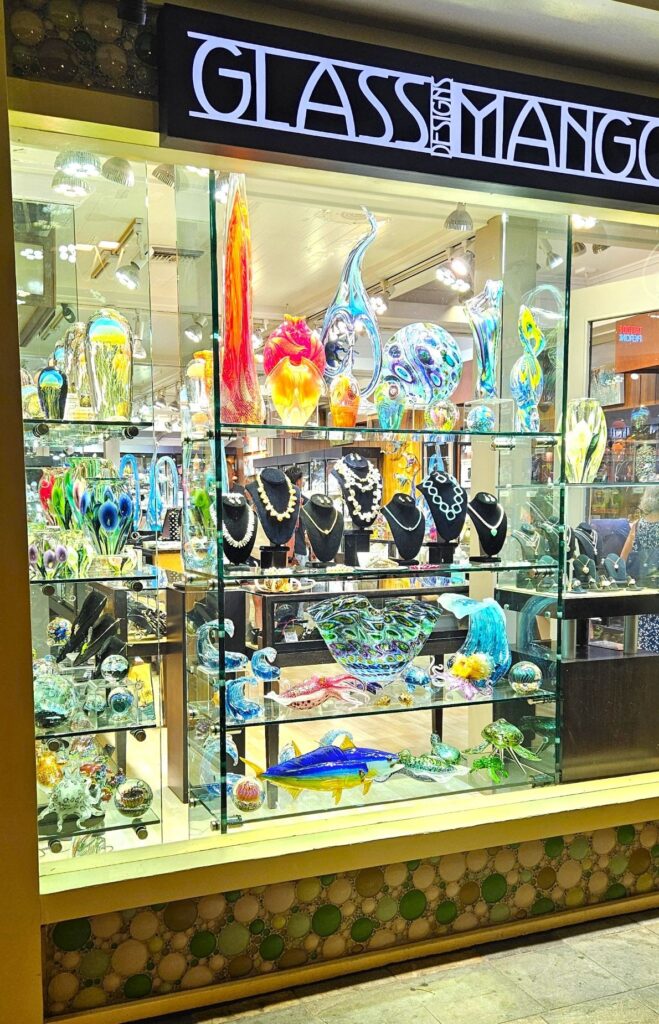
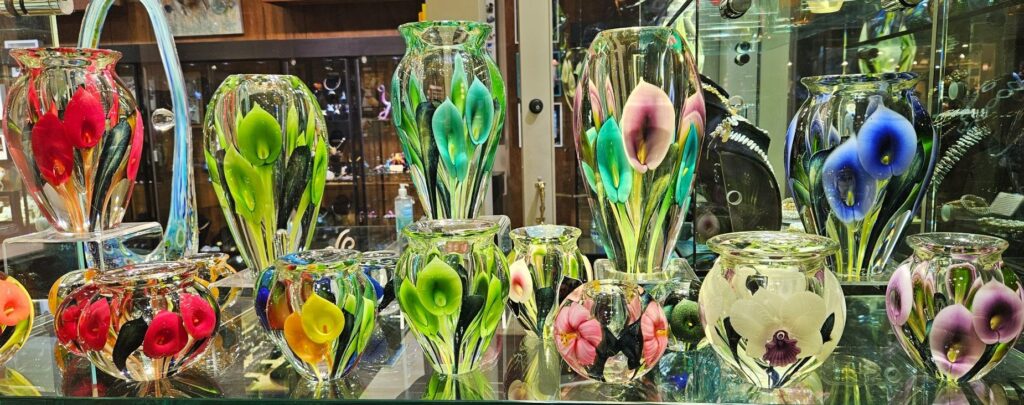
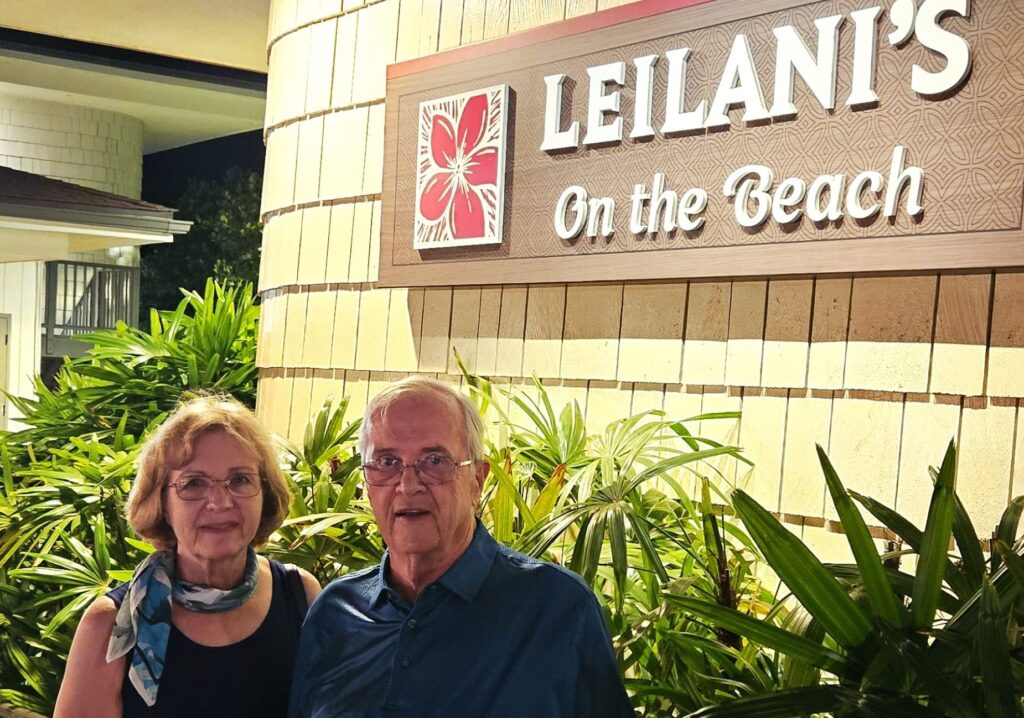
We had dinner reservations at Leilani’s On the Beach, a restaurant in Ka’anapali, Maui. It is near Lehaina where recent fires destroyed much of the city. We got there a little early, so we window-shopped at Whalers’ Village, an oceanfront shopping center right on Kāʻanapali Beach. The Glass Mango shop was our favorite.
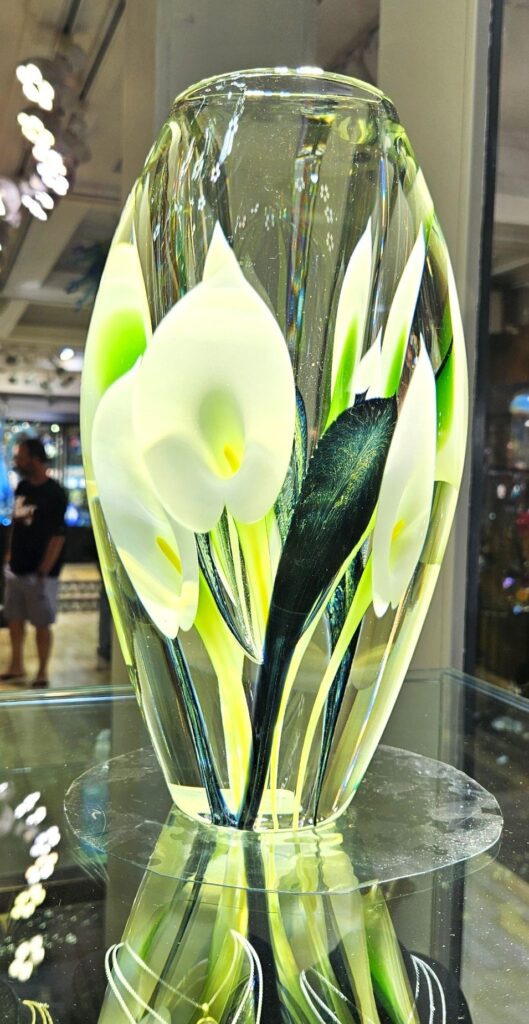
The Glass Mango features wearable art jewelry and artistic glass creations by local artists. Glass vases on display at Glass Mango Shop
This beautiful Calla Lily vase is blown glass made in one piece.
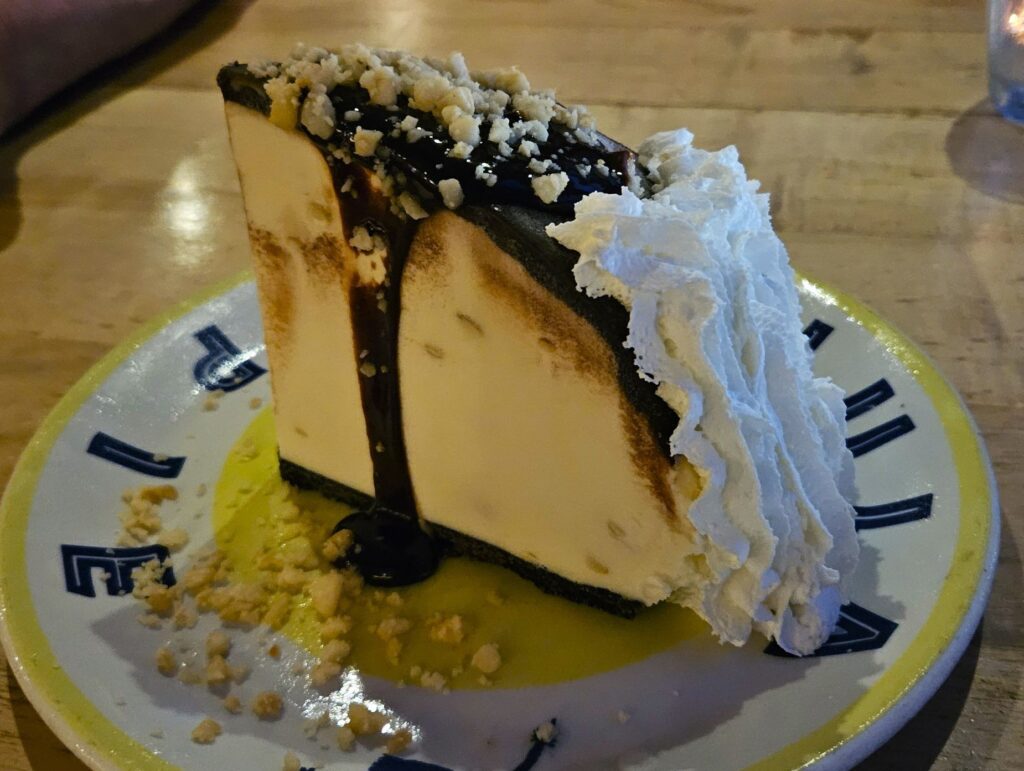
We went to our restaurant and were seated on the second floor at a table with an open air view of the ocean. We ordered a large prime rib dinner and split it between us. For dessert, we split a piece of Leilani’s famous Hula Pie made from macadamia ice cream, chocolate fudge, whipped cream and sprinkled with macadamia nuts. Delicious!
Hula Pie
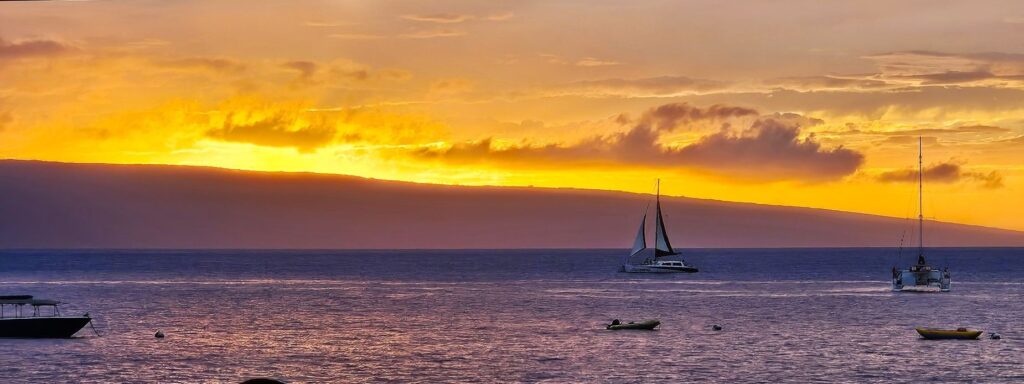
I booked our reservations around sunset so we could see the sun setting over the ocean. It was cloudy when we got there, so I was worried we wouldn’t get to see much of a sunset.
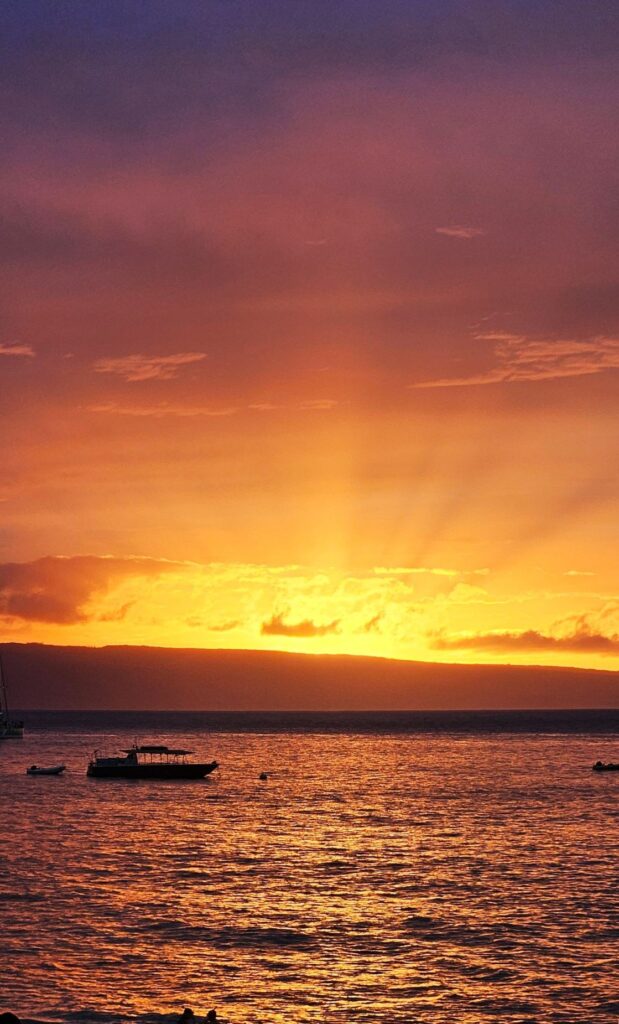
Thankfully, I was wrong. The clouds made it even more beautiful. As the sun began to set, I began taking photos. The sunset became more and more vivid, lasting a very long time. The colors changed from golden to orange to bright pink.
As a finale, the clouds sent rays of sunlight shooting across the sky. People in the restaurant were getting out of their seats to get photos of this beautiful sunset.
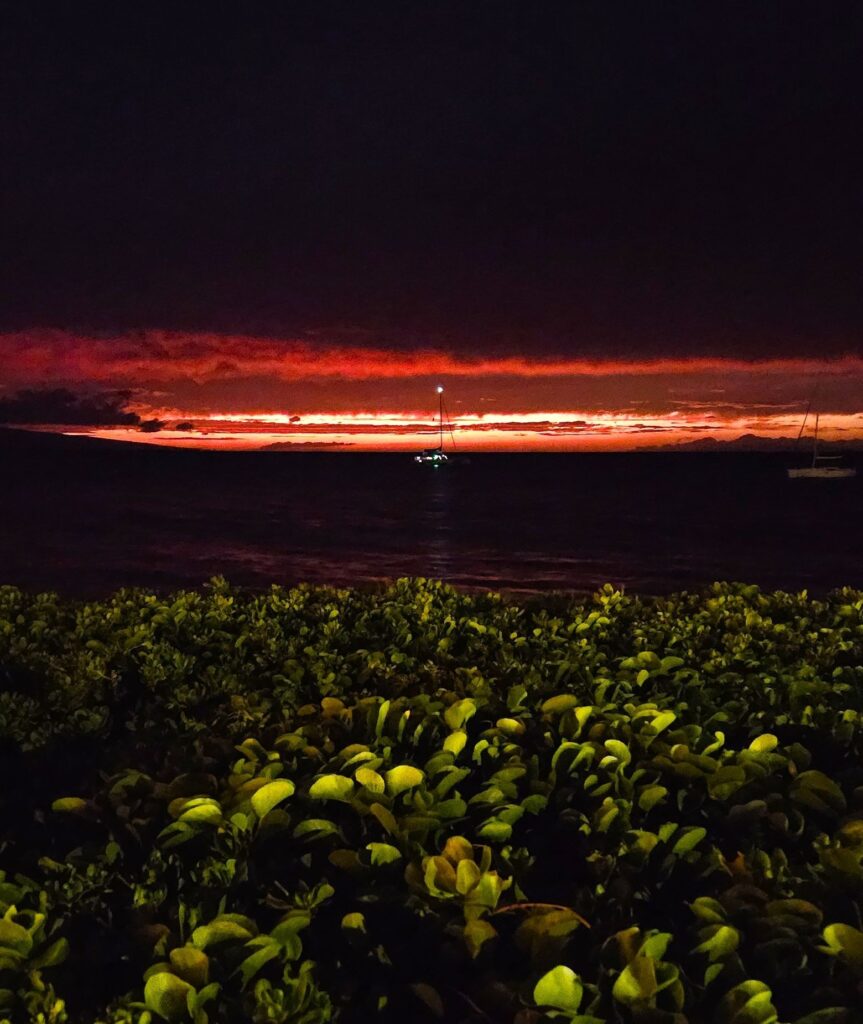
The sun sank below the mountains.
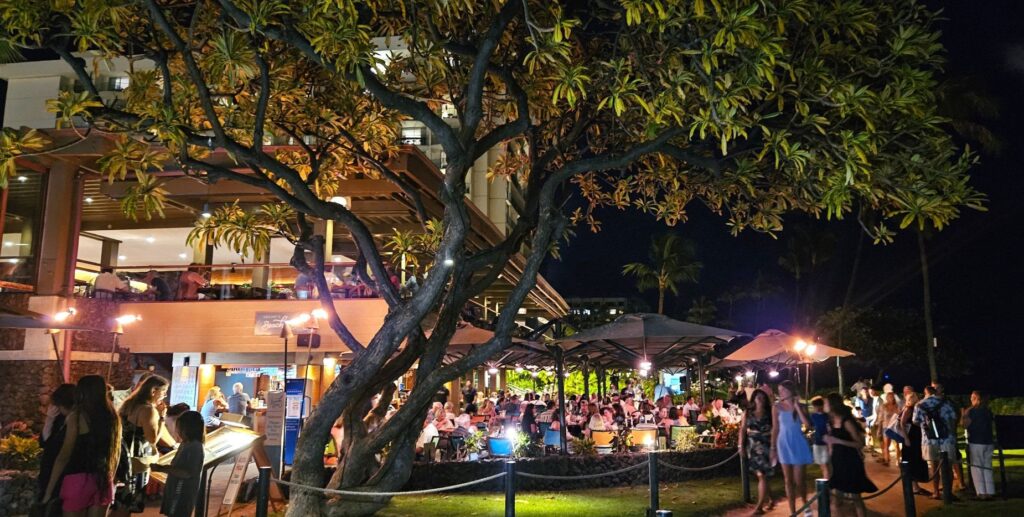
The sun may have gone down, but the area around Leilani’s on the Beach and Whaler’s Village came alive with crowds of people. It was a memorable night for our 50th wedding anniversary celebration.
The next day we got up early to drive to Haleakala National Park. We ascended several thousand feet before we even got to the park entrance. Though it was cloudy when we started, the highway took us above the clouds.
On the road to Haleakala National Park where we were above the clouds.
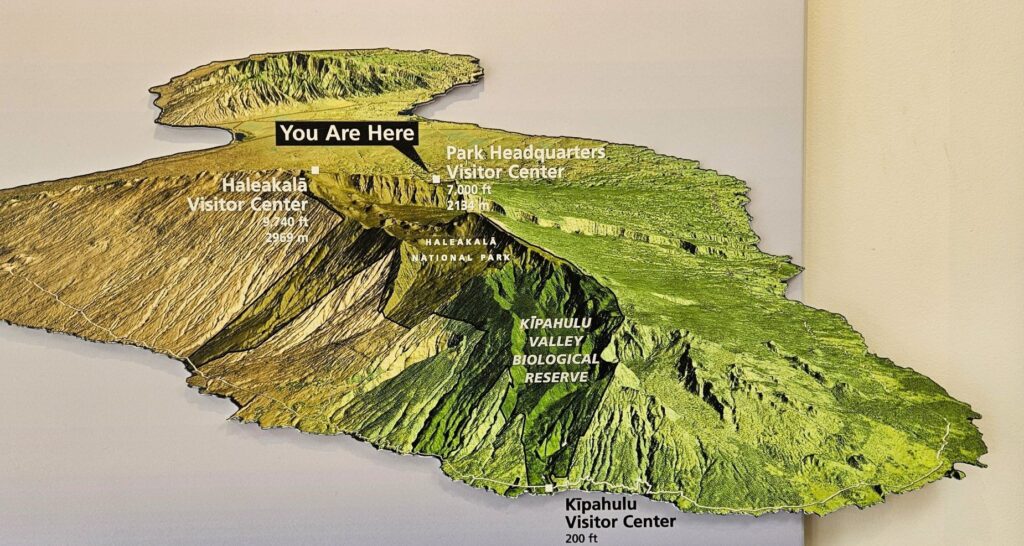
At the Park Headquarters visitor center, I stamped my national parks passport book. It was during the government shutdown, but this visitor center was open. They were out of maps, but we could take photos of the maps posted.
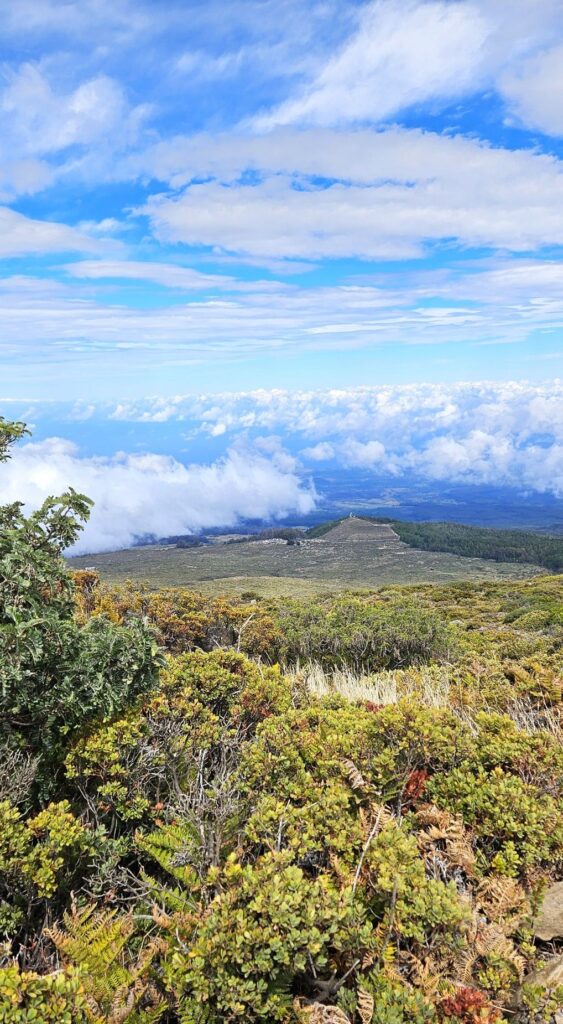
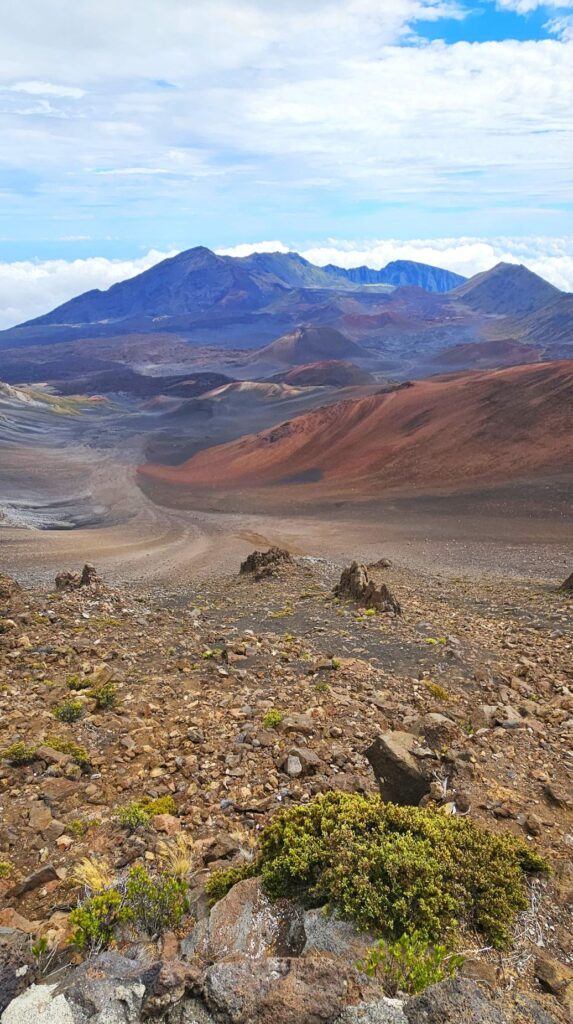
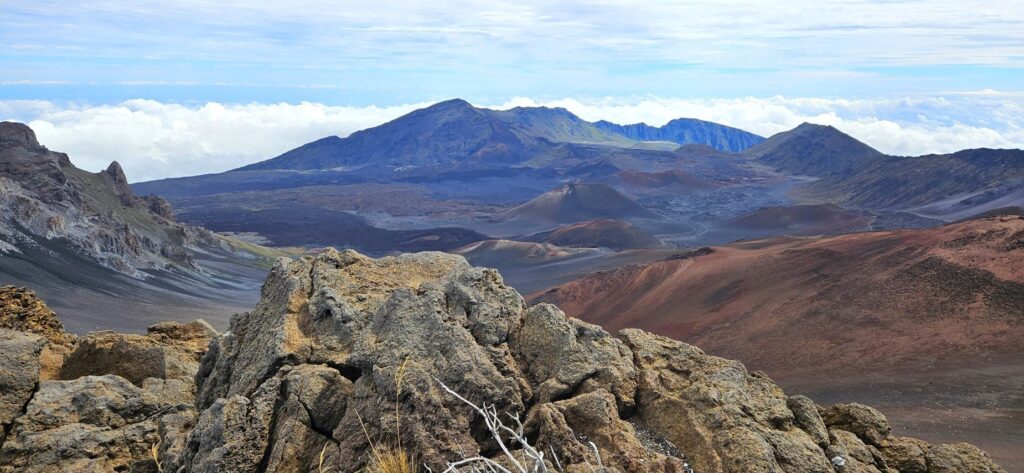
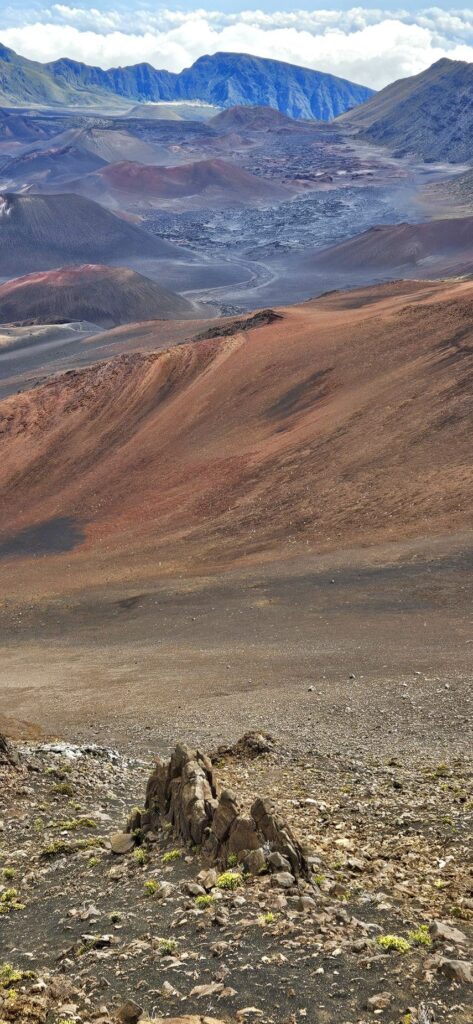
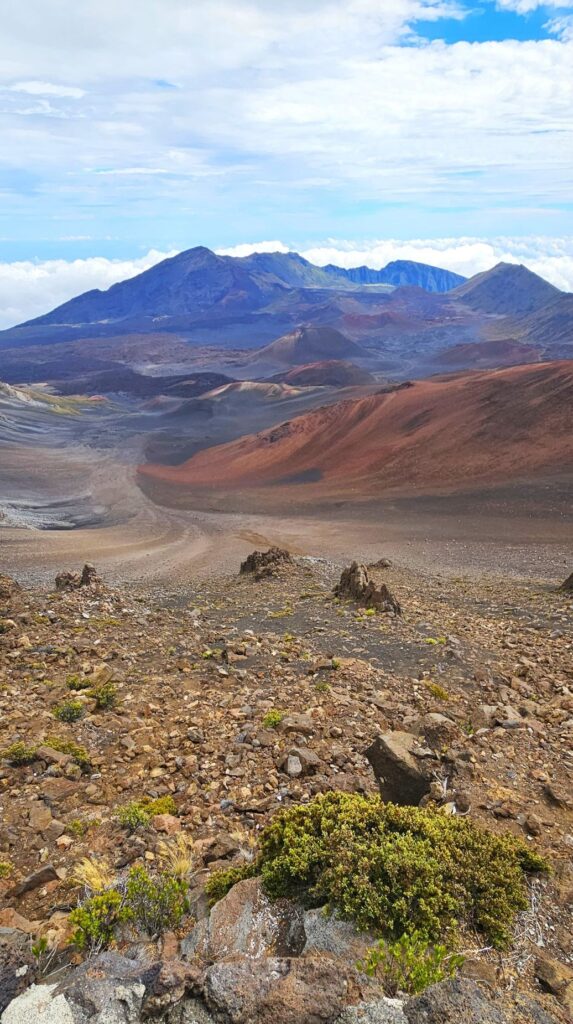
We drove on till we reached the Haleakala Visitor Center (which was closed). The view was amazing. Here we could look across the entire volcano valley floor. It was extremely windy. I had trouble holding the camera steady.
Crater of Haleakala Volcano
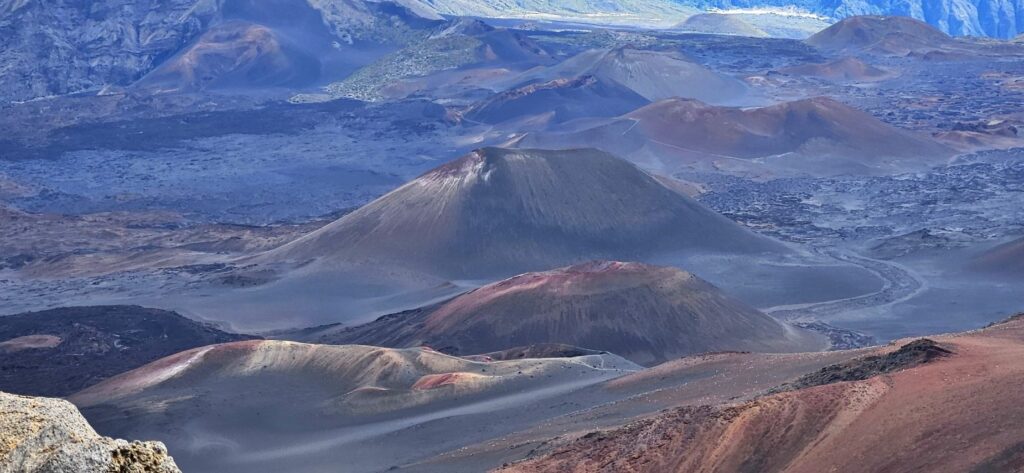
Zooming in, I could see smaller volcanic domes. The variety of colors was so amazing.
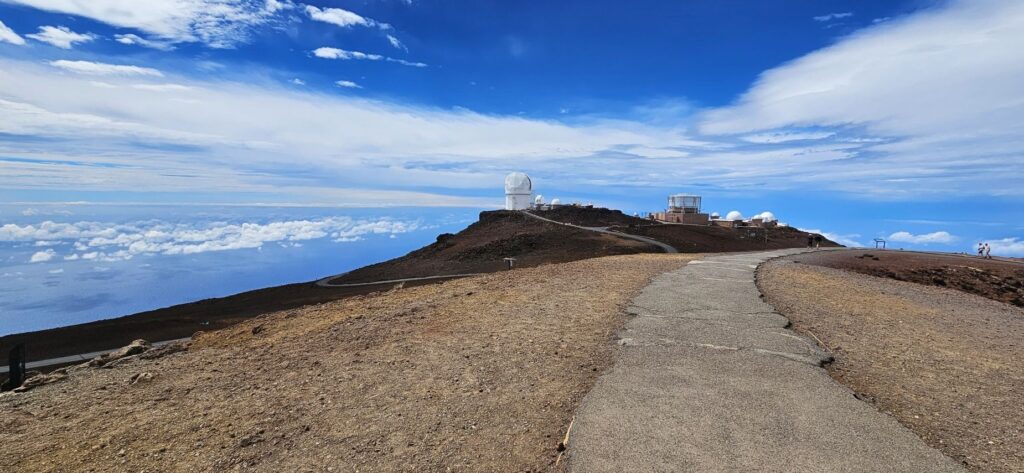
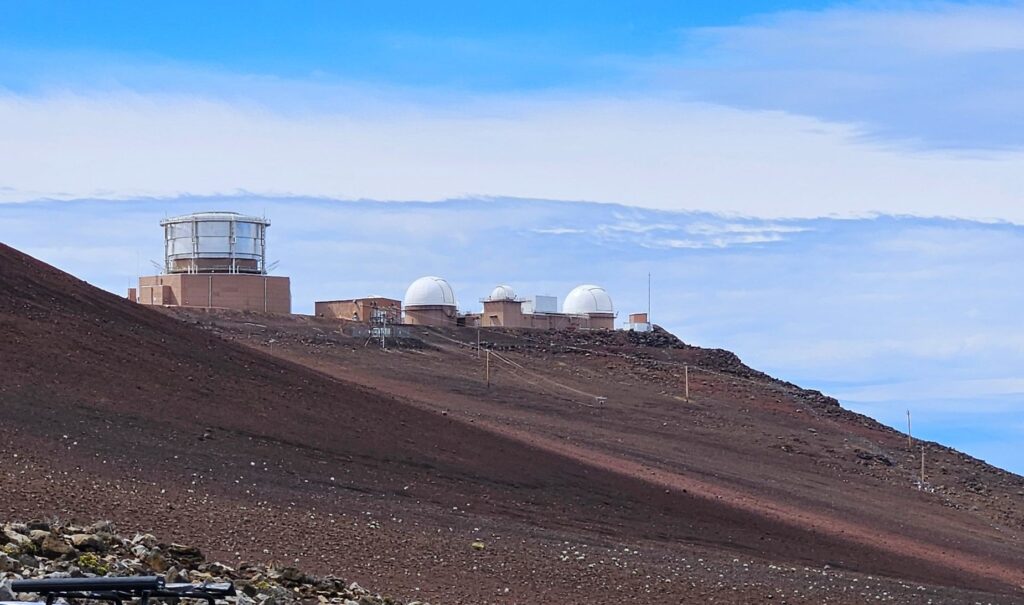
As we drove on to the end of the road, there was another lookout point with a glassed-in viewing structure. On the same mountain was Haleakala Observatory also known as Science City.
Haleakala Observatory or Science City and other observatories on top of the mountain.
There were other observatories from University of Hawaiʻi’s, the Air Force, and Las Cumbres Observatory. These observatories have unparalleled stargazing due to the high altitude, clear air, and lack of light pollution. Unfortunately, they are not open to the public.
Observatories with a clear view of the skies.
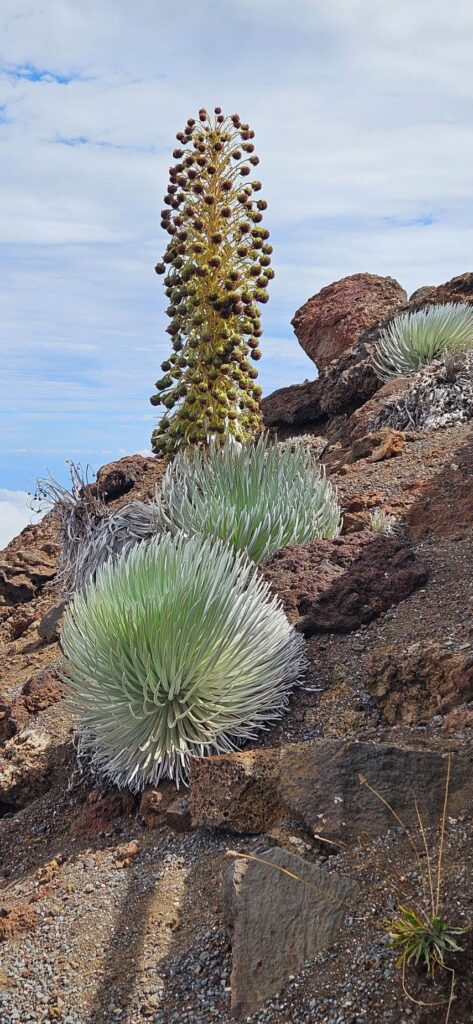
This Silversword plant is unique to Haleakala. These plants live from 3 to 90+ years. They send up a tall flowering stalk, only blooming once. Then they die soon afterwards. The wind scatters the dried seeds. The one-time blooming usually happens after the plant reaches between 20 to 50 years of age. However, some may flower sooner, as early as 7 years depending on conditions. The blooming stalk of the Silversword is amazing and beautiful. It can be as small as 2 feet or up to 10 feet tall. It can have a hundred or more purple flowers. The blooms, however, only last up to 7 days.
Silversword plants on Haleakala summit
On our way down the mountain, we stopped at another overlook for a different view of the crater.
We had plenty of time in our day to do more sight-seeing, so we drove along the road to Hana. We never got to Hana. The road is very narrow with many one-lane bridges and passages where cars have to wait for oncoming traffic to pass before proceeding.
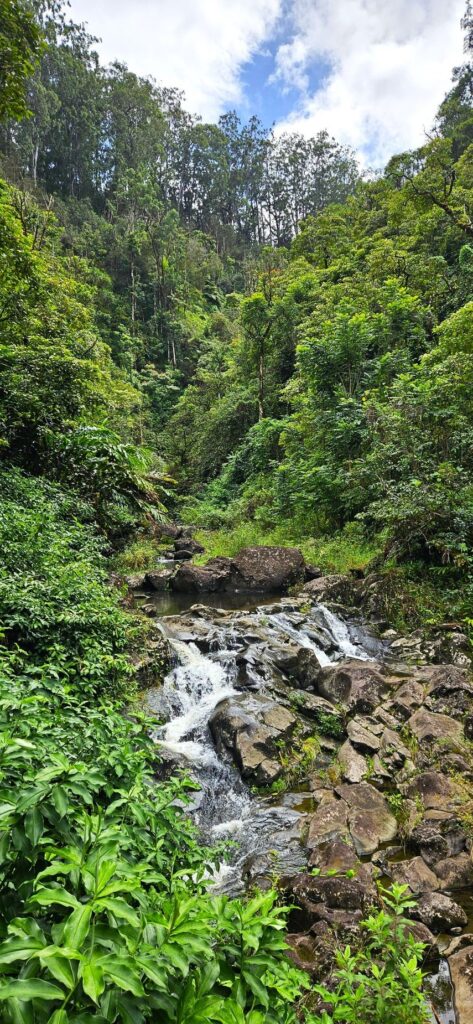
Creek along road to Hana
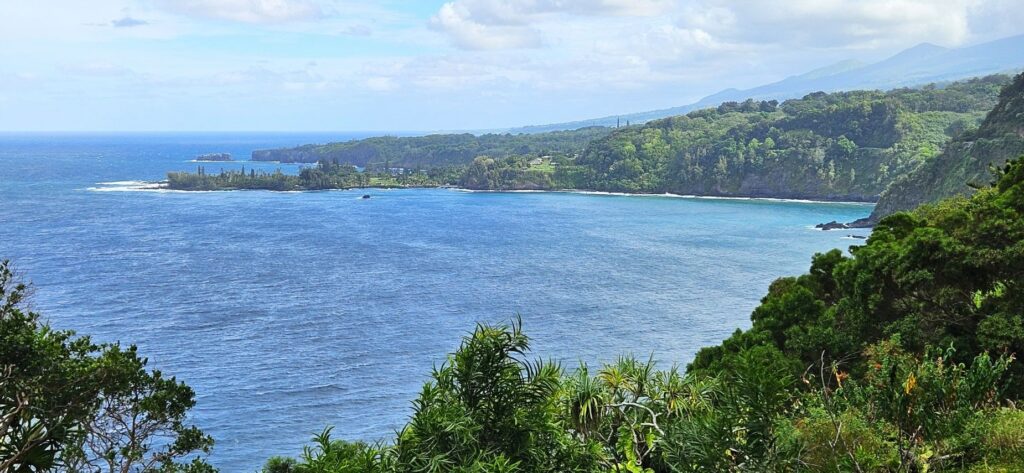
Unlike the mountain, this area is lush with trees and foliage. At one of the state rest areas, we could finally see the ocean. After hours of driving, we turned around to head back.
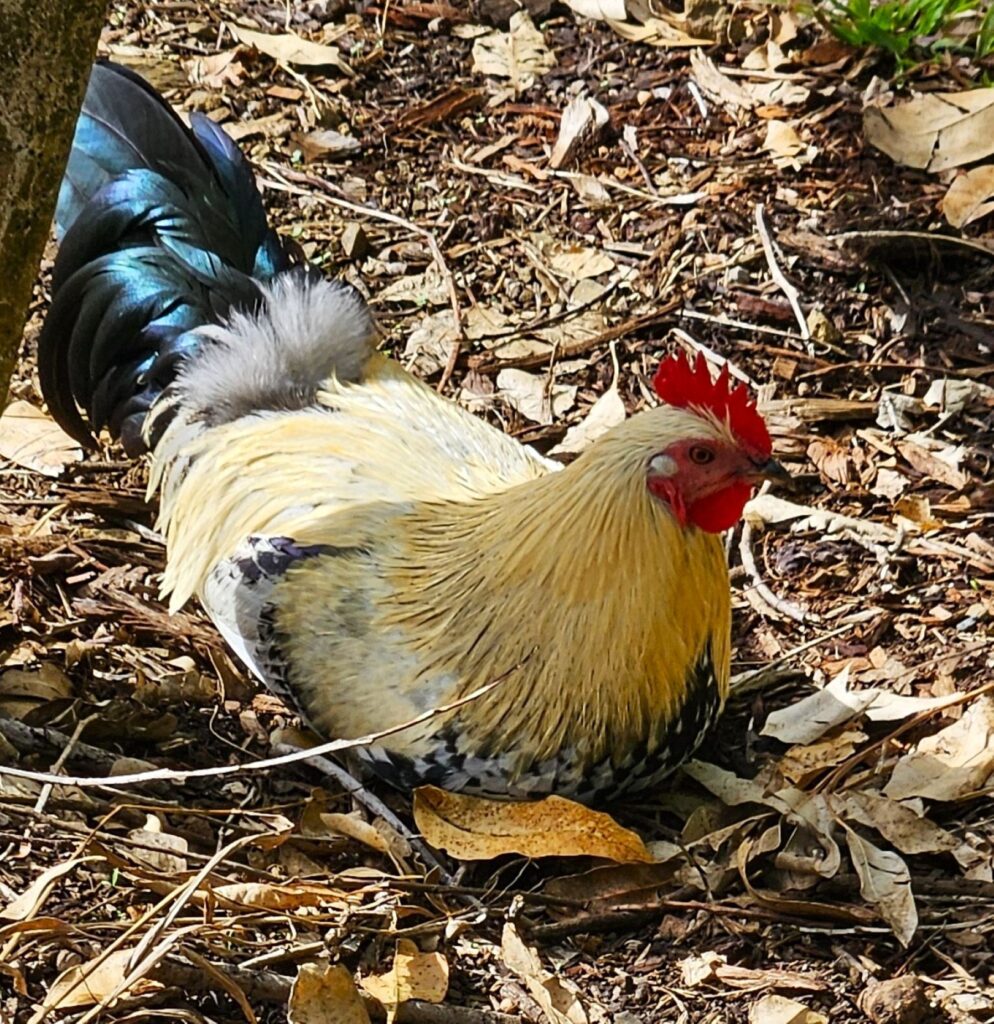
One of the typical sights in Maui is the sight of chickens and roosters running loose everywhere. We saw this beautiful rooster at the rest area.
We had a wonderful time in Hawaii and added two more national parks to our list of national parks. We have visited 36 so far, but we have 27 more to go!
For the mountains may depart and the hills disappear, but my kindness shall not leave you. My promise of peace for you will never be broken, says the Lord who has mercy upon you.Isaiah 54:10
Our 50th Anniversary trip to Hawaii continued by flying from Oahu to the big island of Hawaii, which is called….Hawaii. We stayed in the small town of Kailua-Kona, which is on the western side of the island.
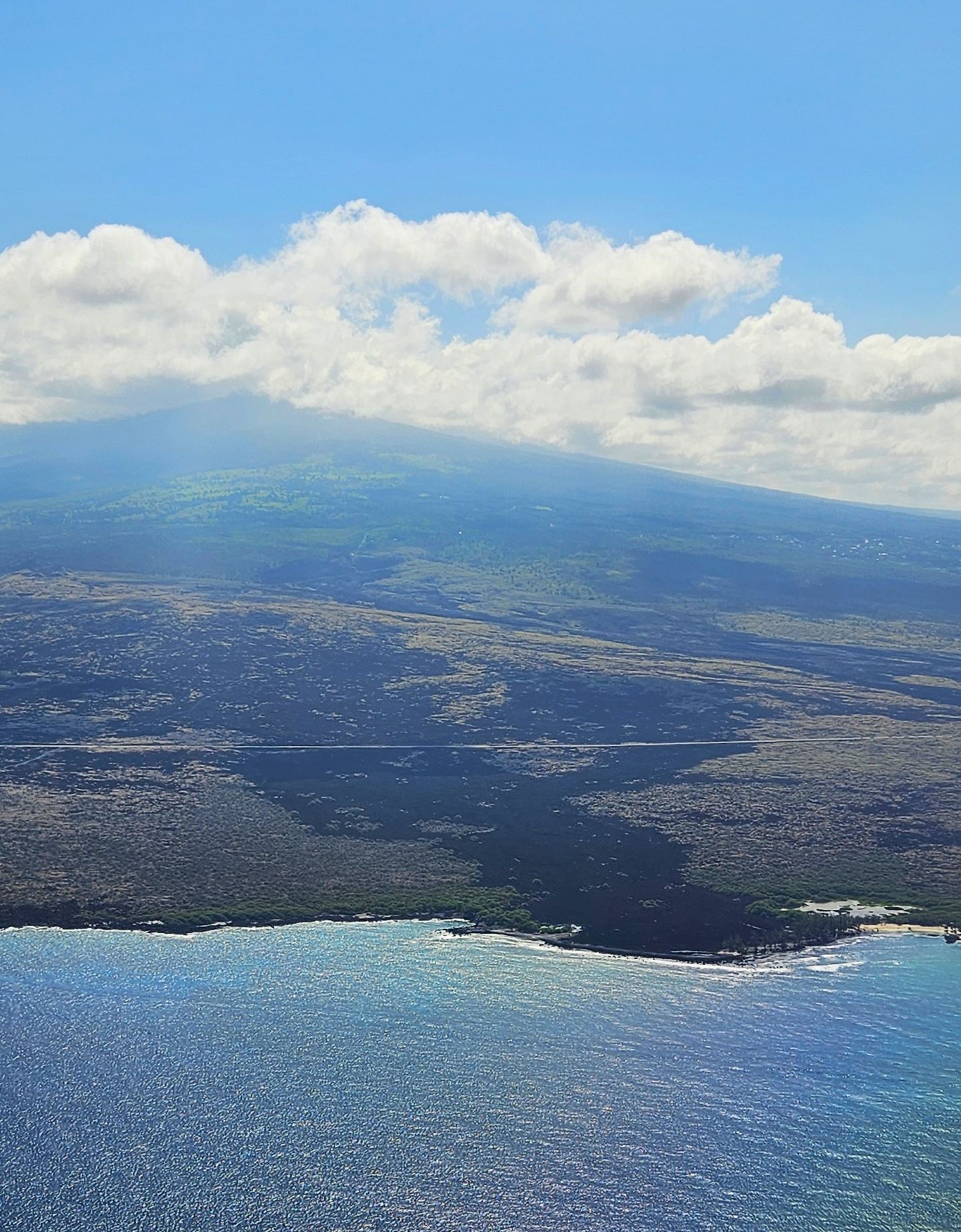
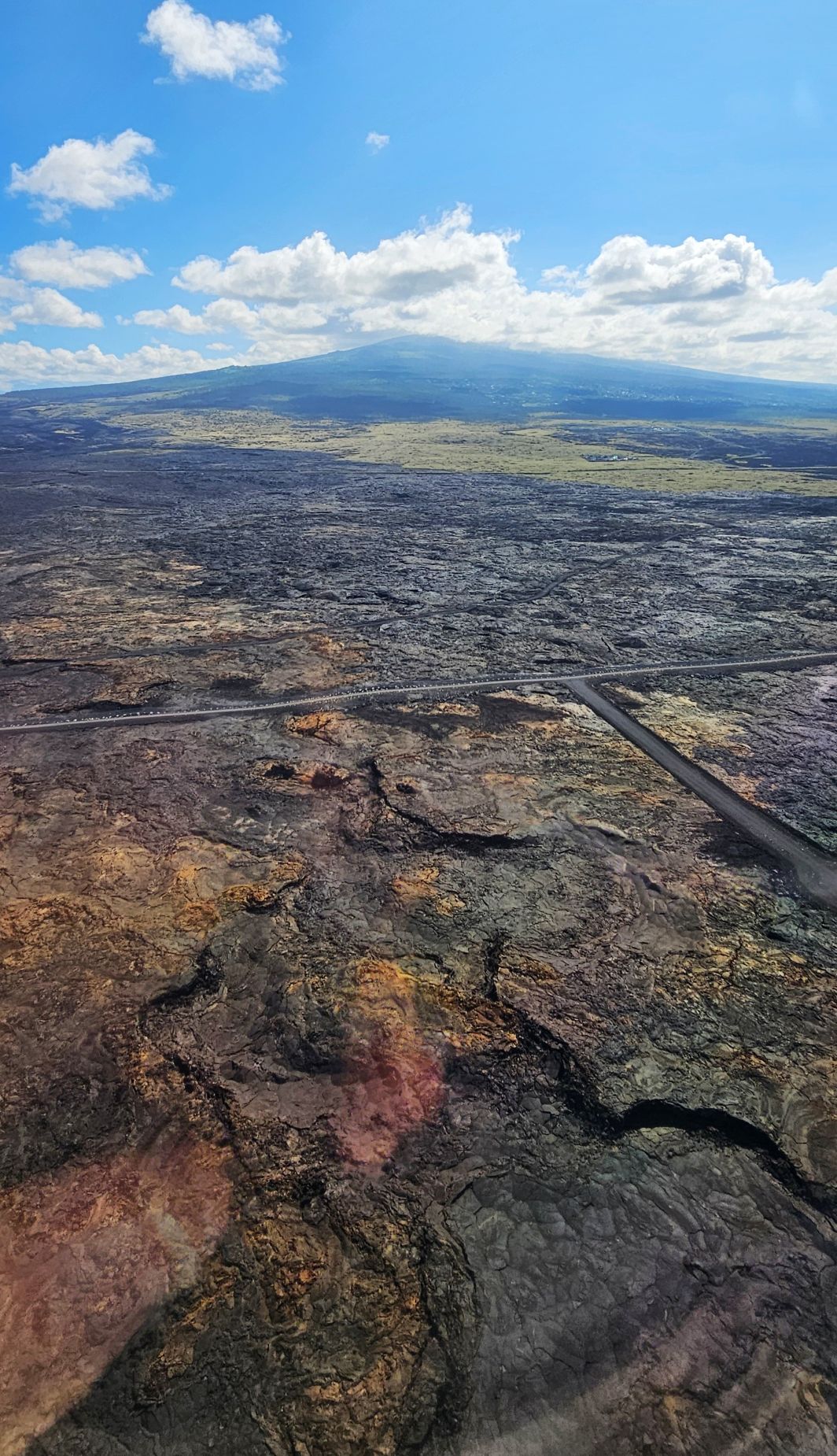
The volcanic origins of the island were visible from the air. The airport and the roads are built right on top of old lava flows.
View from the air. Roads are built on top of old lava flows.
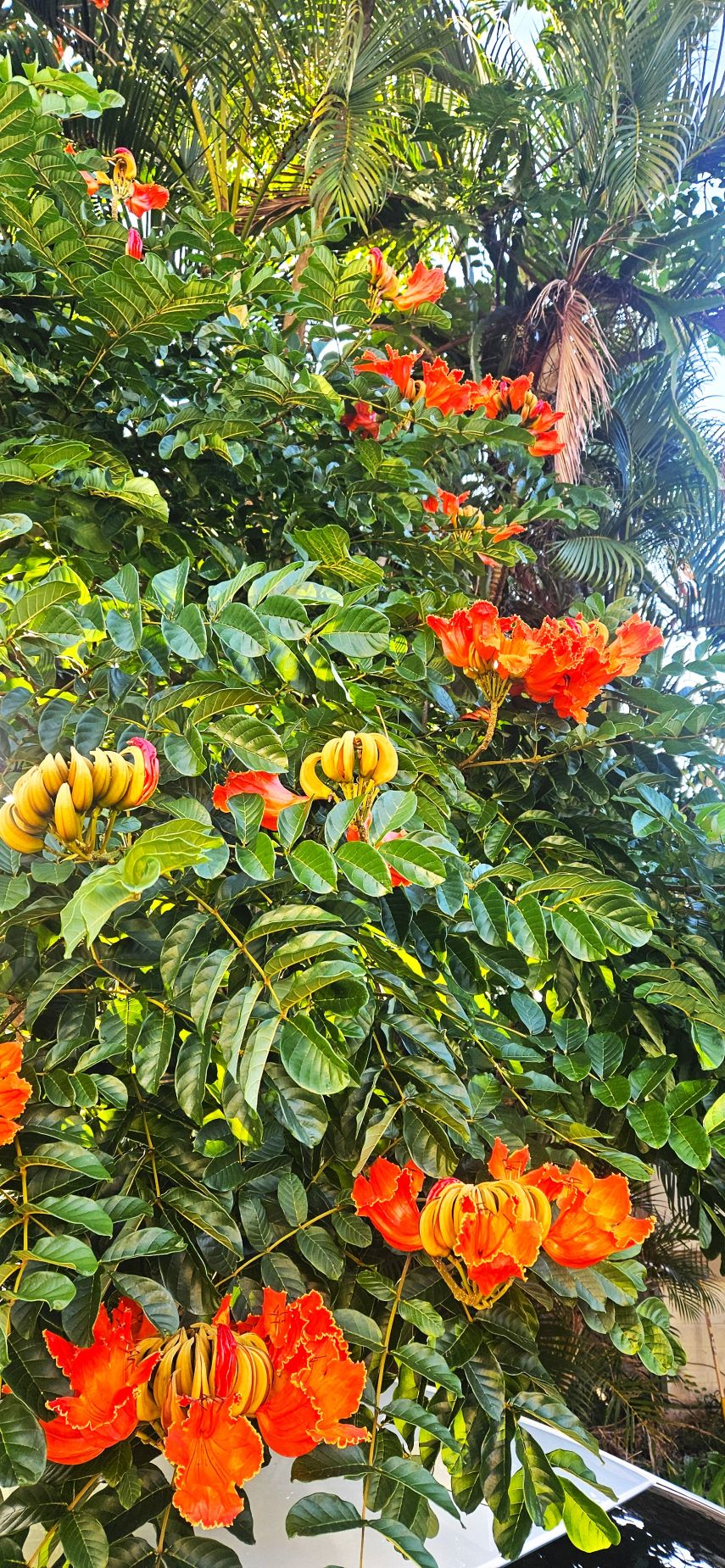
Our Air BnB had this beautiful African tulip tree growing in the front yard.
Flowering African Tulip Tree outside our Air BnB.
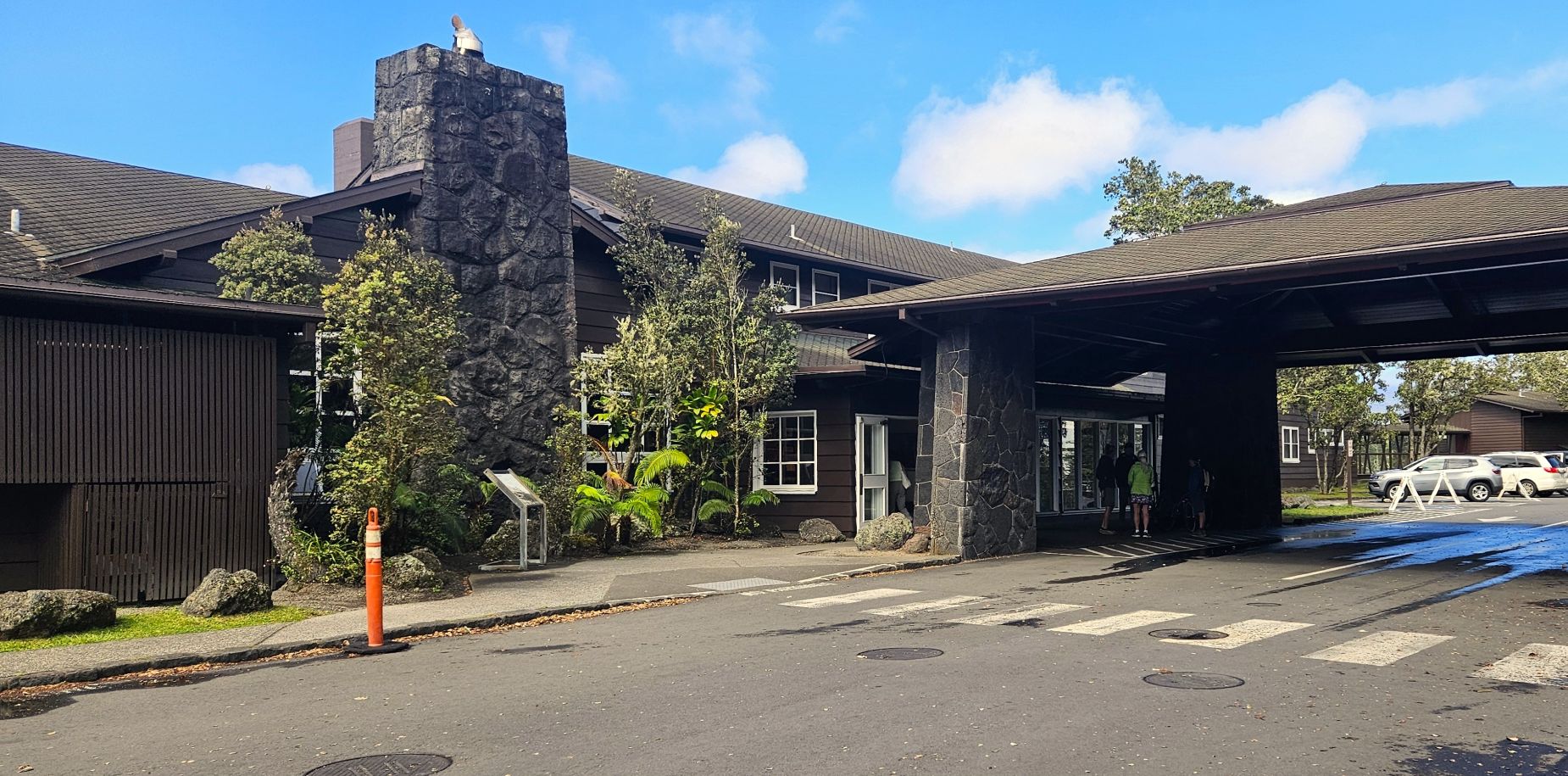
We drove over the middle of the island called the “Saddle Road” to get to Hawaii Volcanoes National Park entrance. It was a 3 hour drive. We stopped at this historic hotel called “The Volcano House” to get some information about where to get my Park Passport book stamped since it was during the government shut down.
Historic Volcano House
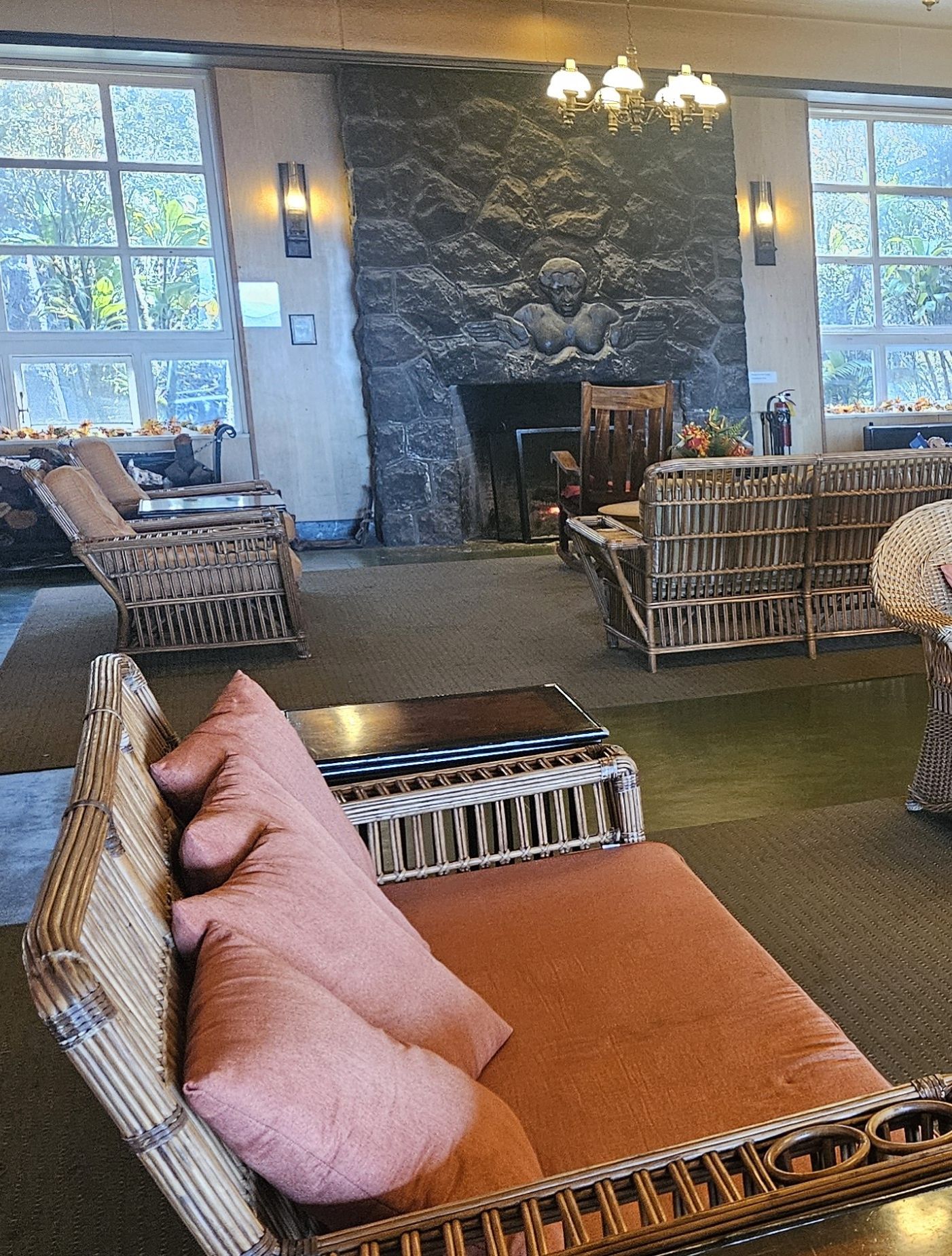
It was a rainy and cool day when we started, but thankfully, it cleared up. The fireplace in the lounge looked very inviting.
Lounge and fireplace in Volcano House
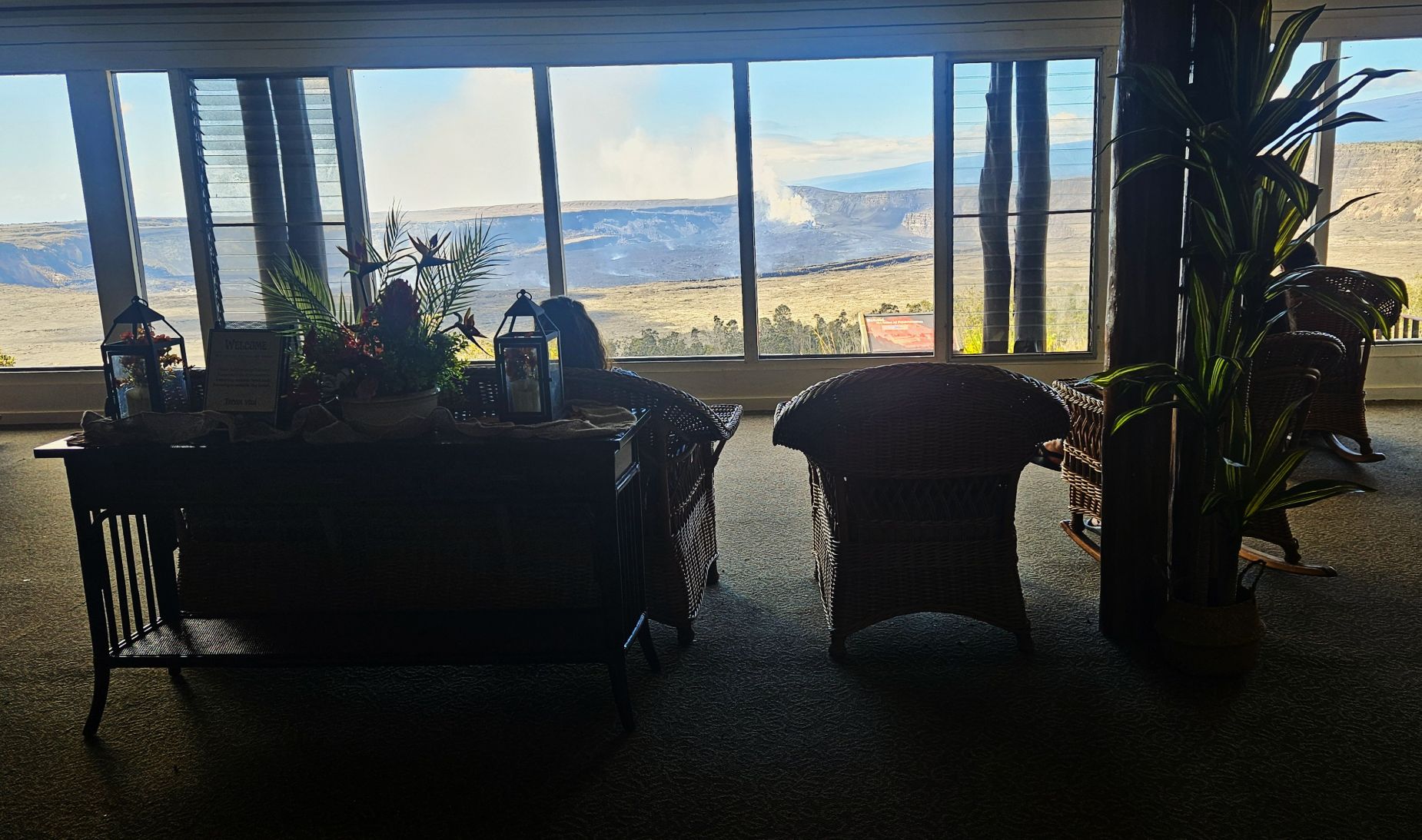
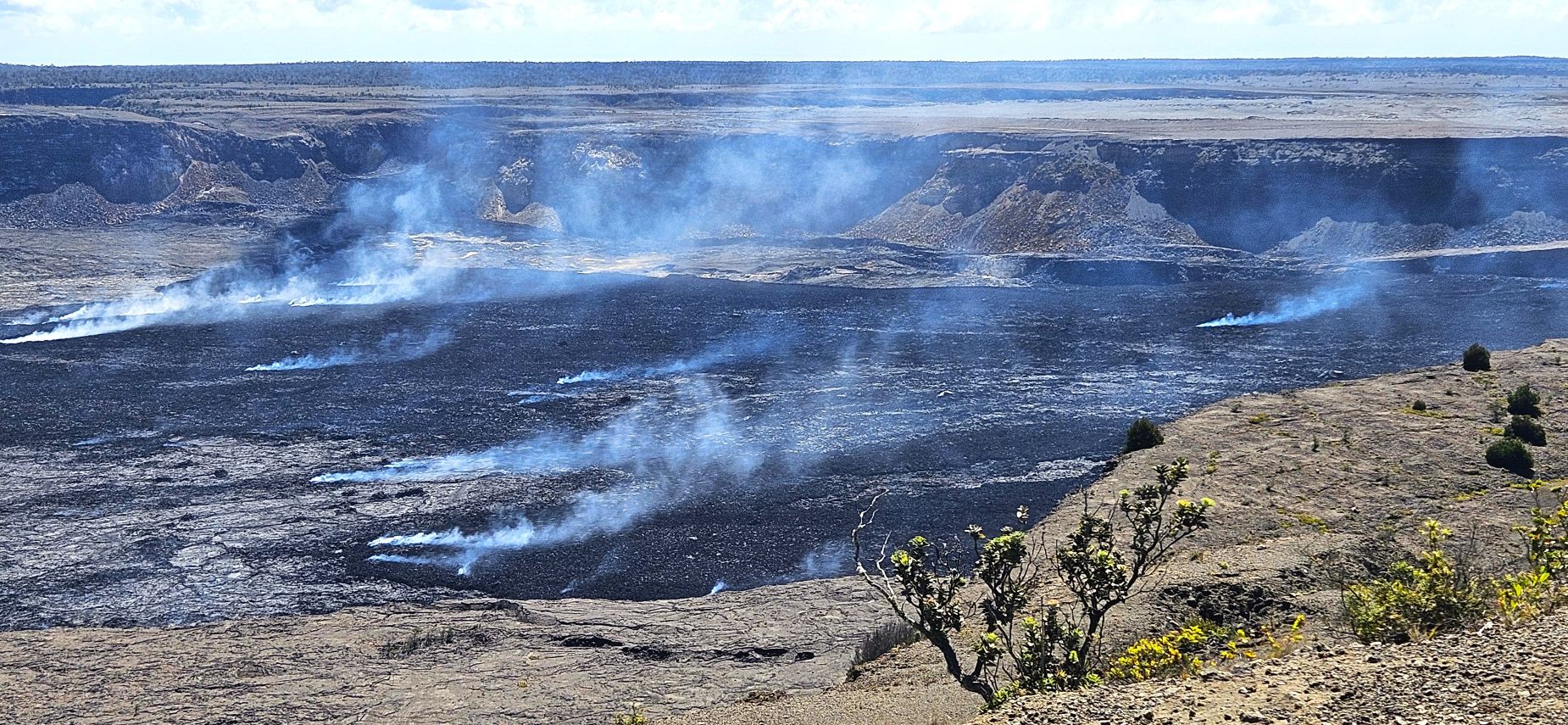
The best part of the Volcano House was the view out over the crater of the volcano. Just five days previously, the volcano had erupted. And, just five days after we left, it erupted again. Again it erupted in December of 2025 and was so powerful that it took out one of the cameras. This is the most active volcano on the island.
Steam venting from volcano can be seen from inside the Volcano House.
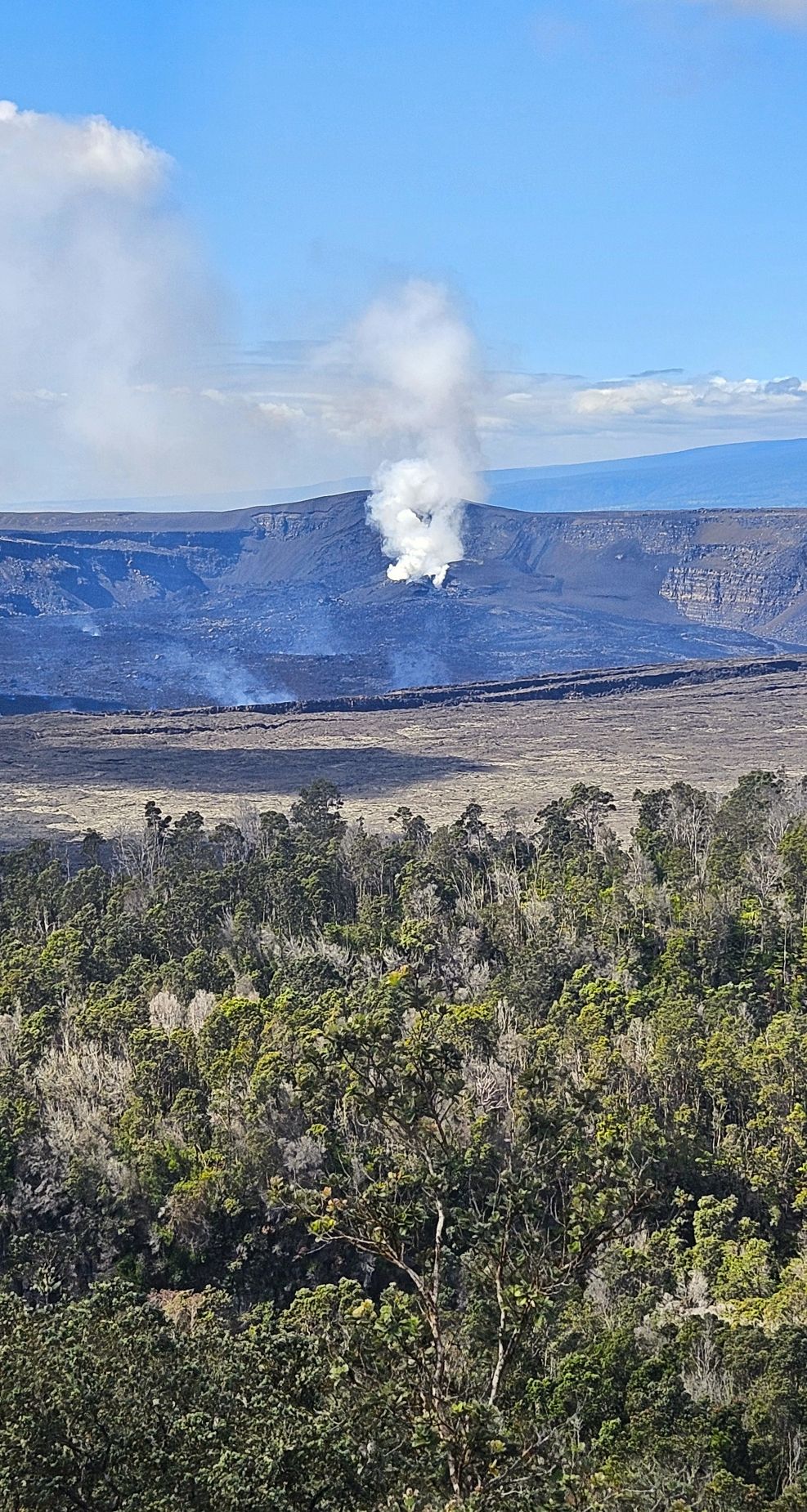
The view from outside the Volcano House was one of the best.
Gasses venting from a recent eruption.
We had a delicious Margarita pizza in the Volcano House restaurant. From our table we could look out at the volcano.
Margarita Pizza at the Volcano House restaurant.
I got my Passport book stamped, and bought a couple of stickers. After that, we drove to the end of Crater Rim Drive to get a closer look at the steam vents.
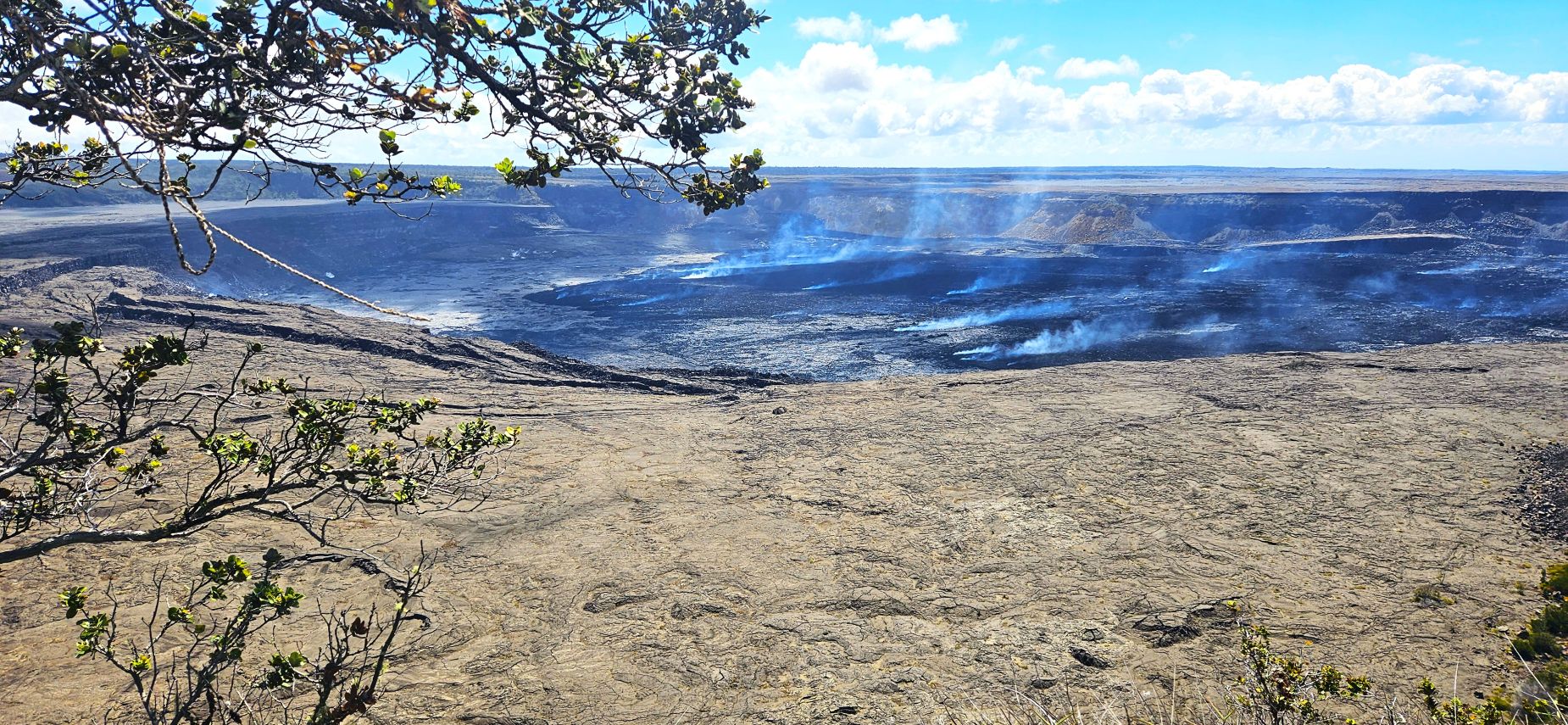
Volcanic smog rising from the recent lava flow of Kilauea volcano.
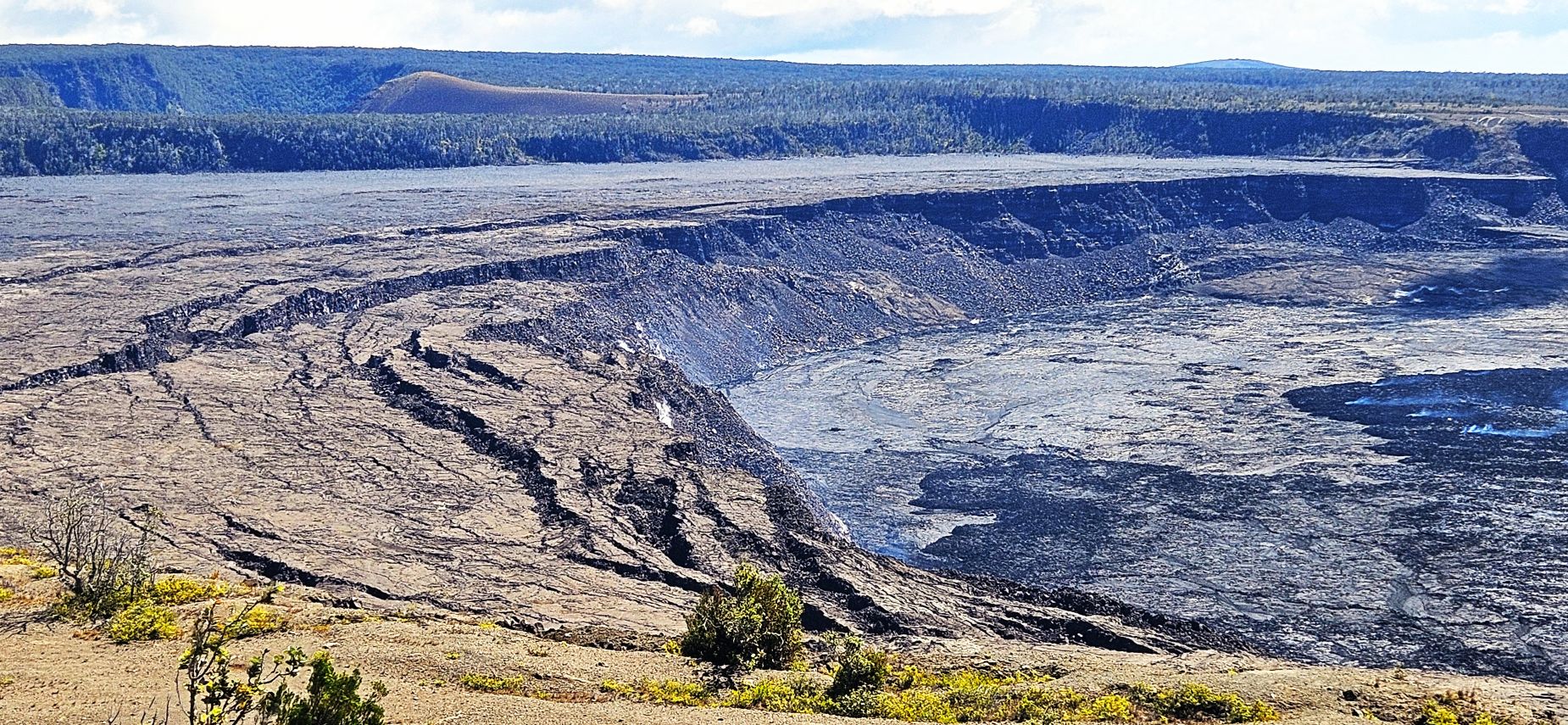
The lava flows onto the crater floor. In 2018, the magma drained from beneath, causing the floor to collapse hundreds of feet. At the crater’s edge, we could see cracks along the crater’s edge where this happened.
From this view point, we could look out over the crater floor and see many steam vents.
Steam vents on the crater floor.
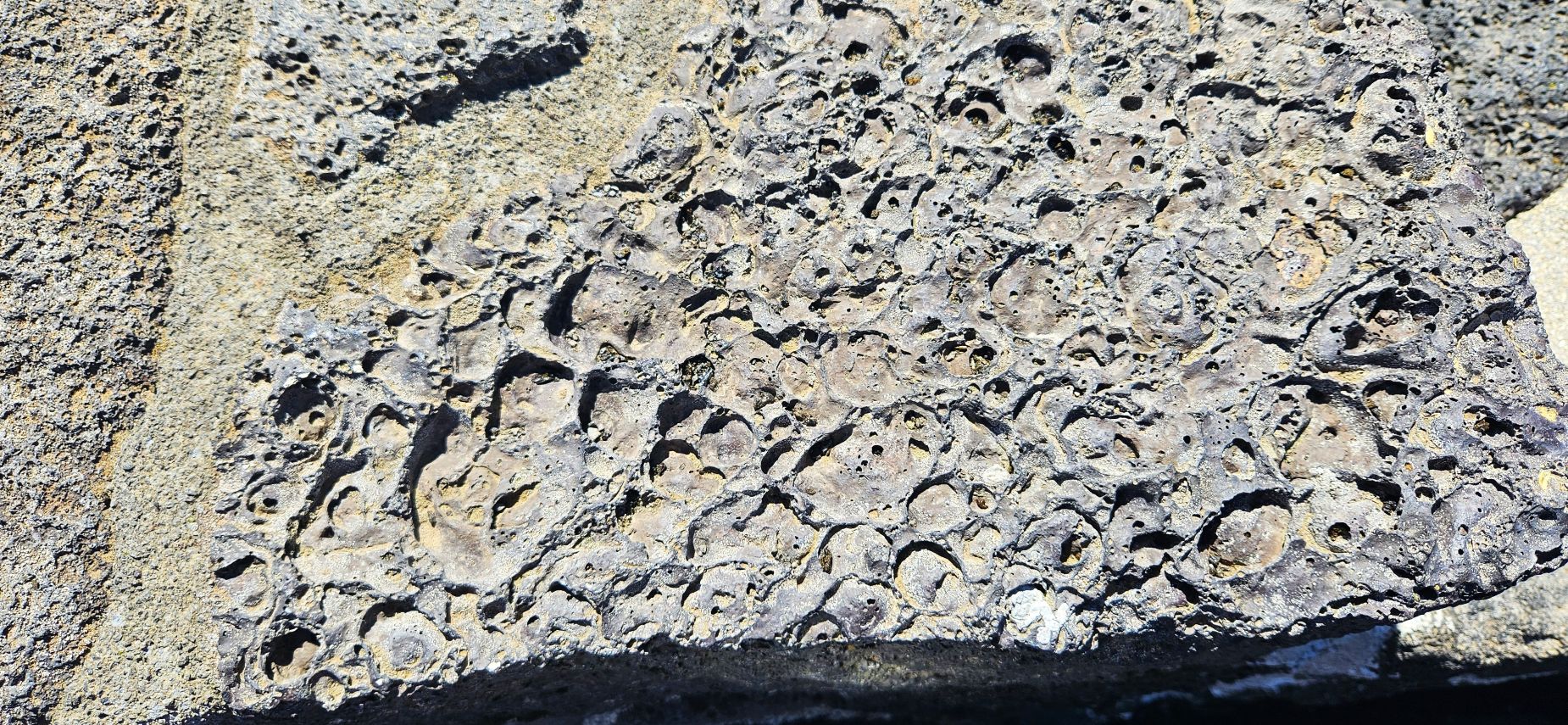
The man-made walls around the viewpoint were made of lava stones. This one shows gas bubbles of all sizes formed in the rock as it was cooling.
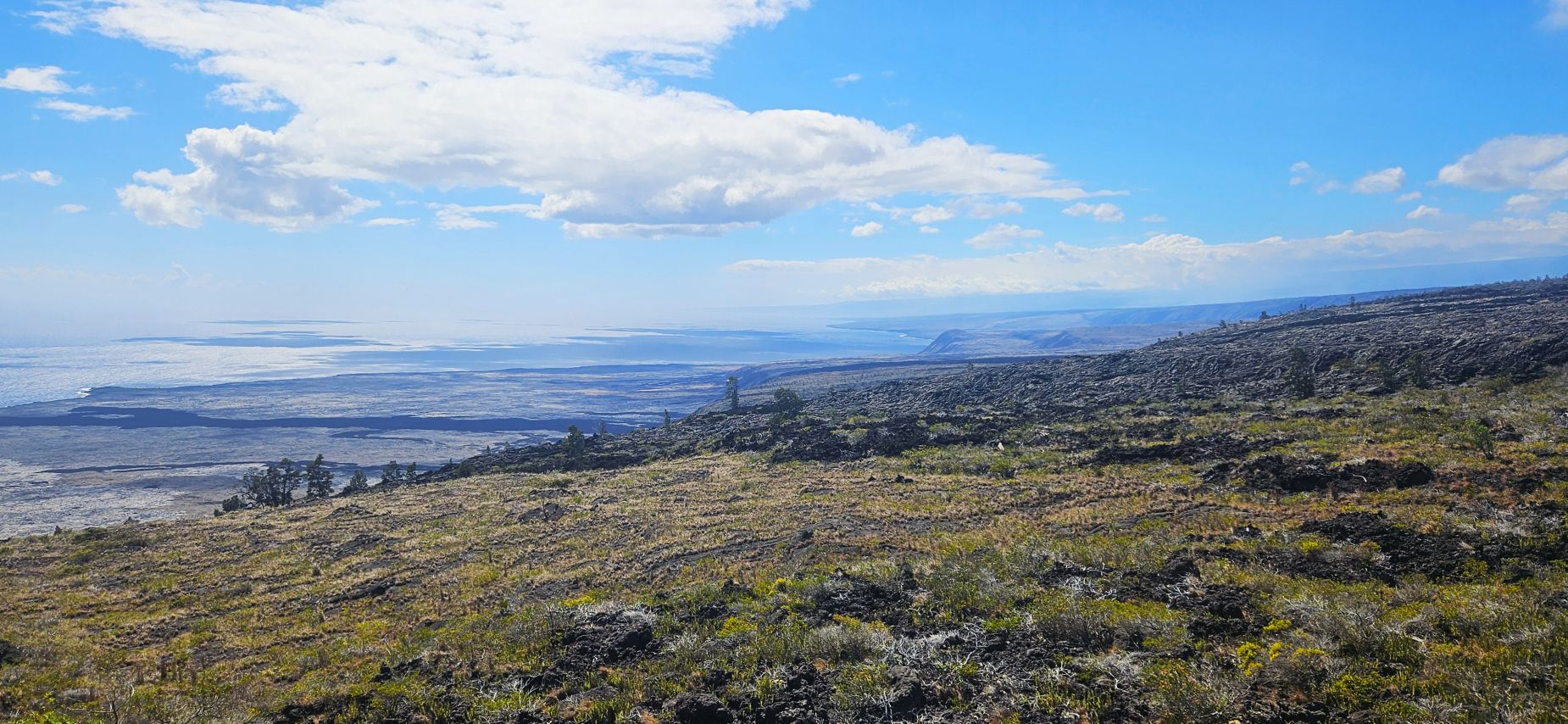
After lunch, we drove the Chain of Craters Road all the way to the ocean where it ended. At this overlook we could see the new land formed by the lava flows. It is unstable because the ocean waves erode and undermine the surface. No one is allowed out there.
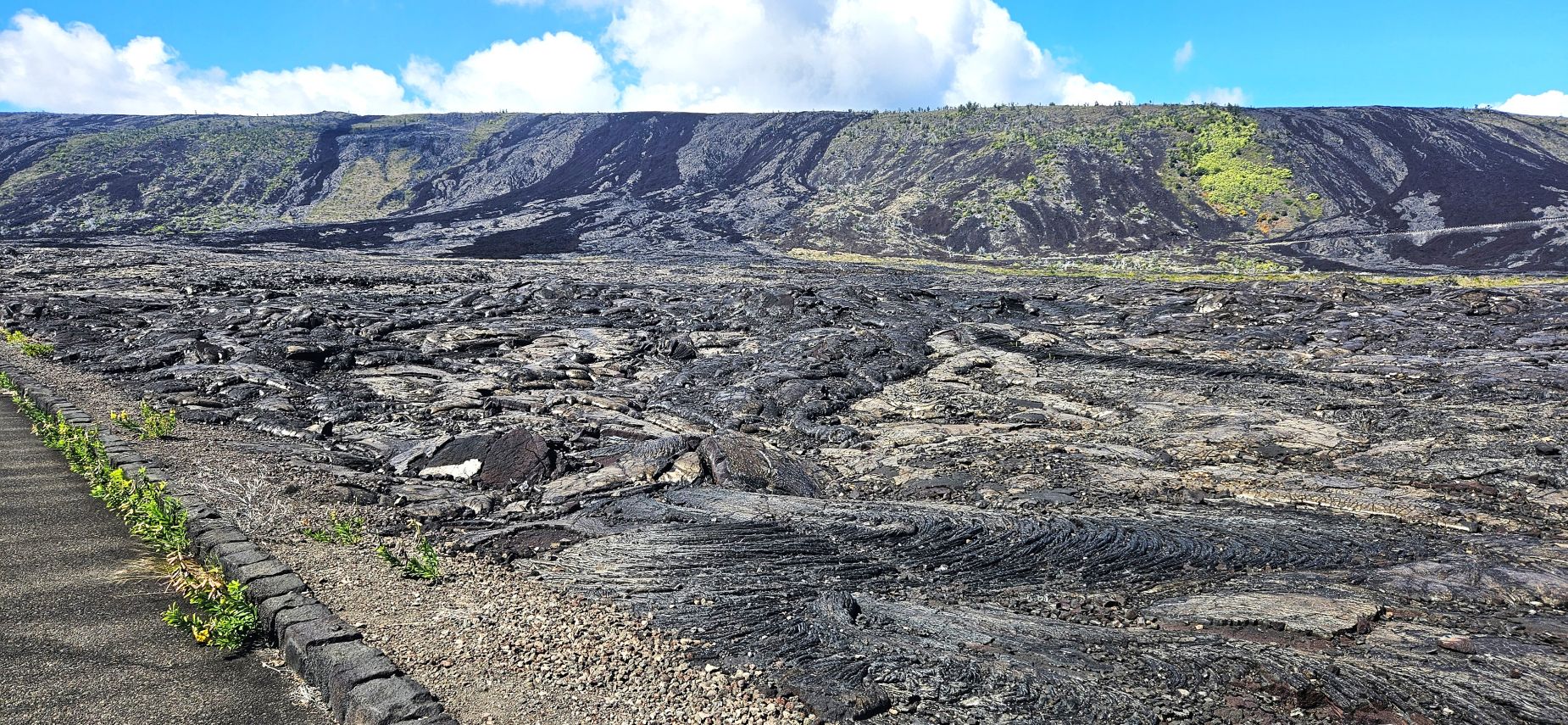
Driving along the road, we could see the black areas where lava flowed down the hills toward the sea.
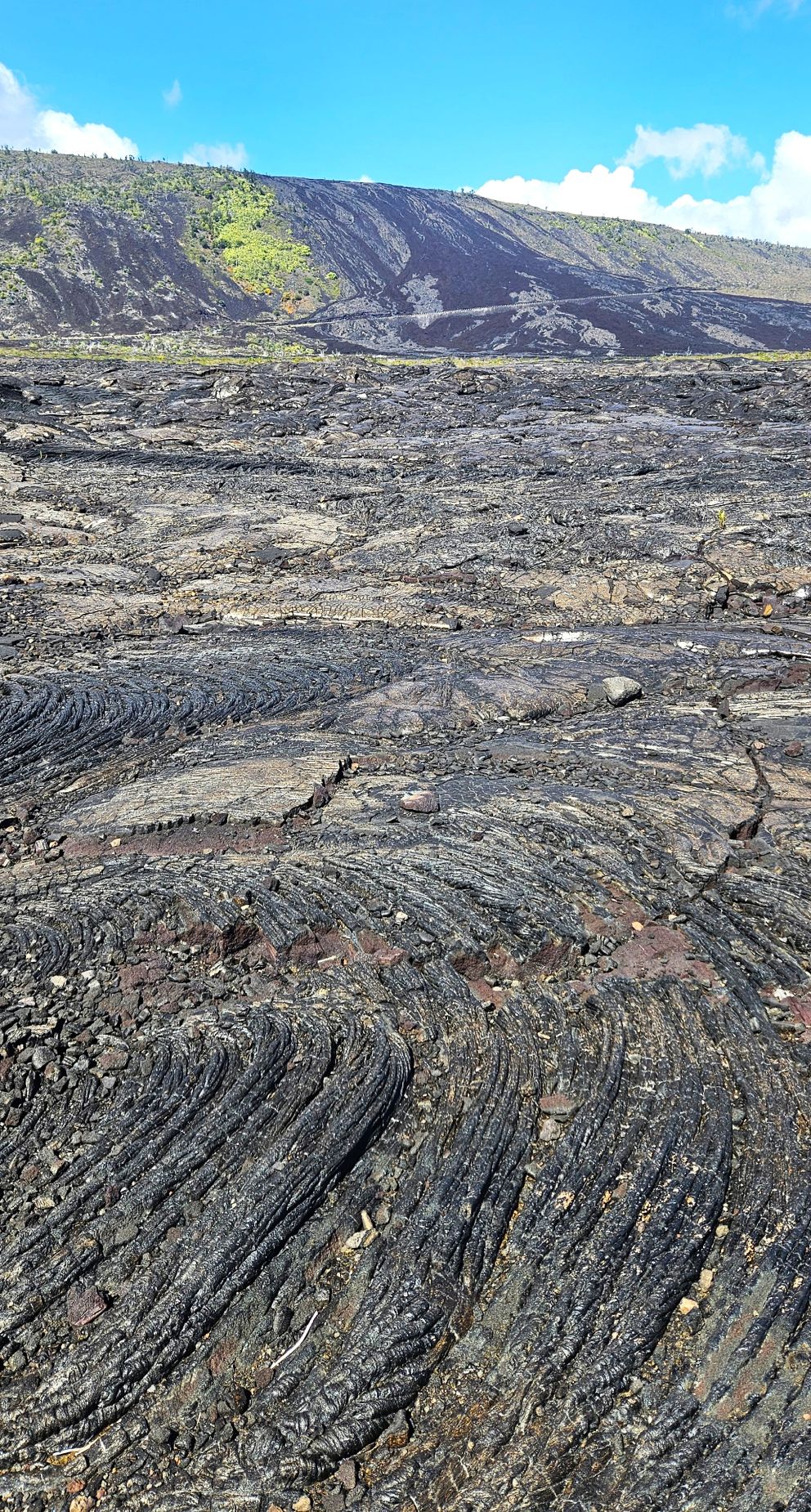
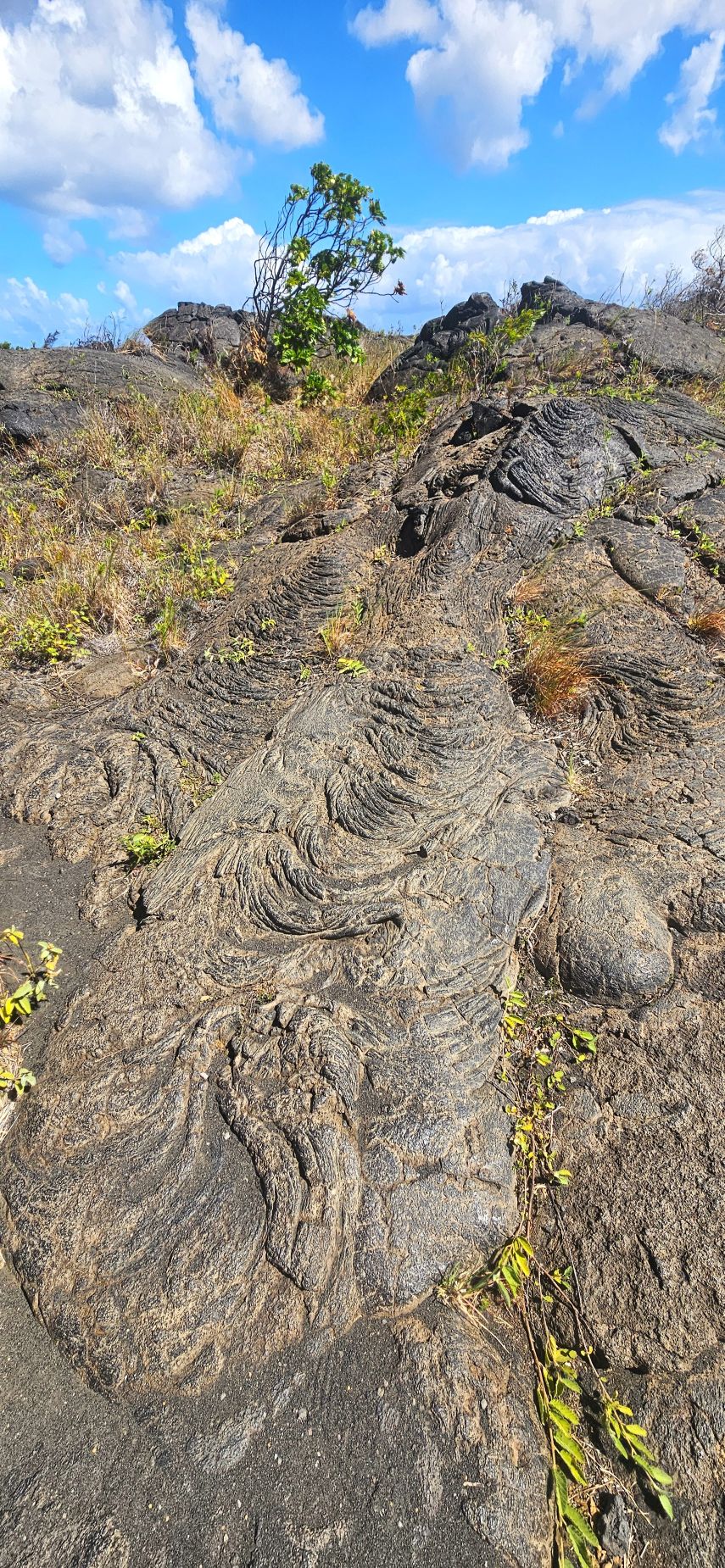
Looking closer, we could see wrinkles in the rock where lava once flowed and then cooled.
Wrinkles from lava flow.Lava flowed here once.
Hawaii Volcanoes National Park was a fascinating place. I’ve always had an interest in geology since a field trip I took with my class in 6th grade. We had a long drive home, so we headed back to our Air BnB for some supper and some rest. The next day, we would fly to our last island–Maui.
“The mountains melted like wax at the presence of the Lord, At the presence of the Lord of the whole earth. The heavens declare His righteousness, And all the peoples have seen His glory.” Psalm 97:5-6
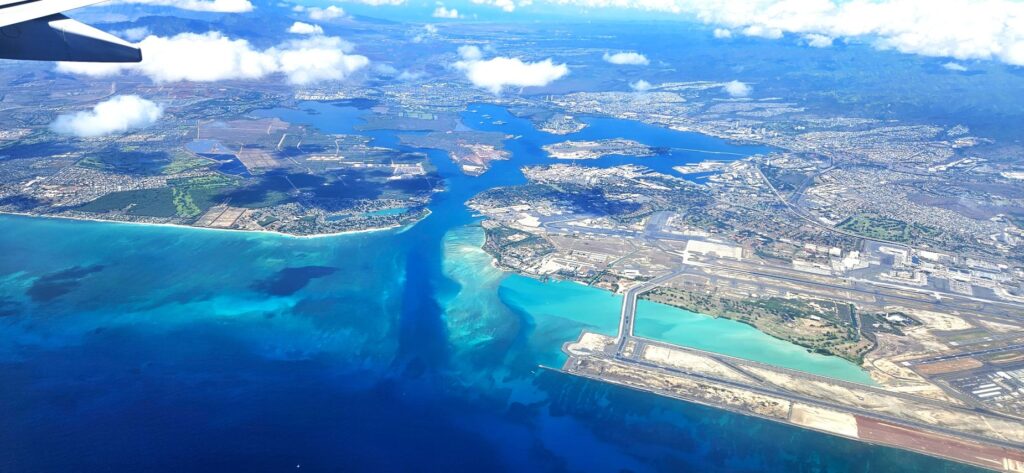
We spent nine days in Hawaii. It was a special trip to celebrate our 50th wedding anniversary. Our first day we flew from Las Vegas, Nevada, to Honolulu. As we flew into the island of Oahu, we could see Pearl Harbor from the air. We would be spending our entire next day there.
Pearl Harbor from our airplane
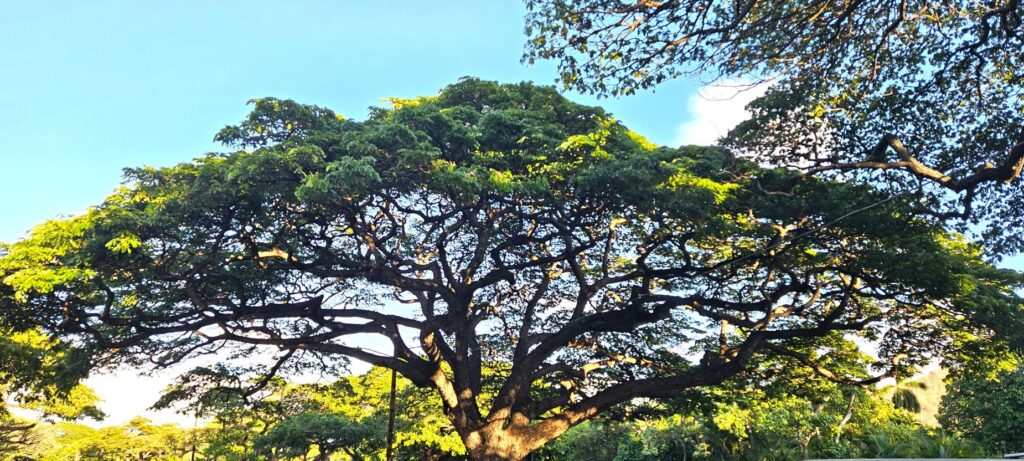
We couldn’t check into our AirBnB apartment until 4 pm, so we did a little sight seeing first. We had a five-hour flight with only snacks to eat, so we looked for Teddy’s Bigger Burgers in downtown Honolulu near Waikiki Beach. We found parking across the street where we saw this beautiful Guanacaste tree.
Guanacaste Tree
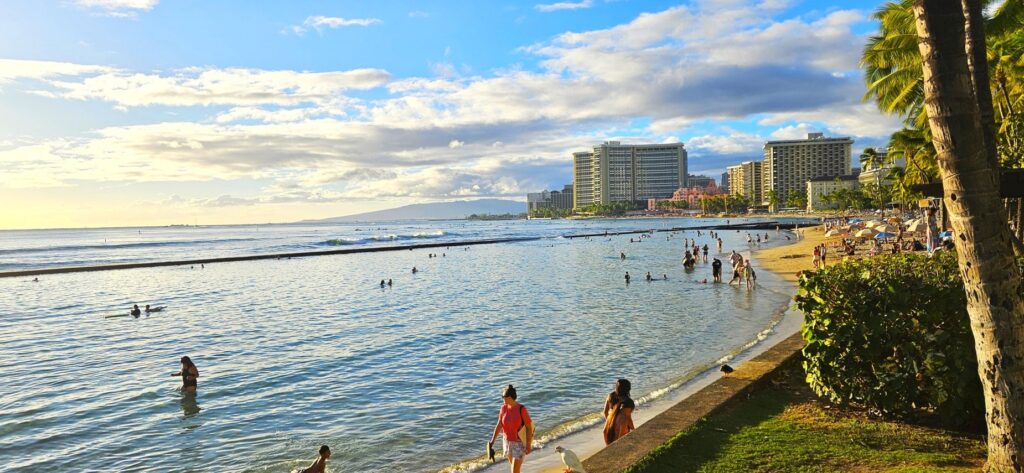
After eating, we took a stroll to see Waikiki Beach. It was pretty crowded, so we decided to go find a grocery store and stock up on food for the next couple of days.
Waikiki Beach in Honolulu
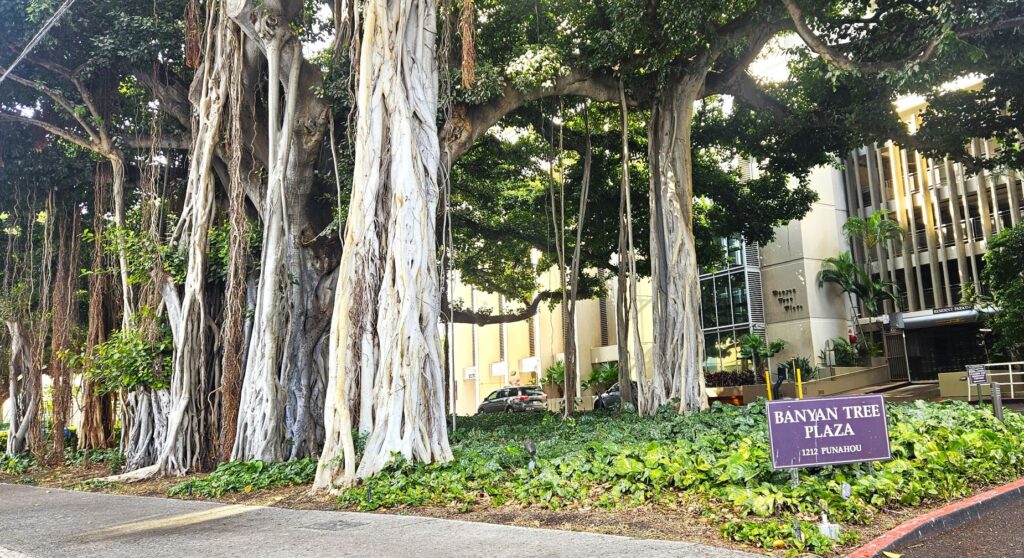
While driving through the city, we saw Banyan Tree Plaza. It had several large Banyan trees. Banyan trees are not native to Hawaii. When their aerial roots descend from branches and reach the ground, they become new trunks.
Banyan Trees in Honolulu
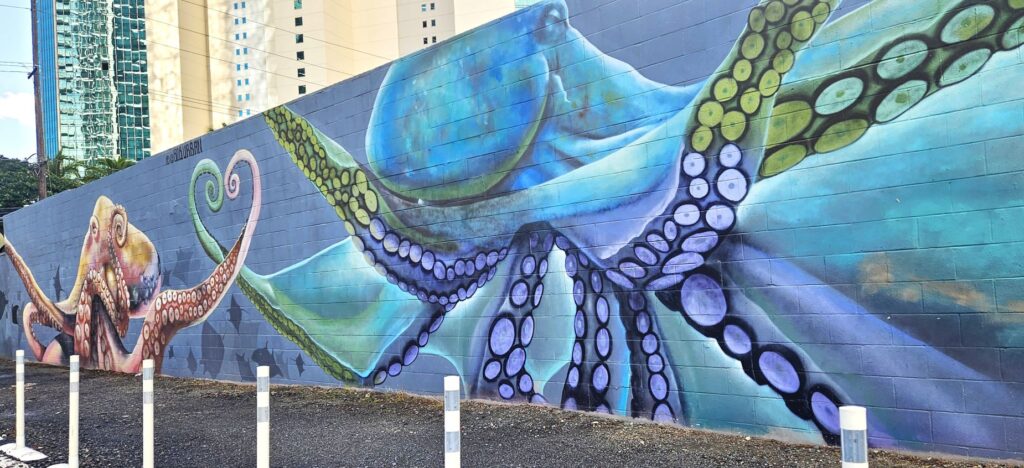
A lot of the tall buildings had murals painted on them. This was one we saw while driving around.
Mural in downtown Honolulu
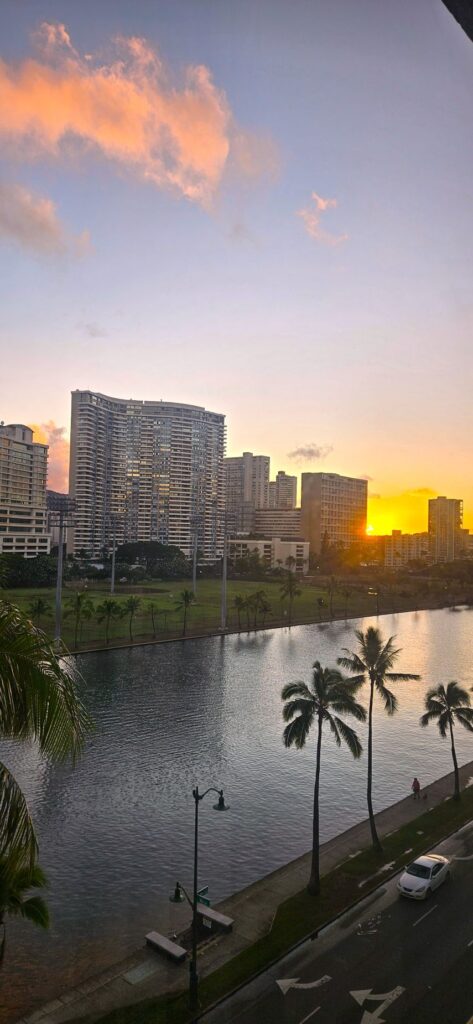
Our AirBnB was on the 9th floor of a high-rise building . It was very small, but had everything we needed, including a full kitchen. Our bodies were still on Las Vegas time, so we woke up early–early enough to get some photos of the sunrise from our apartment window.
View of sunrise from our apartment on the 9th floor.
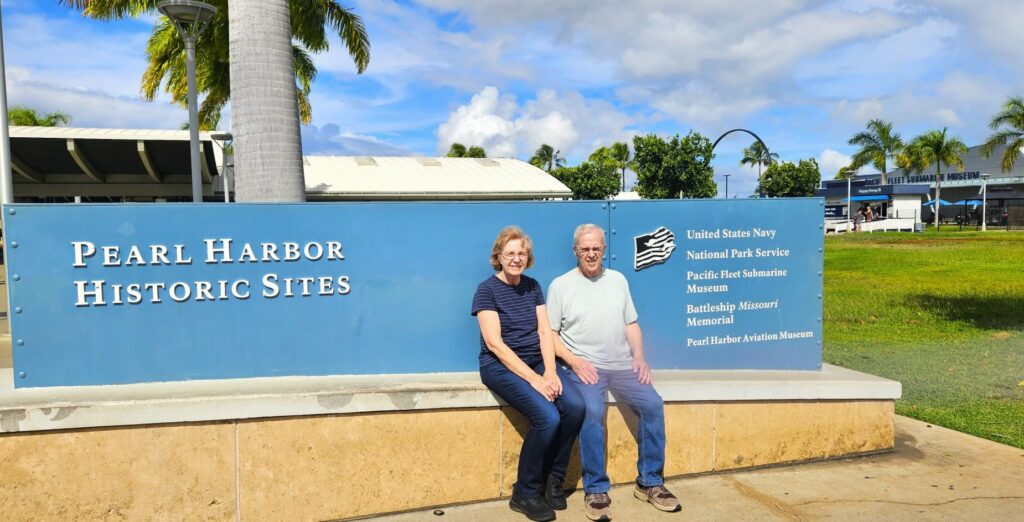
Pearl Harbor
The next day, we rose early so we could get a parking spot at Pearl Harbor Historic Sites. We bought all-in-one tickets that gave us access to all the museums and historic sites. They were open, even though it was during the government shutdown.
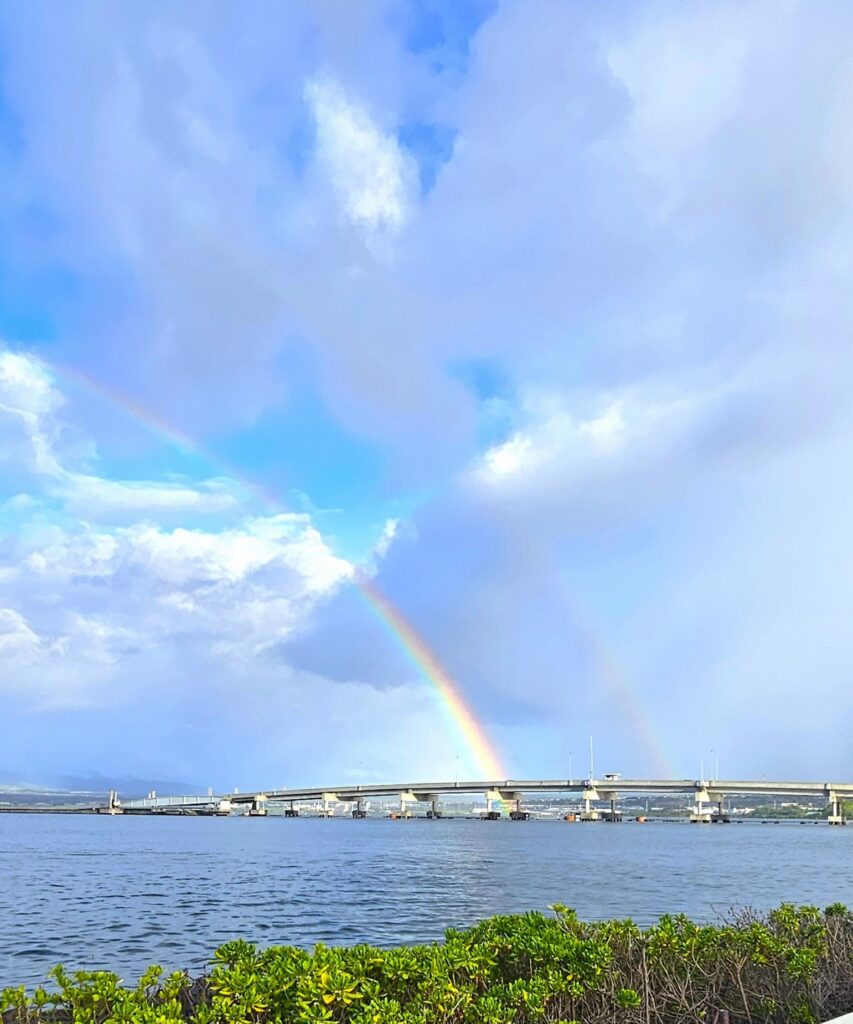
It rained off and on that day, which made it perfect for catching this double rainbow. The rain was warm. It was a hot and humid day.
Double rainbow over Pearl Harbor
Our first stop was to see the Pearl Harbor National Memorial where we read about the attacks on Pearl Harbor on December 7, 1941. The maps and storyboards told the history. I learned that of the 185 ships anchored there that day, only 21 of them were damaged or sunk.
The USS Arizona, USS Oklahoma, and USS Utah were complete losses. But here’s an amazing fact. All but one of the other damaged ships were repaired and returned to service.
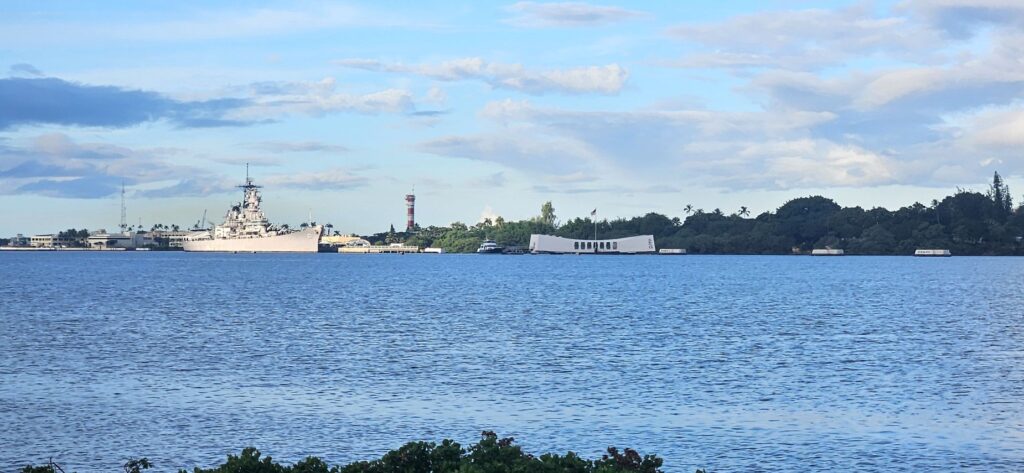
Pearl Harbor, USS Arizona Memorial in the distance
I was unable to get reservations online for the USS Arizona Memorial. But that day, we found out we could apply for stand-by admission. We would be texted when to board the boat that would take us out to the memorial. We went to see the nearby Pacific Fleet Submarine Museum in the meantime.
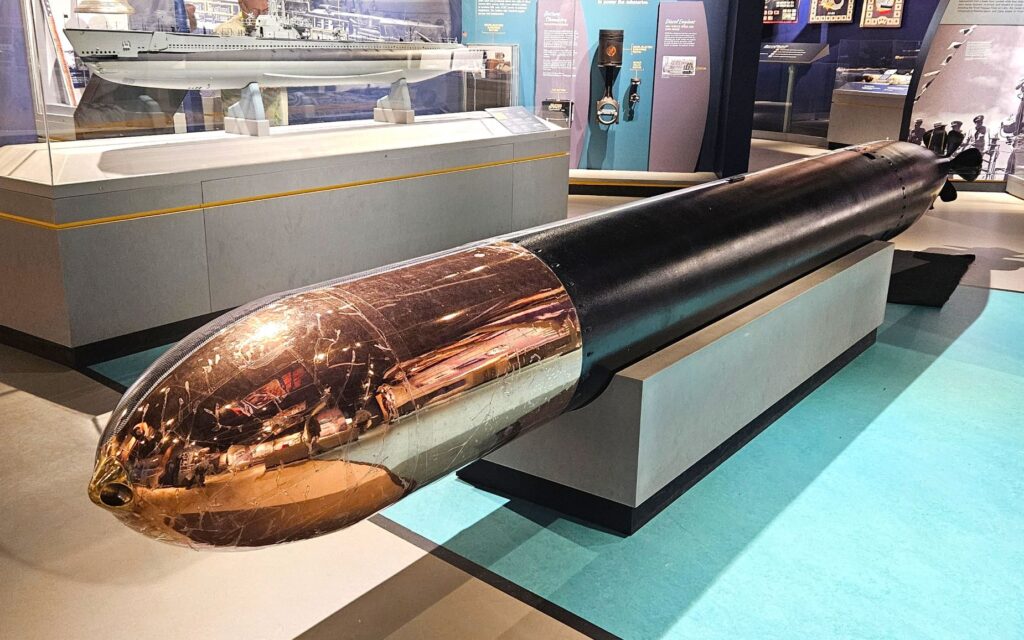
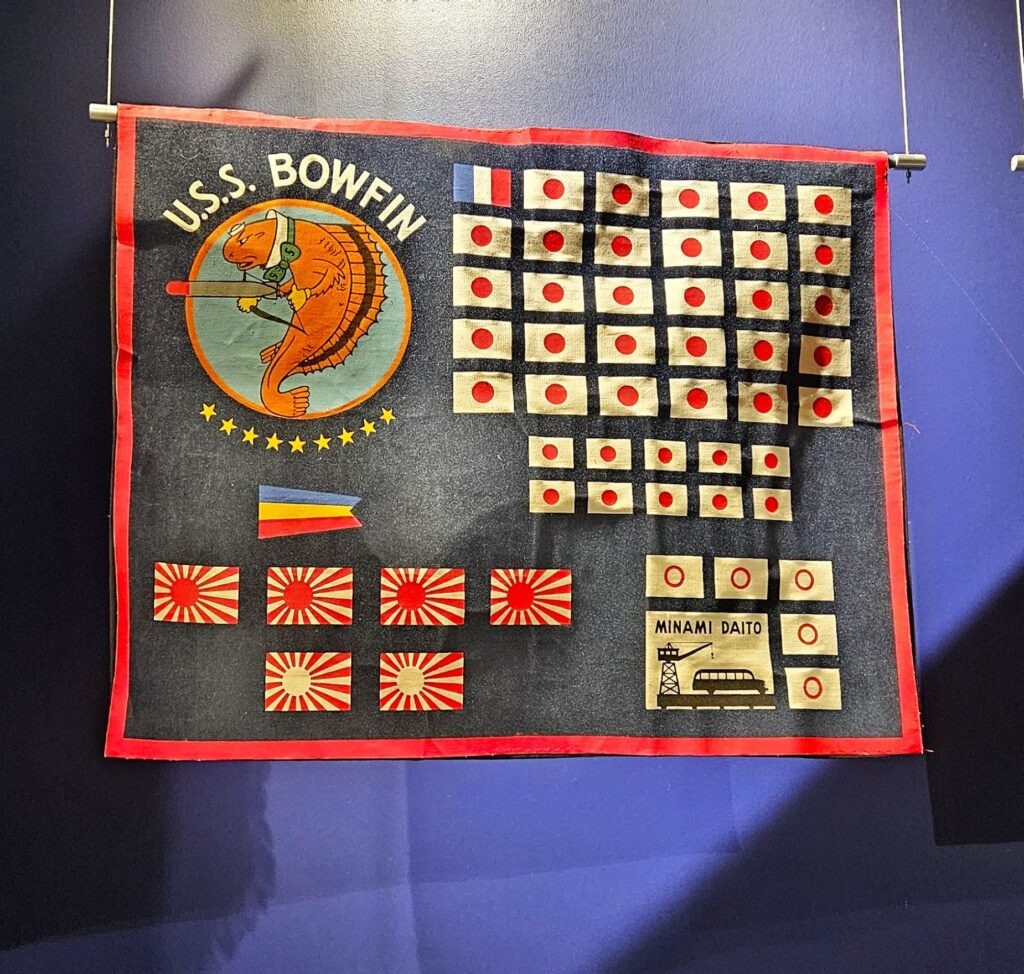
Torpedo display in the Pacific Fleet Submarine Museum.Ship flag of the USS Bowfin Submarine
While we were in the museum, we got a text saying we should report to the boarding area for the boat ride to the USS Arizona Memorial.
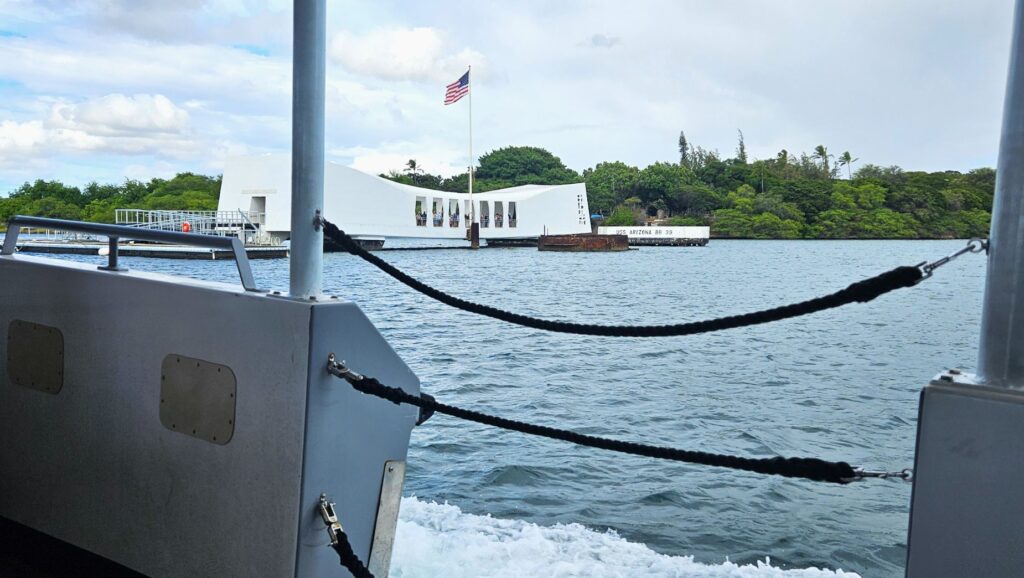
USS Arizona Memorial from shuttle boat
We were asked to be silent and limit our photo taking. This is the grave site of 900 American sailors of the 1,177 crew members who died on the USS Arizona. It was a solemn place.
USS Arizona Memorial
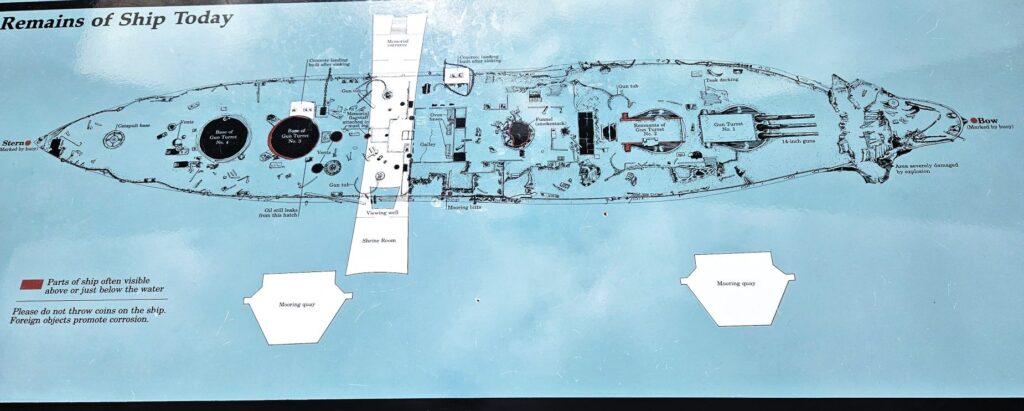
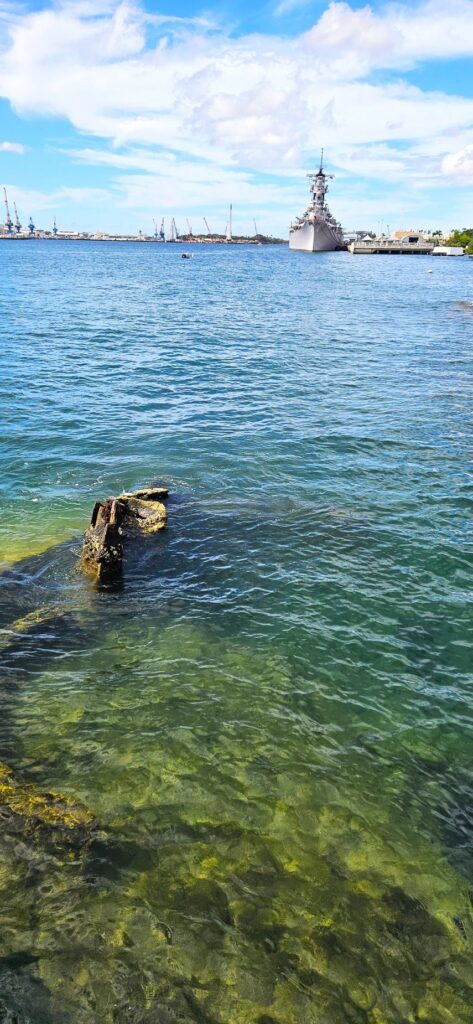
The memorial straddles the sunken remains of the ship. The names of all those who died are engraved on a wall inside the memorial.
Oil still slowly leaks out and rises to the surface from the wreckage of the USS Arizona.
Oil still leaks from the wreckage of the USS Arizona
After the boat returned us to the Pearl Harbor Memorial site, we finished looking through the Pacific Fleet Submarine Museum and then boarded the USS Bowfin submarine for a tour.
USS Bowfin Submarine
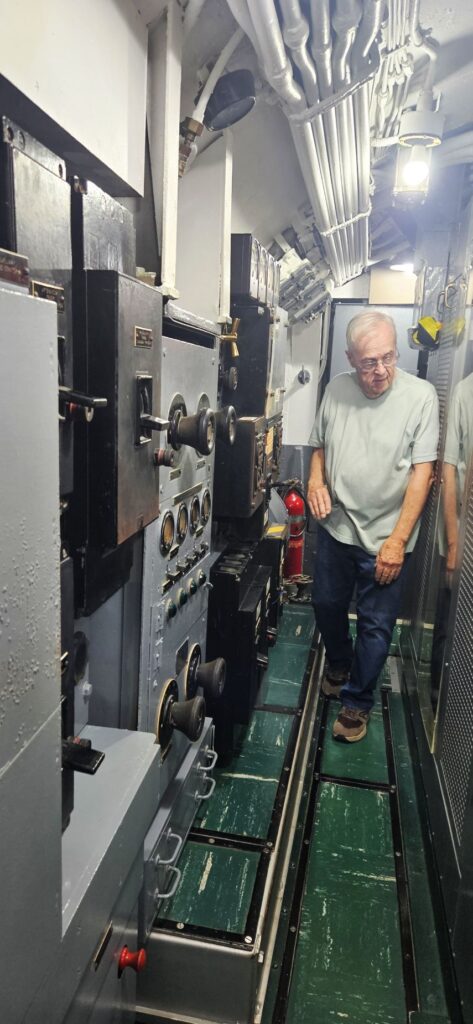
The quarters were tight. We gained new appreciation for sailors who served on submarines.
Inside USS Bowfin Sub
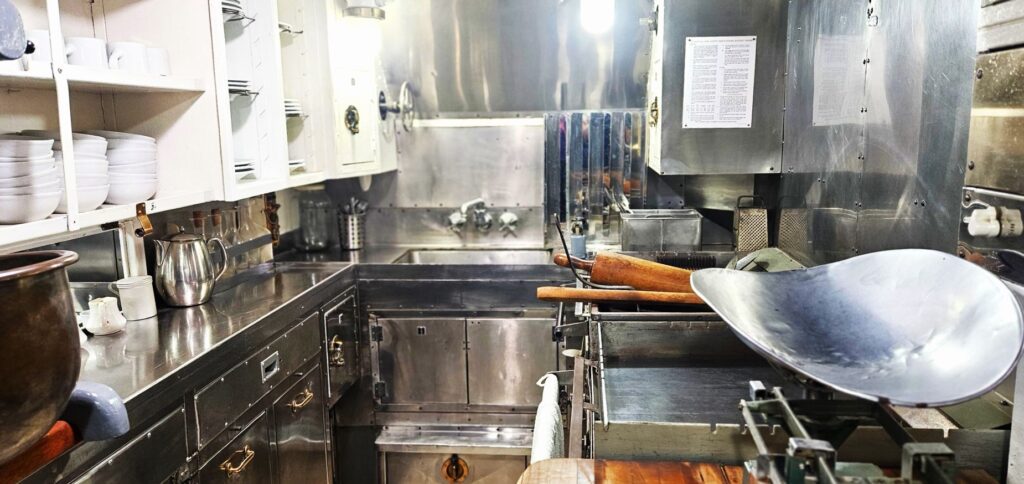
Even though the kitchen was small, it was equipped to serve meals to 80 men.
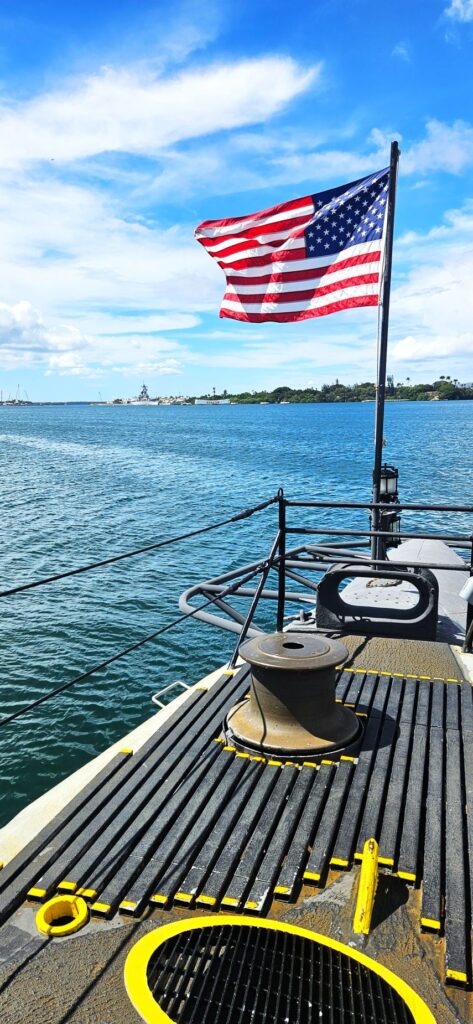
Kitchen of USS BowfinOn top of USS Bowfin
We had lunch at a food truck on site. We had pulled pork tacos with fresh pineapple. Yum!
Shredded Pork Tacos
After lunch, we boarded a shuttle bus that took us to Ford Island where we toured the USS Missouri.
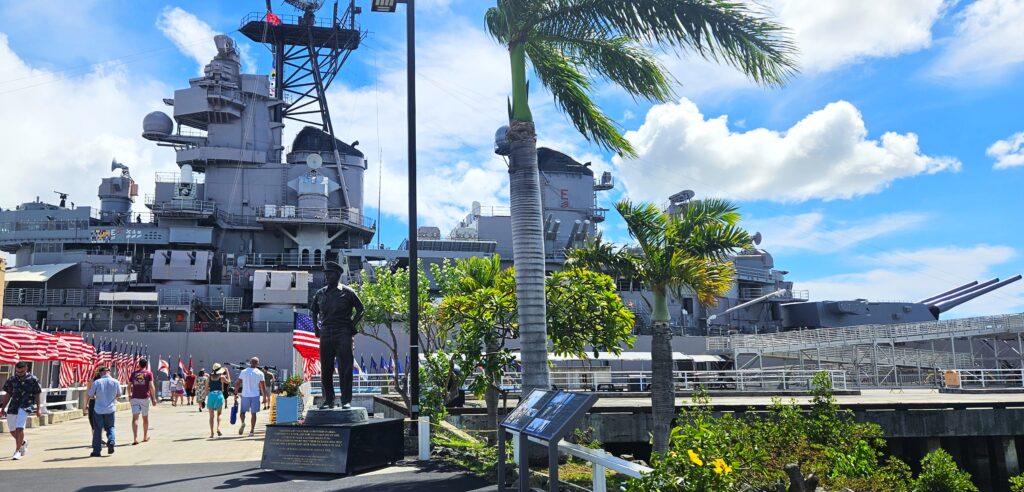
The USS Missouri with a statue of General Eisenhower.
This is a statue of a famous photograph of a sailor kissing a dental assistant on Victory in Japan Day. The actual event took place in Times Square in New York City.
August 14, 1945 was Victory in Japan Day. This was reproduced from the famous photo.
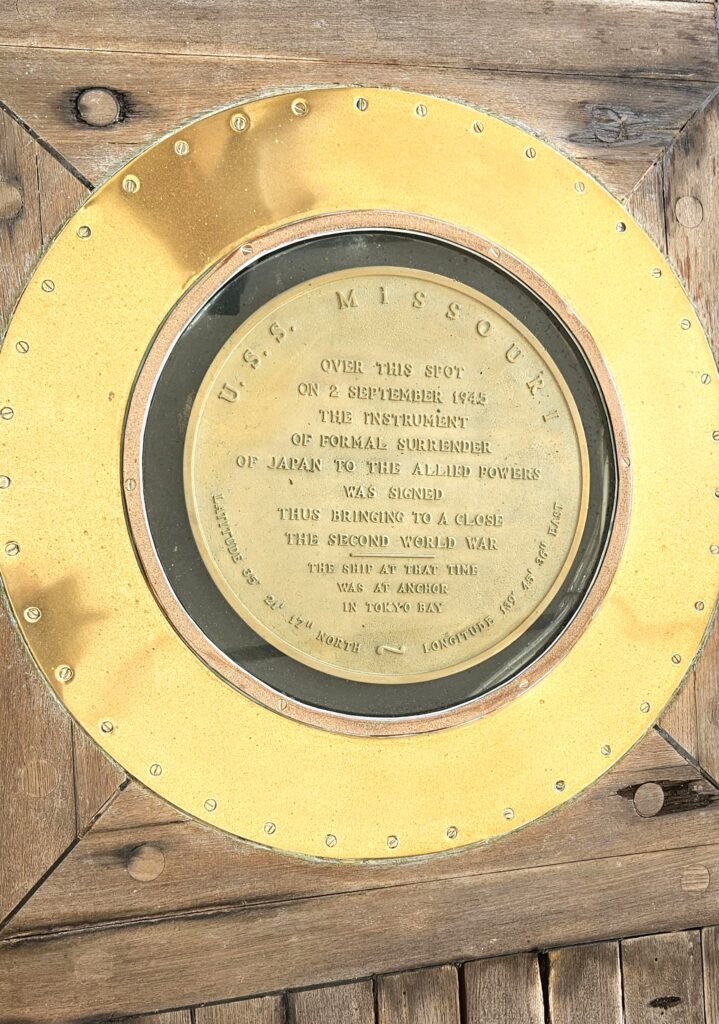
The USS Missouri is famous because it is where the Japanese Instrument of Surrender was signed on September 2, 1945, officially ending WW II.
The USS Missouri is 20 stories high.
We happened to walk onto the USS Missouri just as a tour was beginning. The tour guide was a Japanese man who lived in Hawaii.
USS Missouri
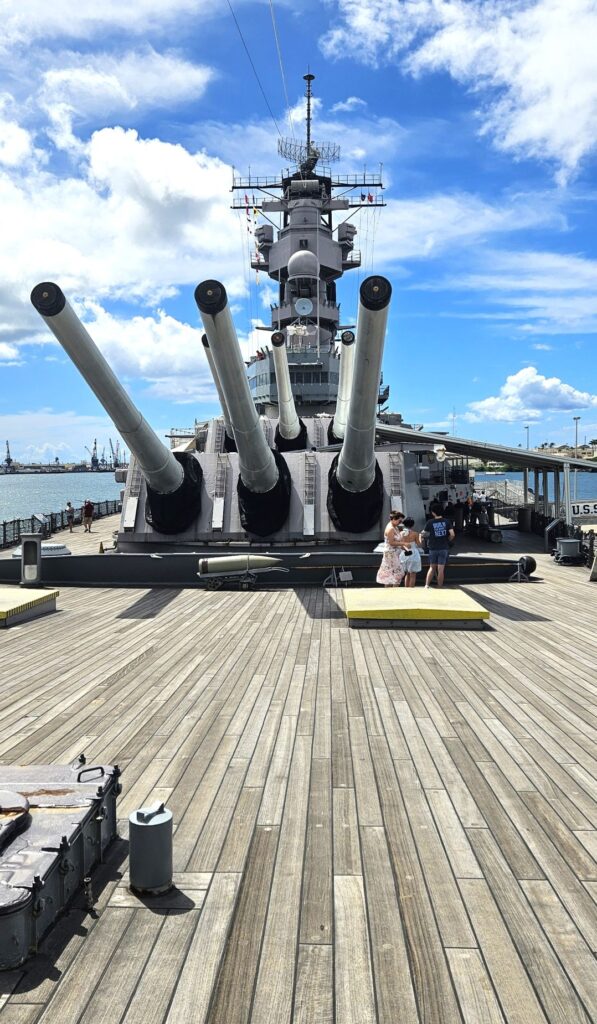
There are nine 16-inch guns on this ship and can fire a 2,700 pound projectile up to 23 miles.
16-inch guns on USS Missouri
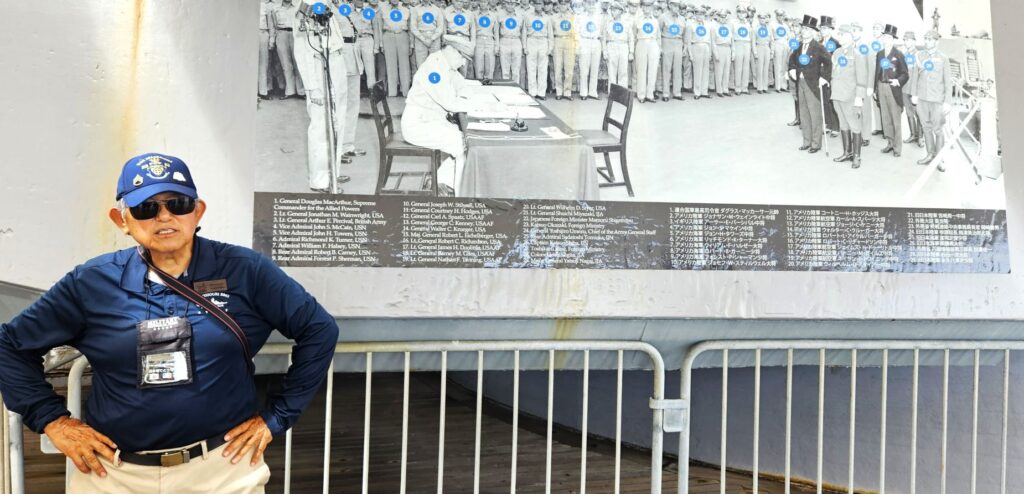
Our tour guide showed us the spot where the Japanese surrendered.
Our tour guide in front of historic photo of Japanese Surrender at the end of WWIIPlaque showing where the Japanese surrendered at the end of WWII
We still had the Air Museum to see, but we were hot and tired, so we decided to skip it and call it a day. I’m really glad we spent the day at Pearl Harbor. It was very worthwhile.
Dole Plantation
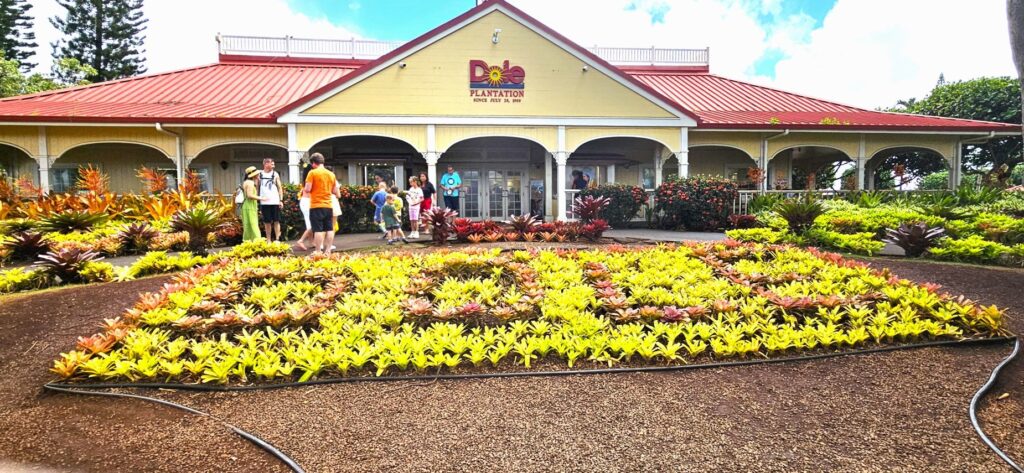
The next day, we drove to the middle of the island where we toured the Dole Plantation.
Entrance to Dole Plantation
There are three main attractions there: The Pineapple Express, the Pineapple Maze and the Garden Tour. We selected the self-guided Garden Tour.
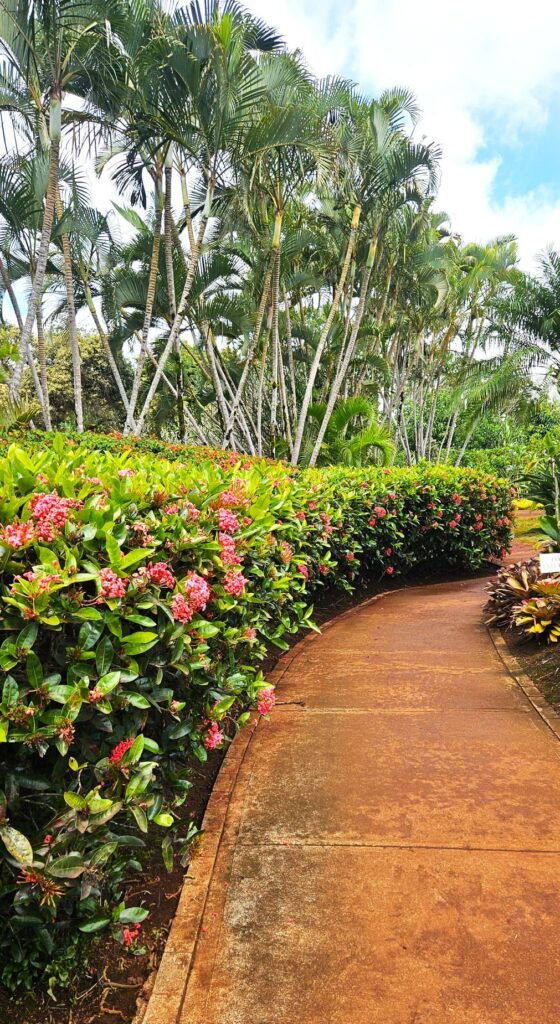
Walkway on Garden Tour
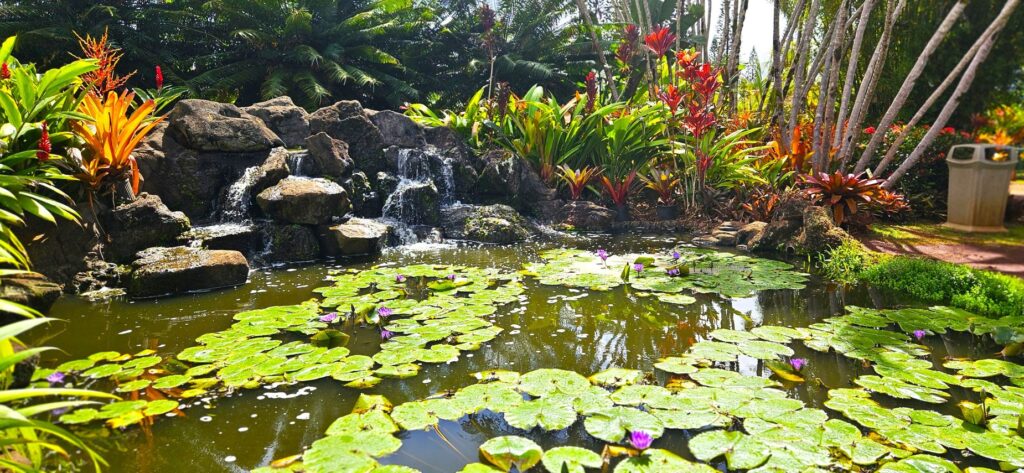
One of the main garden attractions was this lily pond with a waterfall.
Waterfall and lily pond at Dole Plantation
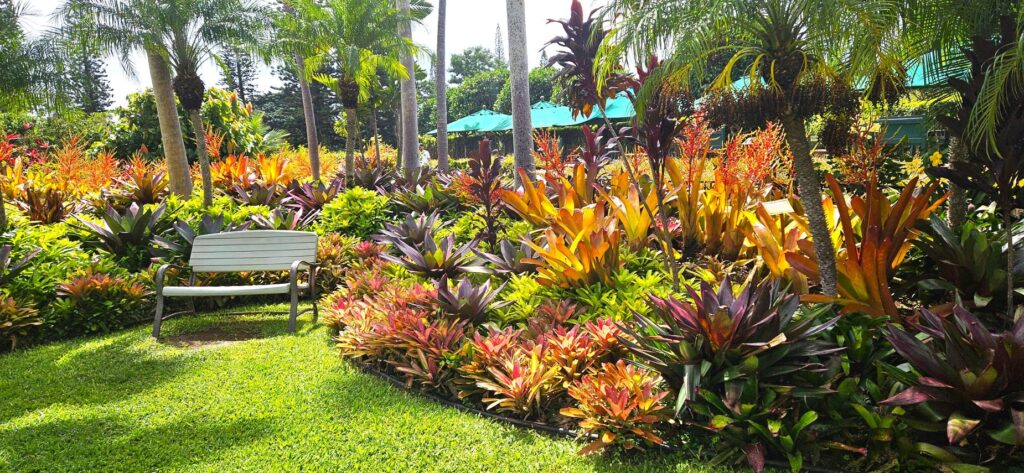
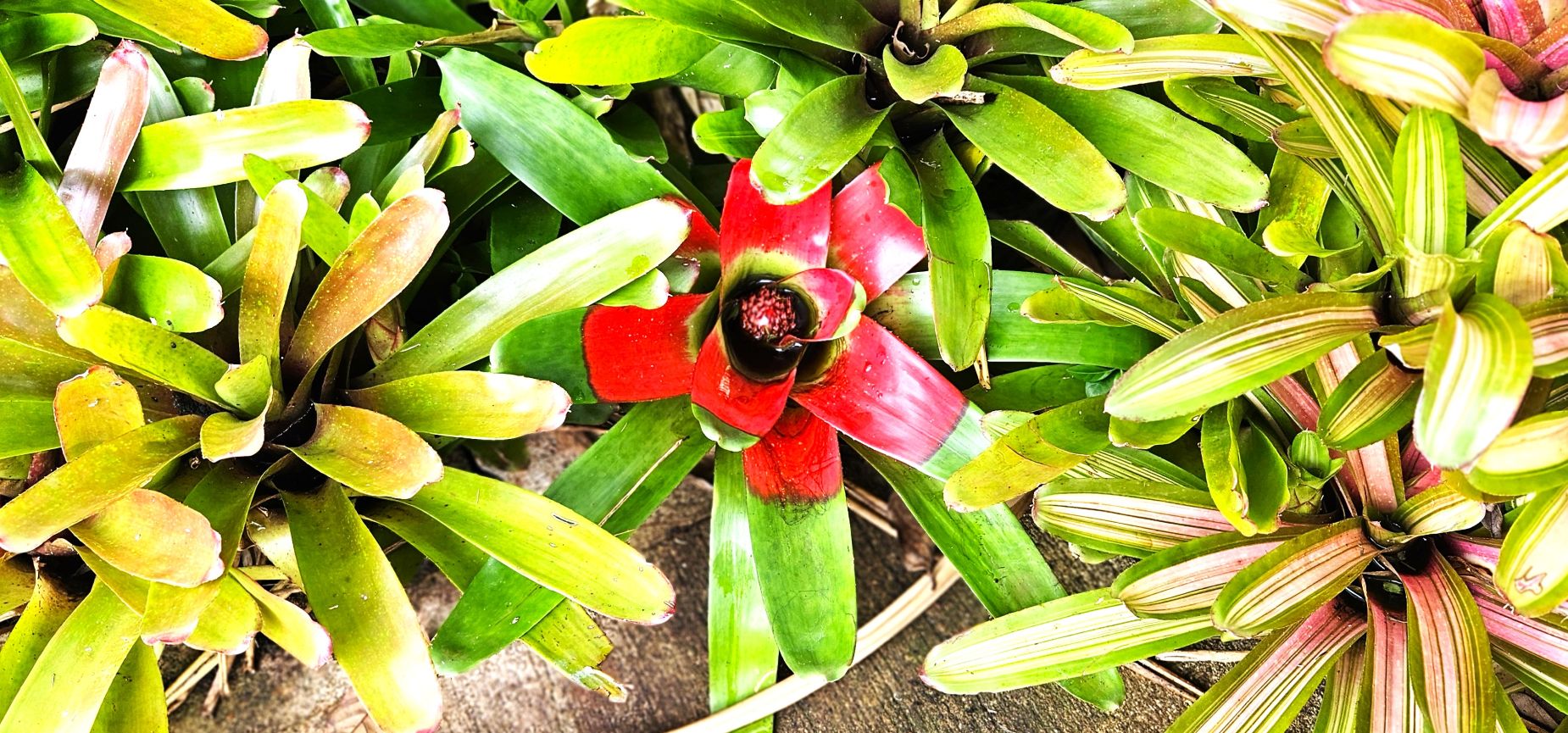
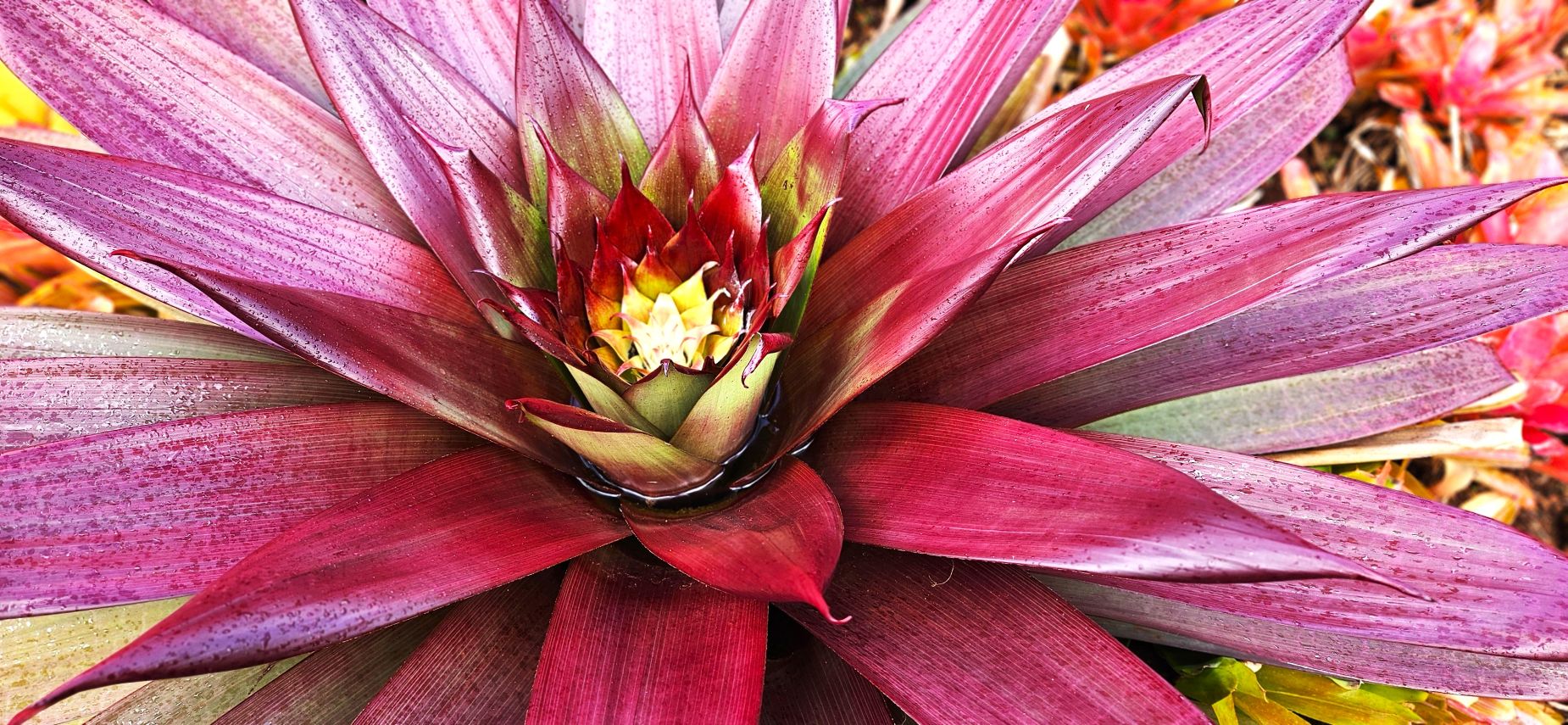
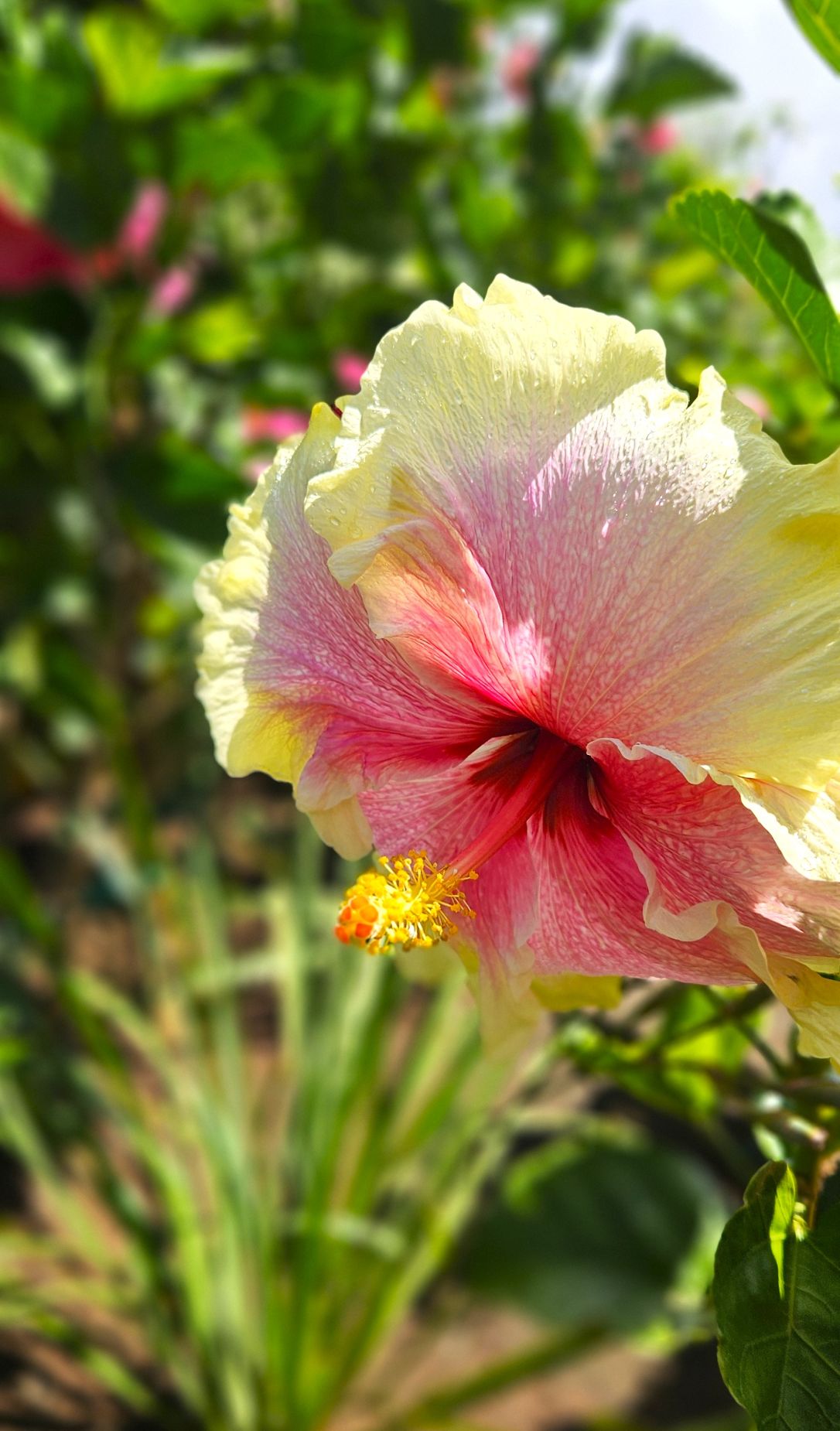
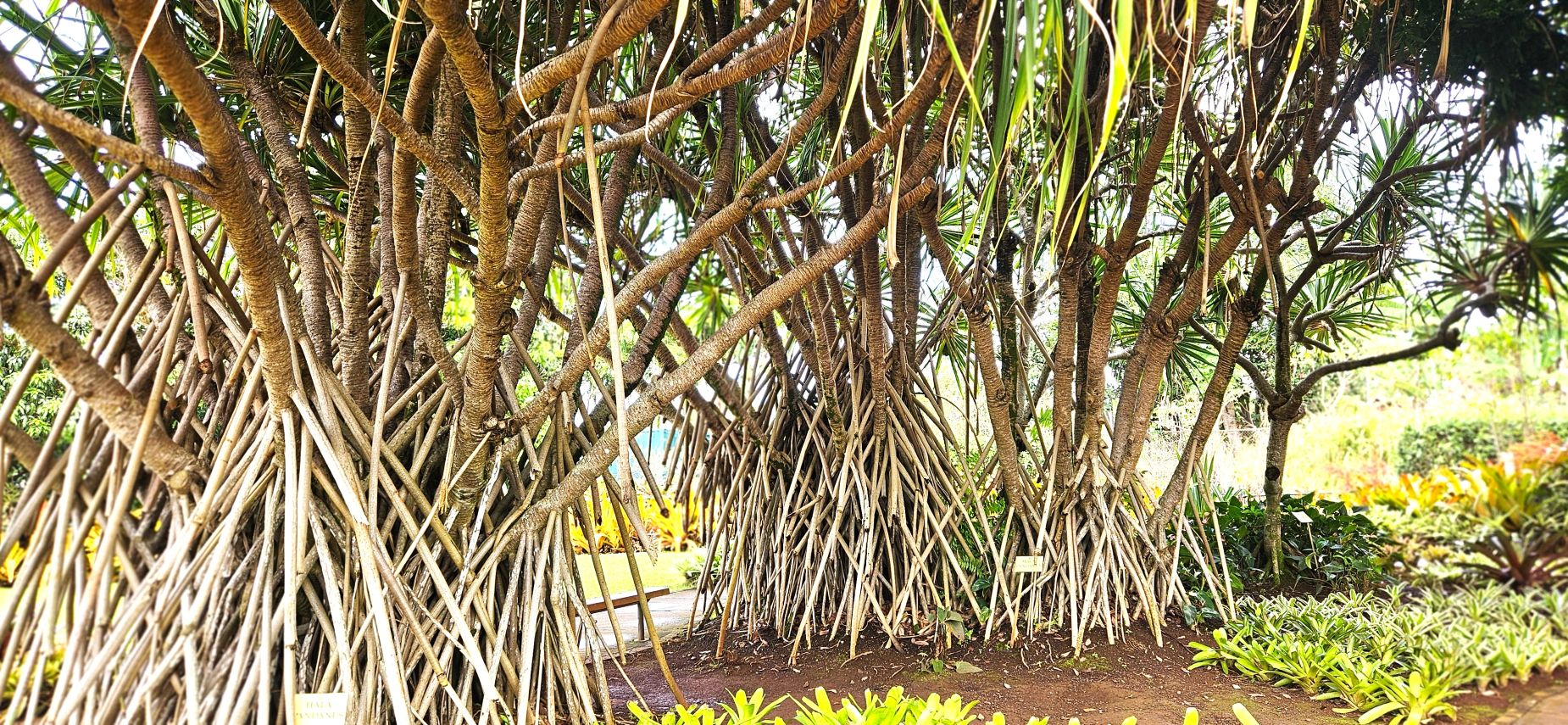
There were many colorful plants in this two-acre garden. There are eight different mini-gardens.
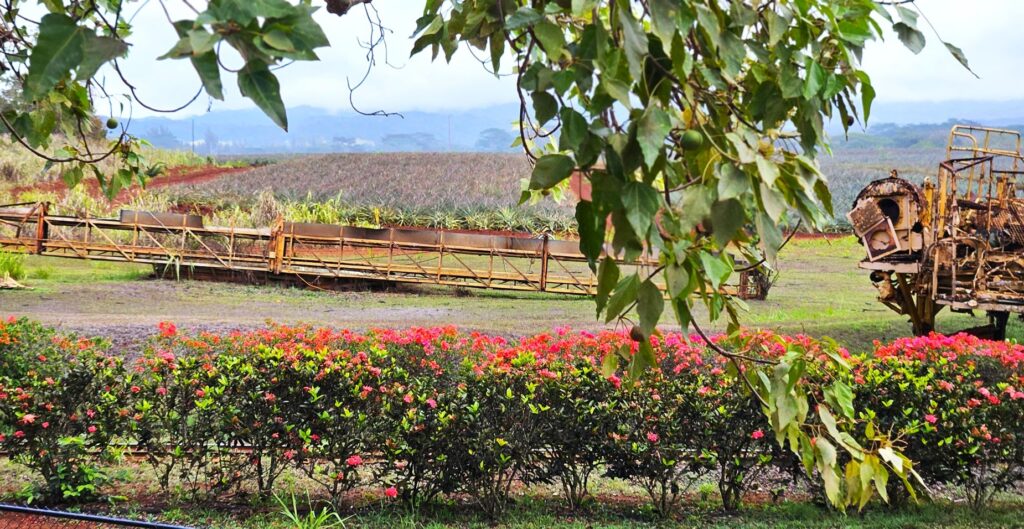
We could see out in the distance where the pineapples are grown, along with some historical machinery. Dole moved it’s pineapple growing to other countries and only produces a small amount for local consumption. The Plantation is mostly a tourist attraction now.
Pineapple field and ancient pineapple harvesters
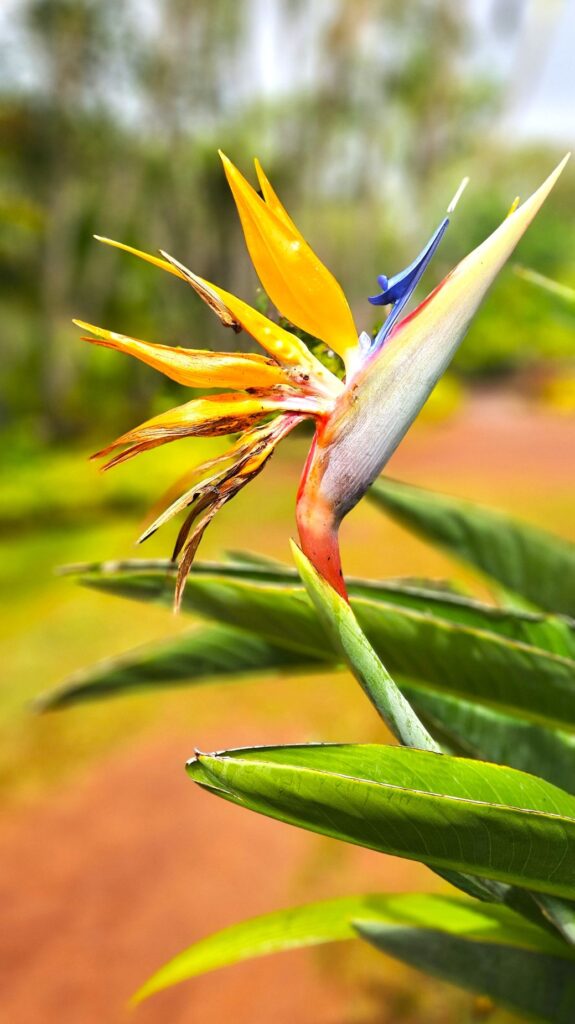
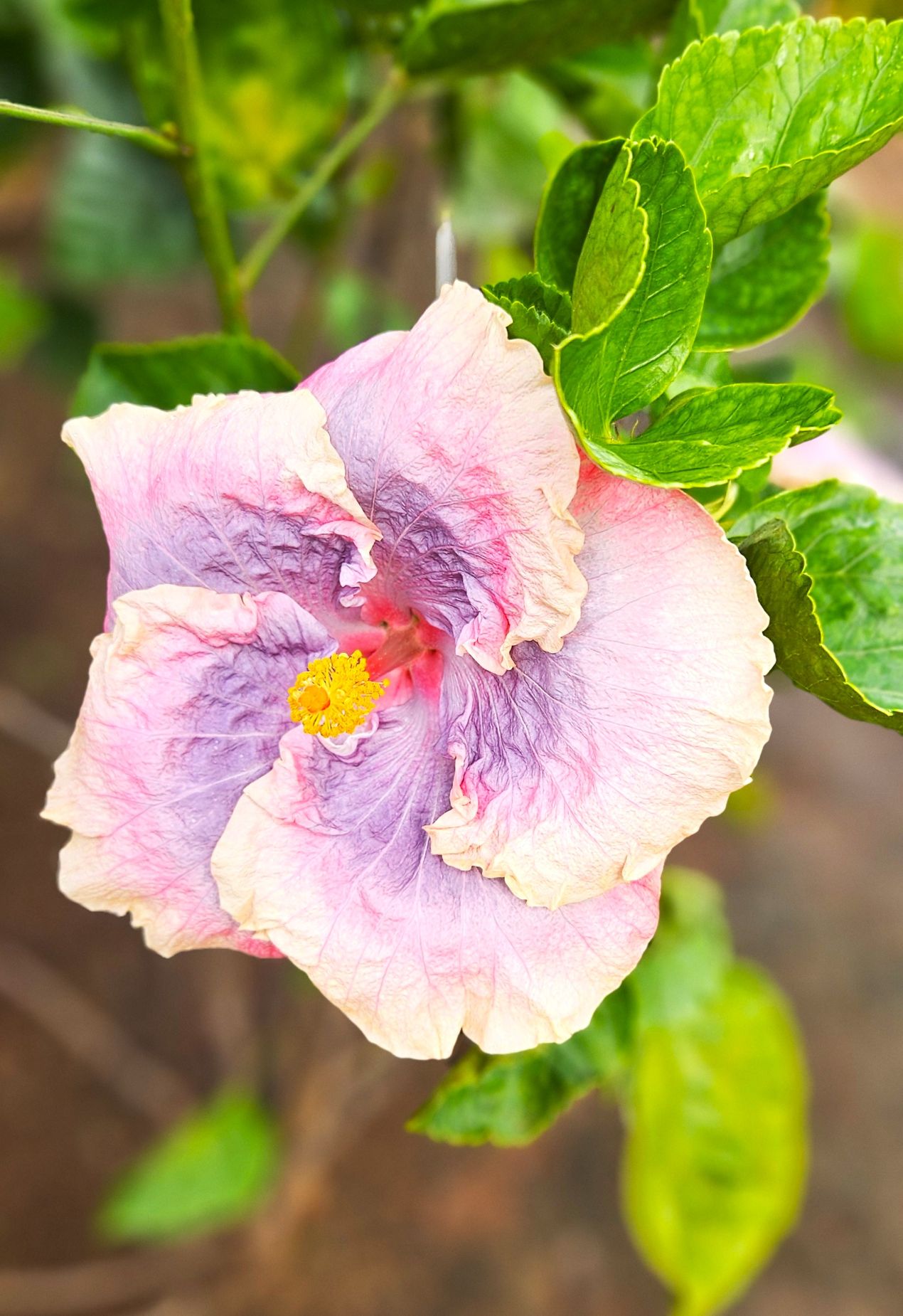
There was no end to beautiful flowers to photograph like this Bird of Paradise.
Bird of ParadiseBromeliadBromeliad – Scarlet StarHibiscusHibiscus
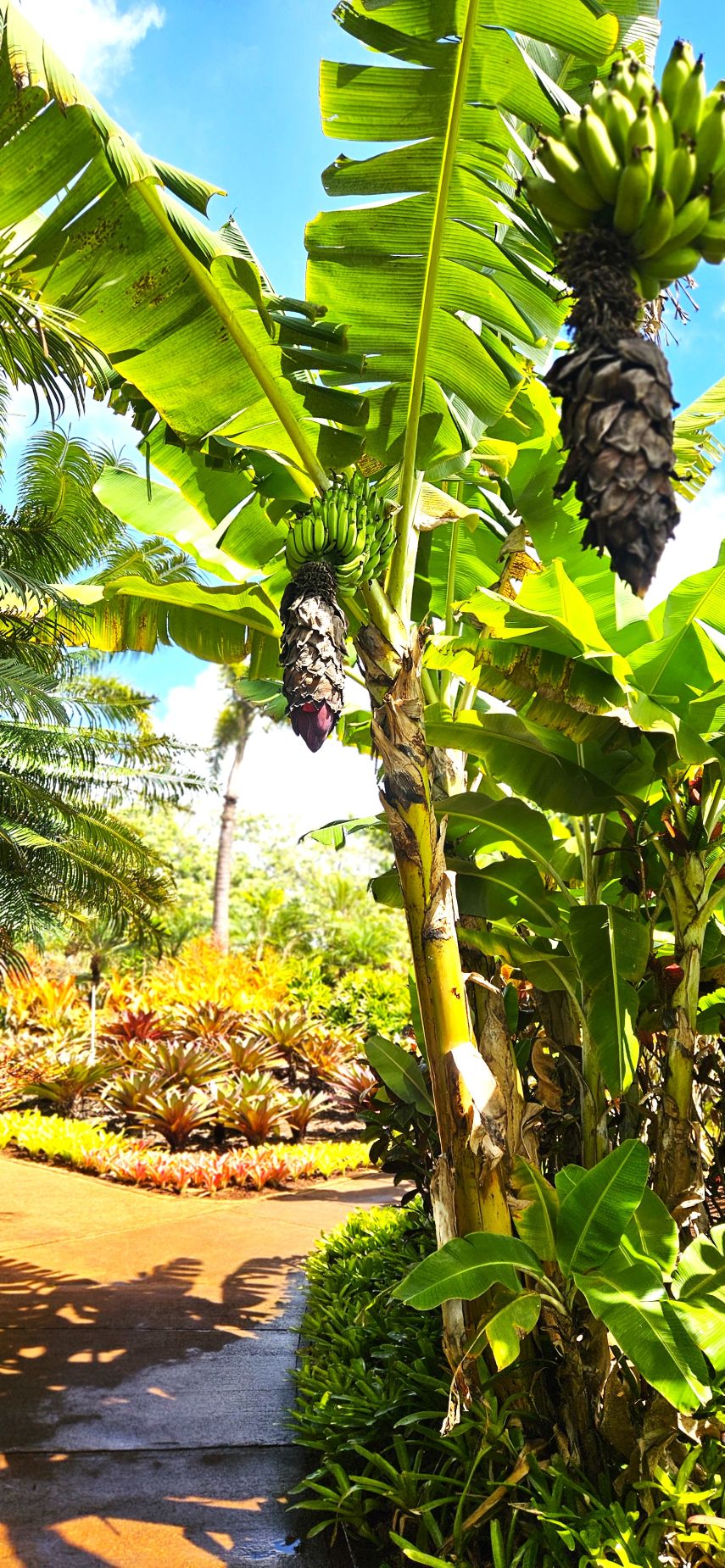
Even though they look like a palm, banana trees are not palm trees.
Banana Tree
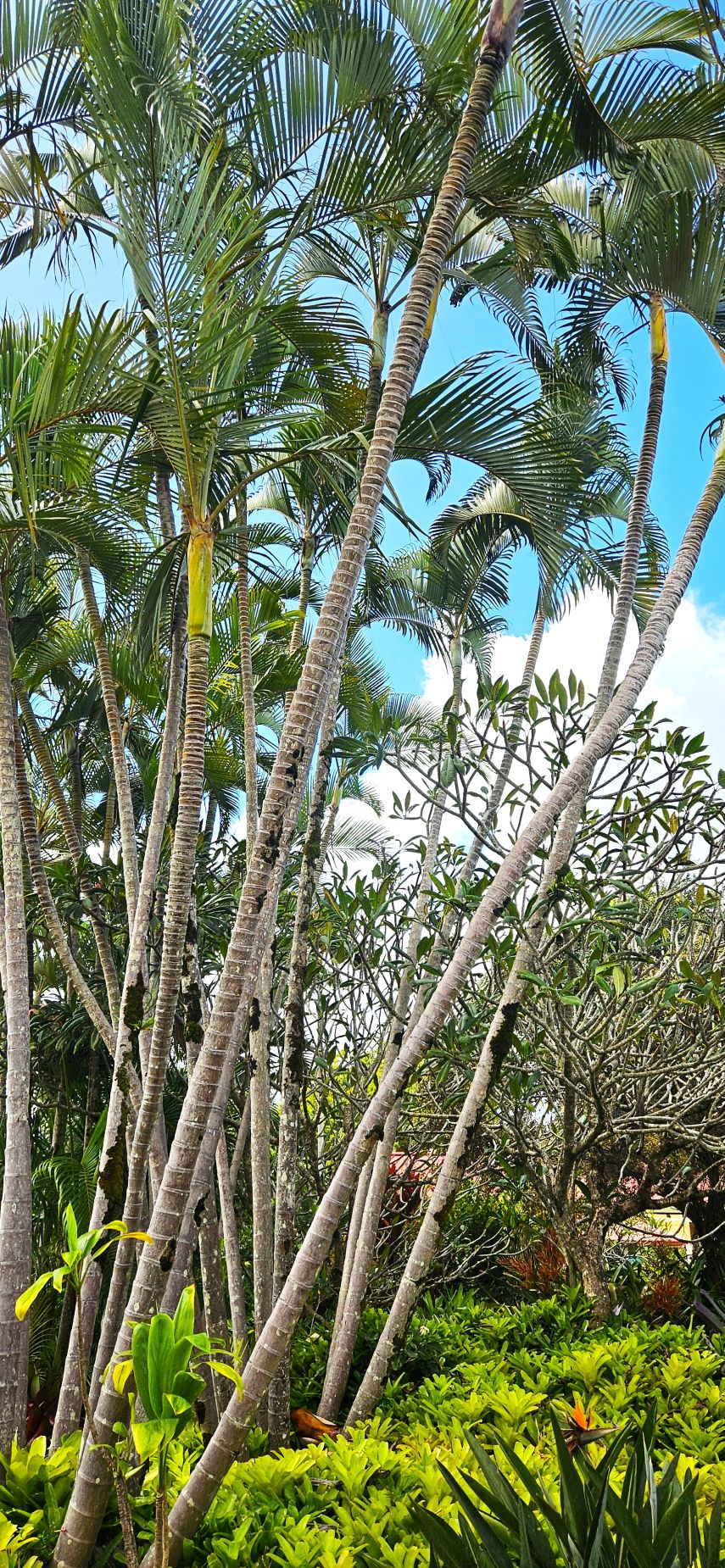
There were many different types of palm trees throughout the garden.
Majestic Palms
We wrapped up our time at the Dole Plantation by getting a Dole Whip–which is a frozen dessert with pineapple flavor. It wasn’t our favorite, but we had to try it.
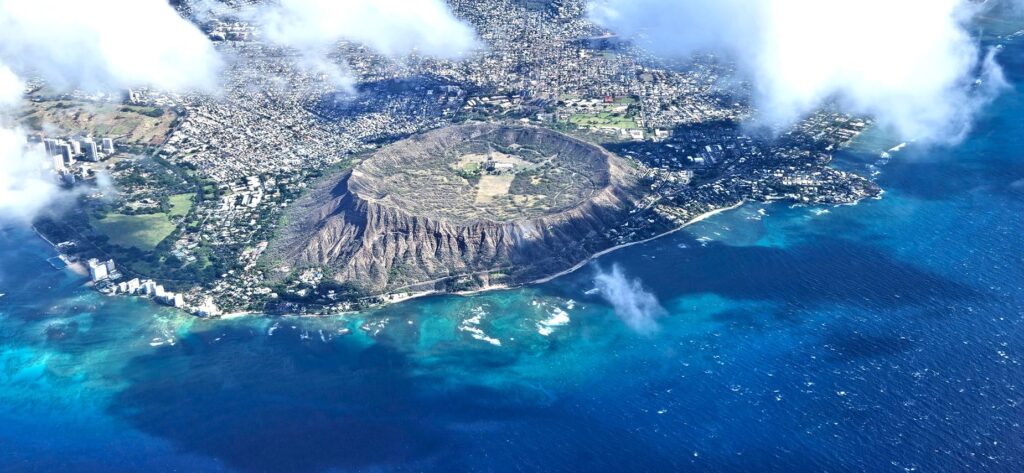
View of Diamond Head from above
As we flew out of Oahu the following day to our next island, we could see the crater of Diamond Head below. Our next island was the “Big Island” called Hawaii.
“O Lord, what a variety of things you have made! In wisdom you have made them all. The earth is full of your creatures.” Psalm 104:24
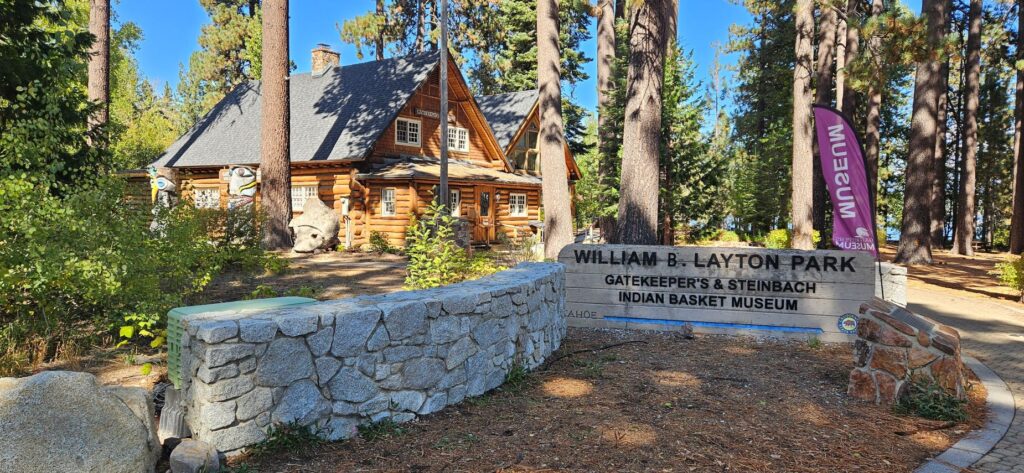
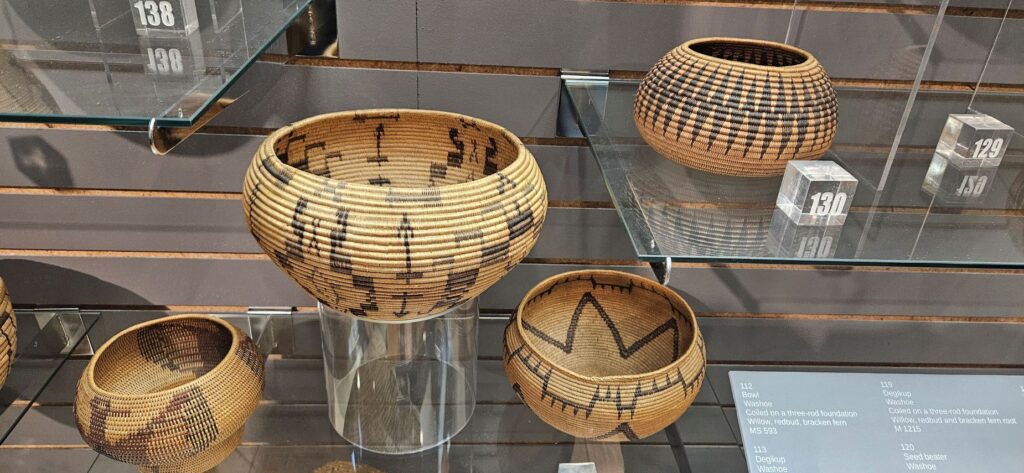
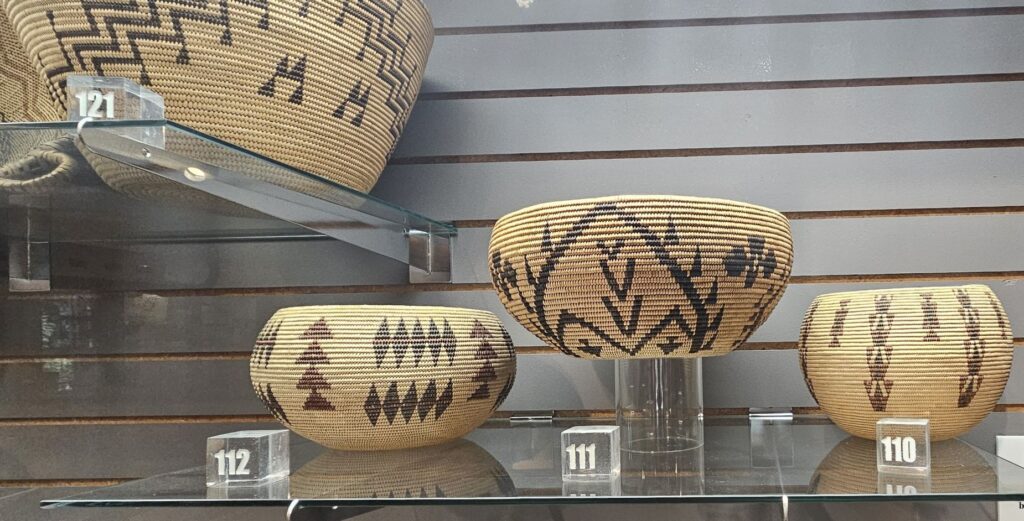
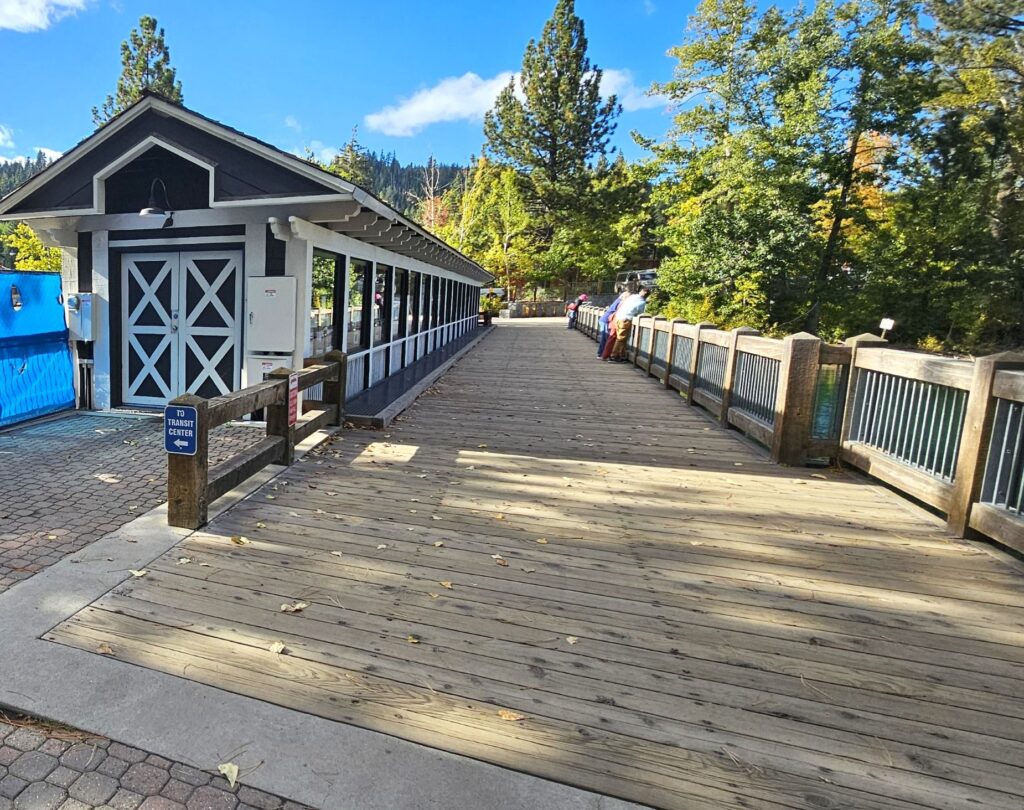
In Tahoe City, a little town in north Lake Tahoe, we visited the Gatekeeper’s Museum and Indian Basket Museum. We stopped here on our audio tour on a previous day, but it was closed. It was worth coming back to visit.
Entrance to Gatekeepers Museum, Tahoe City, NV
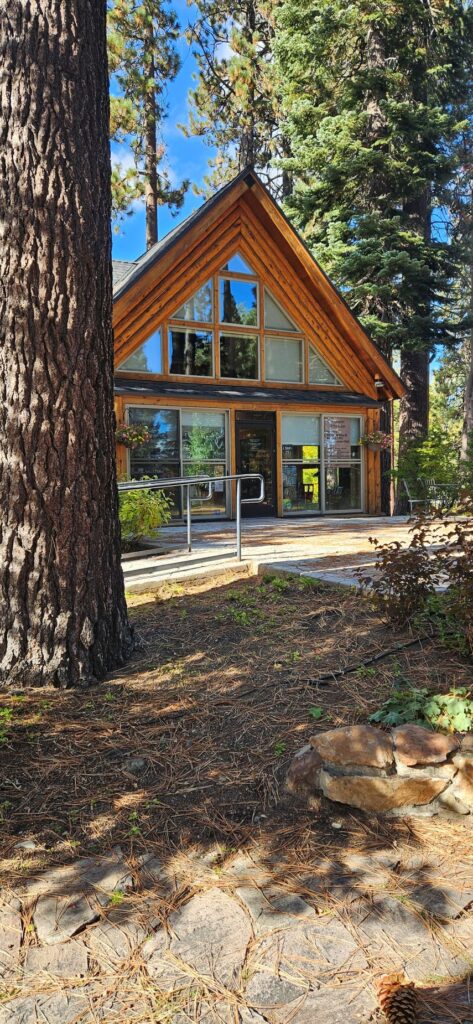
The Gatekeeper’s Museum was once the cabin where the Gatekeeper for the Lake Tahoe Dam resided, whose job it was to regulate the water flow out of the dam. It burned down in 1978 just before it was deeded over to the North Lake Tahoe Historical Society. They reconstructed it completely by hand on the original foundation.
Gatekeeper’s Museum
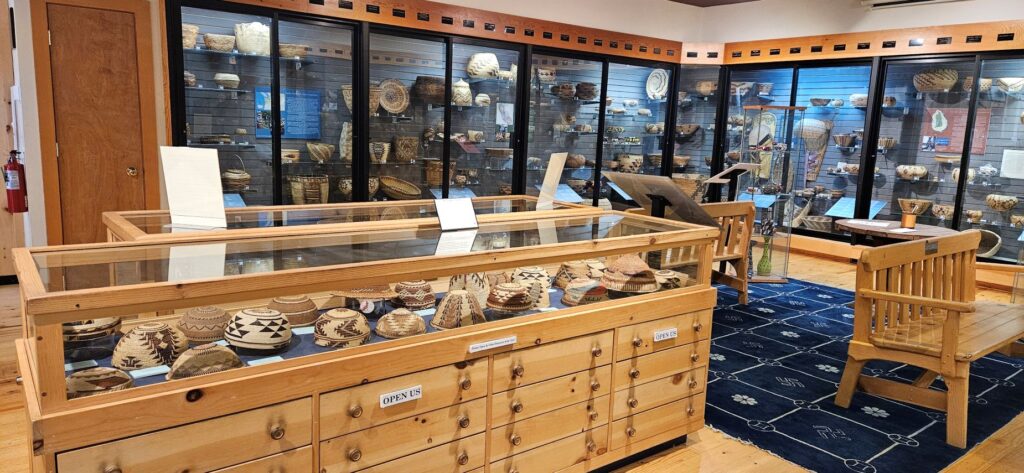
The museum also houses the Marion Steinbach Native American Basket Collection. The basket gallery showcases more than 700 baskets from native peoples of Western North America. The baskets are in very good condition and are works of art.
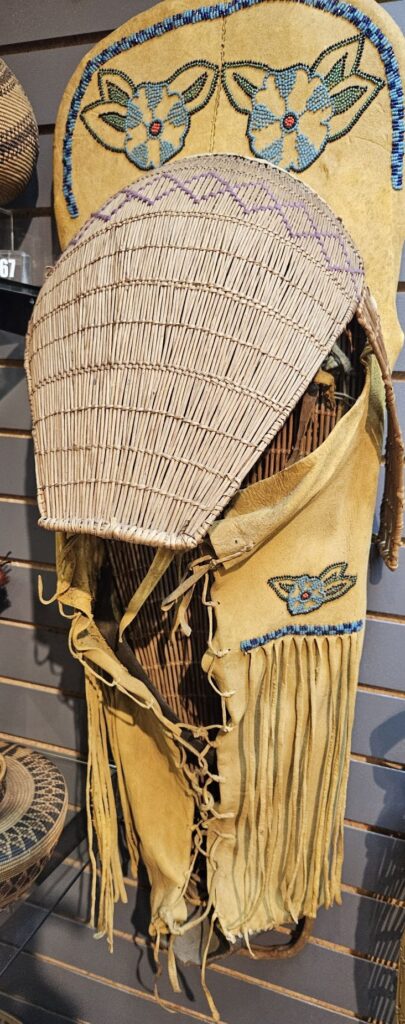
Indian Basket Collection is part of the Gatekeeper’s Museum.Cradle board for papoose
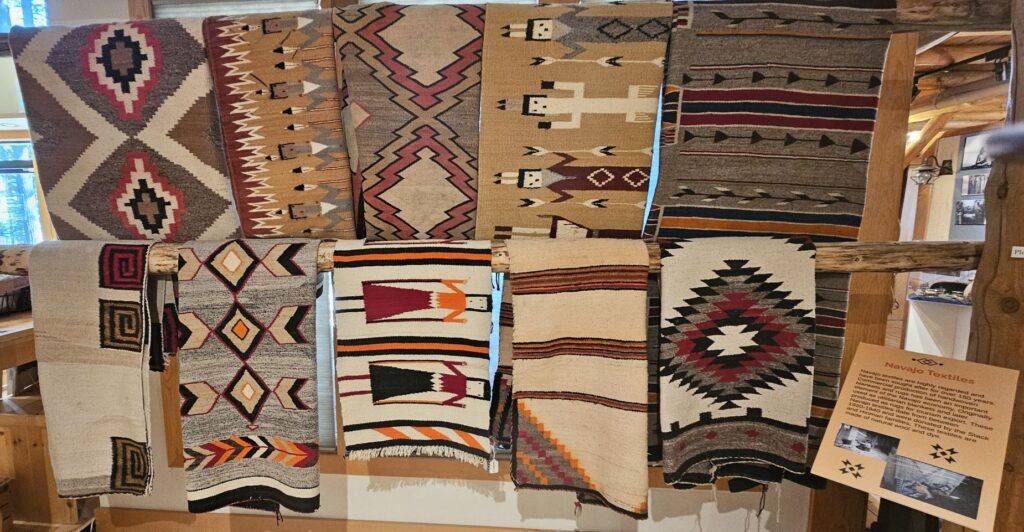
Another display showcases Navajo Indian rugs.
The rest of the museum preserves and tells the history of the Lake Tahoe area. There are stories of various boats that were used on the lake, artifacts from dog sled operators, and dresses from ladies of the past and more. Upstairs there’s more history and wild tales of the legend of the plug at the bottom of the lake.
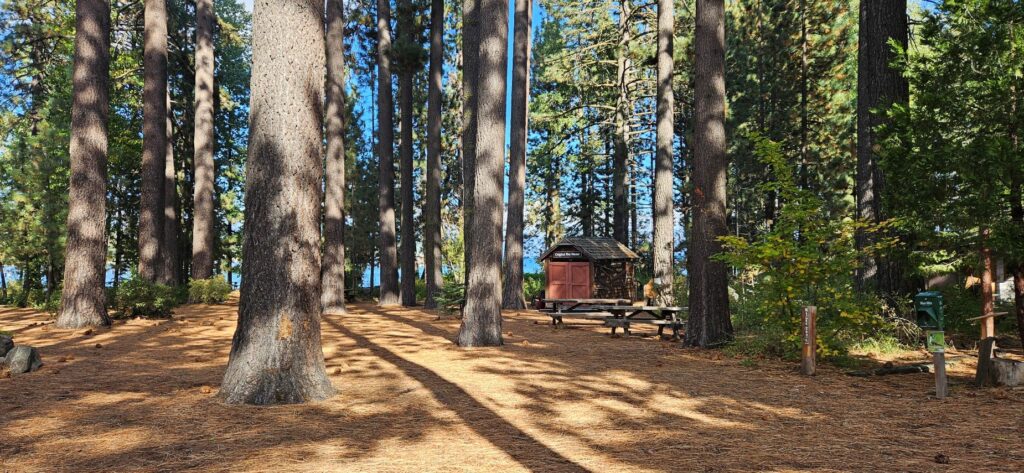
The outside of the museum has beautiful grounds that are right on the edge of the lake. Let’s take a walk down to the lake.
Pathway from Gatekeeper’s Museum to Lake Tahoe
Someone (not us) collected all these pine cones and arranged them on the picnic table.
Within sight of the Gatekeeper’s grounds, is the famous Fanny Bridge which is located over the only outlet of Lake Tahoe into the Truckee River.
The bridge has an interesting story on how it got its name. It was so named from all the fannies that can be seen from the road as gawkers stare over the edge of the bridge at the water below. Do you see any fannies?
Here’s a view of what you can see from Fanny Bridge.
If you walk across the bridge, the North Lake Tahoe Visitor Center has a very interesting interactive display. The “Shaping Watersheds” interactive sandbox is a large-scale educational model where visitors can move the sand to build mountains, valleys and other land-forms. An overhead projector casts topographical contour lines and a color-coded elevation map onto the surface. The motion-sensing camera detects changes and the projected lines and colors change to reflect the new topography. It’s even fun for adults. Ask me how I know.
Grounds of Gatekeeper’s MuseumLake Tahoe from Gatekeeper’s Grounds
There was another historical cabin in Tahoe City that we did not get to see. It’s nice to have reasons to come back. This is one area I could visit over and over again.
“Whoever drinks of the water that I will give him shall never be thirsty; but the water that I will give him will become in him a fountain of water springing up to eternal life.” –Jesus
Lake Tahoe is the largest alpine lake in North America. It is the second deepest lake, after Crater Lake which is in Oregon.
Fanette Island in Emerald Bay is the only island in Lake Tahoe
Lake Tahoe is completely surrounded by mountains of the Sierra Nevada and the Carson Mountain Range.
We enjoyed our three-week stay in South Lake Tahoe. The lake straddles two state lines, California and Nevada. We were on the California side, but did our shopping and fueling up in Nevada where prices were much better.
Emerald Bay at Lake Tahoe is a popular scenic spot.
Our campsite was among tall beautiful pines. Whenever we stepped outside, we could smell the wonderful scent of the pines. Tahoe Valley Campground where we stayed is one of the Encore parks of Thousand Trails Campgrounds.
Our campground, Tahoe Valley Campground, at South Lake Tahoe
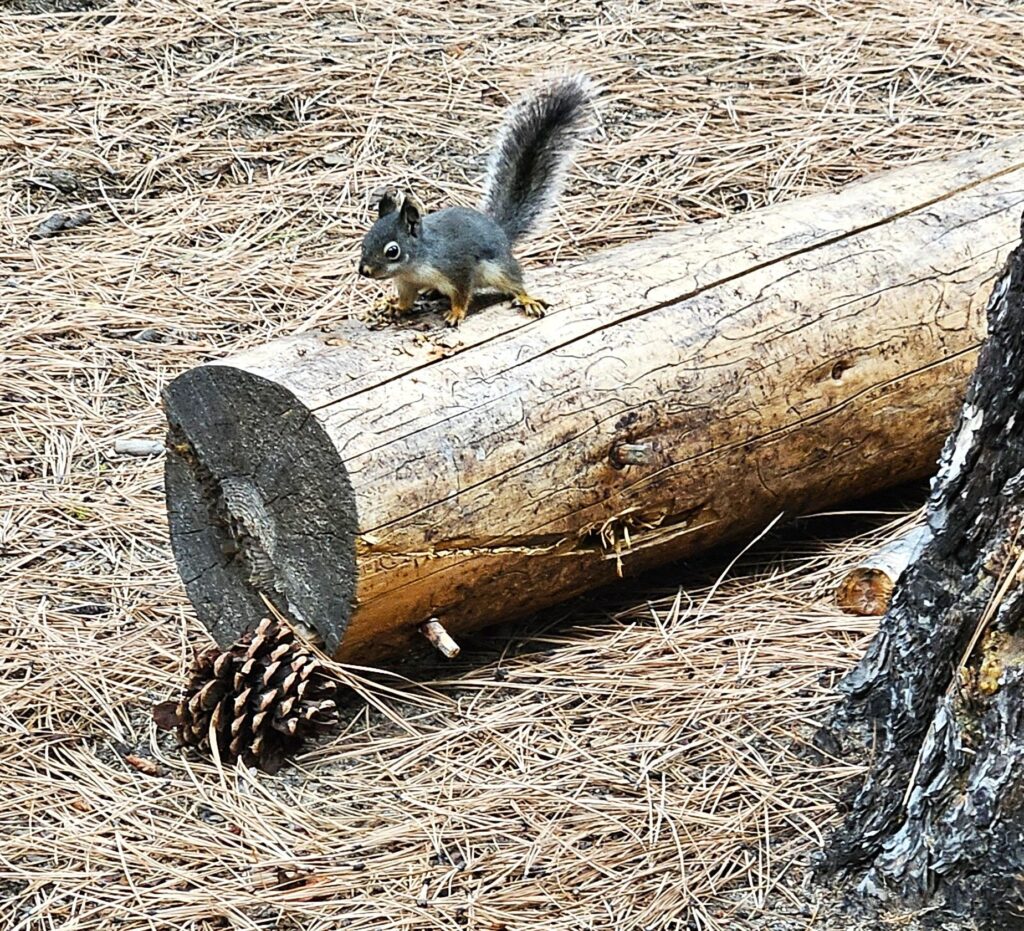
On our evening walks, we saw a variety of wildlife. There were plenty of tree squirrels like this little fellow.
Young squirrel eating pine nuts.
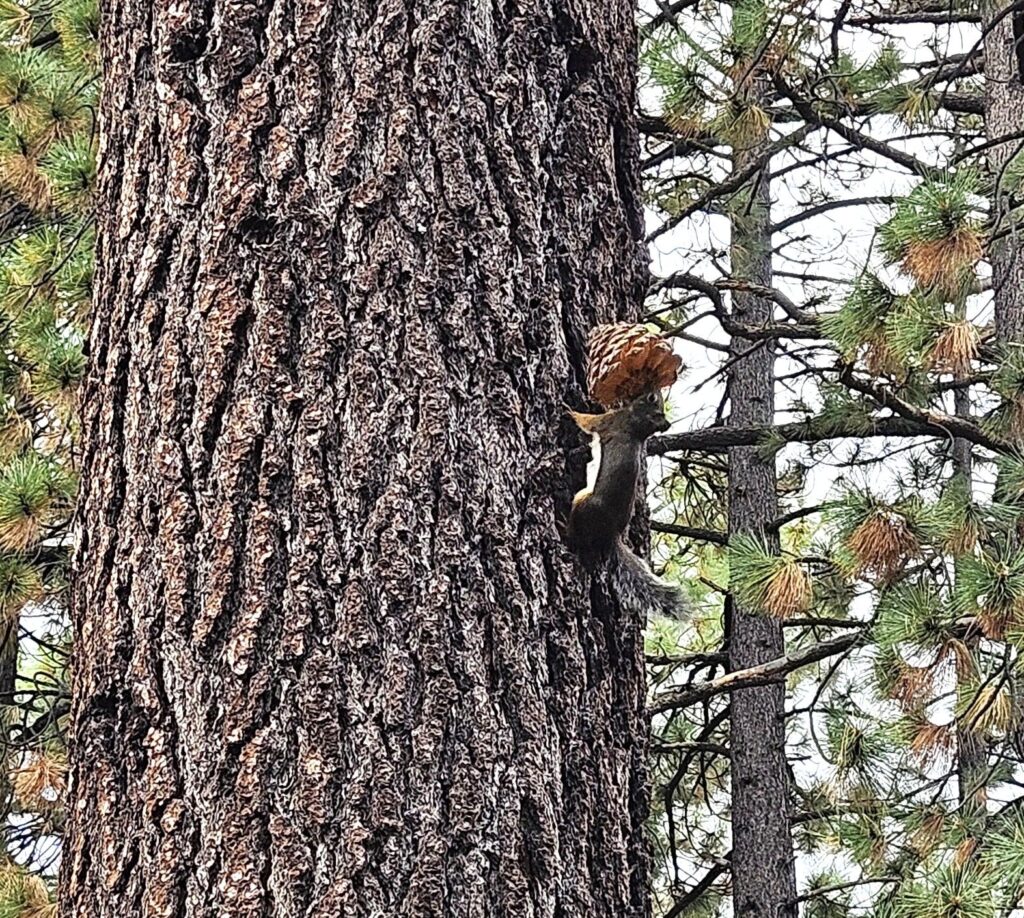
This squirrel amazed me at his determination to carry this pine cone (that was almost as big as he was) up this tree trunk.
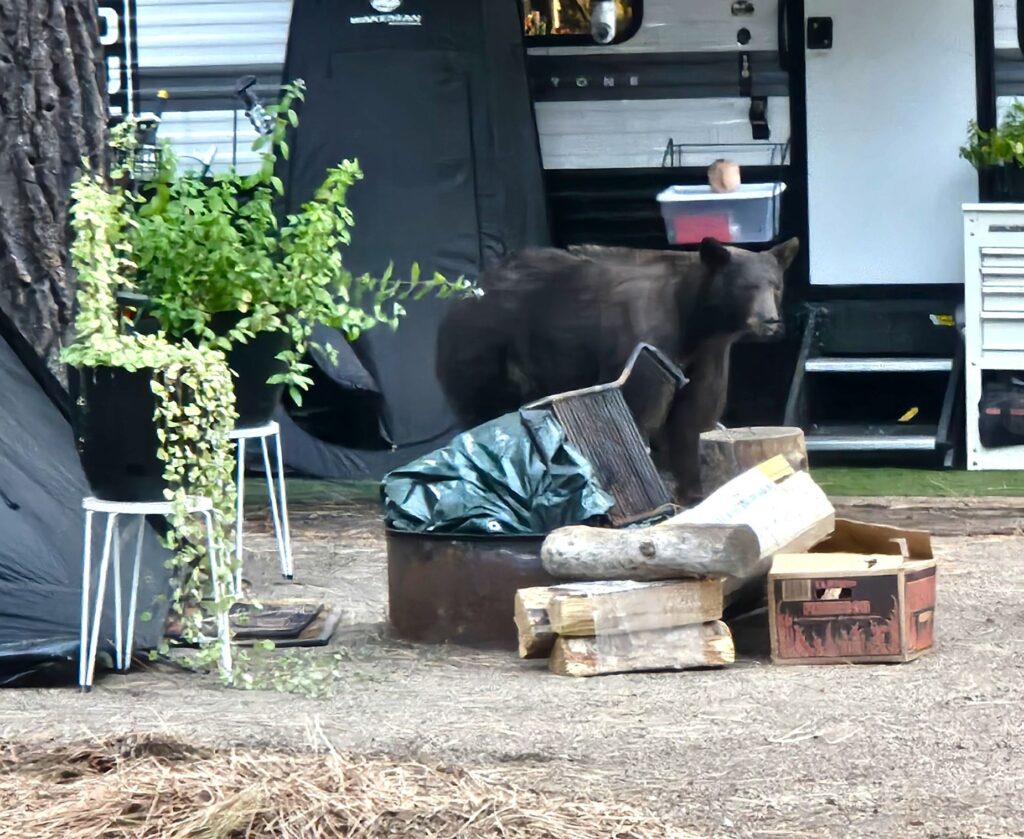
We even saw a bear one evening by a neighbor’s doorway. We had our own bear incident. I came out one morning to find both doors on the passenger side of our truck wide open. I thought maybe Ray had forgotten to close them, until I saw a bunch of trash around on the ground. Although we always lock the truck at night, we forgot that night. A bear opened the truck doors and found Ray’s bag of Fritos and our stash of peanut butter crackers. He ate everyone of them! (and left the trash for me to clean up.)
Bear at neighbor’s door
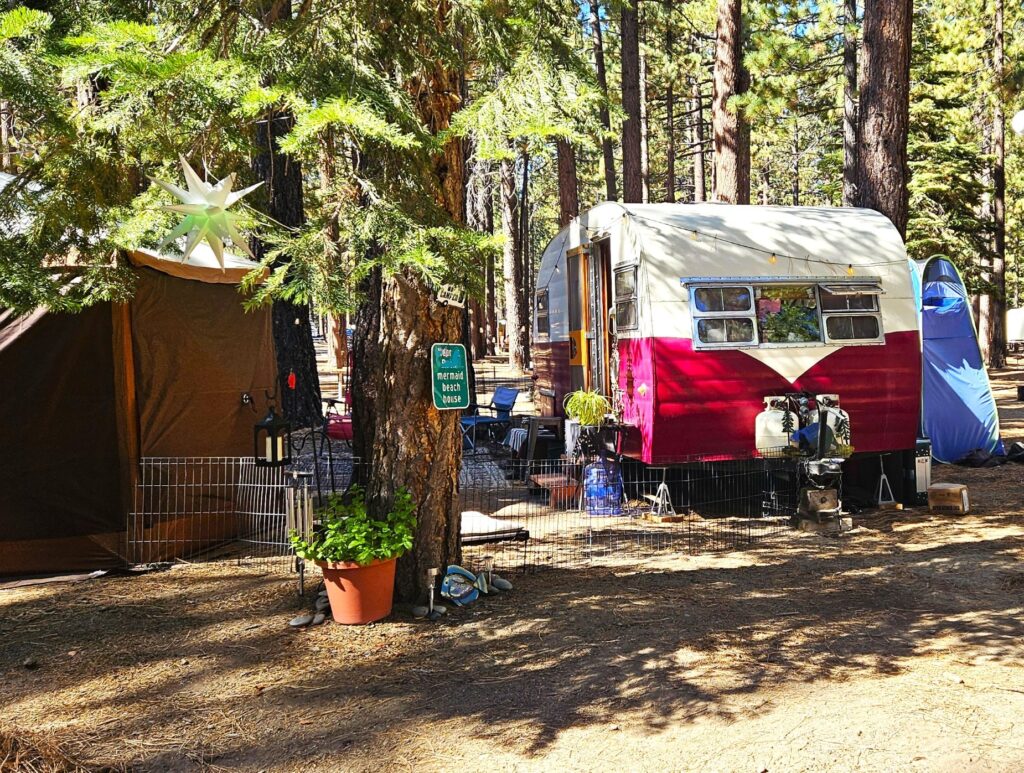
On our walks, we like to look at the variety of homes on wheels. I thought this little vintage trailer was cute.
Vintage Trailer
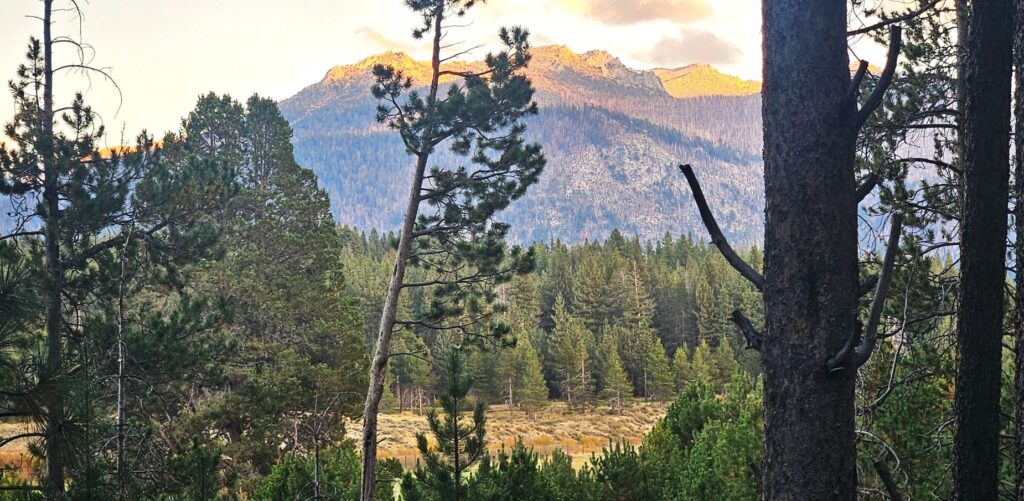
If we timed our walks right, we could peer through the trees and see the mountains in the distance as the last bits of sunlight lit up the mountain tops at sunset.
Sunset on mountain peaks
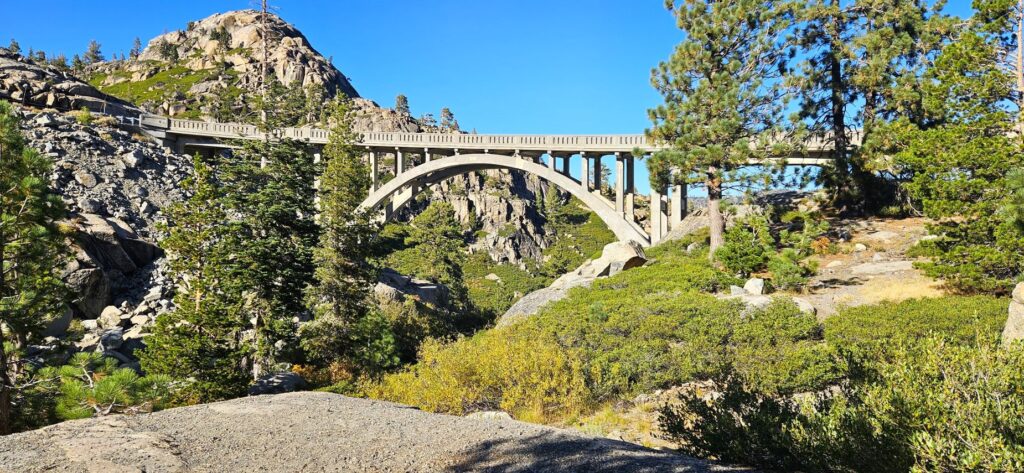
Donner Pass
One of our first excursions in the area was to Truckee, California, to see Donner State Park and Museum. The museum tells the history of the Donner party and the history of the Lincoln Highway (Highway 50). We listened to an audio tour and learned about the history of the area as we drove along. We lost the route in Truckee and had to finish it on our own. We listened to the rest of the tour on our way home.
Bridge on the Lincoln Highway
Taylor Creek Visitor Center
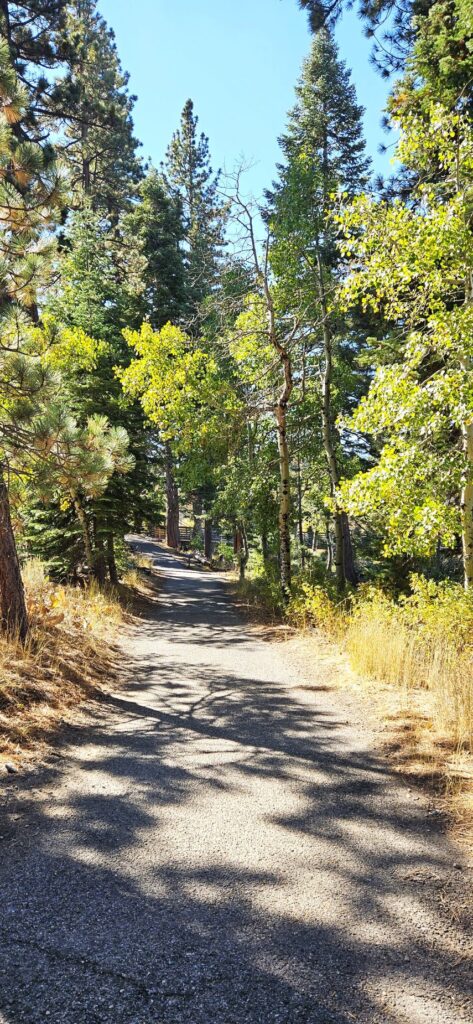
Another excursion closer to home was the Taylor Creek Visitor Center. We hiked the half-mile Rainbow Trail that makes a loop back around to the Visitor Center. It was a perfect day for a walk.
Rainbow Trail at Taylor Creek Visitor Center
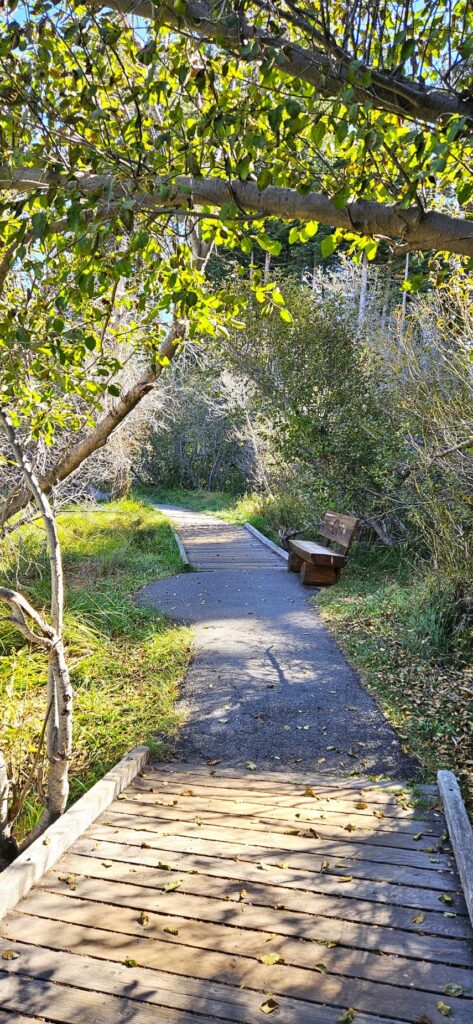
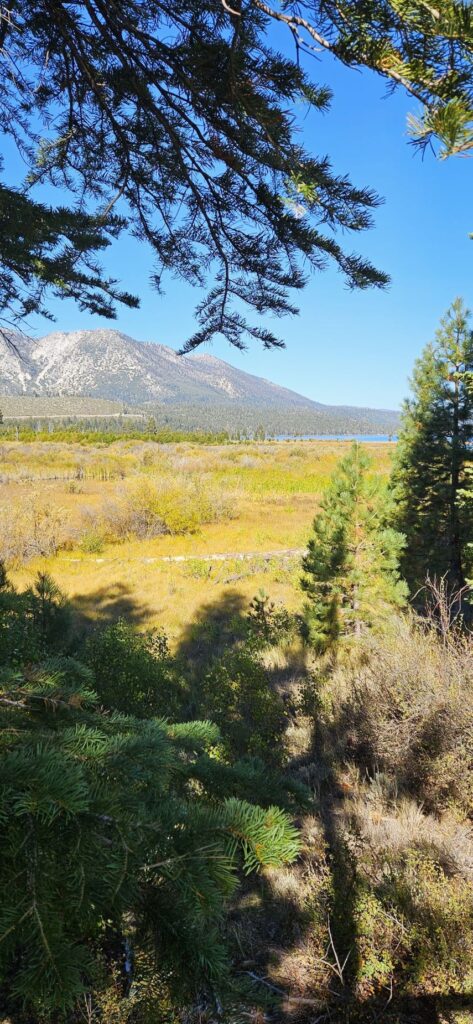
Most of the area is marshy. One of the reasons Lake Tahoe is so clear is that it is mostly filled from rain and snow. The marshes also contribute to the clarity by filtering water flowing into the lake.
Boardwalk on the Rainbow Trail
The marshes help slow the water flowing into the lake, thereby trapping sediment.The plants in the marshes absorb excess nutrients which removes pollutants from runoff and snow-melt before it reaches the lake.
Marshes like this purify the water flowing into Lake Tahoe
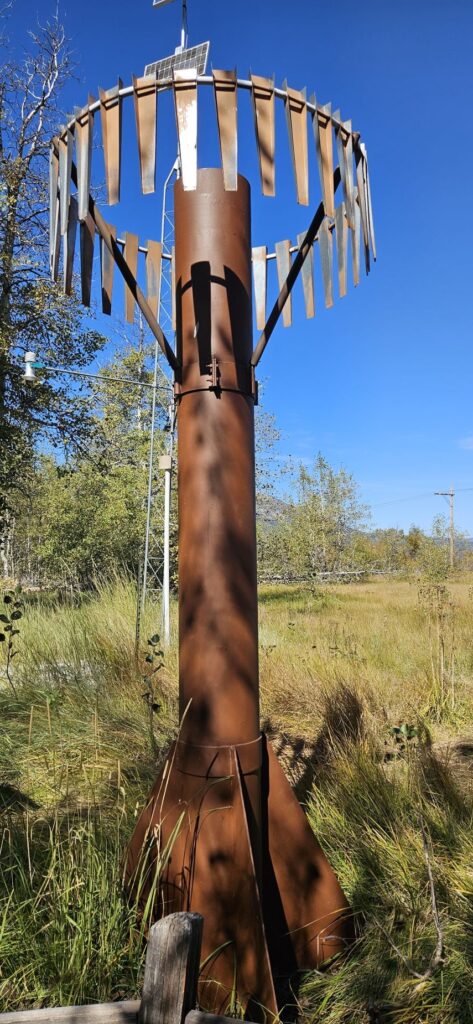
Lake Tahoe gets 300 to 500 inches of snow each year. This “Snowtel” is one of the ways the snowfall is monitored.
Snowtel for measuring snowfall
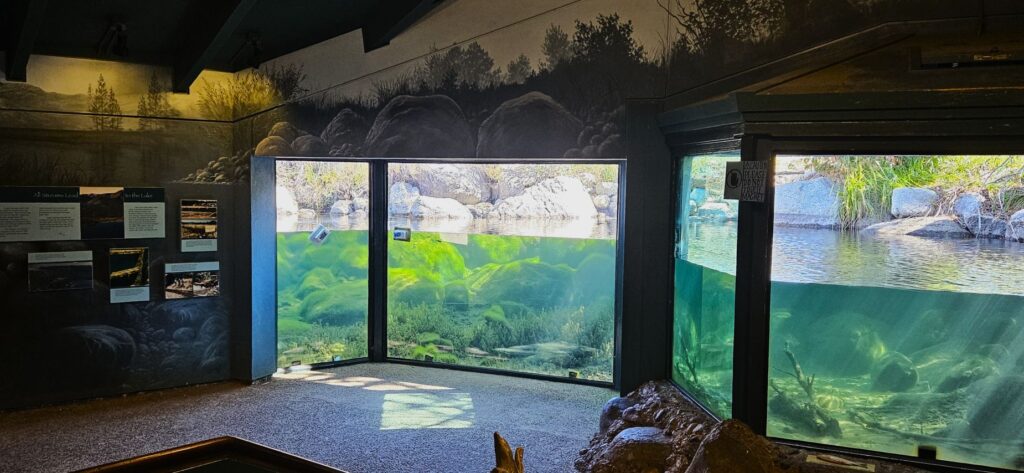
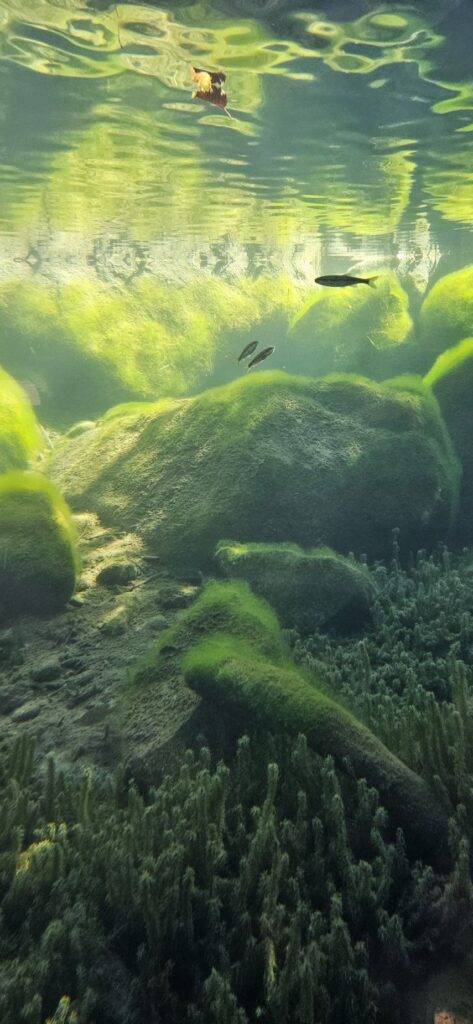
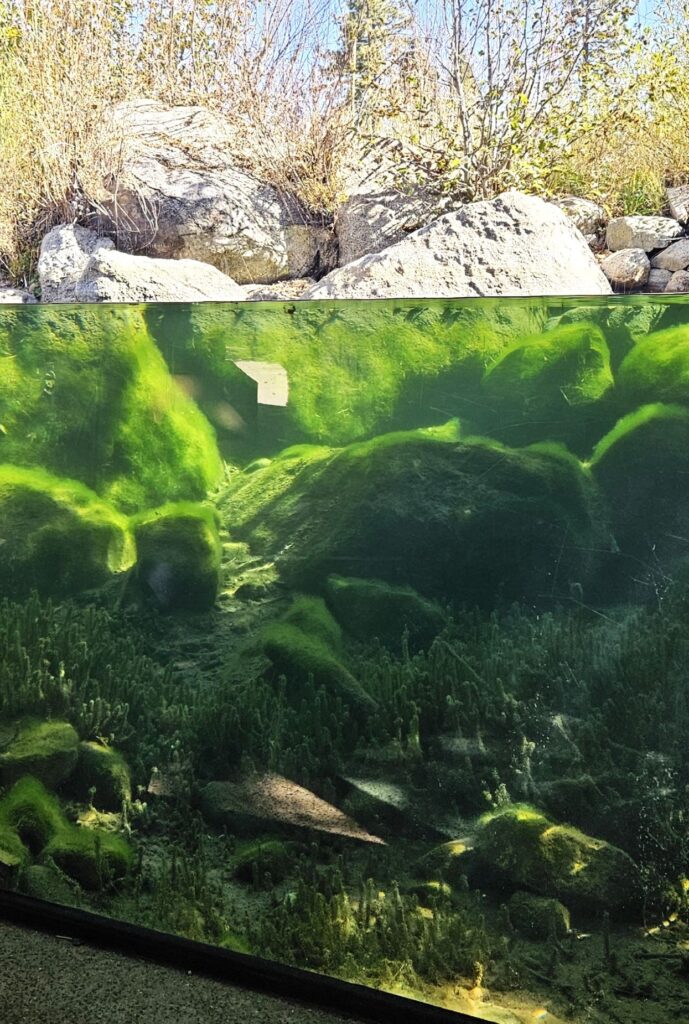
The Stream Profile Chamber is the highlight of the Rainbow Trail. Visitors can view the stream from under water. This is one of the most unique nature displays I’ve seen.
Stream Profile Chamber at Taylor Creek Visitor Center on the Rainbow Trail
We were there too early to see the salmon spawn. The Kokanee salmon spawn here in mid-October to November. We saw a few small fish.
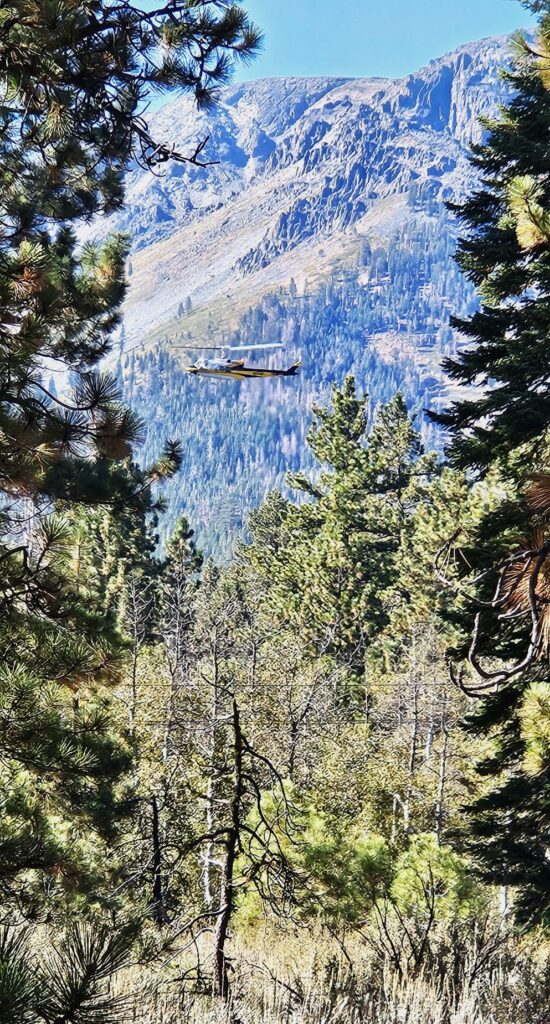
On our way back to the parking area, we saw this helicopter practicing search and rescue.
Helicopter practicing rescue efforts
Tallac Historic Site
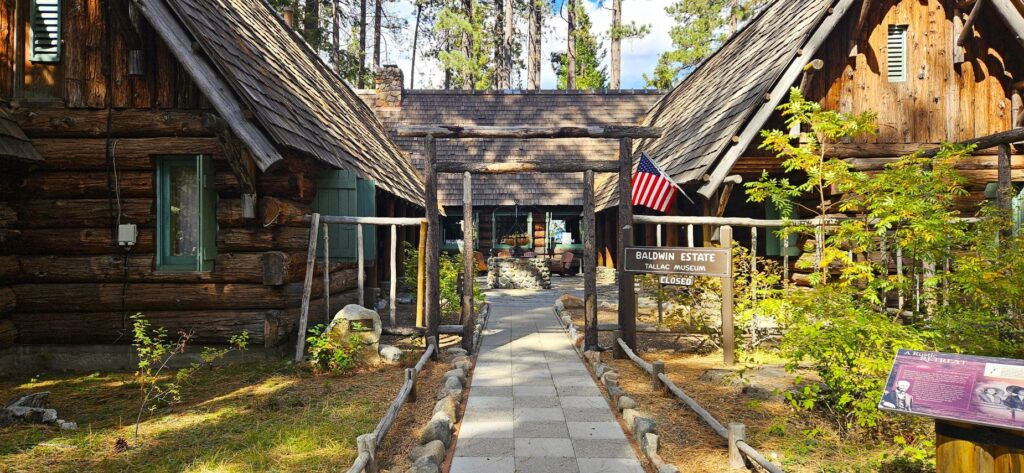
Near the Taylor Creek Visitor Center is the Tallac Historic Site. You can hike a short trail from Taylor Creek to get there, or drive a short distance and park in the parking lot. This historic site is a beautifully preserved glimpse into the lives of three prominent families from San Francisco during the Gilded Age.
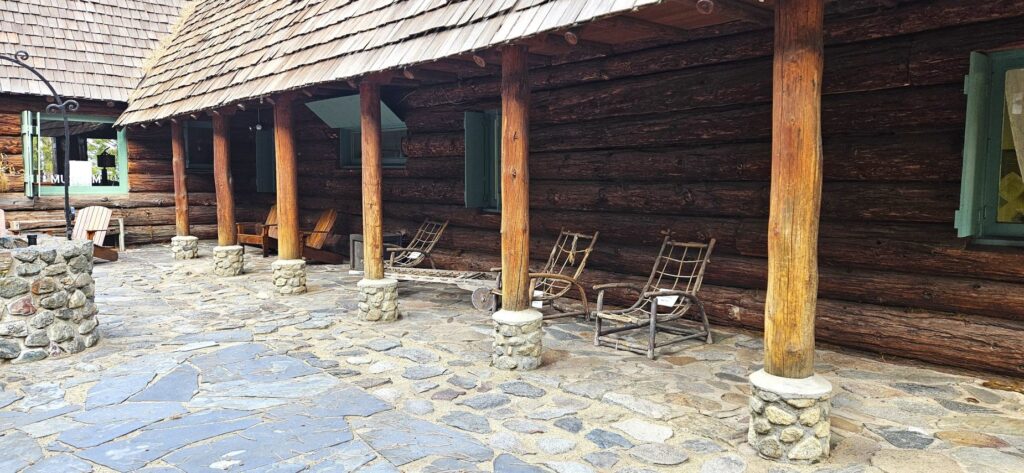
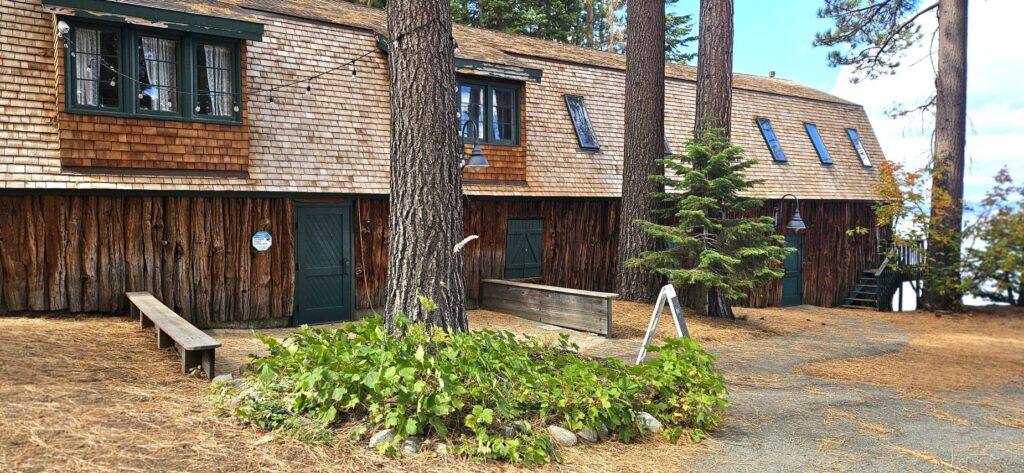
The Baldwin Museum and Gift shop is in a central location on the properties.The Baldwin Estate Courtyard
The walk through the grounds is beautiful.
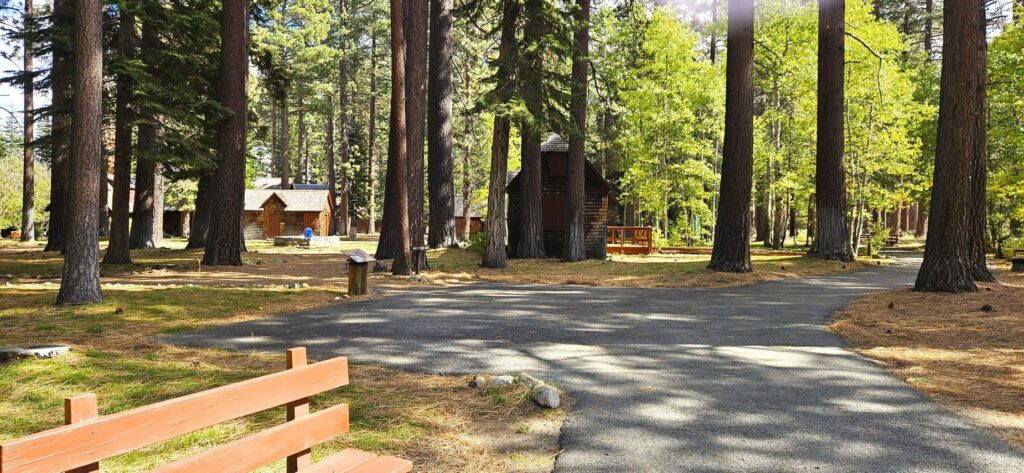
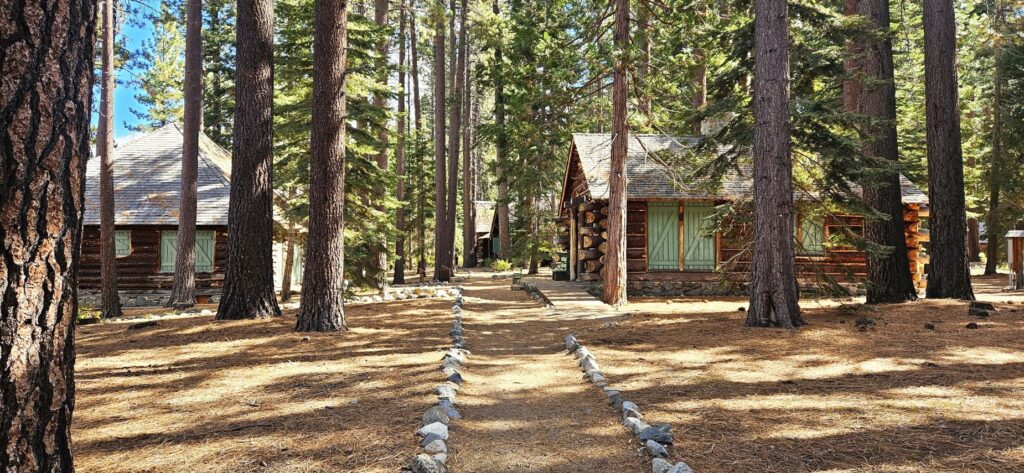
Besides the larger homes, there were many smaller cabins.
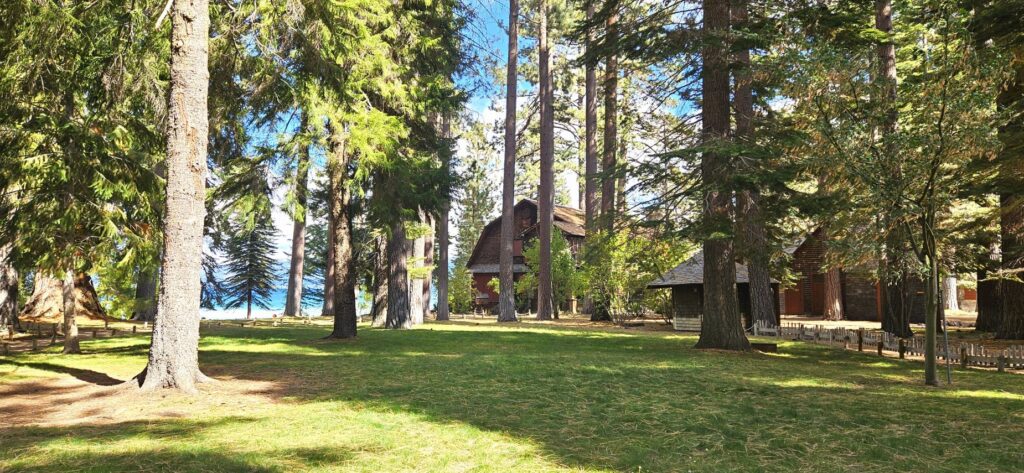
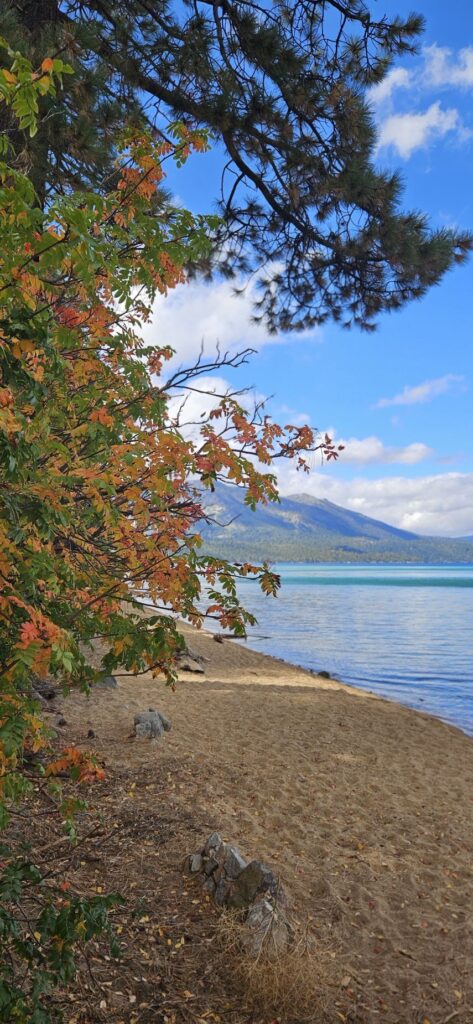
The grounds are right on the shore of Lake Tahoe with beautiful views of the lake and forest.
There are three estates here, so you can get some good exercise by going to all three.
Many of the buildings are still being restored. Volunteers restored this garden.
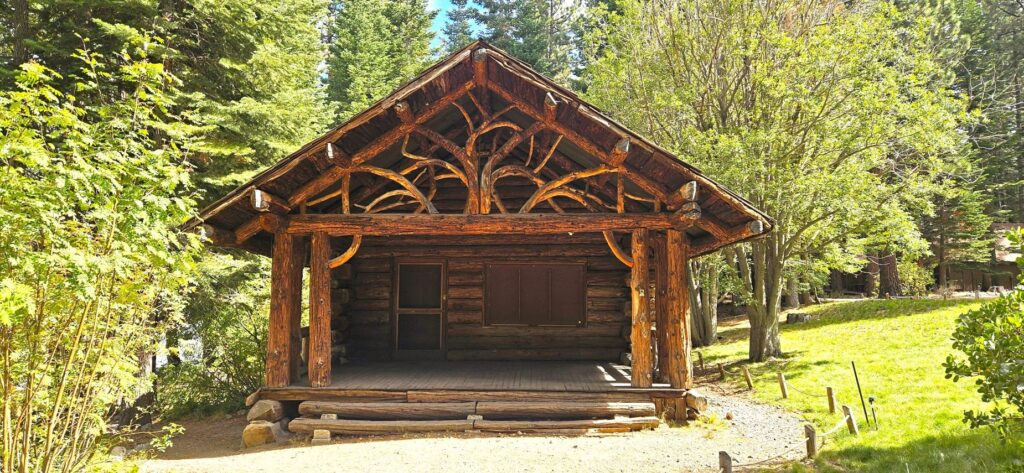
The Pope Estate invited painters, sculptors, photographers and other artists beginning in the 1920s. The Great Basin Institute re-launched the artist-in-residence program in 2023. The artists use the historic cabin as their personal studio, showcase their talent and provide workshops. The beautiful setting is an inspiration to any artist.
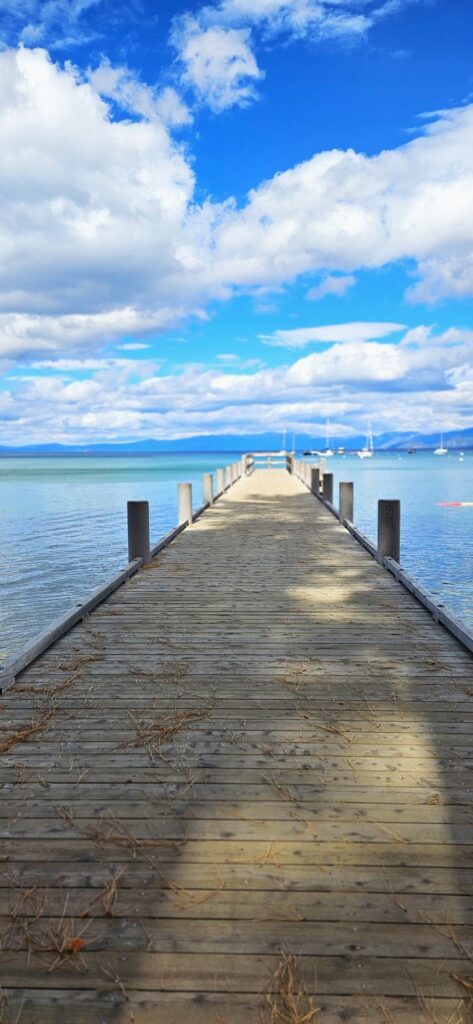
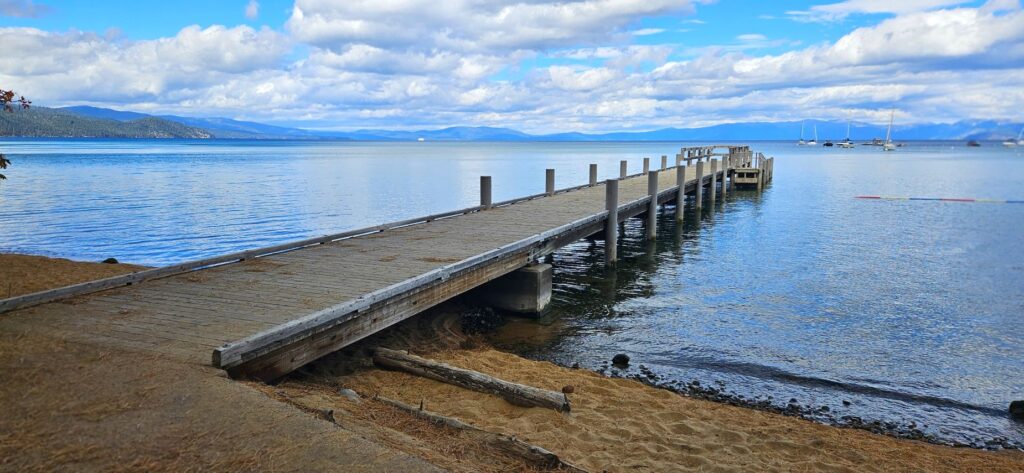
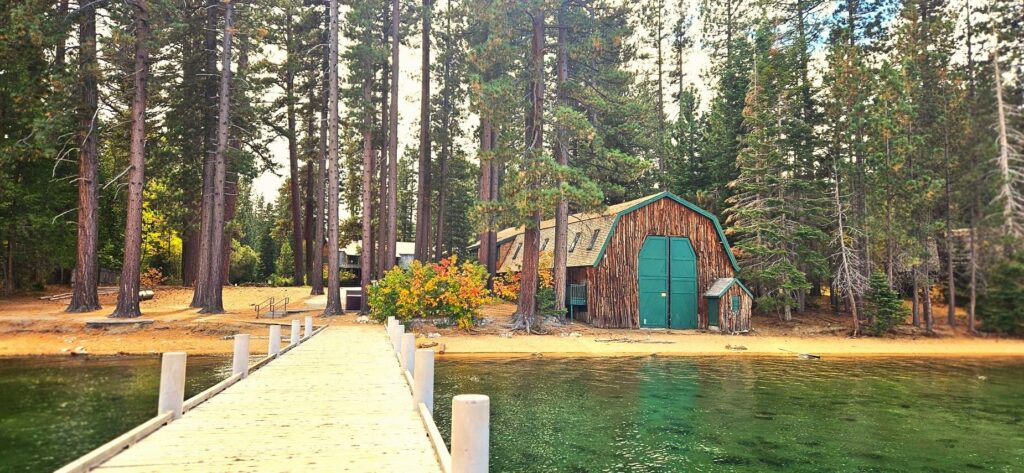
Further down the shoreline is a pier and marina.
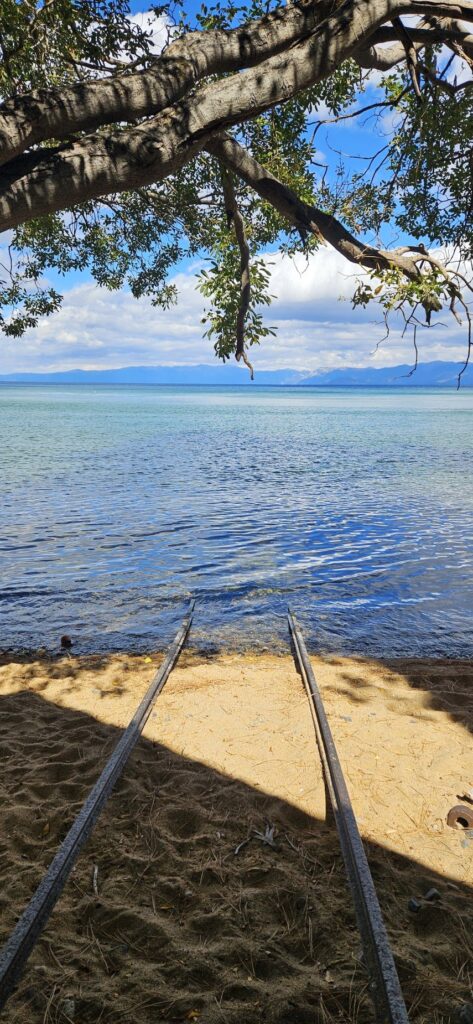
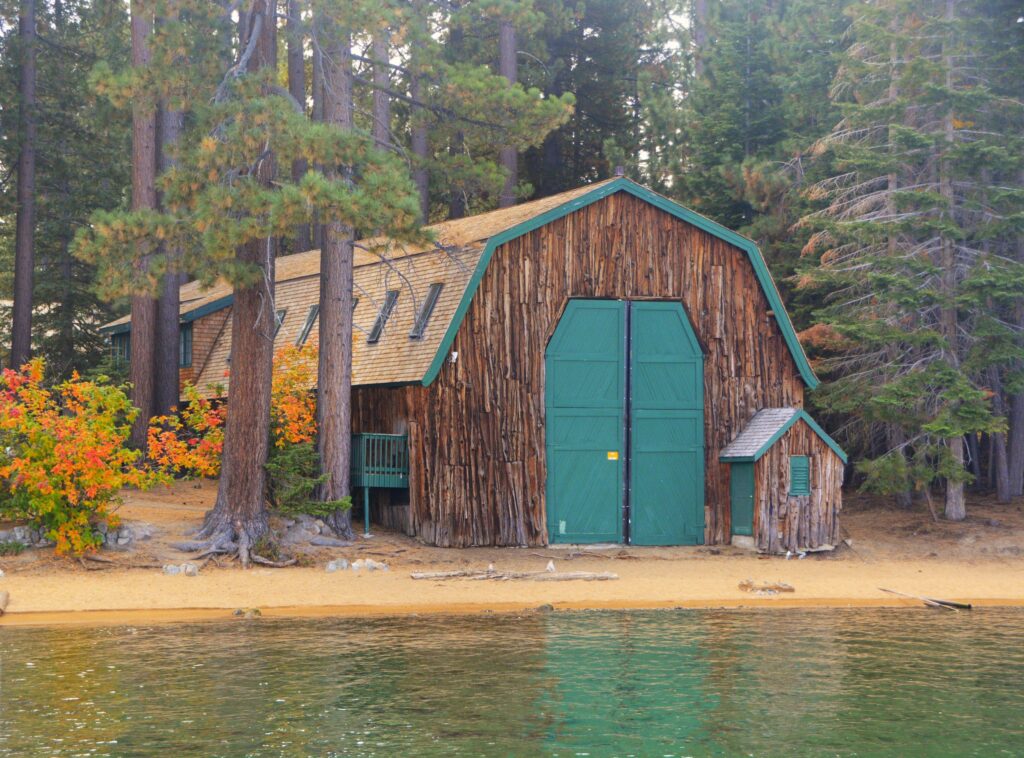
To get supplies or to get to the other side of the lake, boats were launched from the boathouses on rails into the water.
If they didn’t want to get their feet wet, they used the pier.
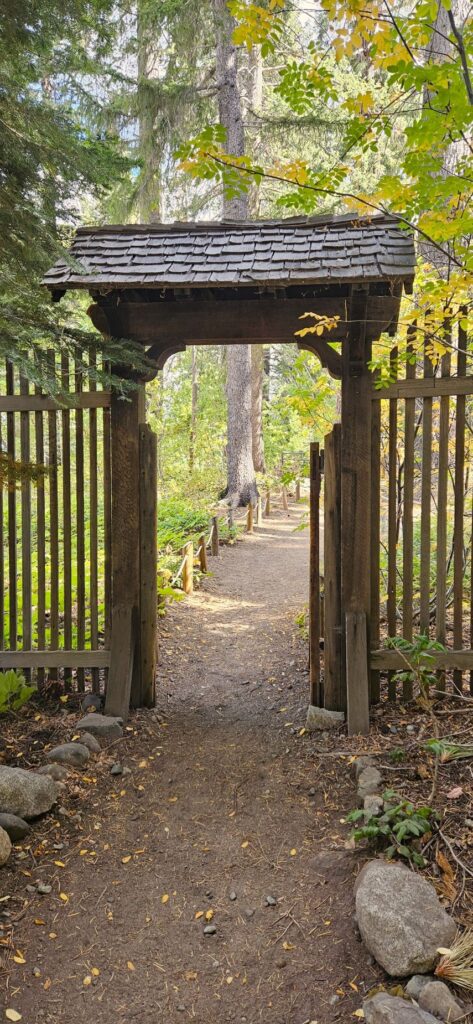
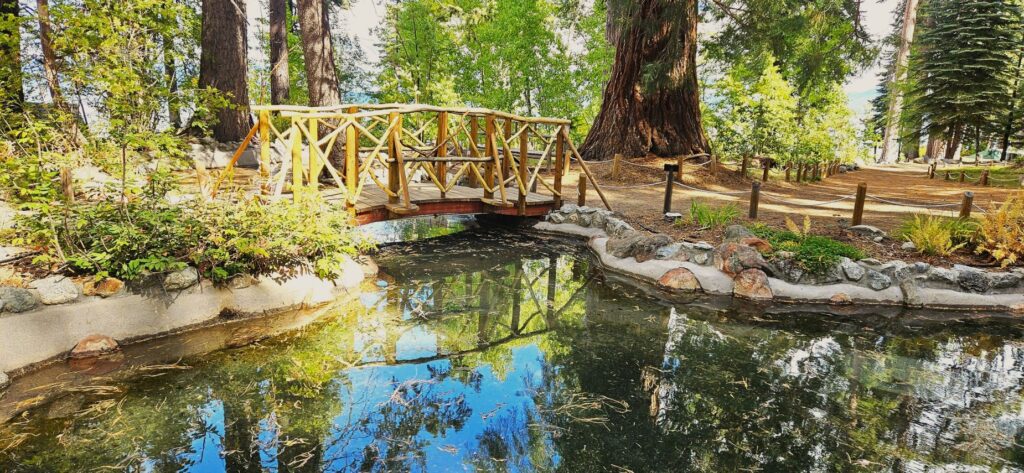
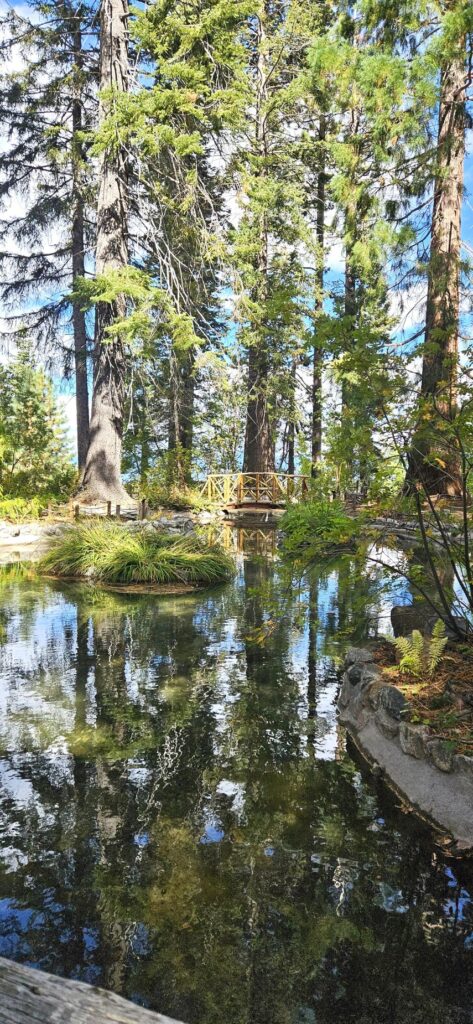
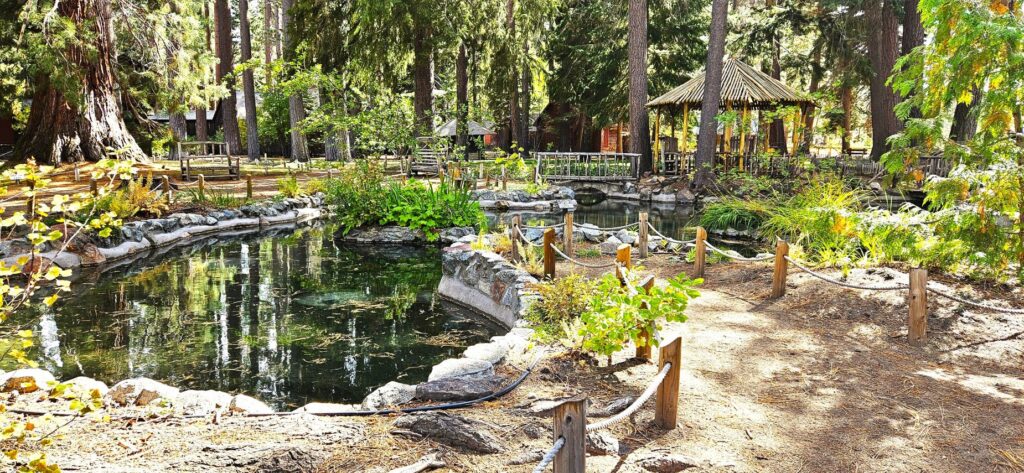
My favorite estate was the Pope Estate with it’s fish pond and gazebo.
Entrance to Pope EstateThe Pope Estate’s fish pond.
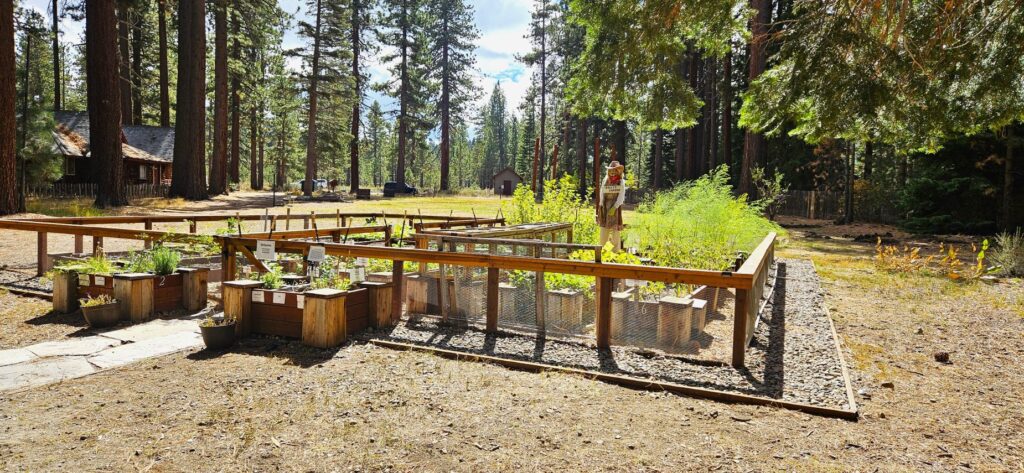
In this community garden, volunteers grow herbs and fruits and vegetables like strawberries, tomatoes and asparagus.
Community Garden at Tallac Historic Site
The Valhalla/Heller Estate boathouse was converted into a community theater which is currently used for events and performances.
The Valhalla/Heller Estate boathouse that was converted into a community theater.View of the boathouse/theater from the dock
Lake Tahoe is such a beautiful place, it is on my list to re-visit again and again. Some places are just especially beautiful. This is one of them.
“For since the creation of the world His invisible attributes, that is, His eternal power and divine nature, have been clearly perceived, being understood by what has been made, so that they are without excuse.” Romans 1:20