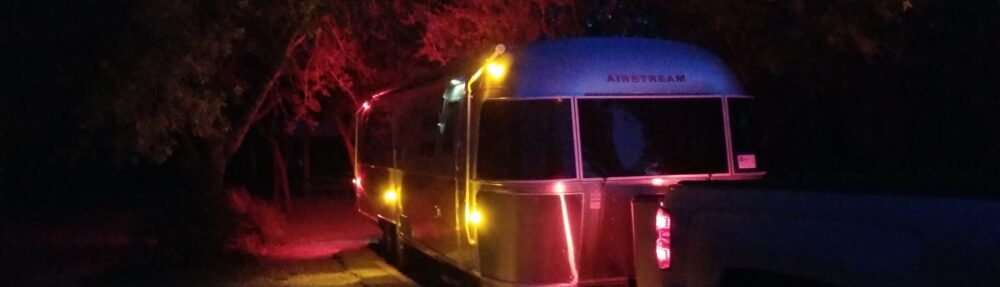
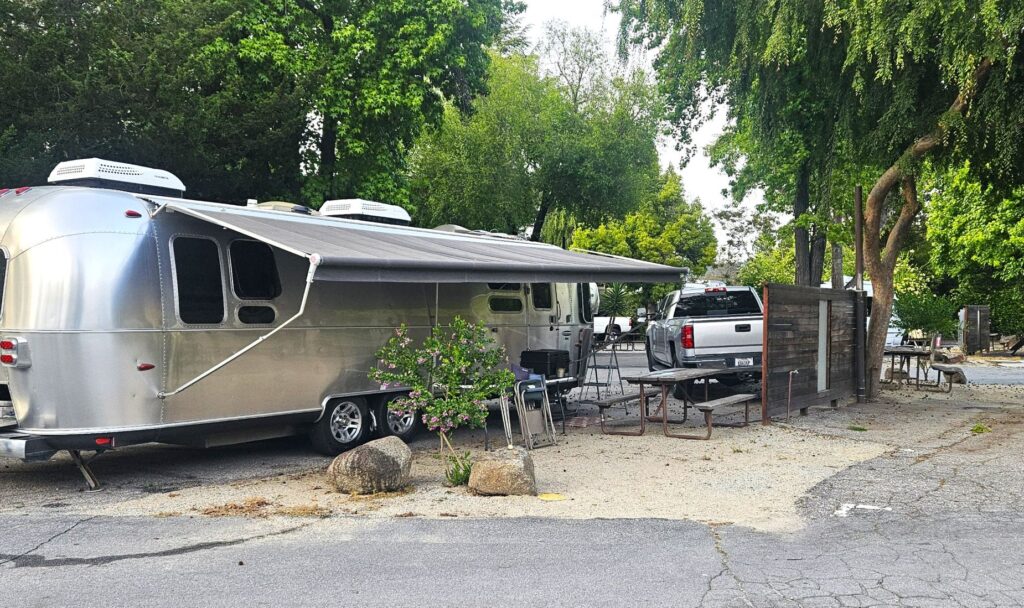
In the spring of 2026, we stayed in Santa Cruz Ranch Campground in Scotts Valley, California, for the first time. It’s a smaller campground than we’re used to, tucked away in the redwoods but within the city limits. I really like trying new places even though this one was rather tight quarters.
Nearby in Felton, CA, is Henry Cowell Redwoods State Park where we visited one late afternoon. There are several redwood state parks scattered along the northern coastline. Redwoods thrive in the coastal foggy climate.
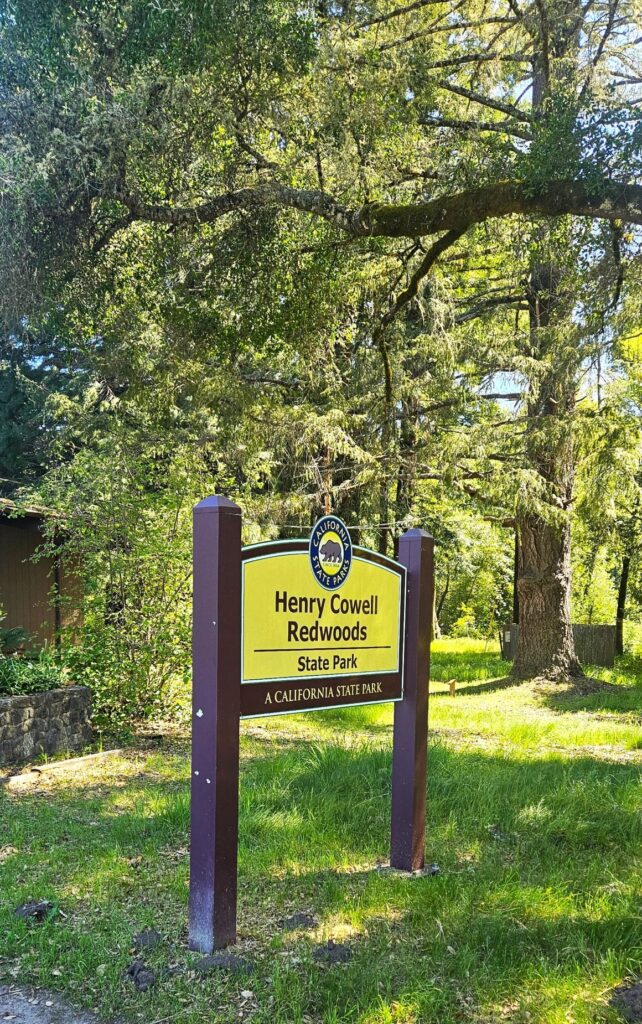
The Henry Cowell Redwoods State Park is over 4,000 acres. The redwoods cover approximately 40 acres.
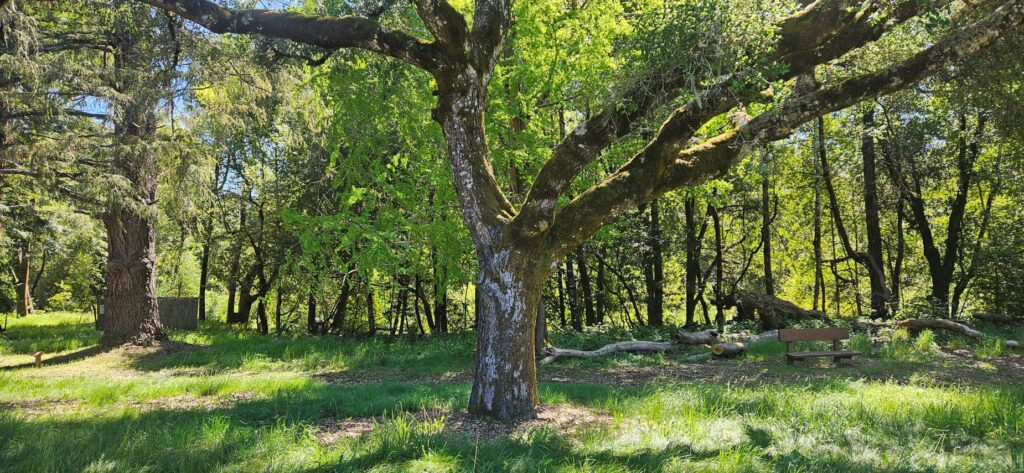
We stopped at the visitor center first before walking the 0.8 mile Redwood Grove Loop Trail. The late afternoon was the perfect time for a nature walk.
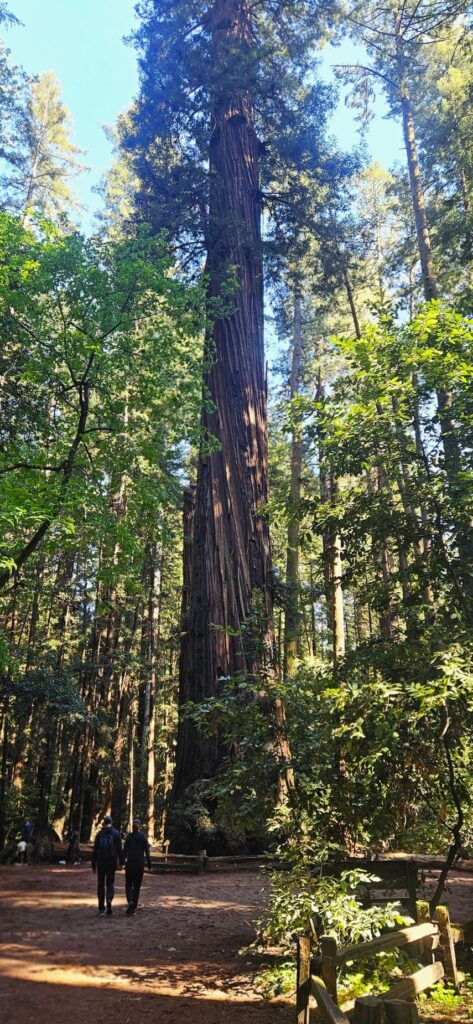
This trail highlights a grove of redwood trees estimated to be anywhere from 1,400 to 1,800 years old.
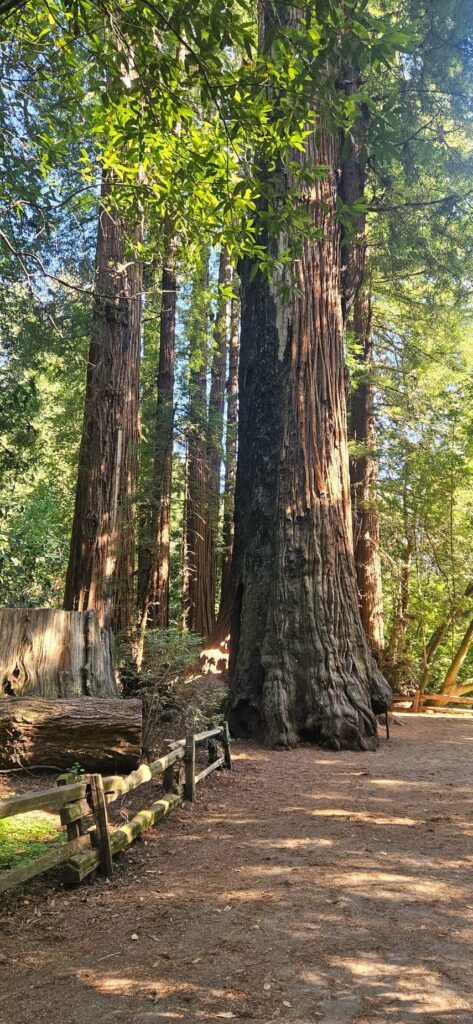
A Redwood tree may use up to 500 gallons of water a day. Forty percent of that water can be absorbed from coastal fog.
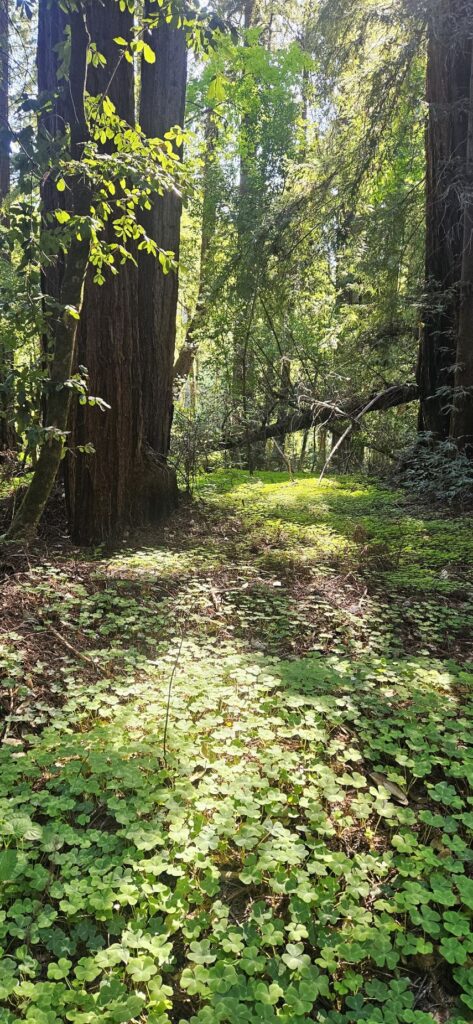
The largest tree in the park is roughly 277 feet tall and estimated to be 1,500 years old.
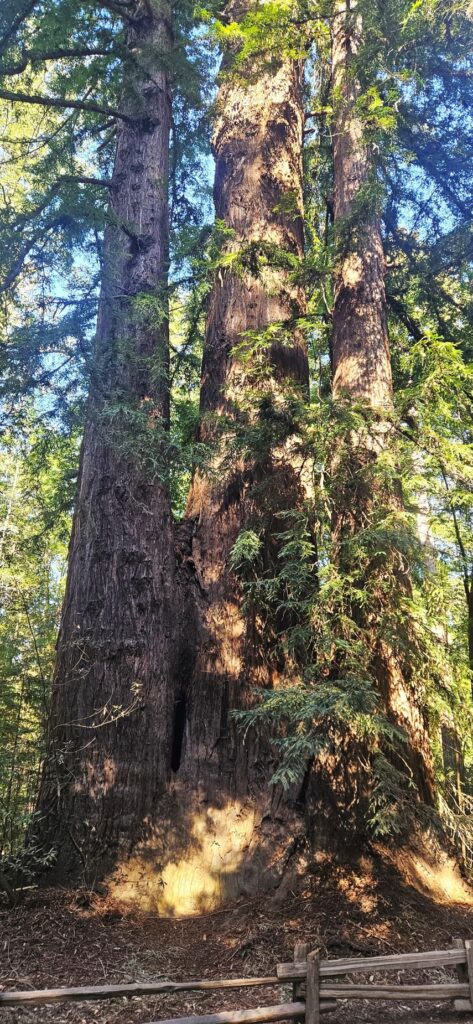
During our walk, we explored the inside of this massive tree. Redwoods are surprisingly resistant to fire damage. The layer of bark that transports water and nutrients to the tree is only a couple of cells thick and lies just beneath the bark. For this reason, the trees can withstand having their centers burned out, yet the tree itself continues to live and grow.
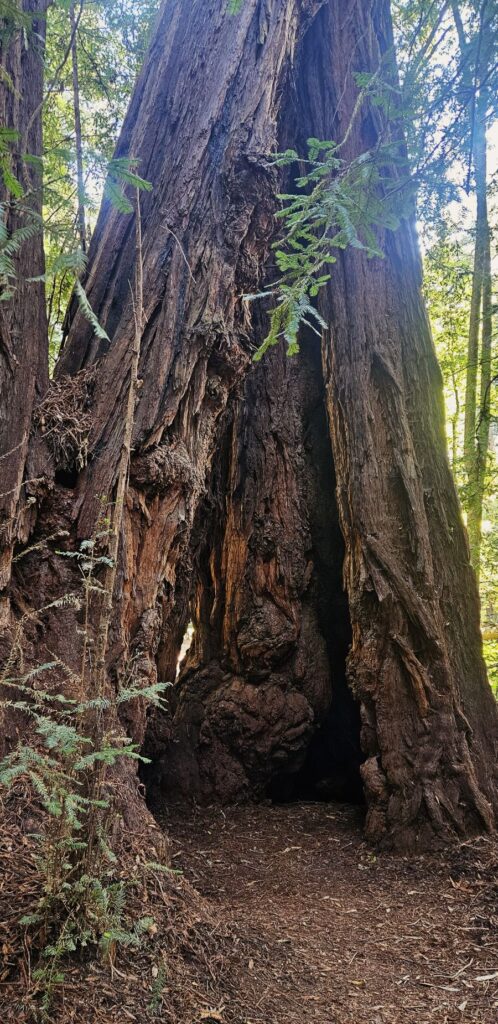
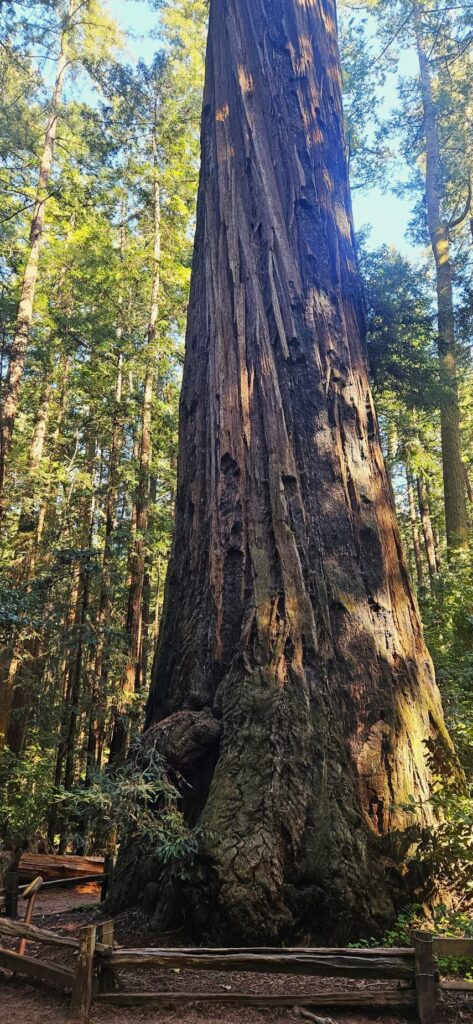
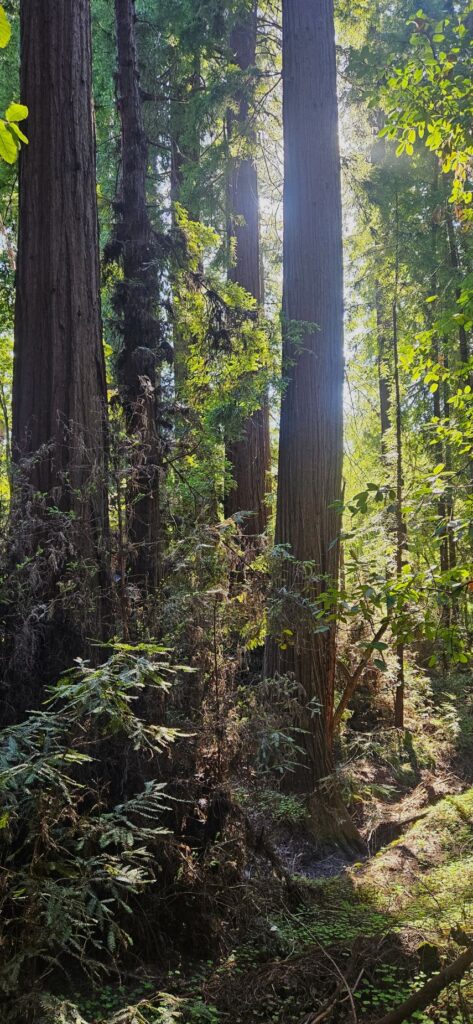
The late afternoon sun made for a beautiful walk through the grove of trees.
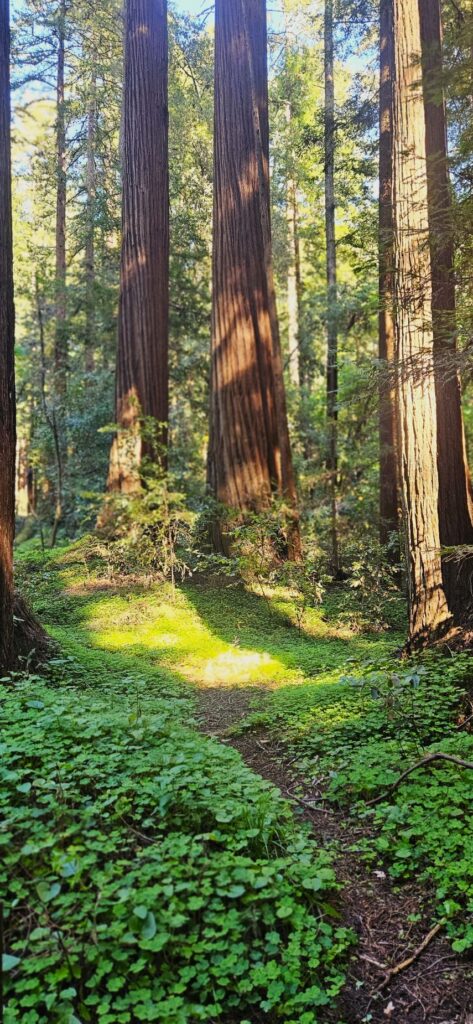
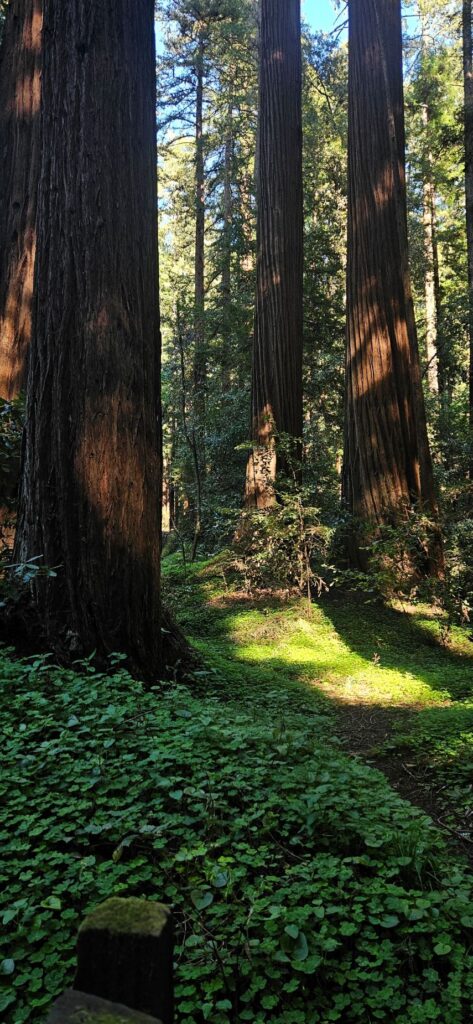
The redwood trees have shallow root systems that pull hundreds of gallons of water daily. They also absorb water through their specialized leaves that act like sponges. A single large tree may absorb up to 14 gallons of water from the air in just an hour.
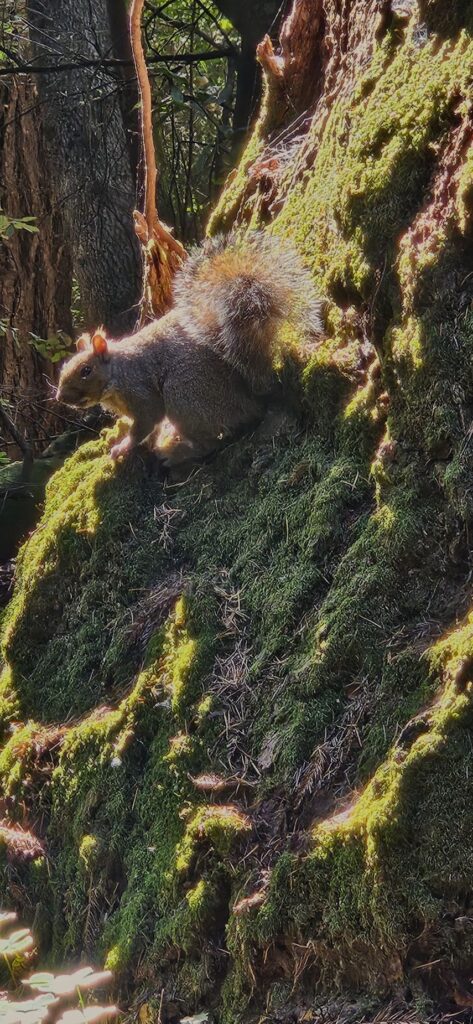
This tree squirrel didn’t seem to mind us as we walked by. He remained motionless while I took his picture.
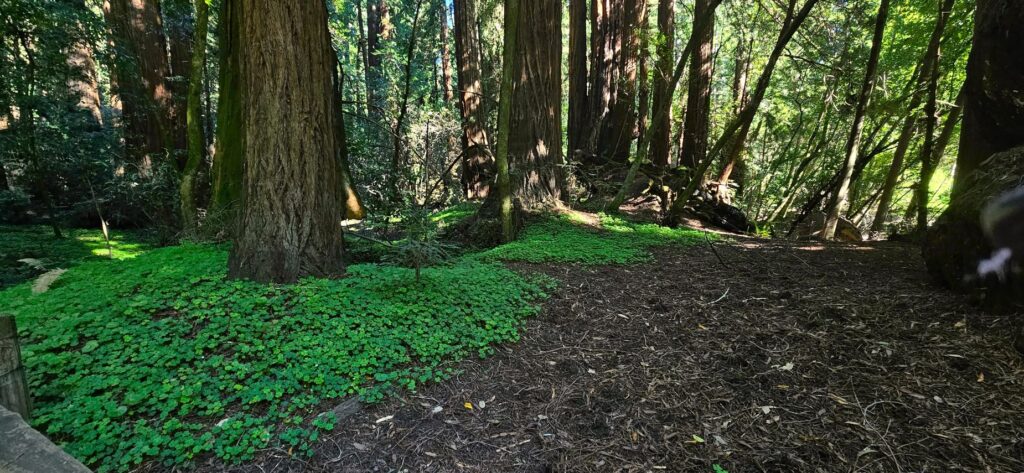
The red color of Redwoods comes from tannin which also acts as a natural flame retardant. The tannin also protects them from insects and disease.
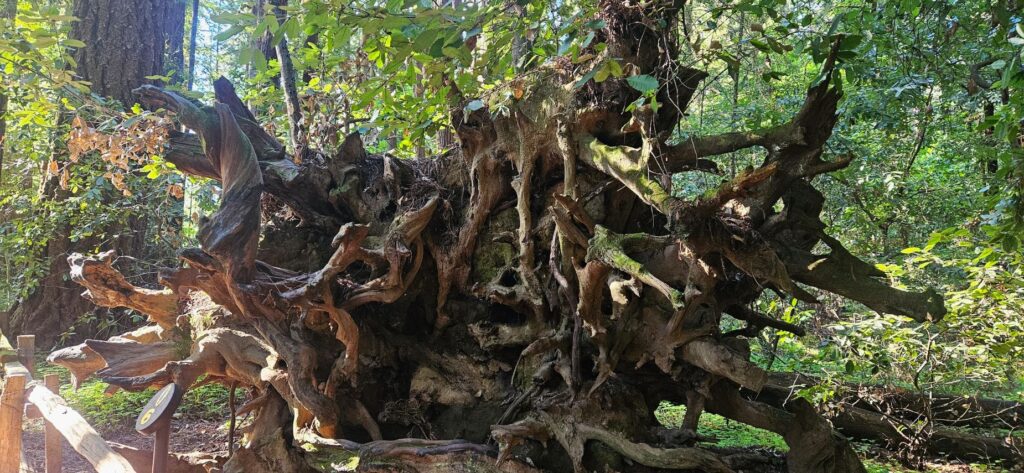
Woody growths at the tree’s base called “burls” are stimulated by fires. The trees can grow entirely new trunks from these burls. This is why you may see a ring or circle of trees which are called “fairy rings.”
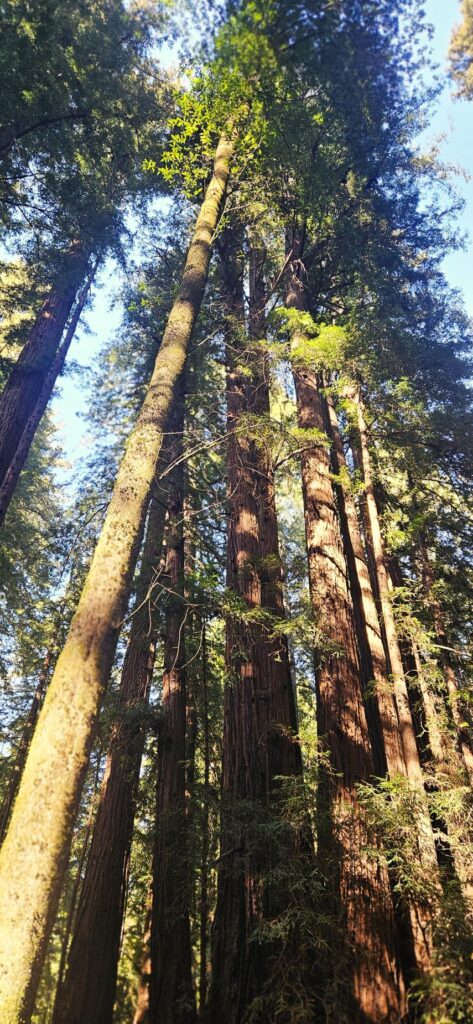
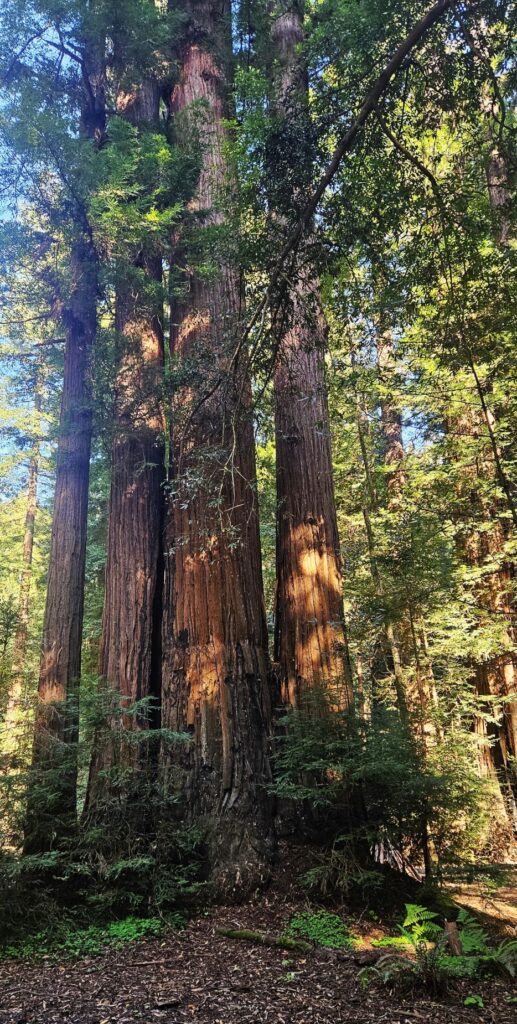
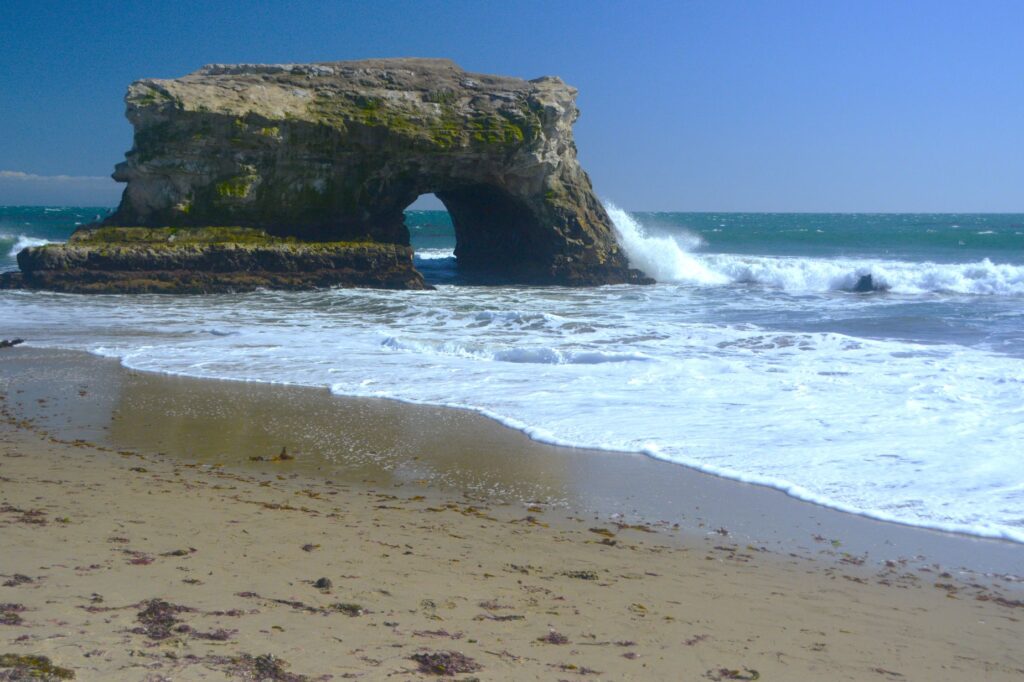
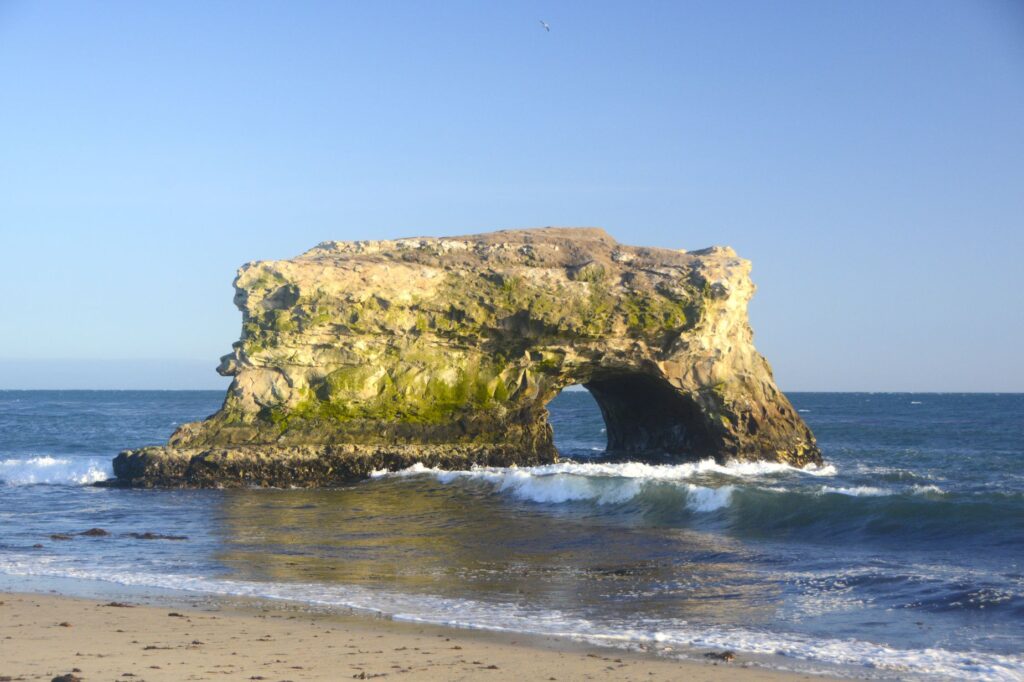
Another afternoon we took a drive to Natural Bridges State Beach. Located near the town of Santa Cruz, it is a 65-acre park with a natural bridge or sea arch on the beach and a eucalyptus grove which is home to thousands of butterflies during the months of October through early February.
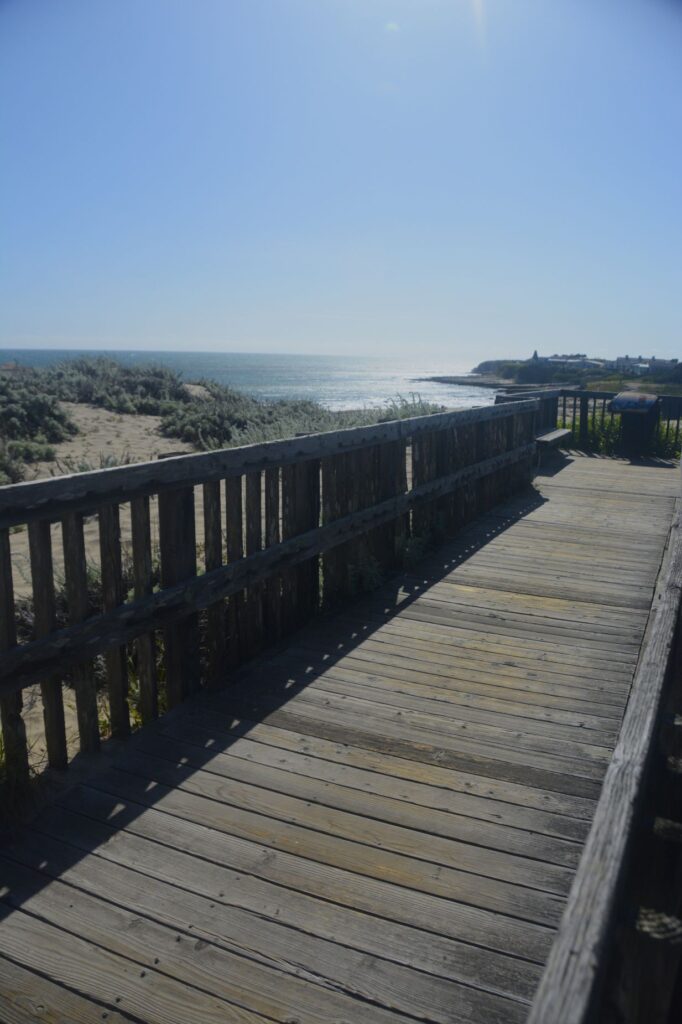
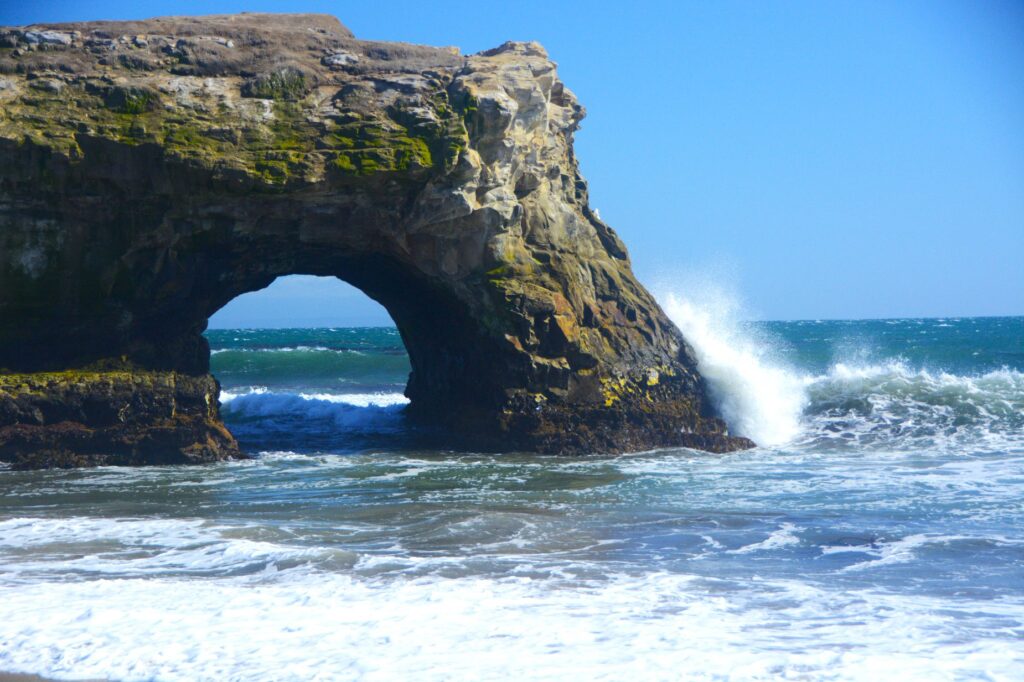
The natural bridges were formed from mudstone. The mudstone, jutting out into the ocean was eroded by wind and sea.
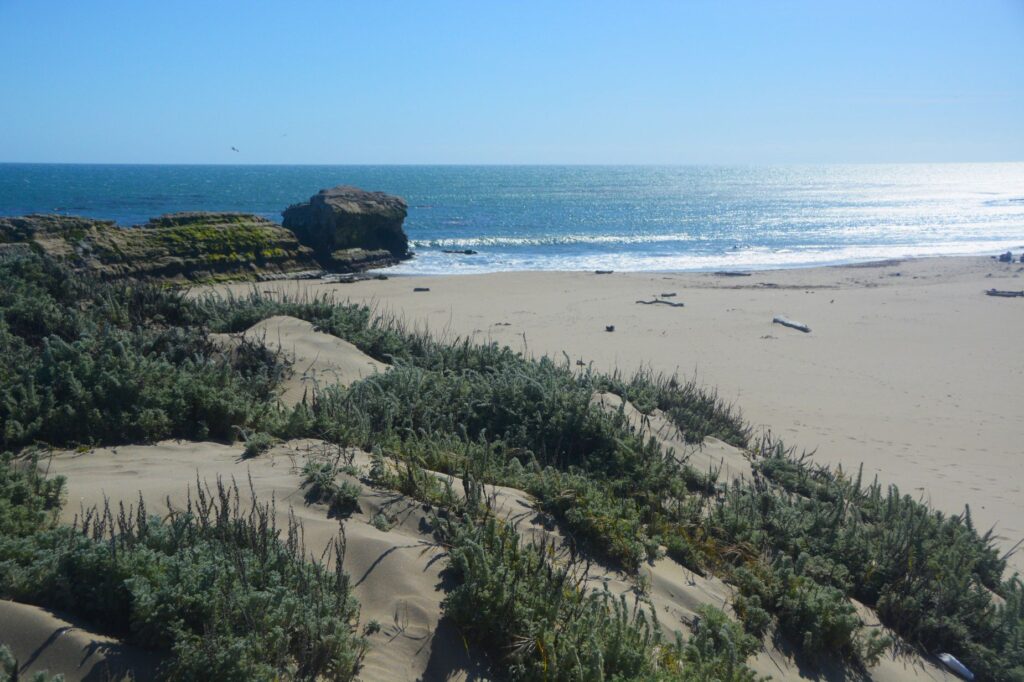
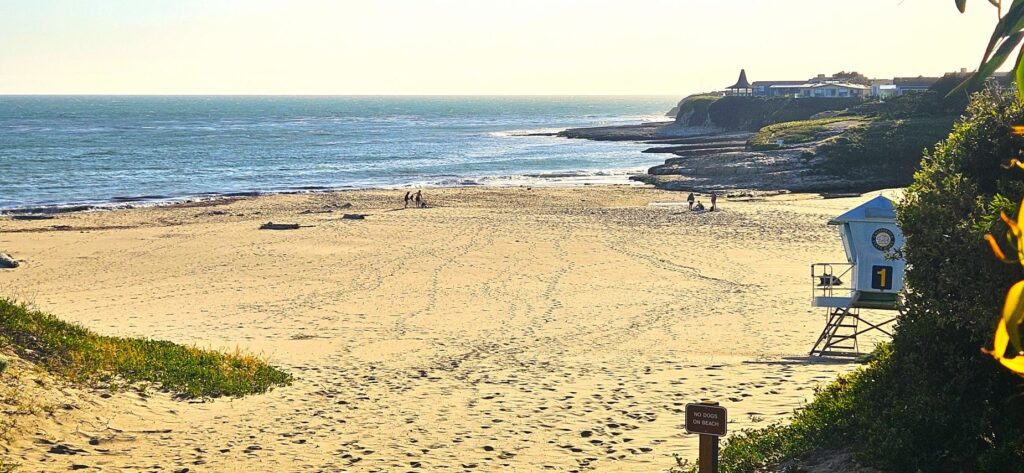
There were originally three arches. The outermost one collapsed around 1905. The inner arch (connecting these two rocks) collapsed during a storm in 1980. What is left today is the middle arch.
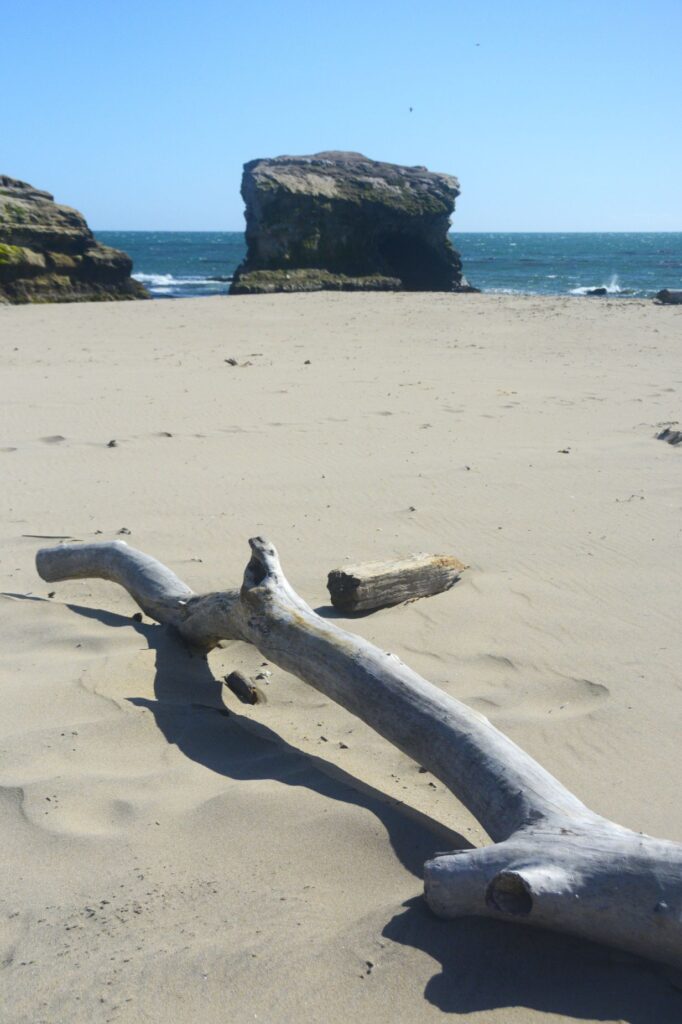
There’s also this hole in the rock here which, I guess, is not considered an arch.
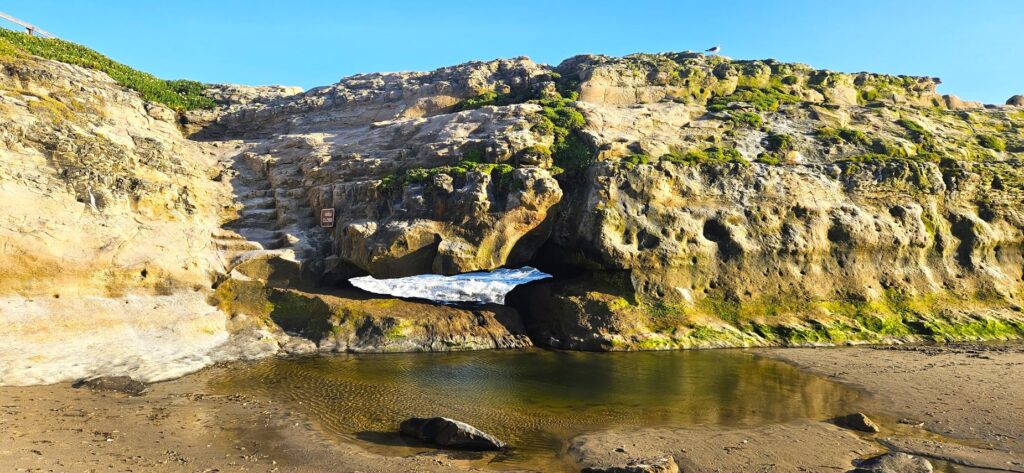
The middle arch was once connected to the land by the inner arch which is now washed away.
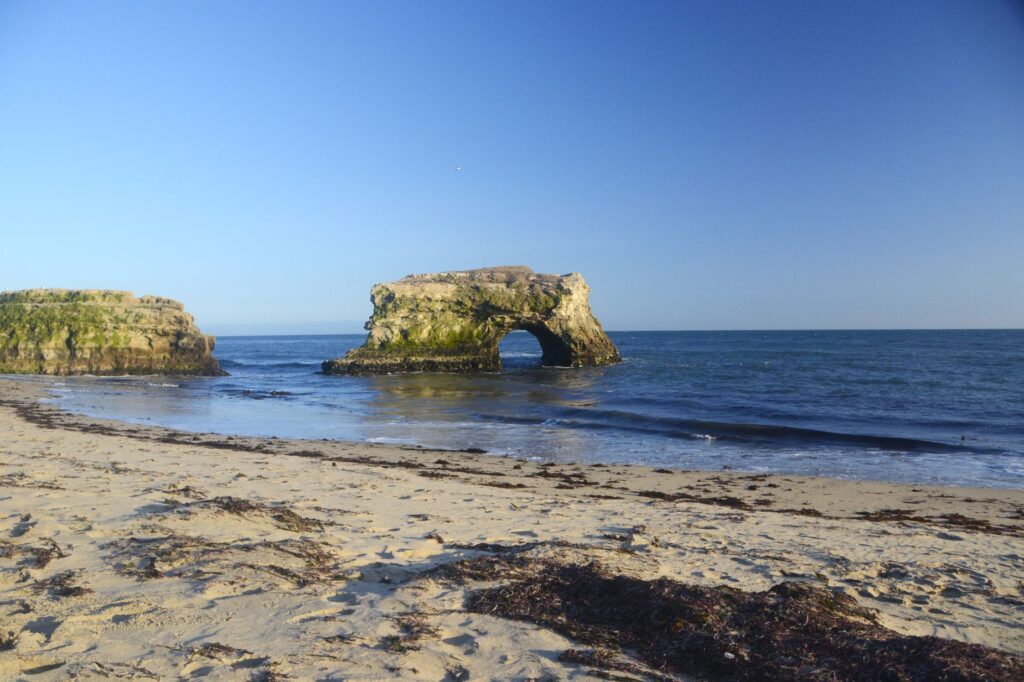
Someday this arch probably will collapse into the ocean like the others. Just look at how the waves beat against it!
Around 150,000 butterflies migrate 2,000 miles to Natural Bridges State park during the winter months from as faraway as Canada. At Natural Bridges State Beach they find shelter, food and water in the eucalyptus trees. The butterflies form clusters by intertwining their legs among the branches to protect each other from winter winds and rains.
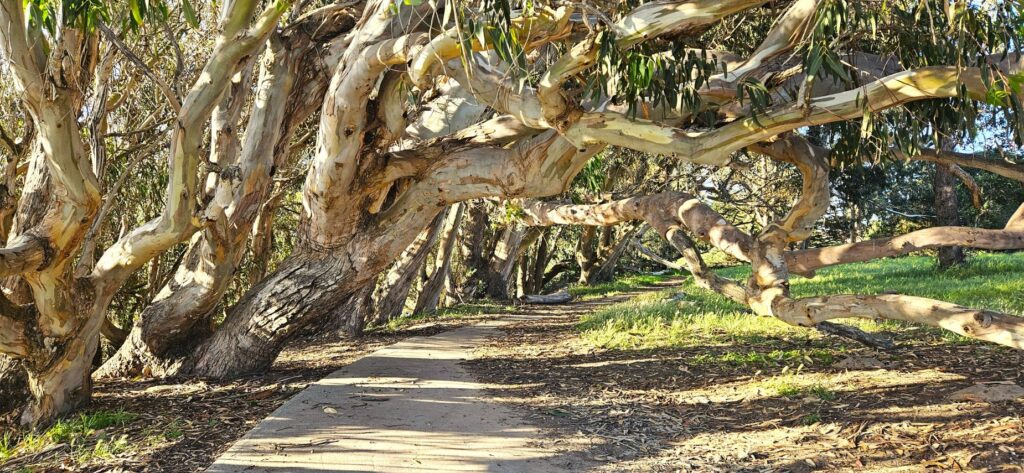
We didn’t get to see any butterflies when we were there, but perhaps we will in the future.
“Mightier than the thunders of many waters,
mightier than the waves of the sea,
the Lord on high is mighty! Psalm 93:4″