Valley of Fire State Park, Nevada

While staying in Pahrump, Nevada, we took a day trip to Valley of Fire State Park. The road into the park was very scenic, but it was quite some time before we saw red rocks.
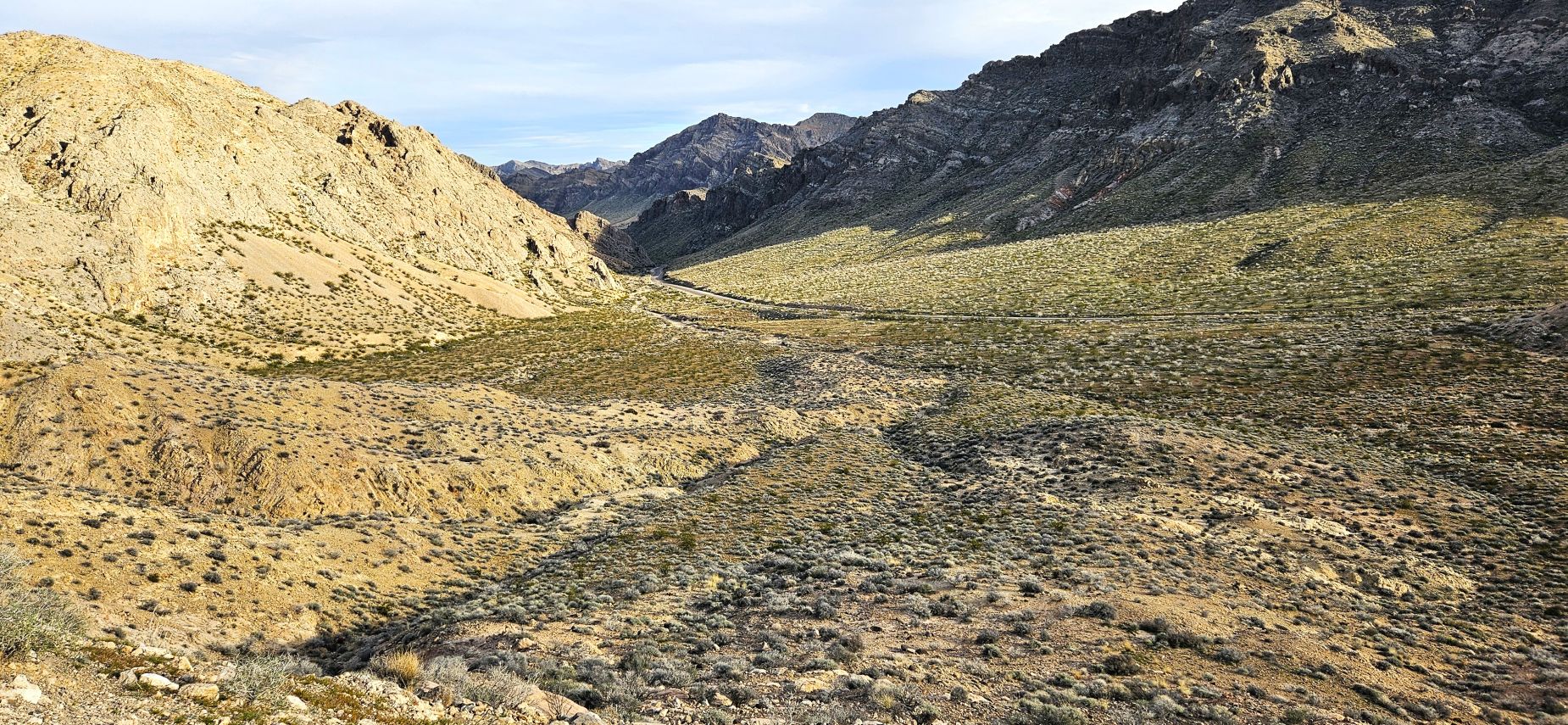
The road on the way to Valley of Fire State Park

The red rocks come in varying shades of red: red, redder and really red.
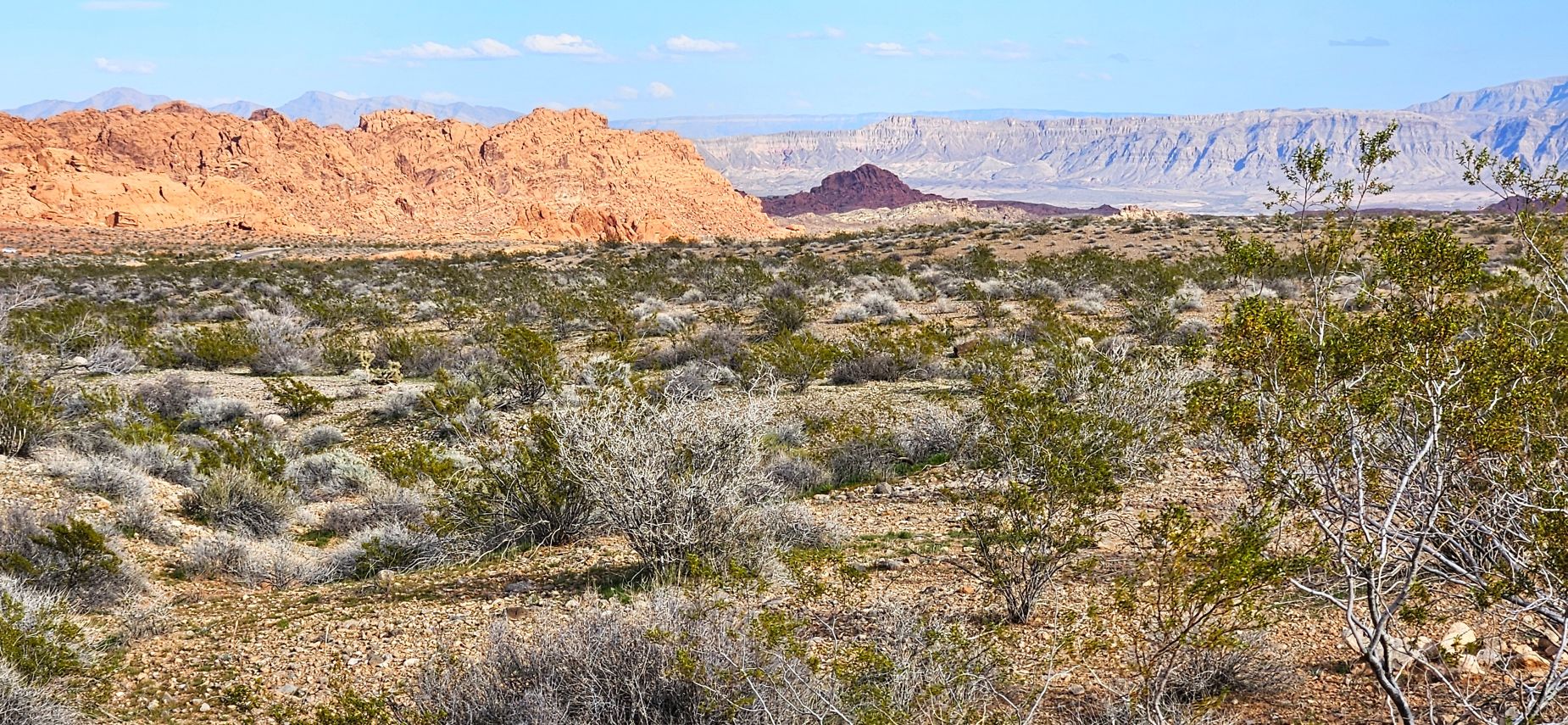
Really red rocks in the distance against the lighter red rocks in the foreground.

We entered the park through the west entrance. The new visitor center was fabulous with many interesting exhibits. Large windows looked out over the rocks behind the building.
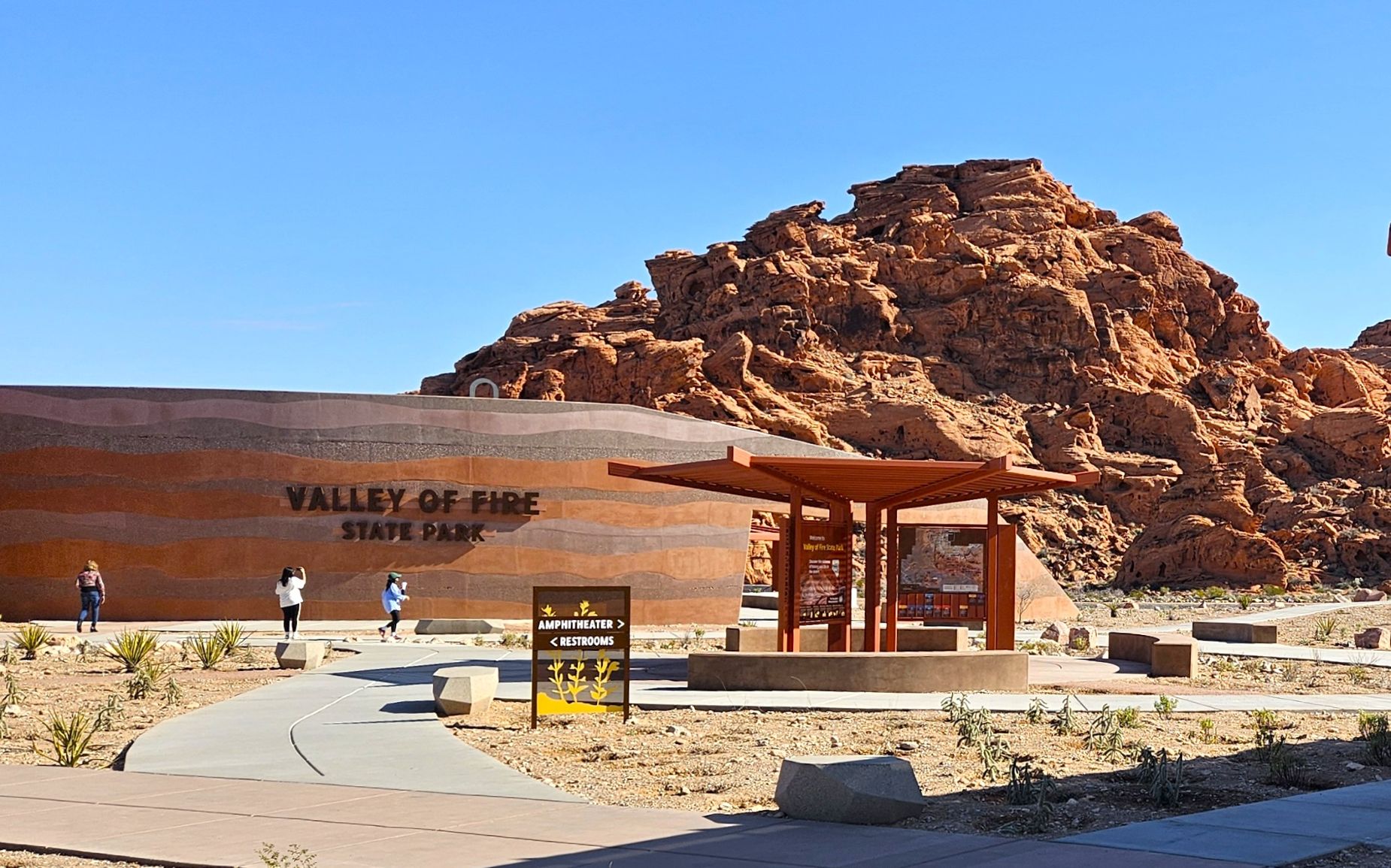
Valley of Fire Visitor Center

A facsimile of an atlatl (pronounced AT-lat-tuhl) was on display in the visitor center. It was used to hurl a spear or a dart. As a lever, it increased the velocity, force and distance. It was used for hunting long before the invention of the bow and arrow.
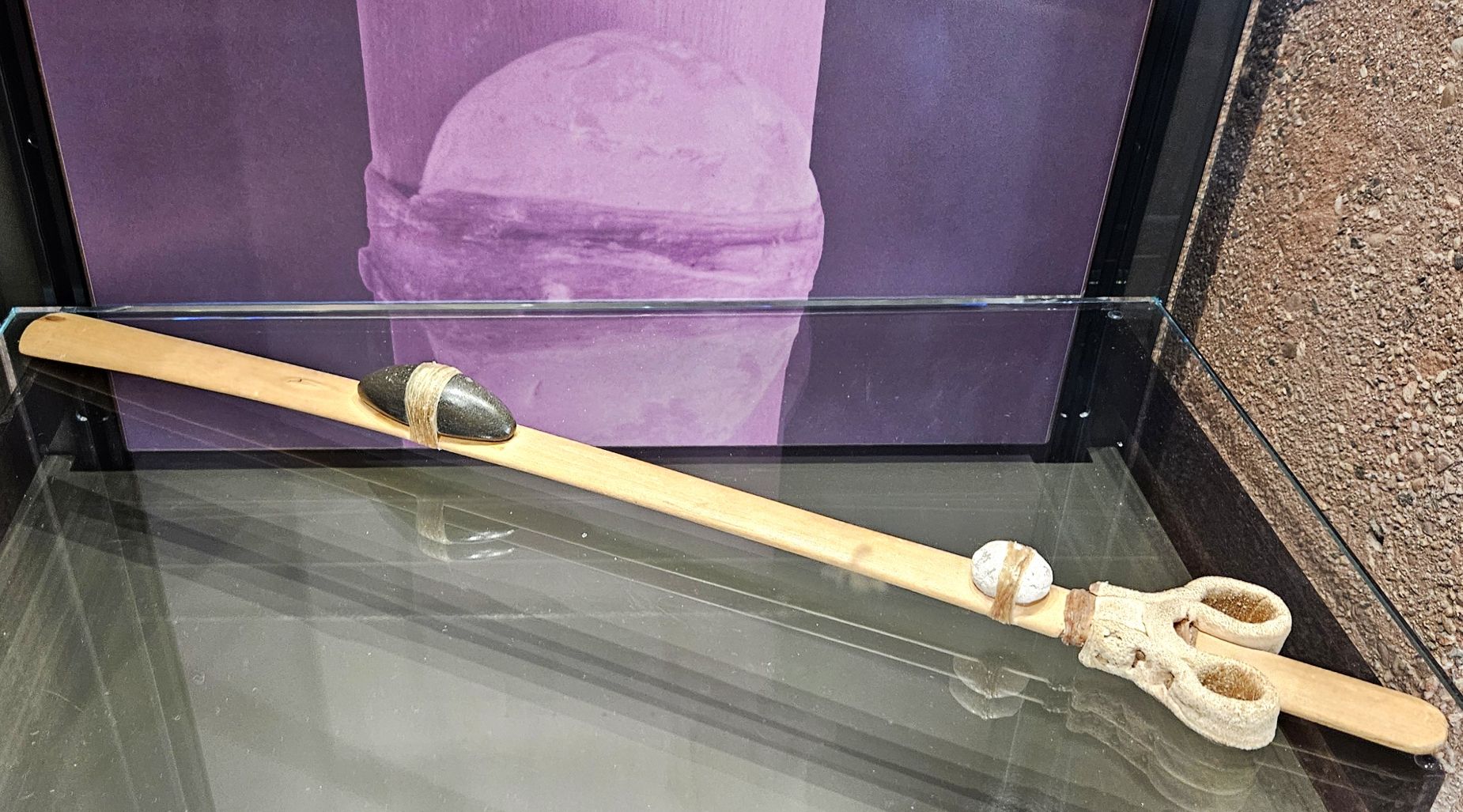
Indian Atlatl

On our drive through the park, we stopped at Atlatl Rock, so named for the petroglyphs showing an atlatl. The petroglyphs were high on a wall, but a stairway led to a viewing platform.
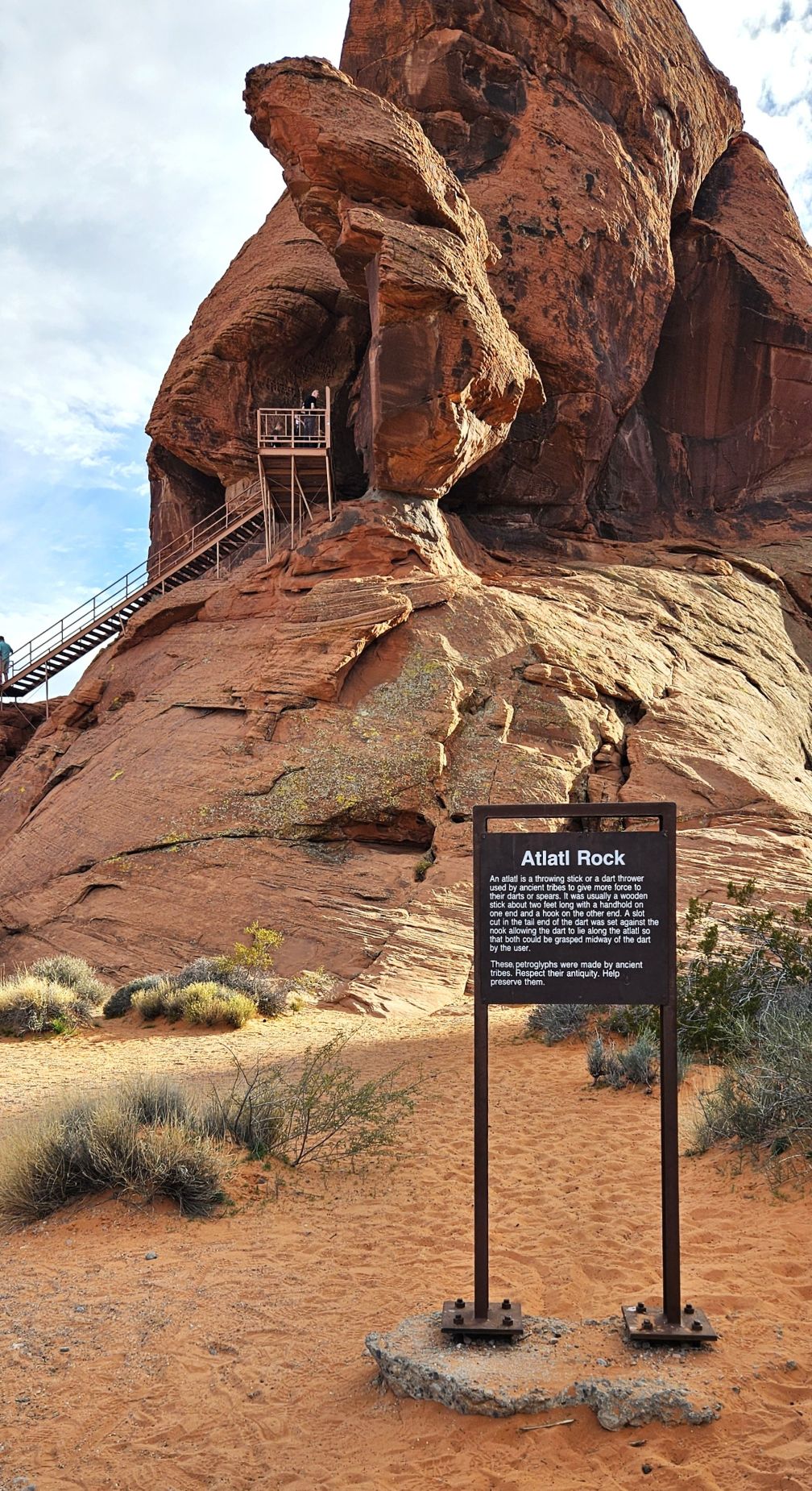
Can you see the atlatl at the top of the rock? Other symbols represent big horn sheep which were plentiful in the area. These petroglyphs are estimated to be 2,000 to 4,000 years old.
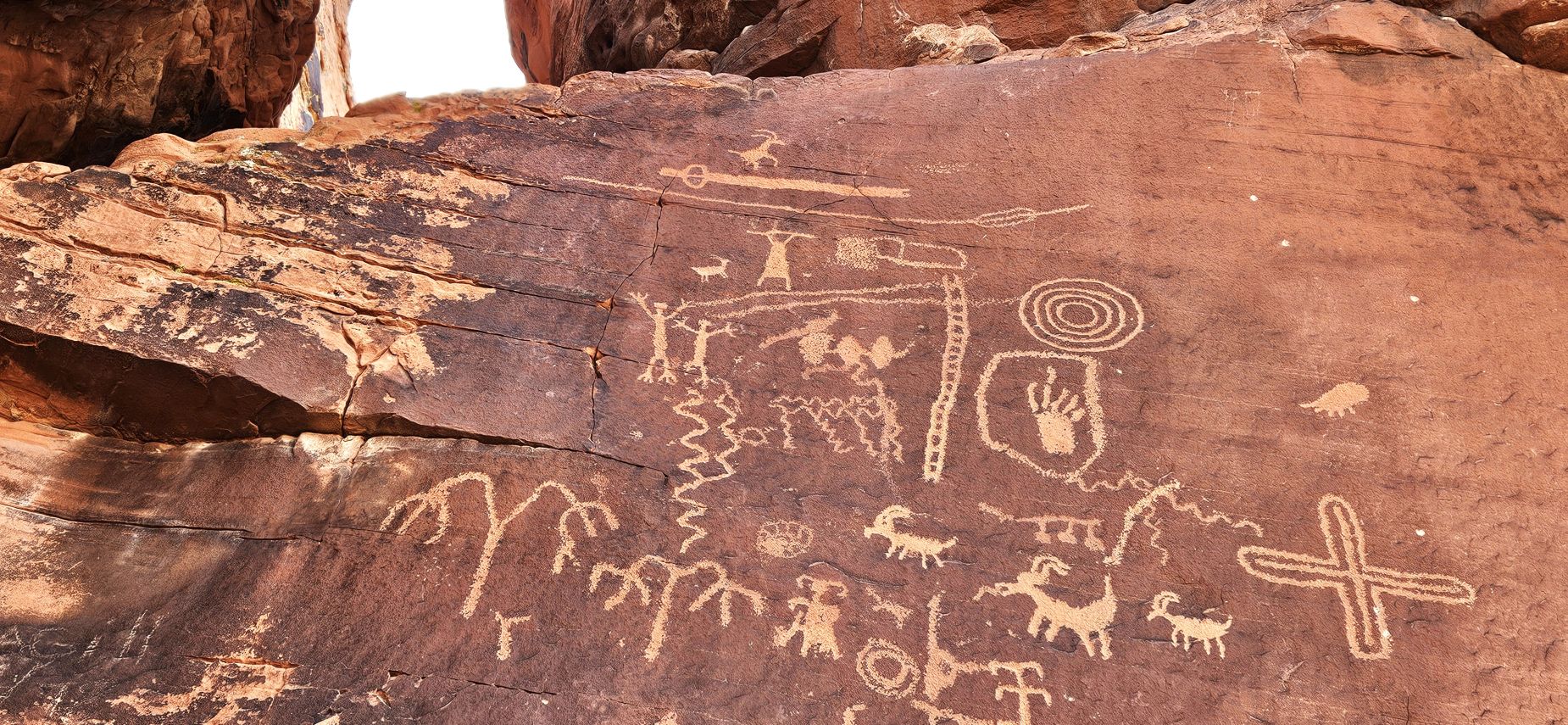
Petroglyph of atlatl at top of rock is where this rock got its name.

My first goal was to drive the White Domes Road to the Fire Wave and get there before it was too crowded. Even though we went on a weekday, it was so busy there was no place to park. I decided to save that for another time and just enjoy other places in the park. We stopped at Rainbow Vista where we ate our picnic lunch.
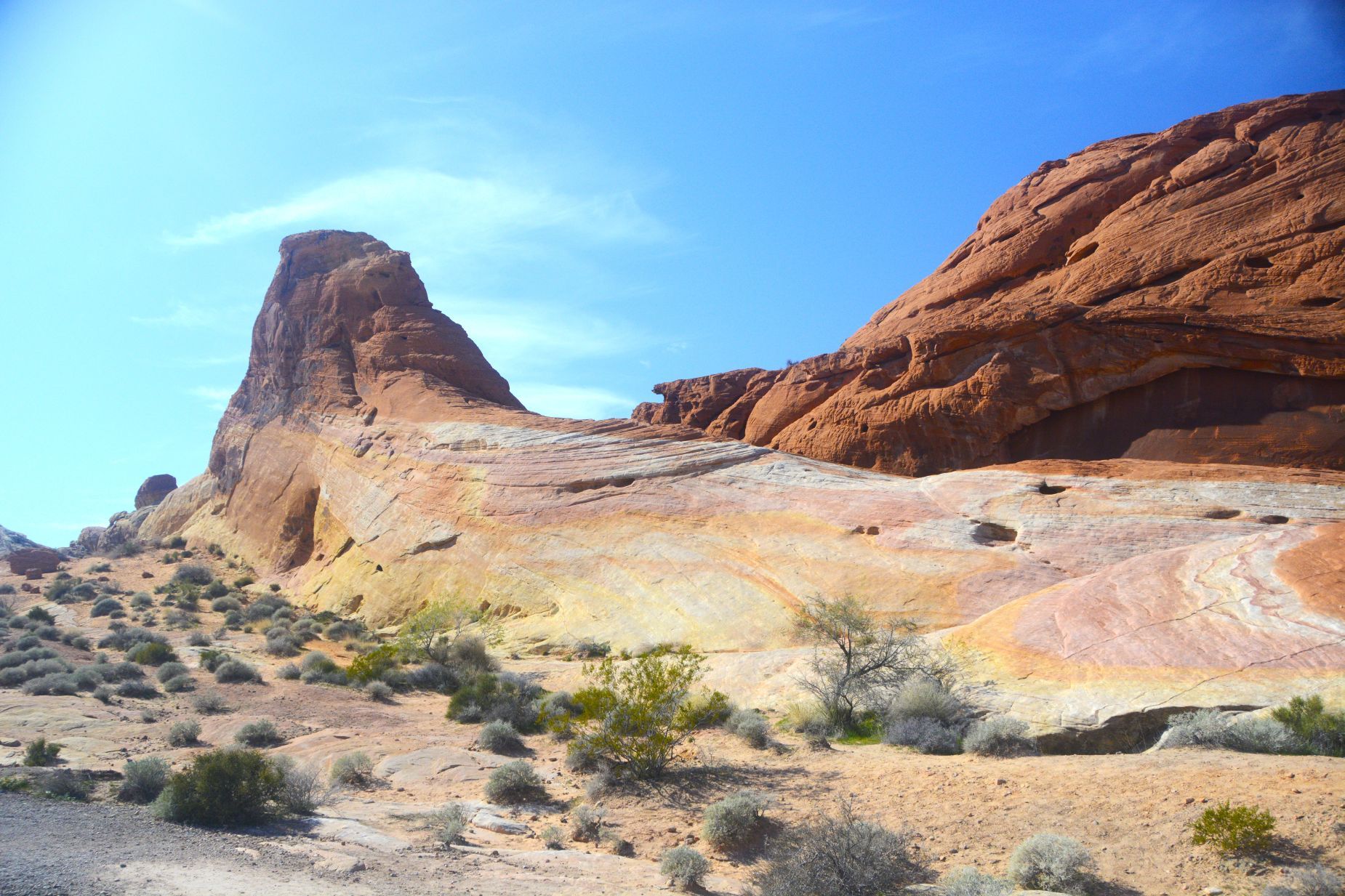
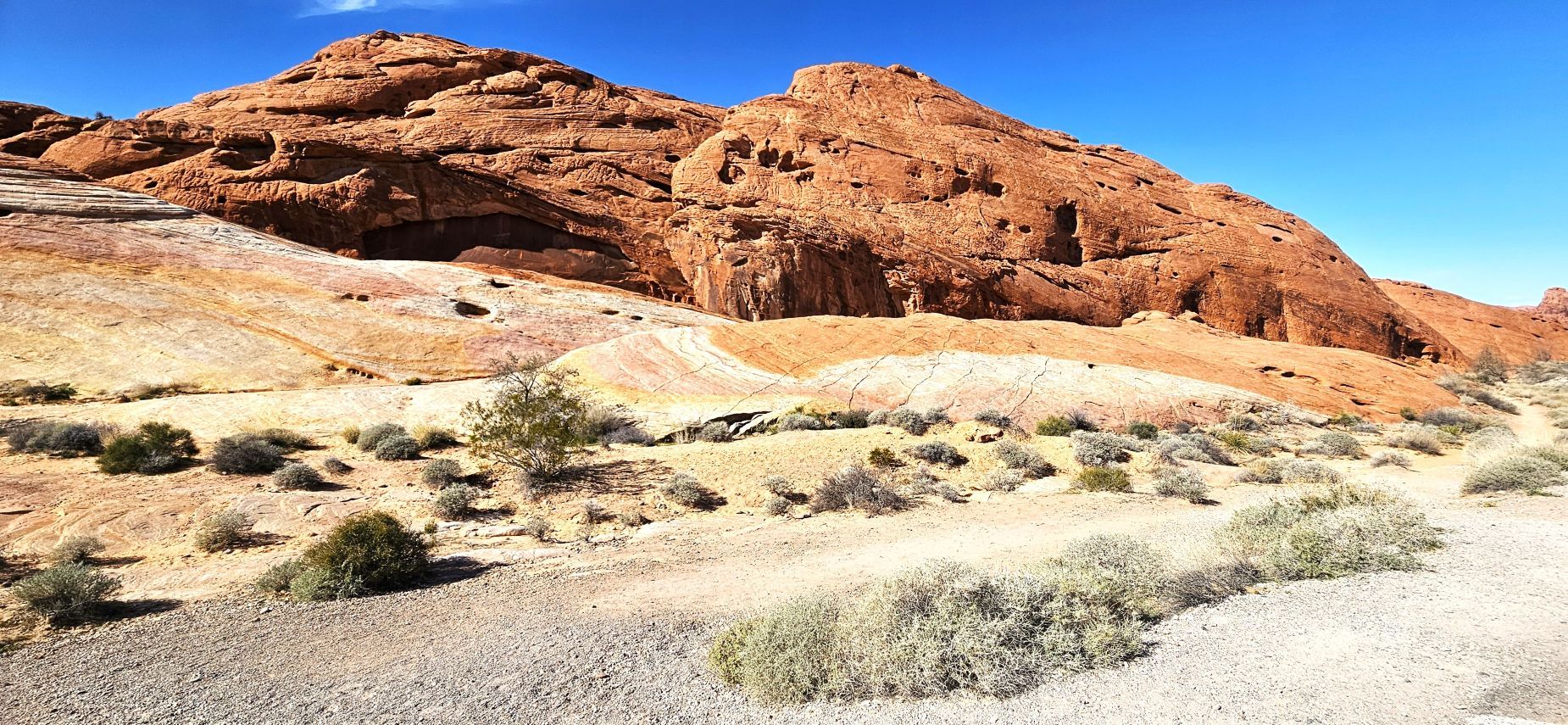
The rocks at Rainbow Vista are very colorful.
Rainbow Vista

After lunch, I took a short hike on the Rainbow Vista Trail. I was stunned at how blue the burro bushes looked here.
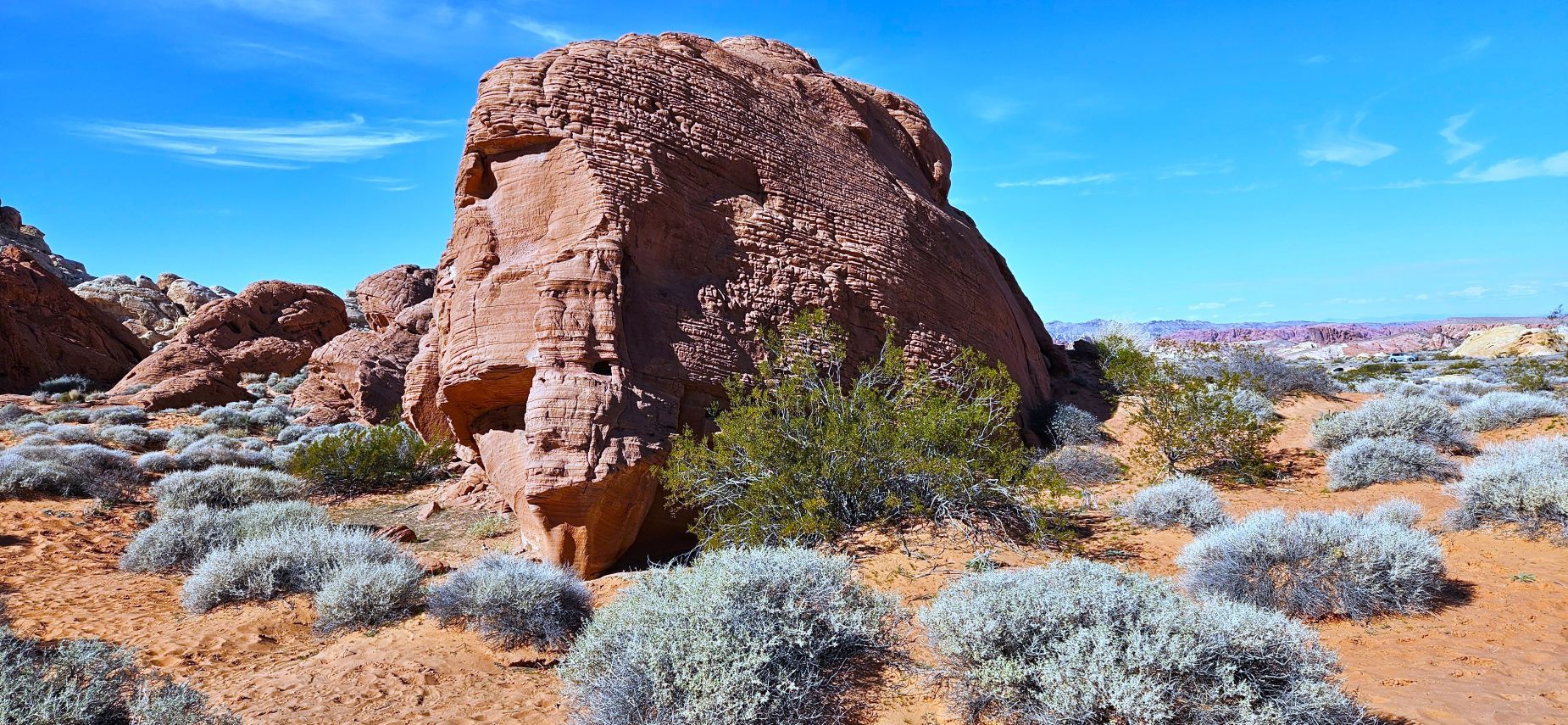
Rainbow Vista Trail

This little side valley had some interesting hoodoos and rocks.
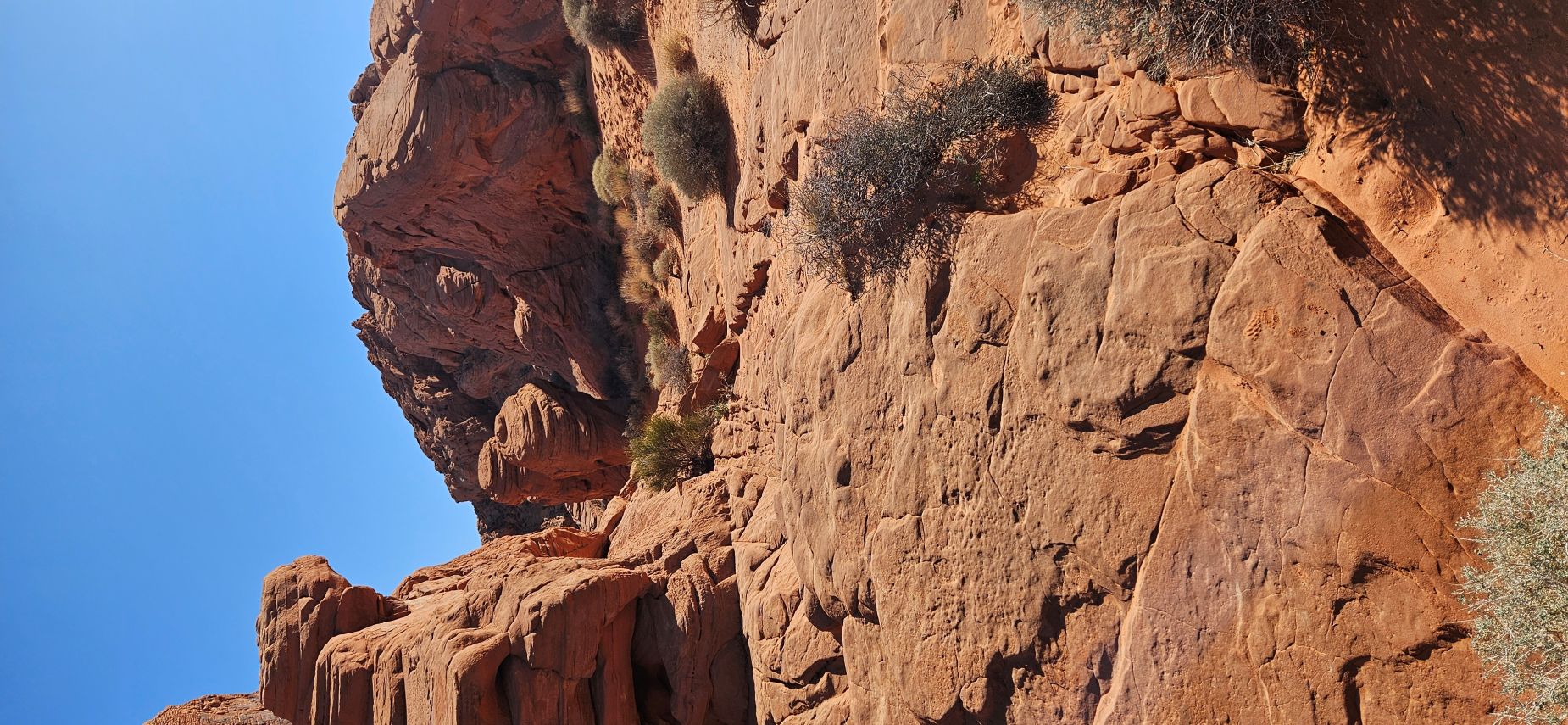
Rainbow Vista Trail

From Rainbow Vista, we drove the Fire Canyon Road to the Silica Dome Overlook. The rocks here were very jagged. A crevice divided the landscape.
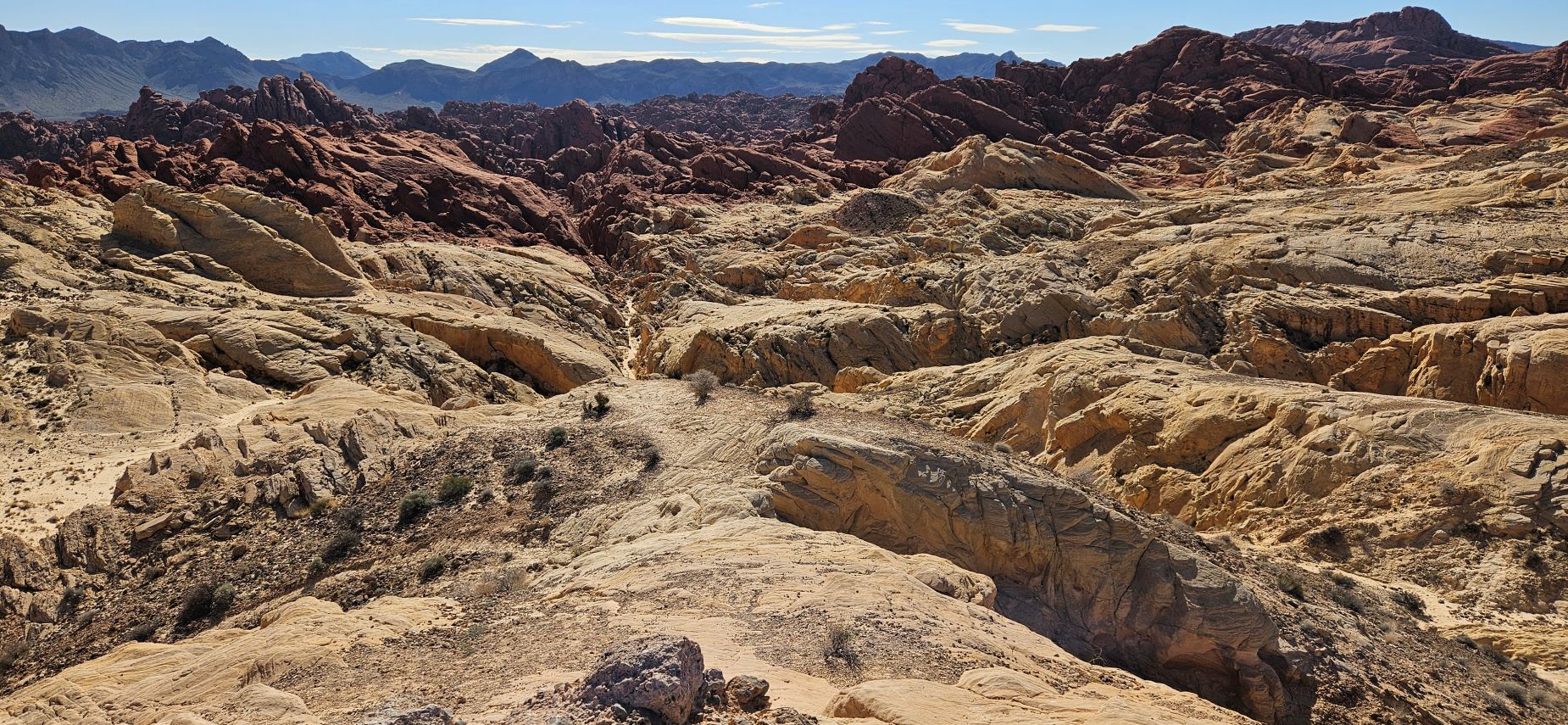
There was an overlook at the end of the road. I believe this is Silica Dome. The rocks here are a buff color in contrast to the reddish rocks found elsewhere in the park. The different colors come from the minerals in the composition of the rocks.
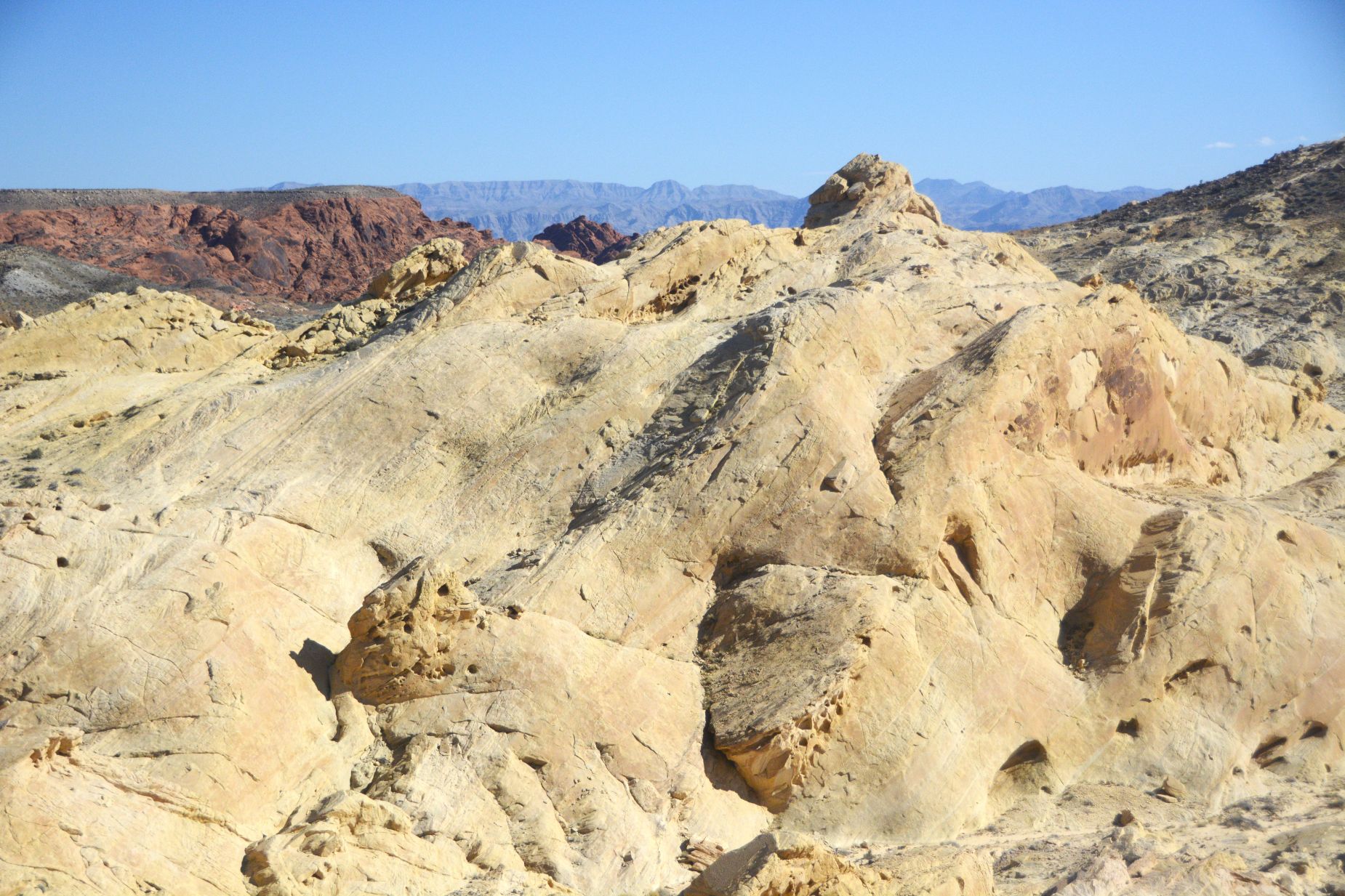
Silica Dome at the end of Fire Canyon Road.

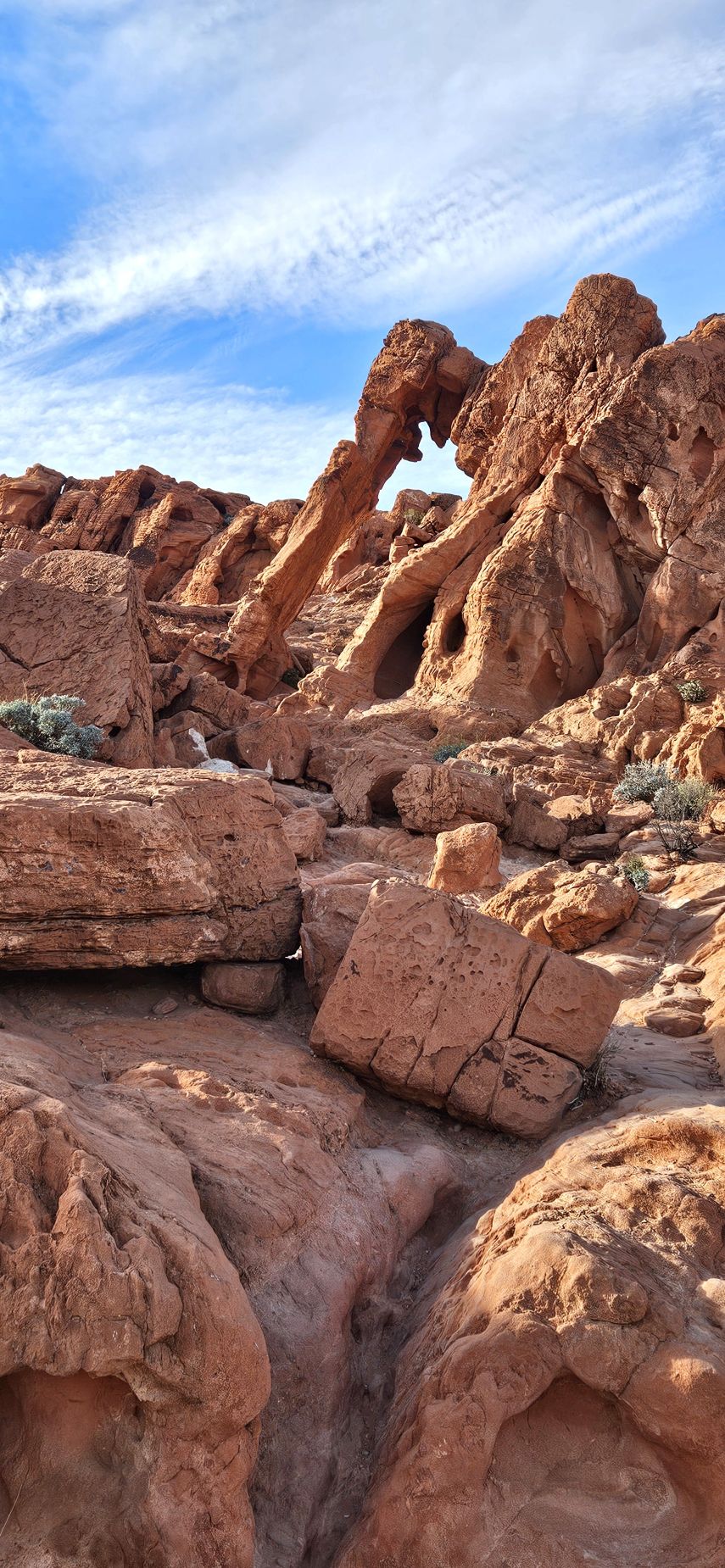
We drove back to Valley of Fire Road toward the east entrance of the park. The Elephant Rock can be seen from the roadway, but we hiked the short trail so we could get a closer look. Can you see the elephant?
The park ends just past Elephant Rock, but we decided to drive outside the park to see Lake Mead. Surprisingly, it had a decent amount of water in it. With all the recent rains, the water levels have risen again. Lake Mead is formed from Hoover Dam on the Colorado River.
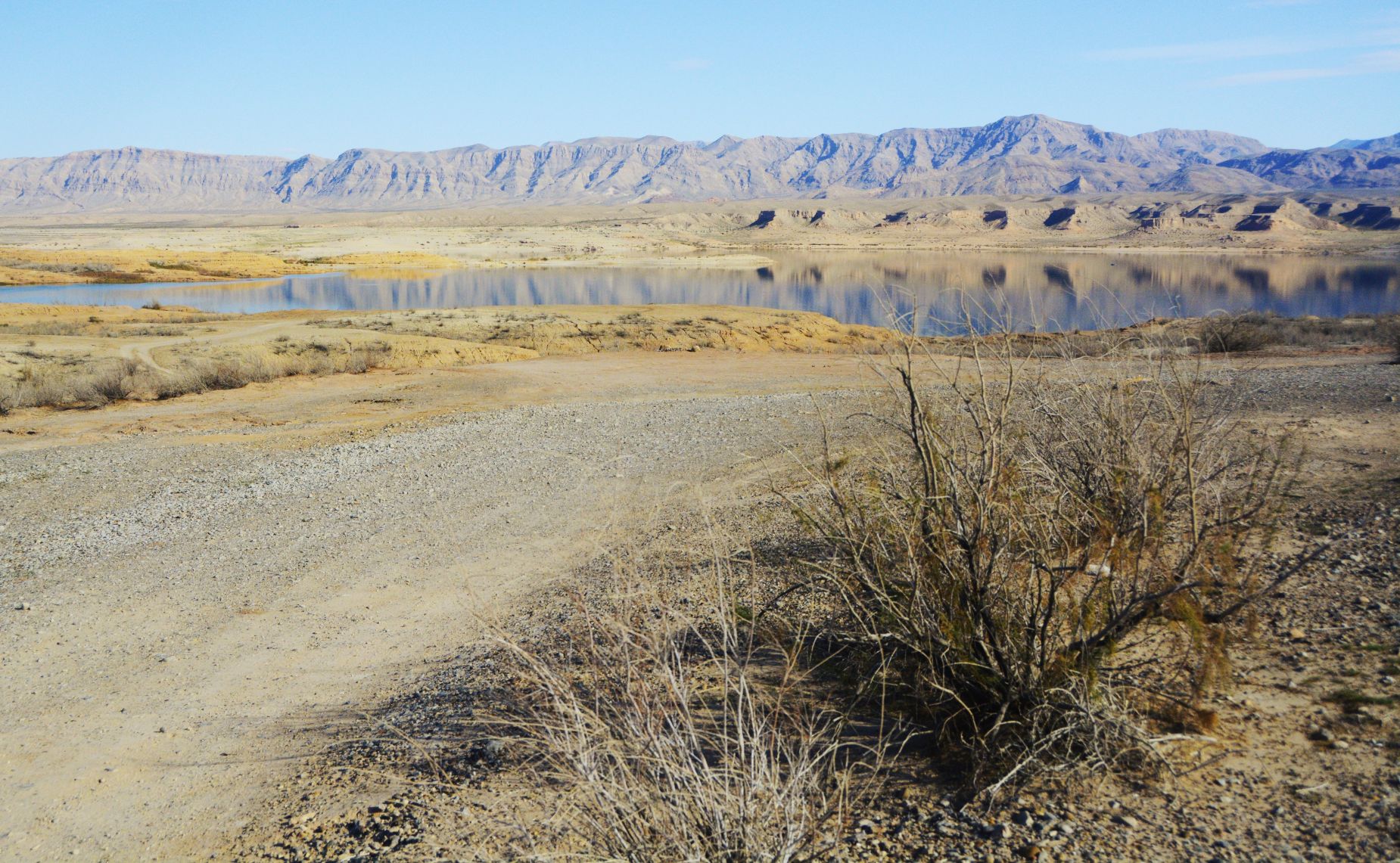
Lake Mead National Recreation Area

Going back into the park, I stopped to get a photo of the entrance sign which I missed on our way into the park at the other entrance.
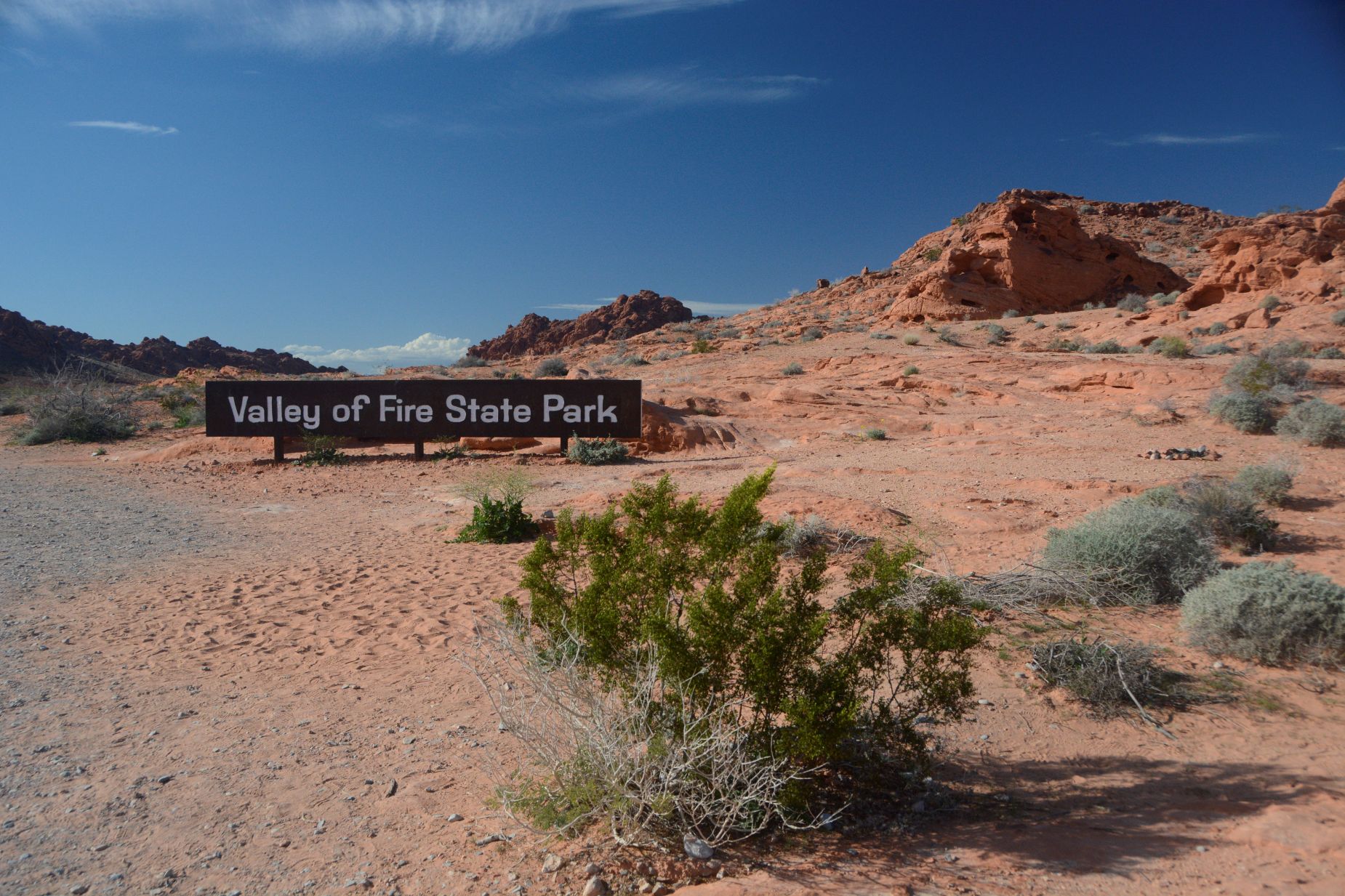
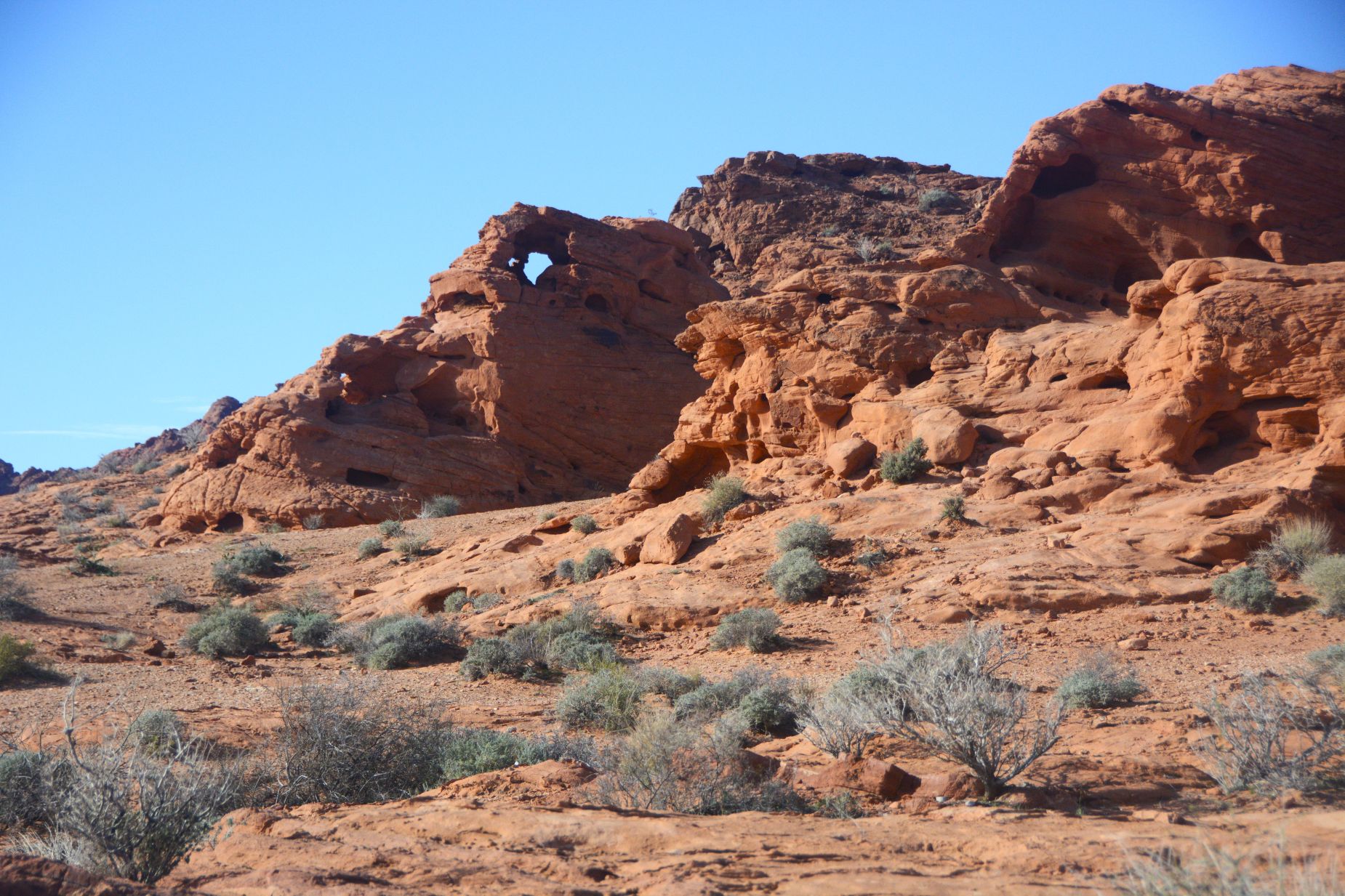
While trying to get the best angle, I spied a window in a rock.
Also along Valley of Fire Road is a turnout and picnic area called Seven Sisters. Only one rock resembled a human head. You really need an imagination to see the other six sisters.
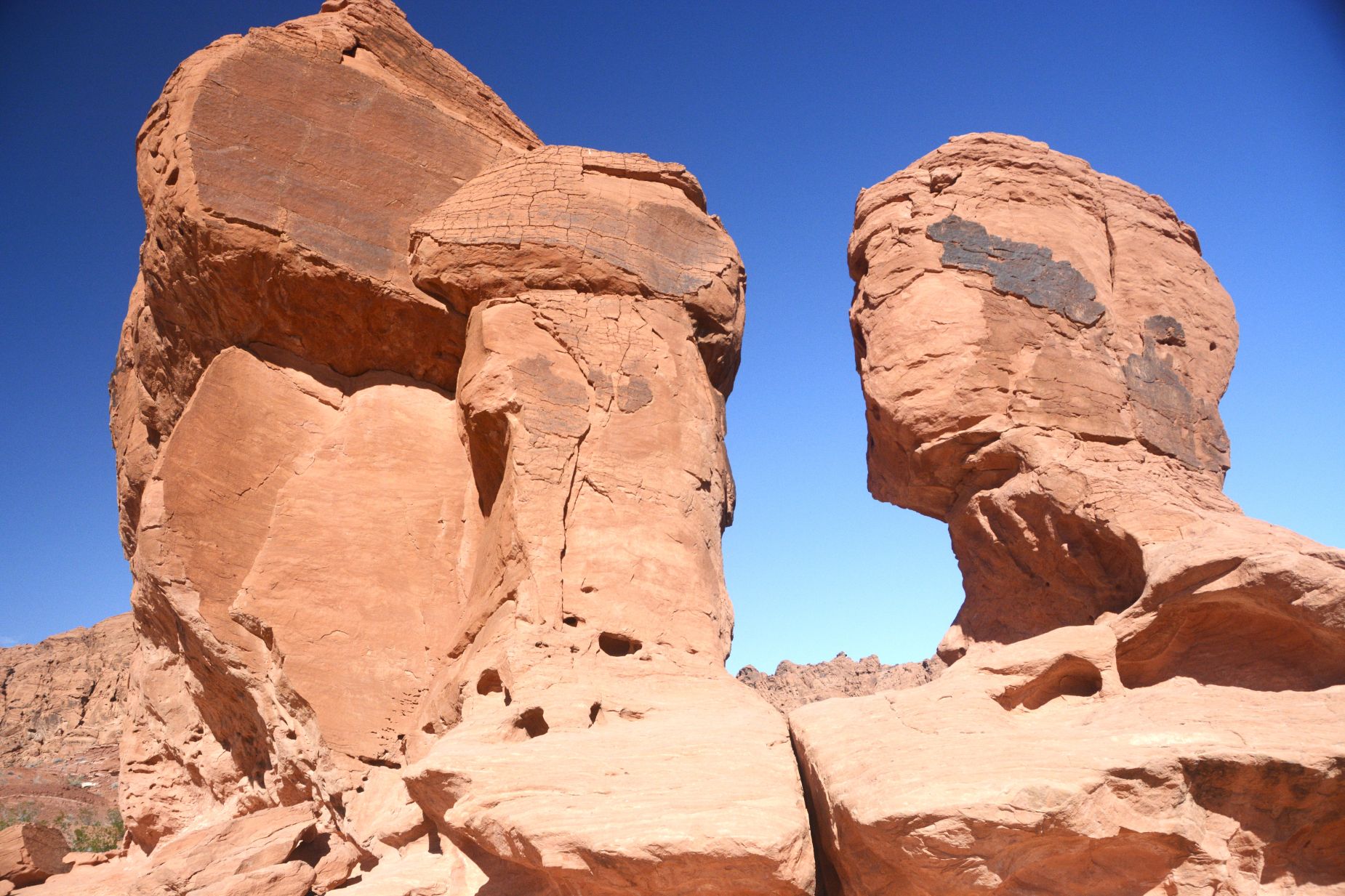
Seven Sisters

Another side road took us to The Cabins, built in 1935 by the Civilian Conservation Corps as shelters for travelers and campers. They even had fireplaces.
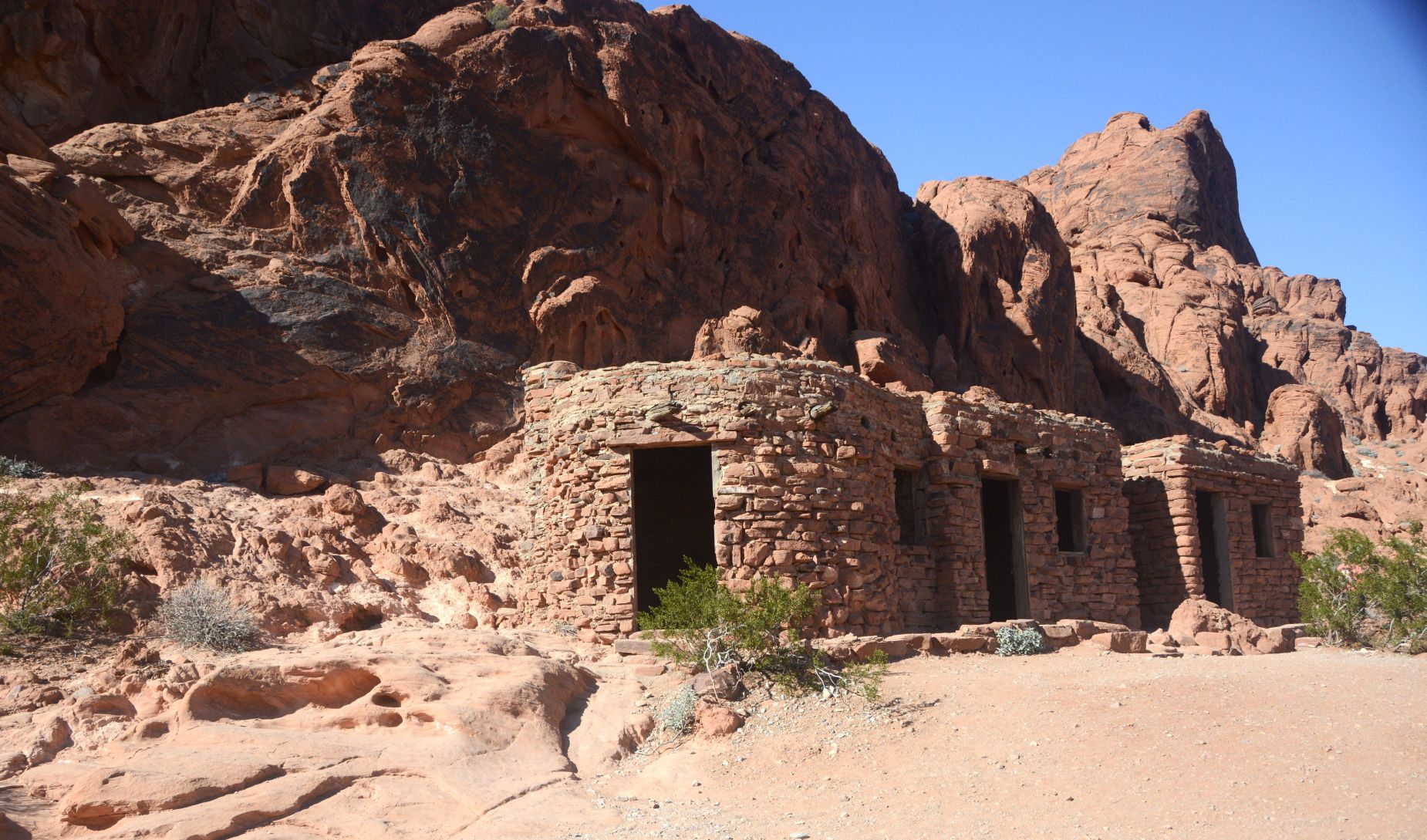
The Cabins built by the CCC in 1935.

Past Atlatl Rock on a side road is a natural arch called Arch Rock. A large sign said “No Climbing on the Rocks.” So when I saw a man and woman climbing in the arch to get their Instagram photo, I ungraciously waved them off and yelled that they weren’t supposed to climb on the rocks. Am I becoming a grouchy old lady?
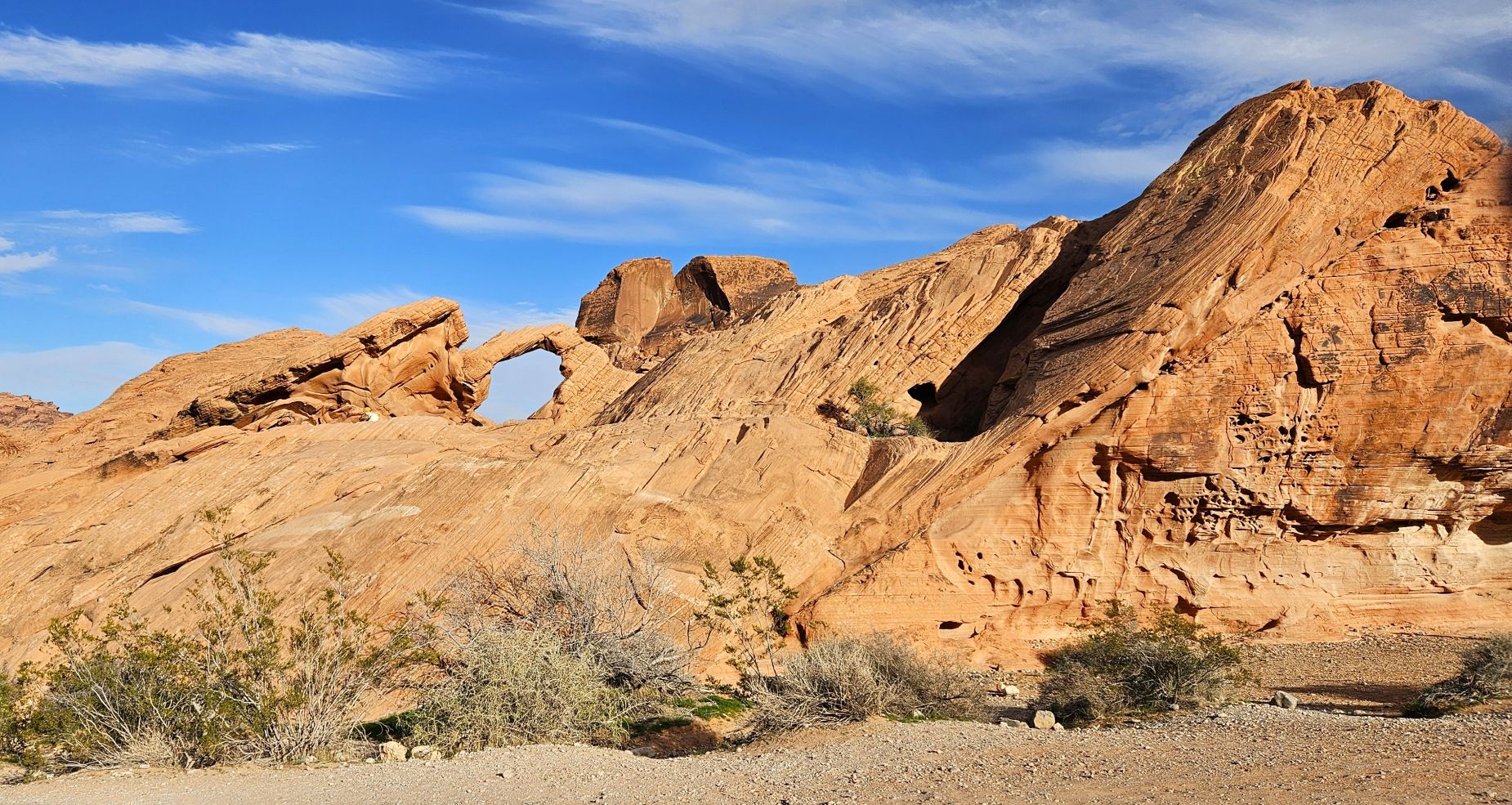
Arch Rock

There were other sights to see like the Beehive formations, the petrified logs and the balancing rock. Some of them required lengthy hikes in order to see them. We will have plenty to see for the next time we come.
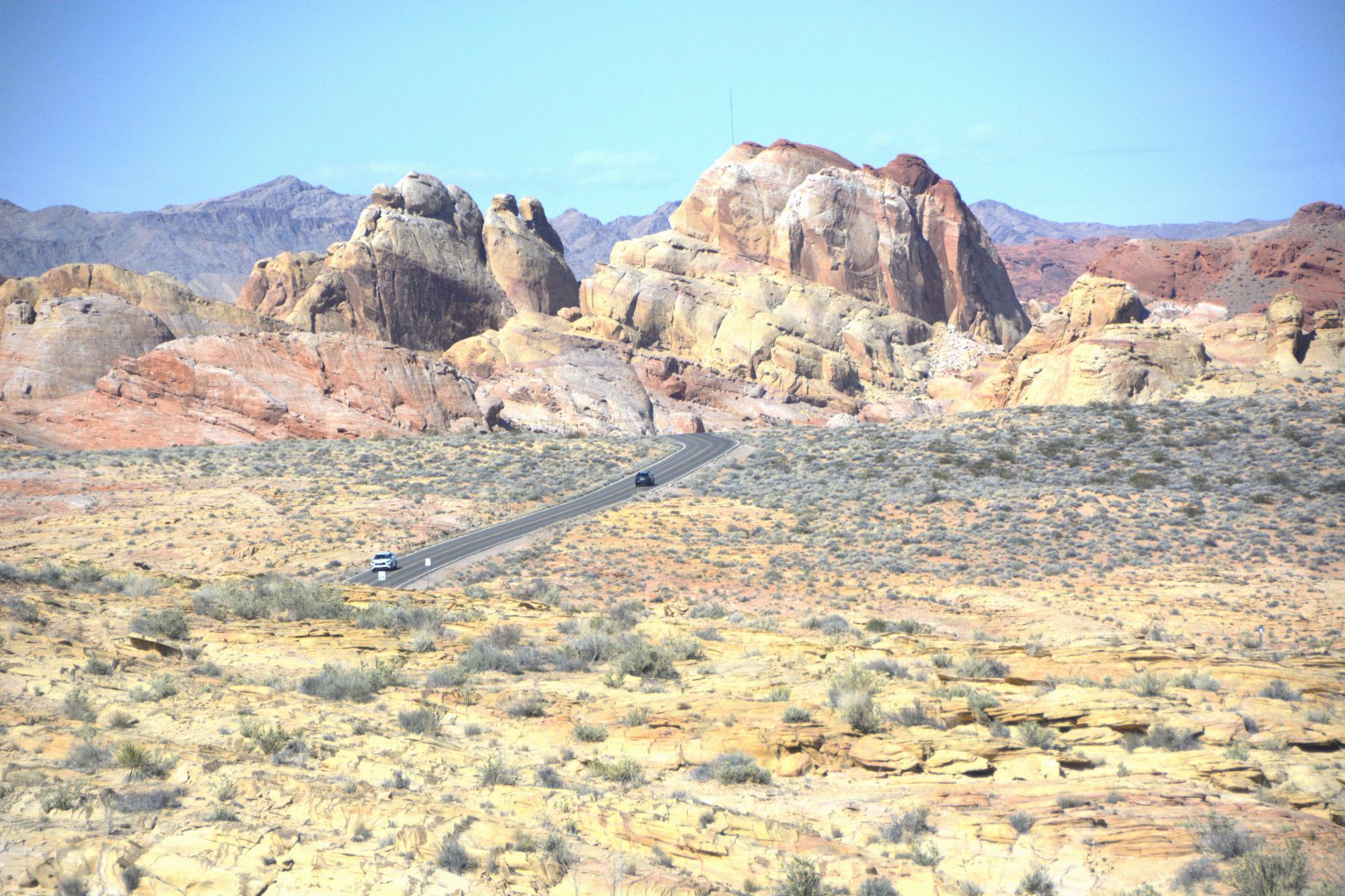
Colorful rocks in Valley of Fire State Park

This Nevada state park was full of a variety of fascinating and beautiful scenery. Just an hour from Las Vegas, however, it quickly gets overrun with lots of visitors. Many of the trails are closed during the summer months due to extreme heat and hazardous conditions, so winter is a great time to visit. In my opinion, it’s worth seeing again.

“He is the Rock, His works are perfect,
    and all His ways are just.
A faithful God who does no wrong,
    upright and just is He.” Deuteronomy 32:4 NIV
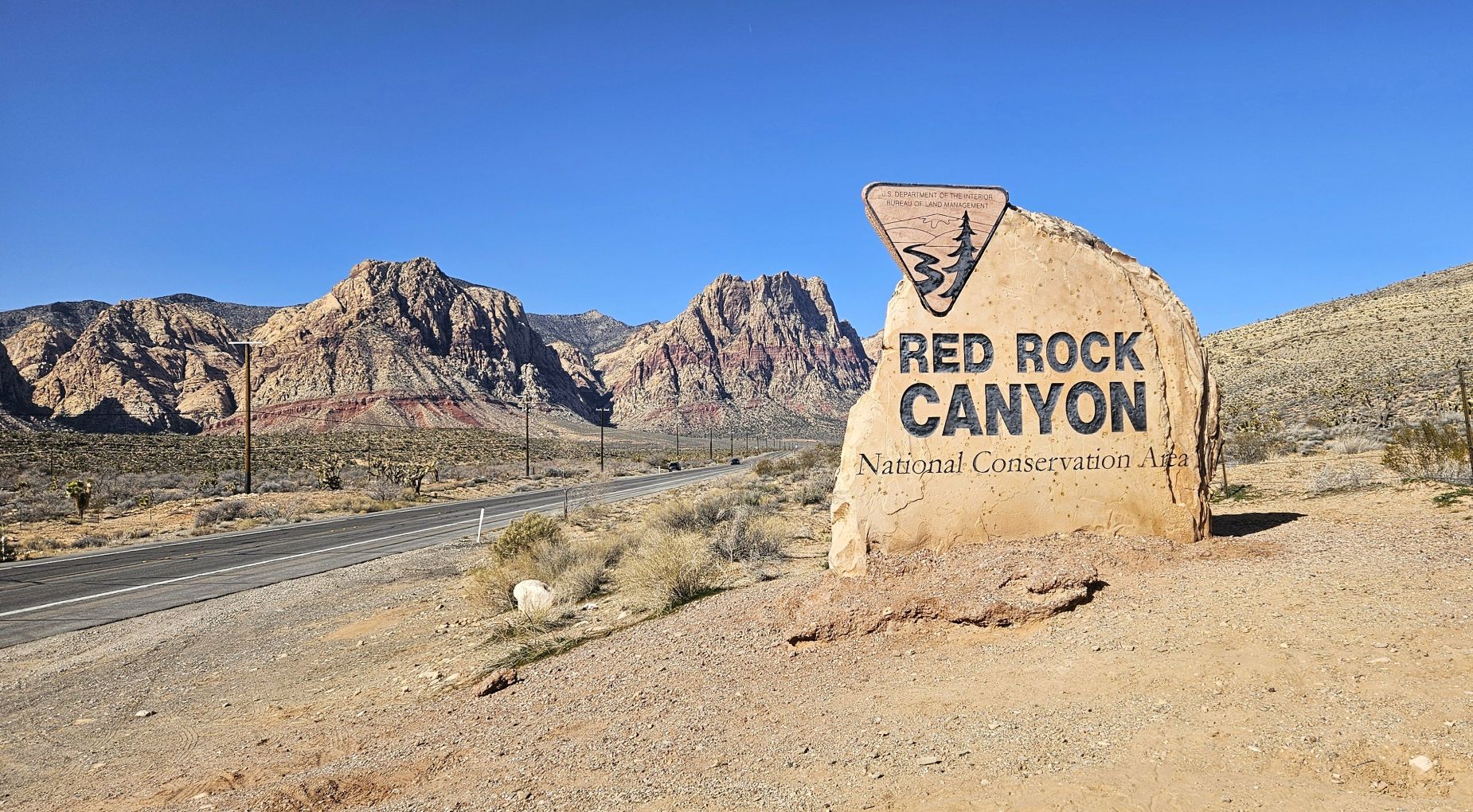
Red Rock Canyon NCA, Nevada

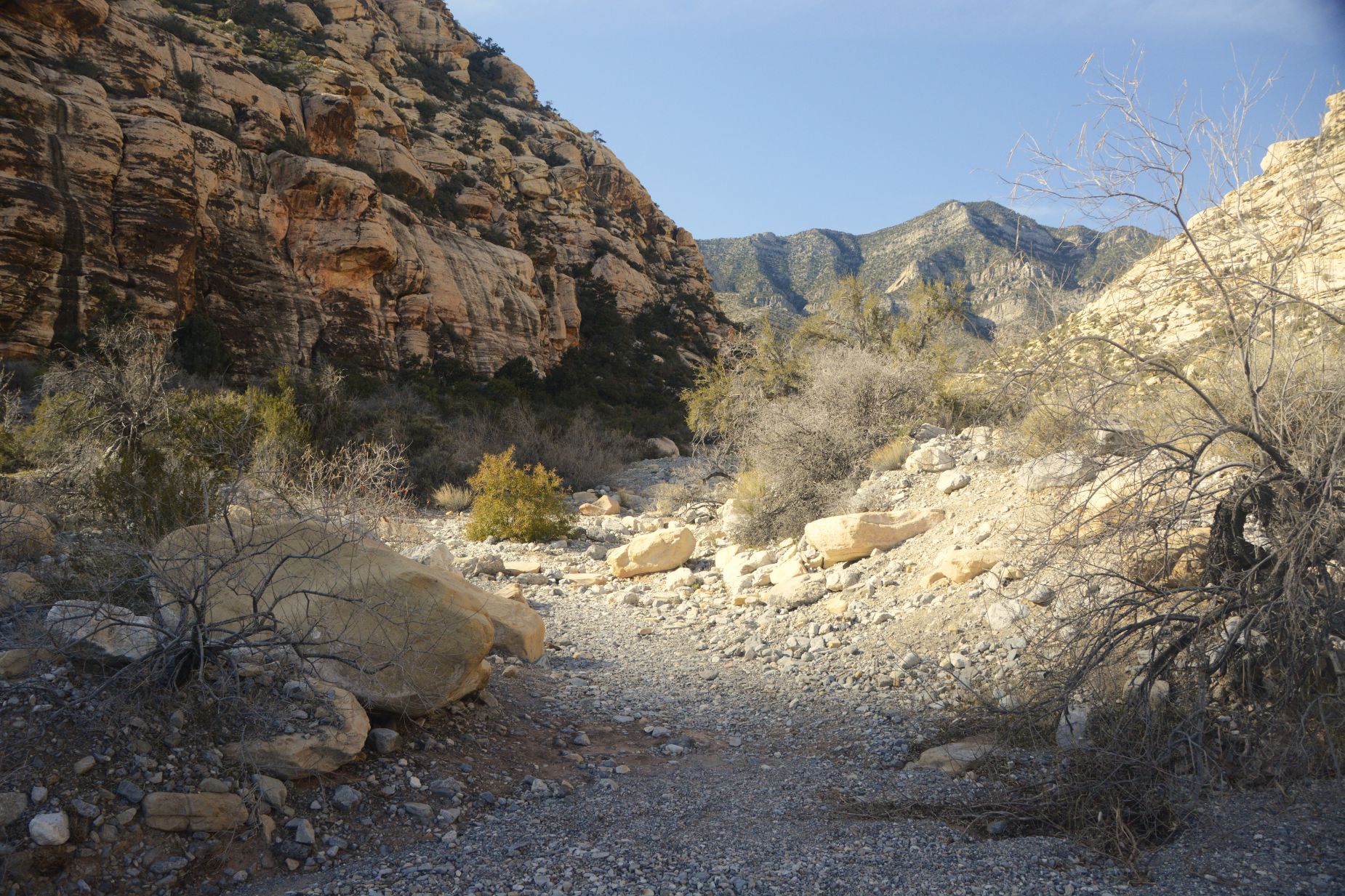
While we were staying in Pahrump, Nevada, we took a day trip to Red Rock Canyon National Conservation Area. It’s located a few miles north of Las Vegas. It has timed entry reservations, so we had to plan ahead.

We used our National Parks pass for free entrance to Red Rock Canyon National Conservation Area

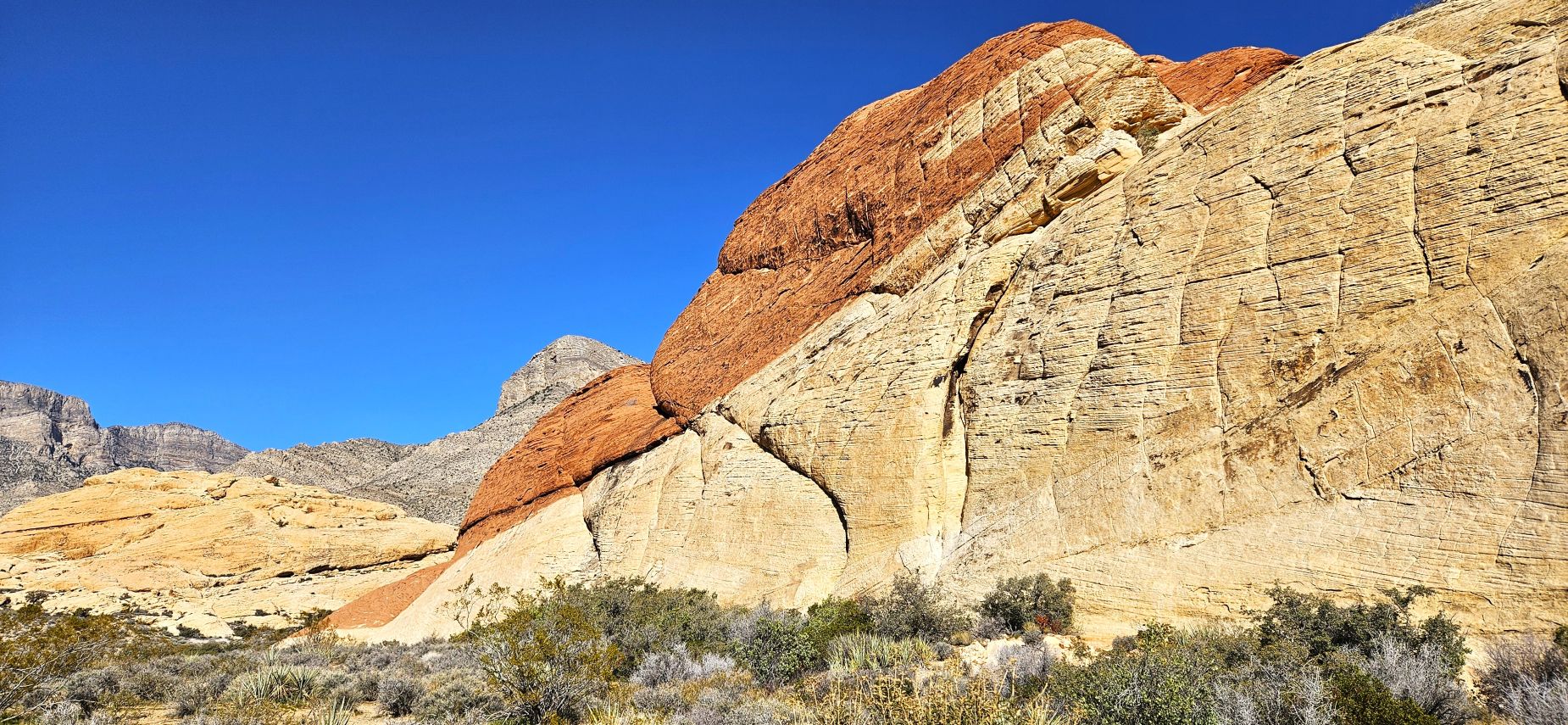
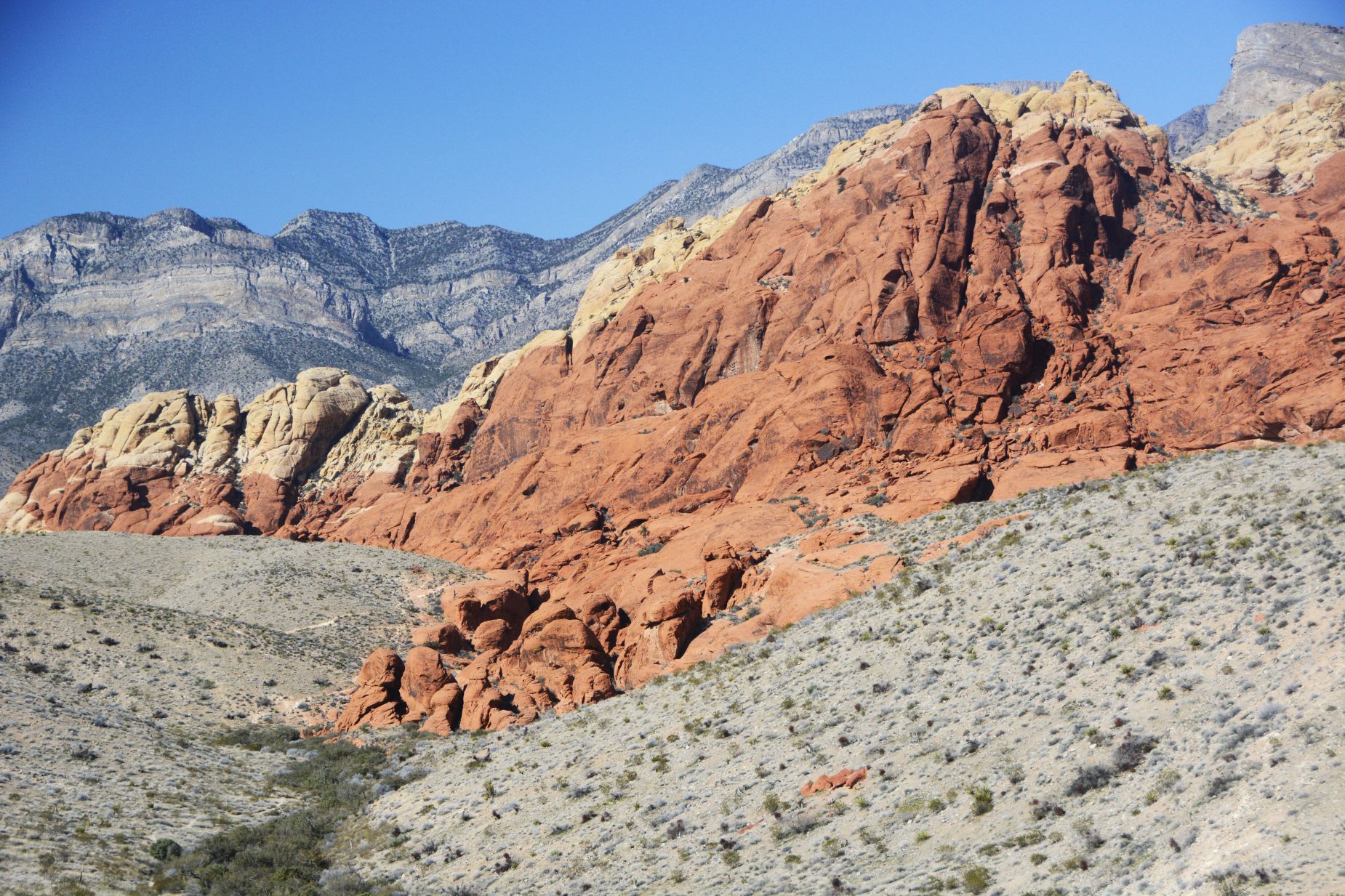
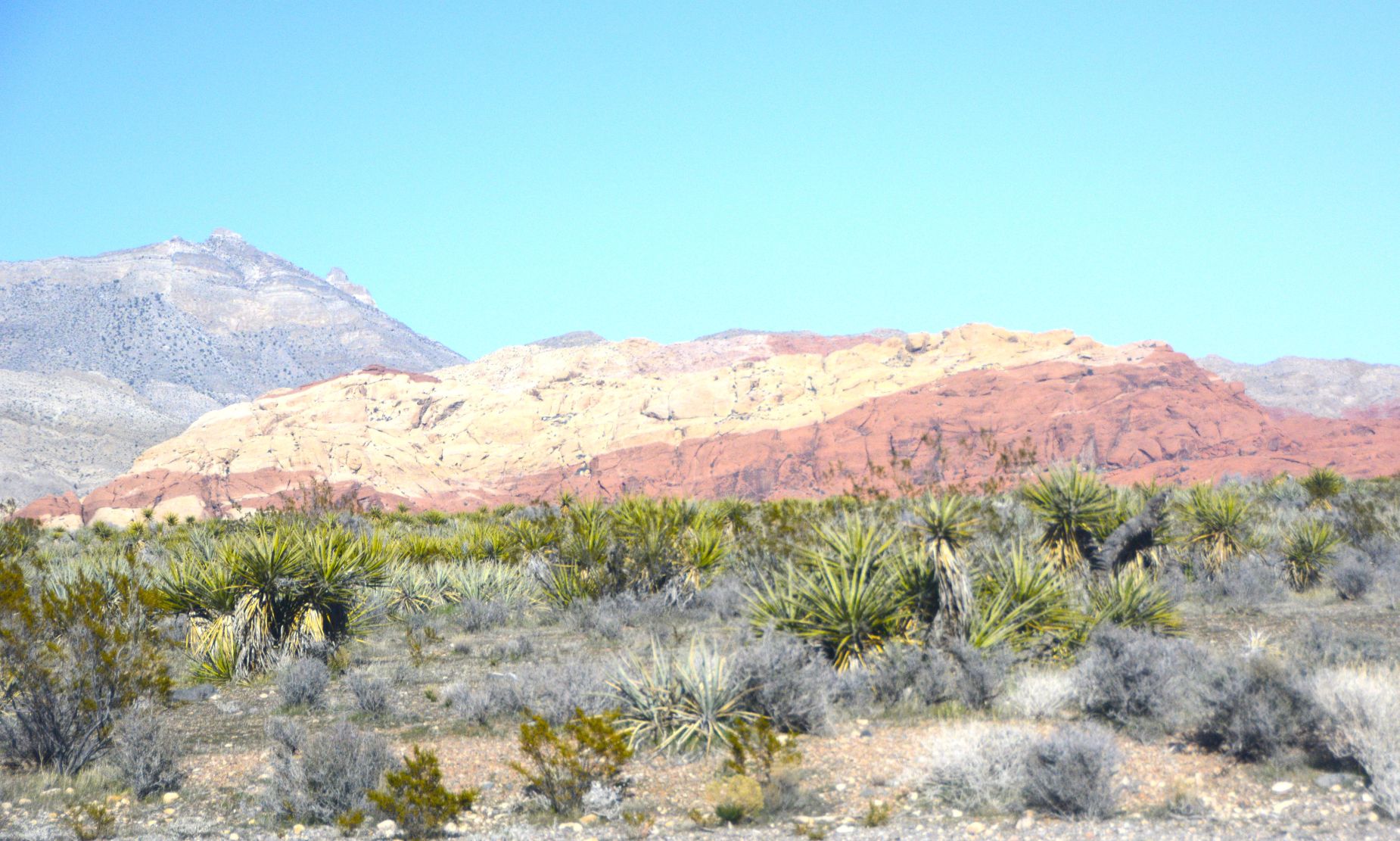
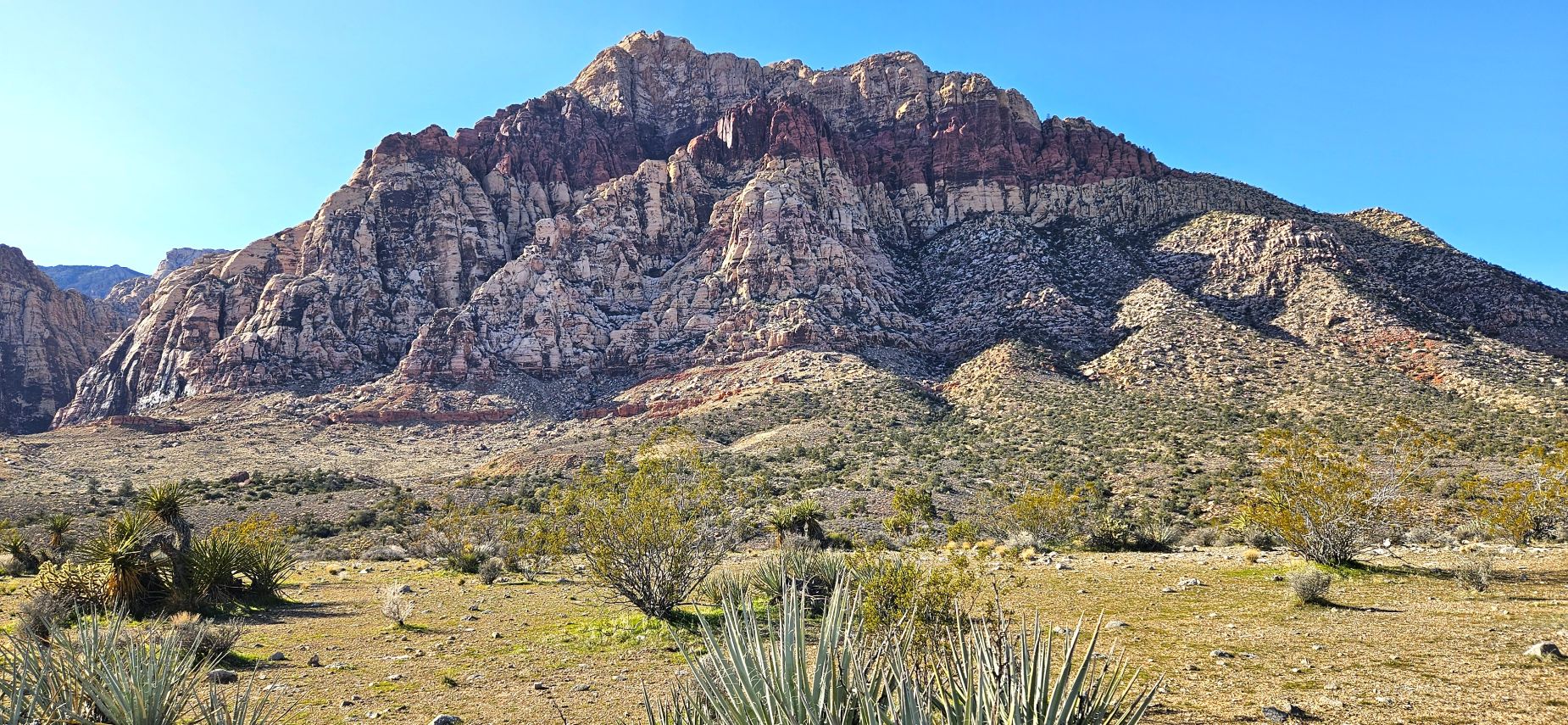
The red rocks in this area appear even redder next to the buff sandstone. The iron in the rocks causes the variations of red in the sandstone rocks.

Deep red sandstone atop a layer of buff sandstone creates a dramatic scene

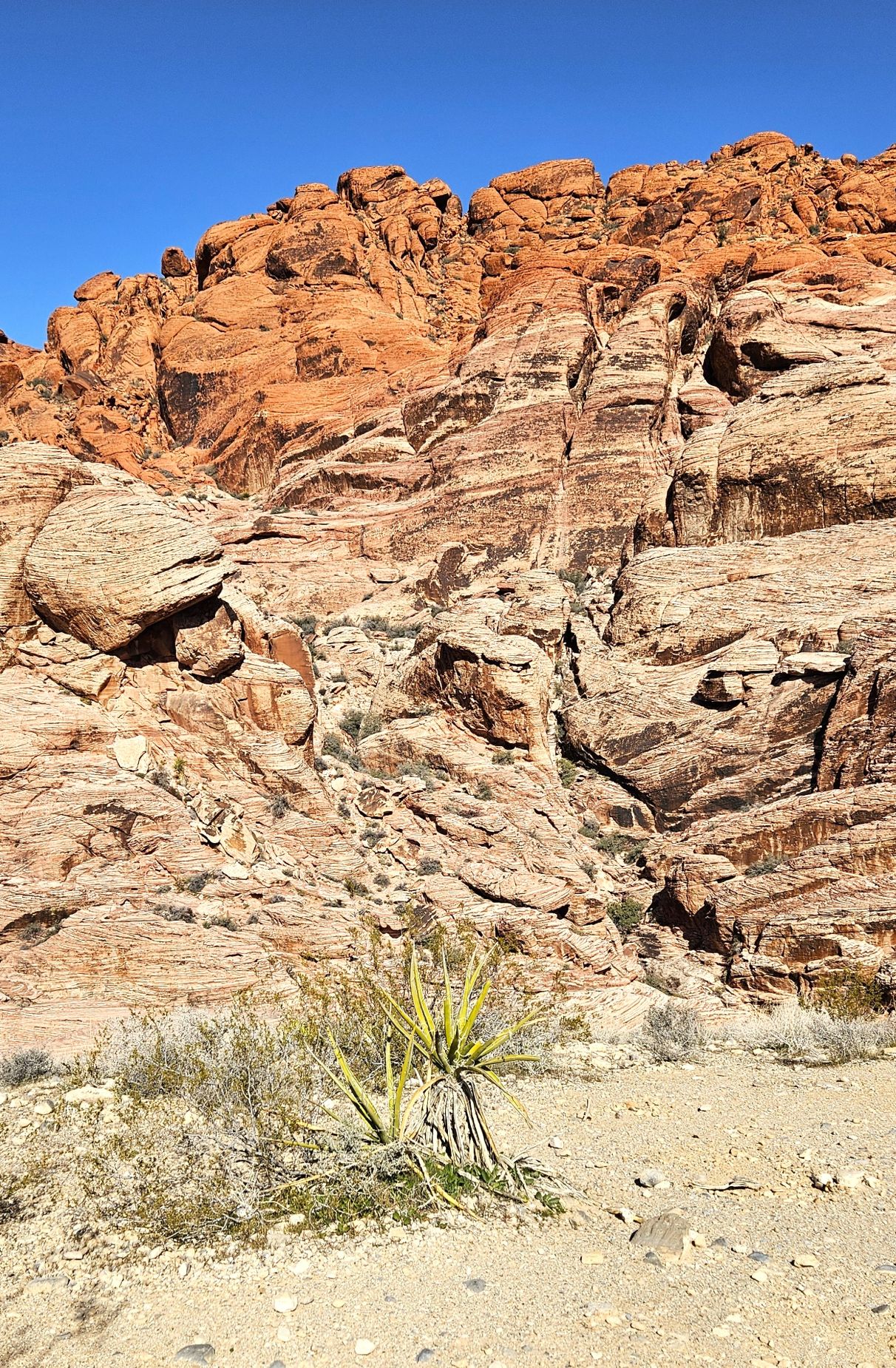
Sandstone is a sedimentary rock and is very porous allowing water to flow through it. It is susceptible to weathering by water and wind which causes holes and striations or grooves in the rock.

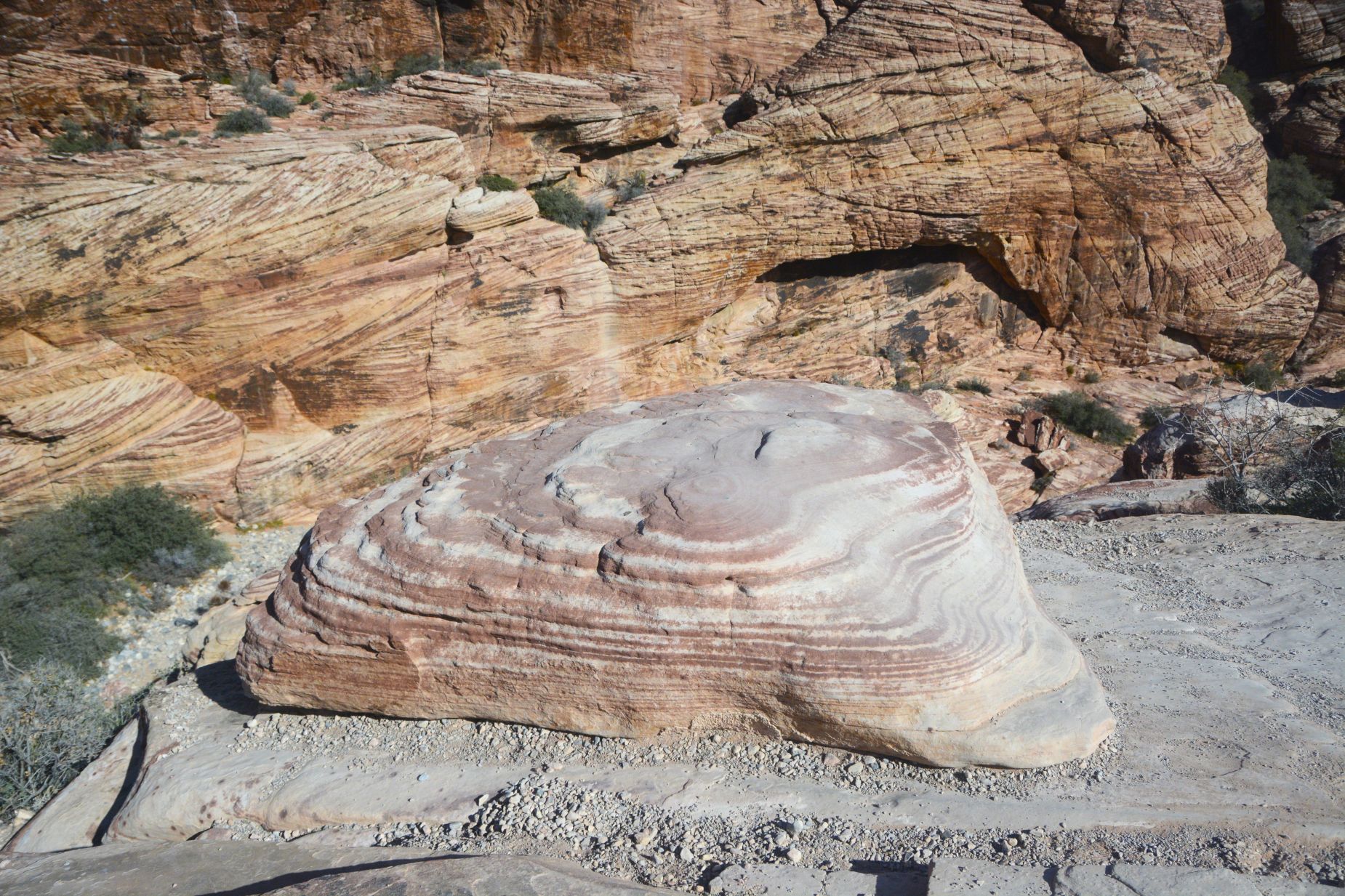
At our first viewpoint, I noticed this rock with grooves and a dark brown coating which is called desert varnish. Desert varnish is formed slowly on rock surfaces made up of clay minerals, manganese and iron oxides.

The dark brown on this rock is desert varnish

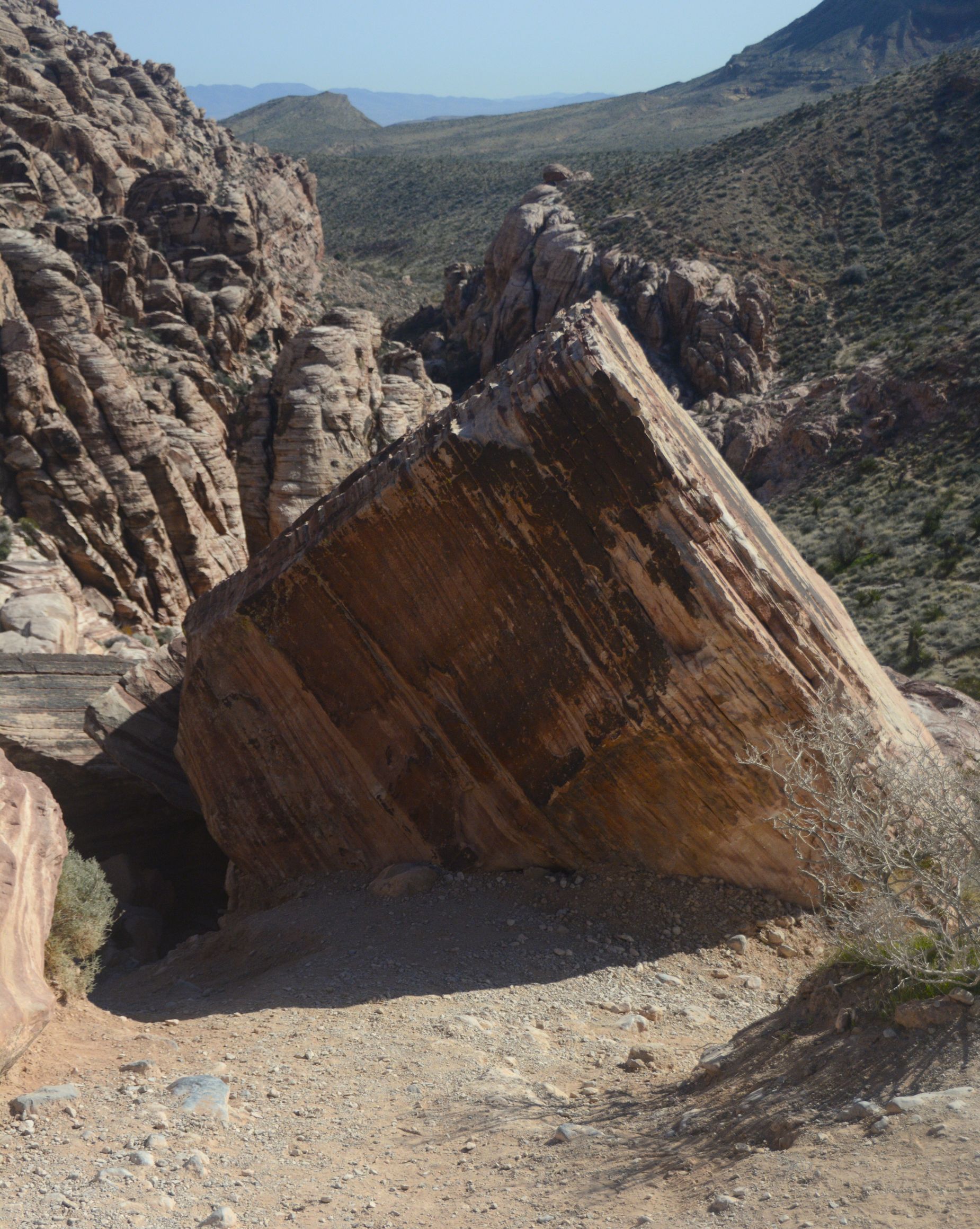
Here you can see the layers of sedimentary rock. The different colors are from various amounts of or lack of iron oxide in the composition of the rocks.

Erosion exposed the layers in this rock.

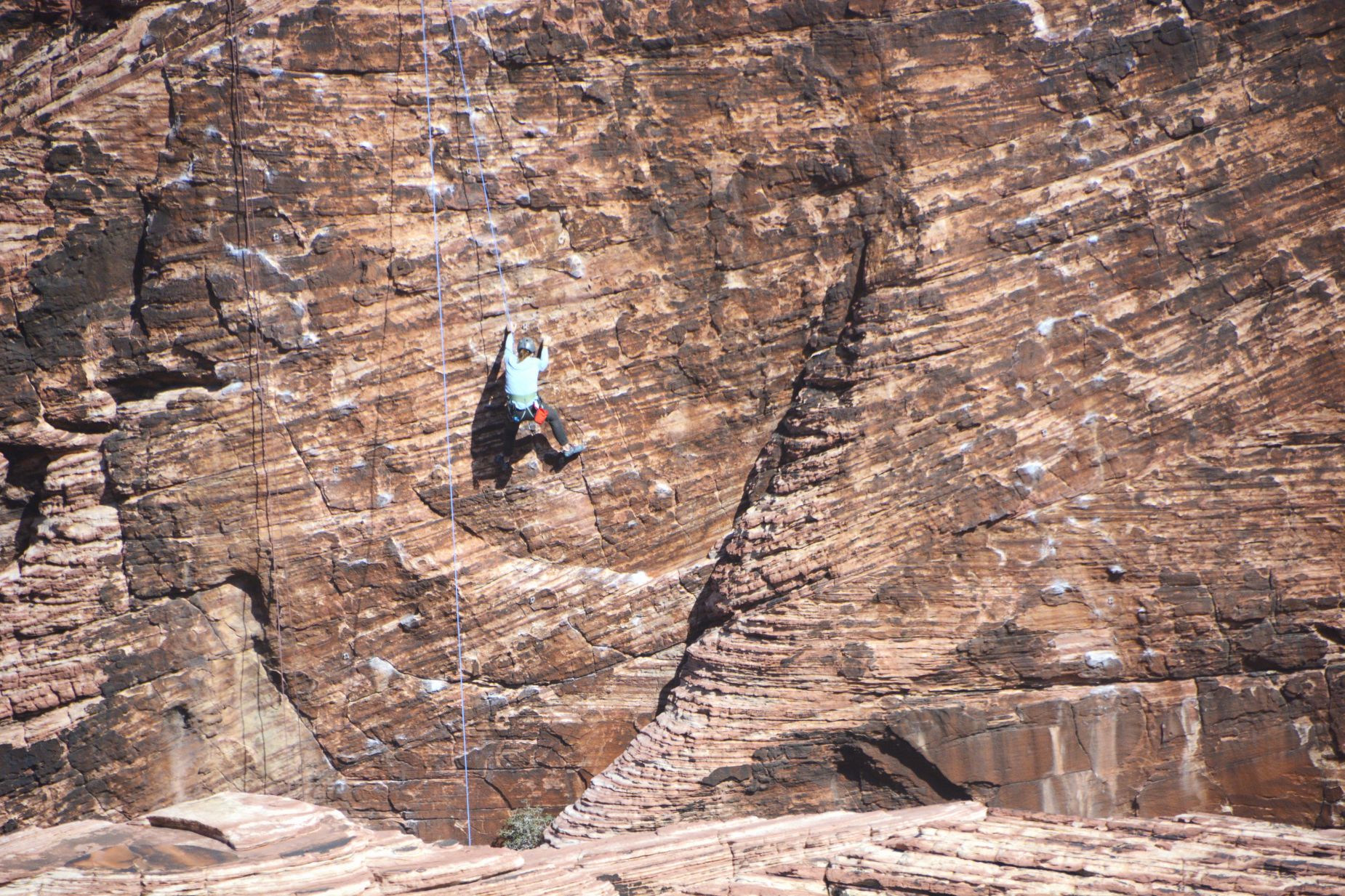
We saw a couple of rock climbers in this area.

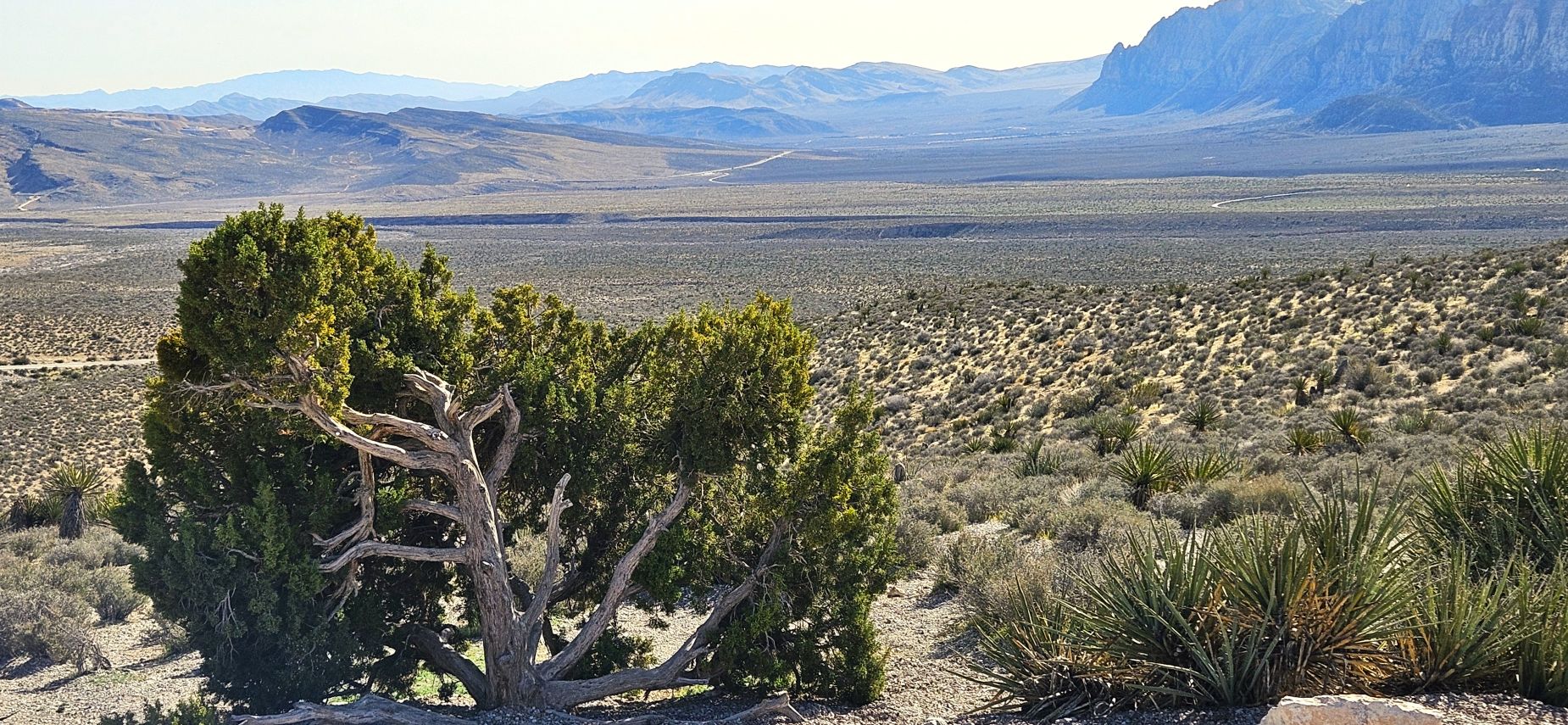
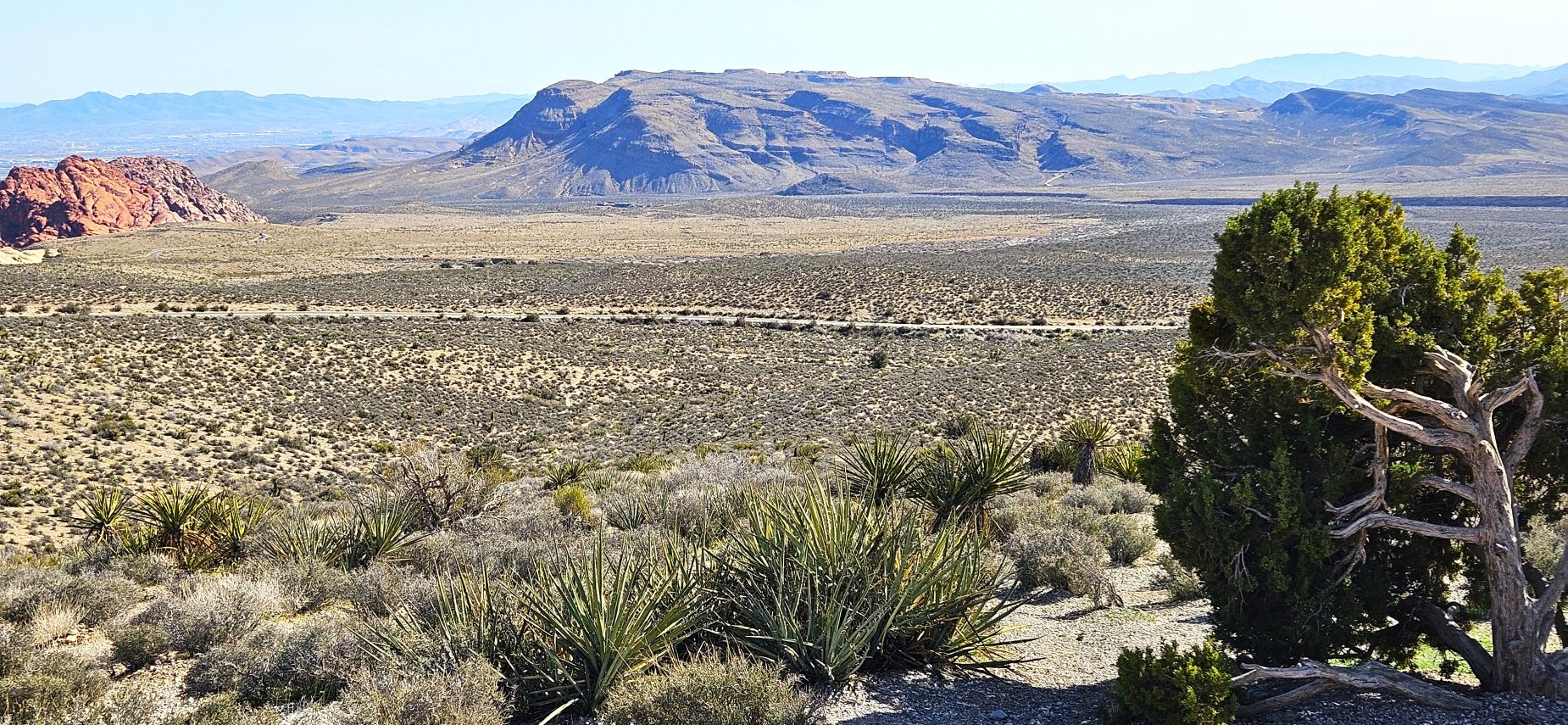
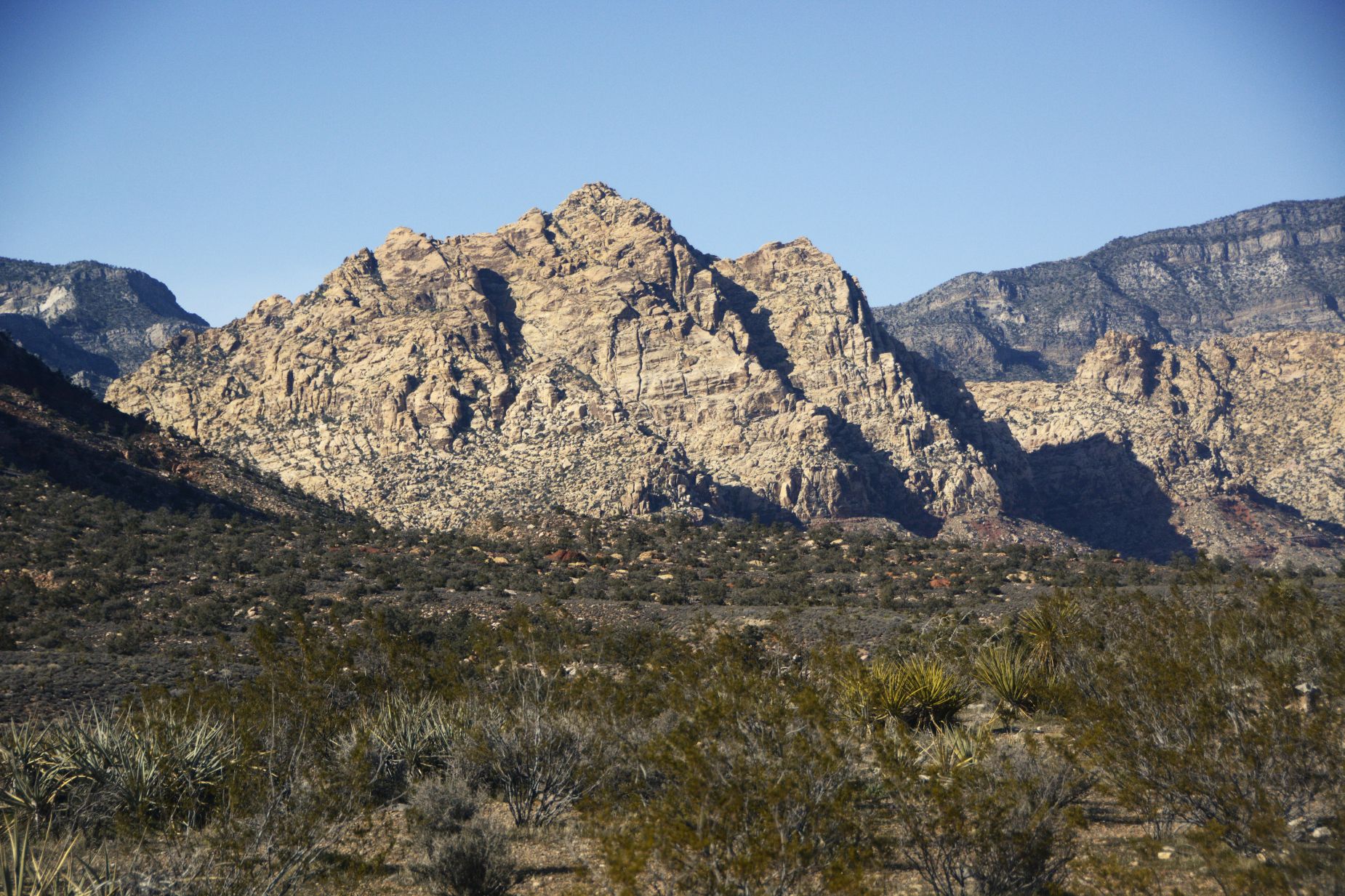
As we drove the 13-mile one-way scenic highway through the park, we got some epic views of the large valley we had just crossed.

The 13 mile one way road across the valley in Red Rock Canyon NCA

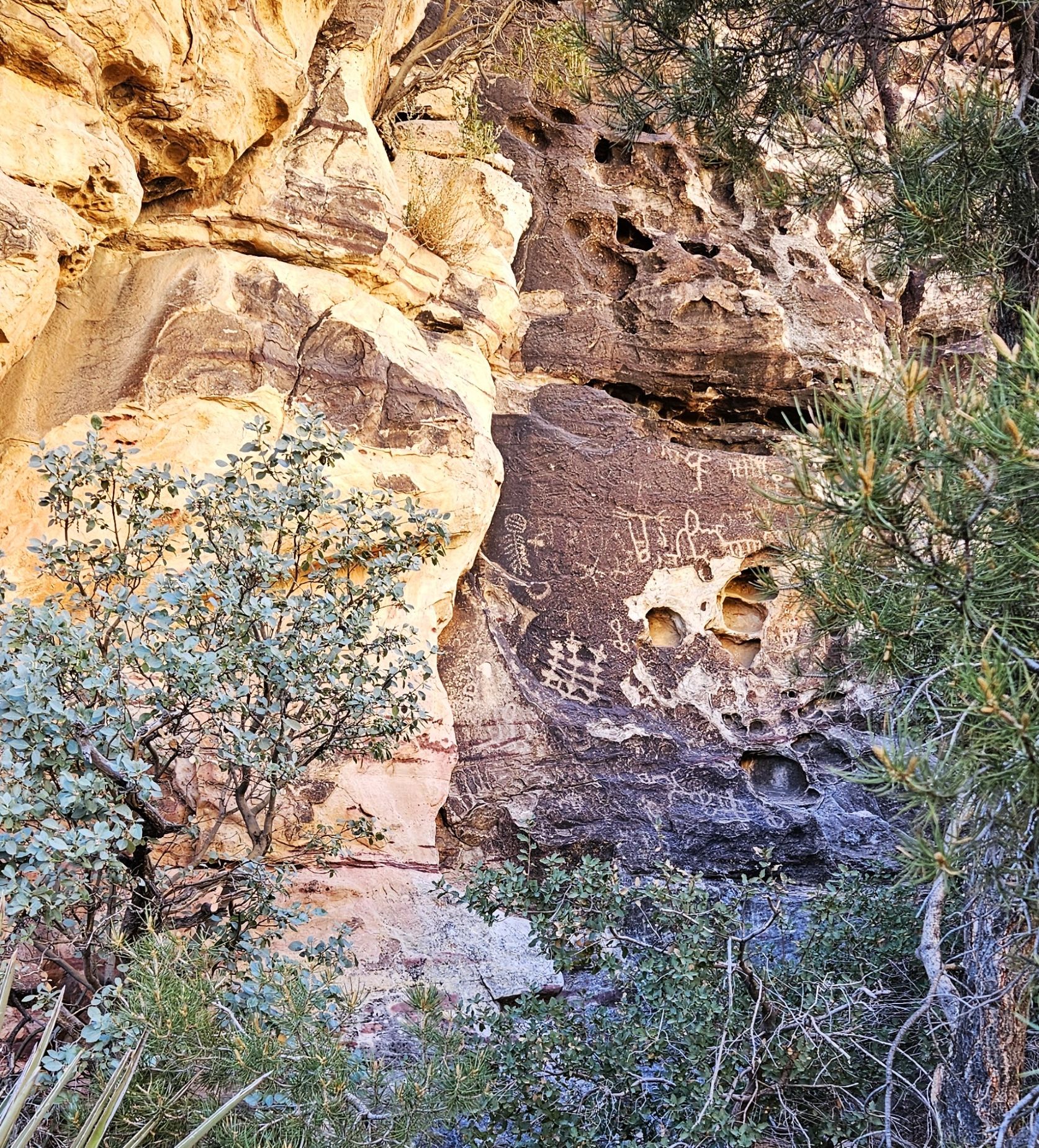
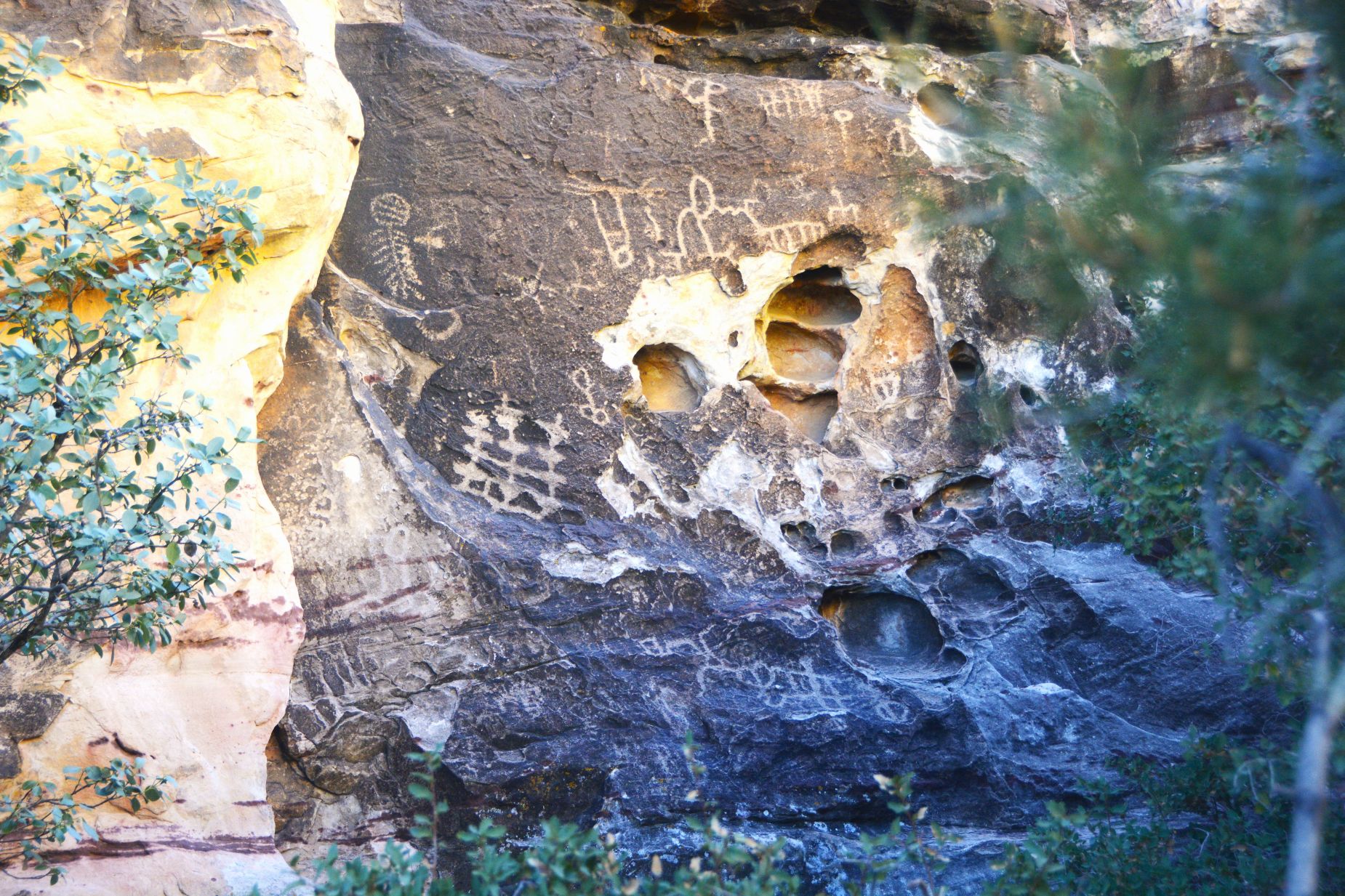
We stopped for lunch at a picnic area. Nearby was a wall with Indian petroglyphs. After lunch, I took a little hike down this trail to see the ancient Indian artwork.

Pathway to Indian Petroglyphs

It takes some imagination to figure them out.

Indian Petroglyphs

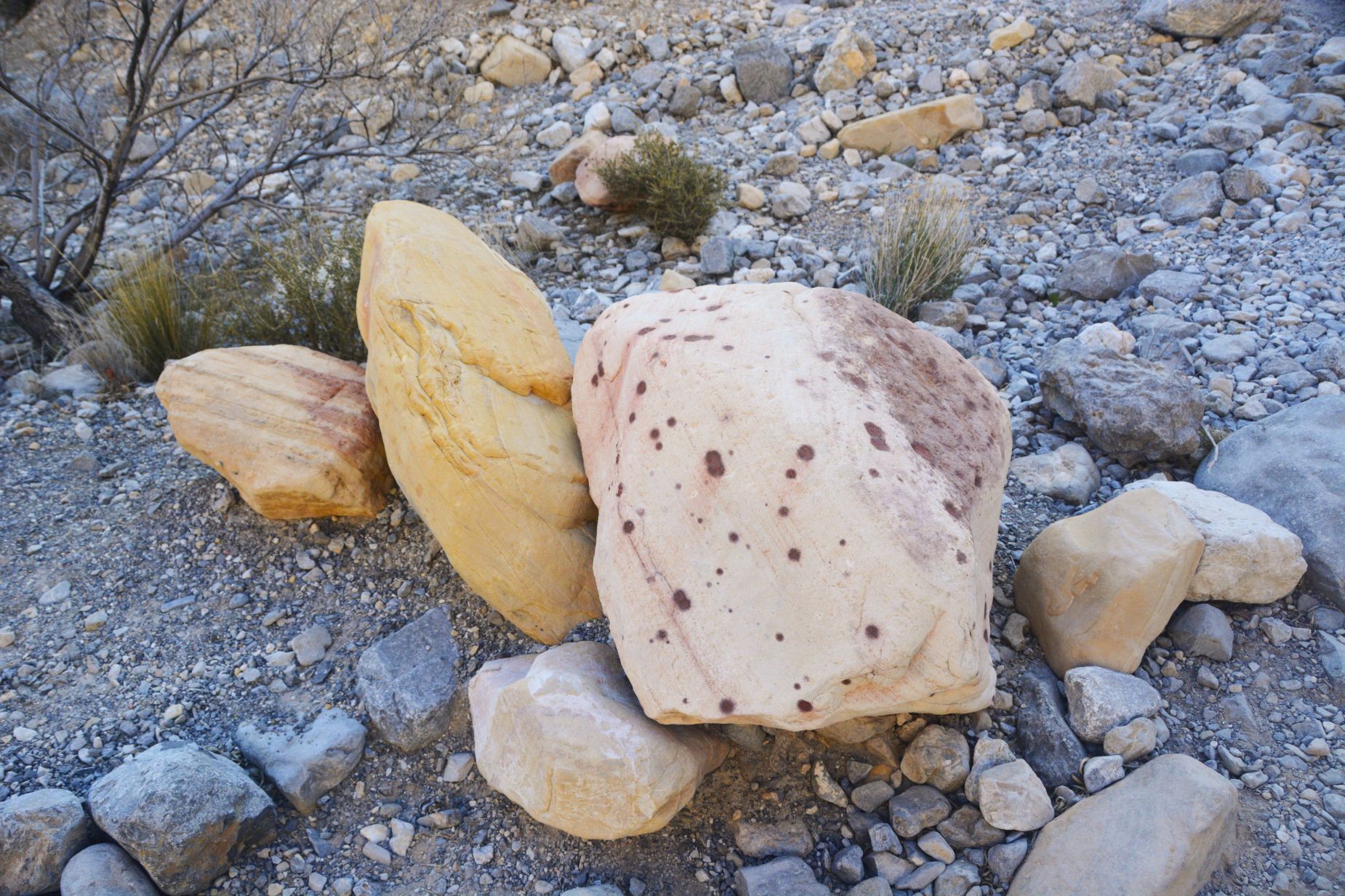
On my way back, I saw this interesting spotted rock.

As we made our way through this conservation area, we saw more beautiful scenery. Sadly, we didn’t see any Big Horn Sheep or wild donkeys.

As the afternoon sun lit up the mountains, we knew it was time to head back home. It was an hour drive to see it, but we were happy we took the time to visit this interesting and beautiful place.

Nevada Northern Railway

June 11, 2021

After leaving Arizona, we made our way north by way of eastern Nevada, going through Caliente, Ely and Wells, NV.

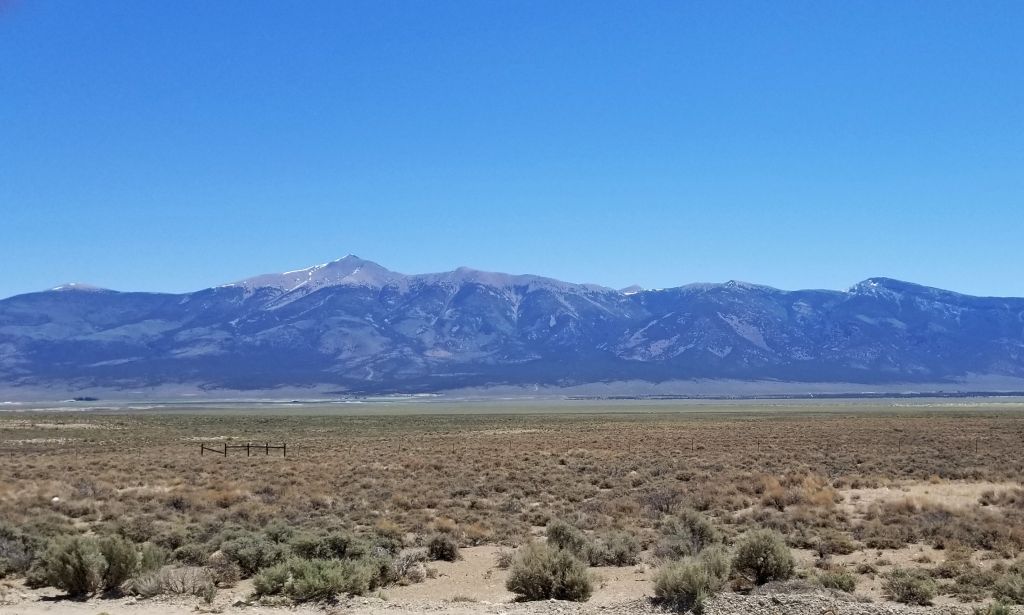
Wheeler Peak Great Basin National Park

On the way there, we drove along the backside of Great Basin National Park. I could see Wheeler Peak in the distance. We drove to the top of it when we visited the park last year. The 13,000’ peak still had snow on it.

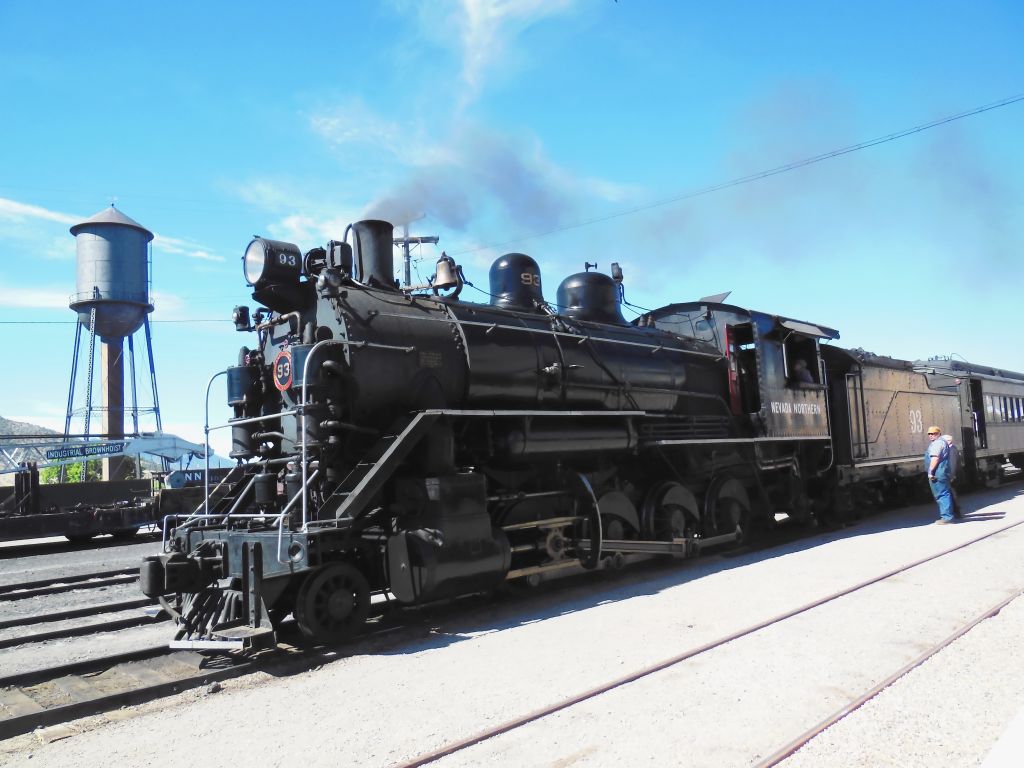
 In Ely, we stopped for four nights so we could ride the Nevada Northern Railway and visit the Museum. The Railway is a National Historic Landmark and the museum complex includes a rail yard on 56 acres with 63 structures to explore.

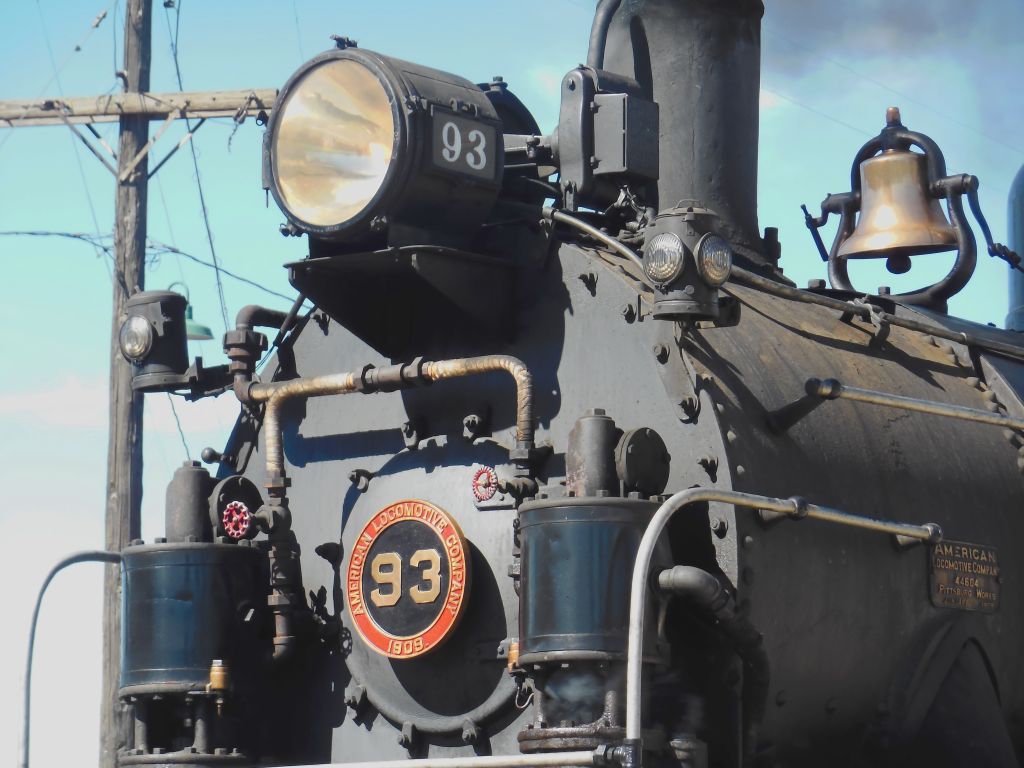
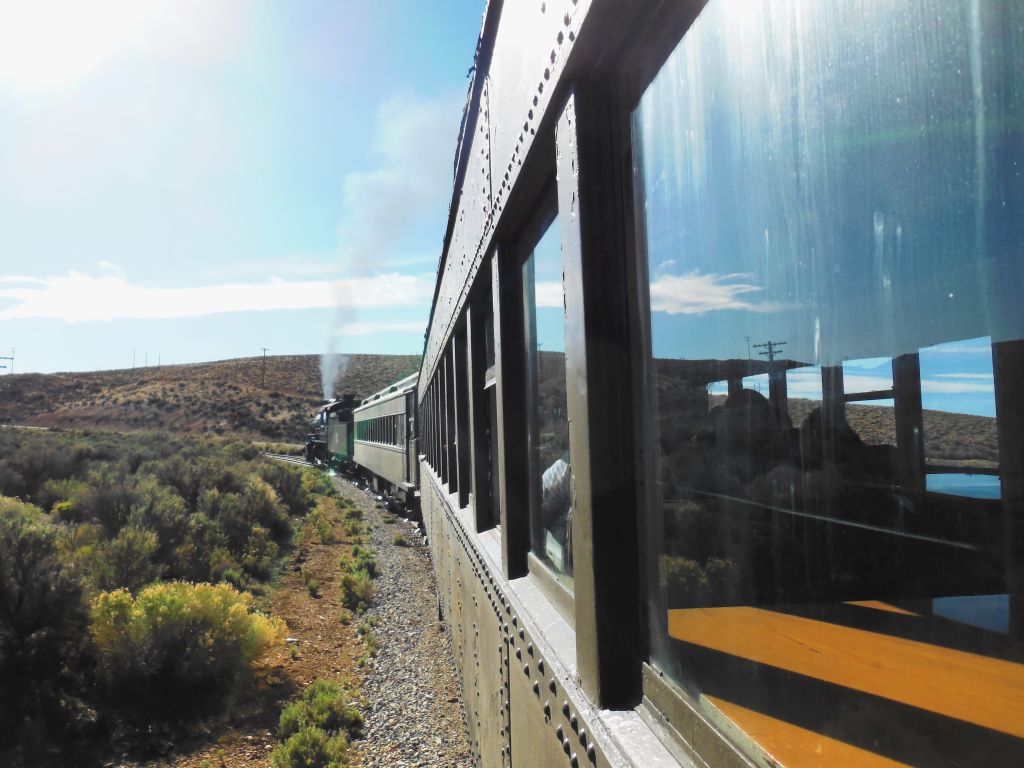
We enjoyed a 90 minute ride in an old passenger car pulled by a steam locomotive.

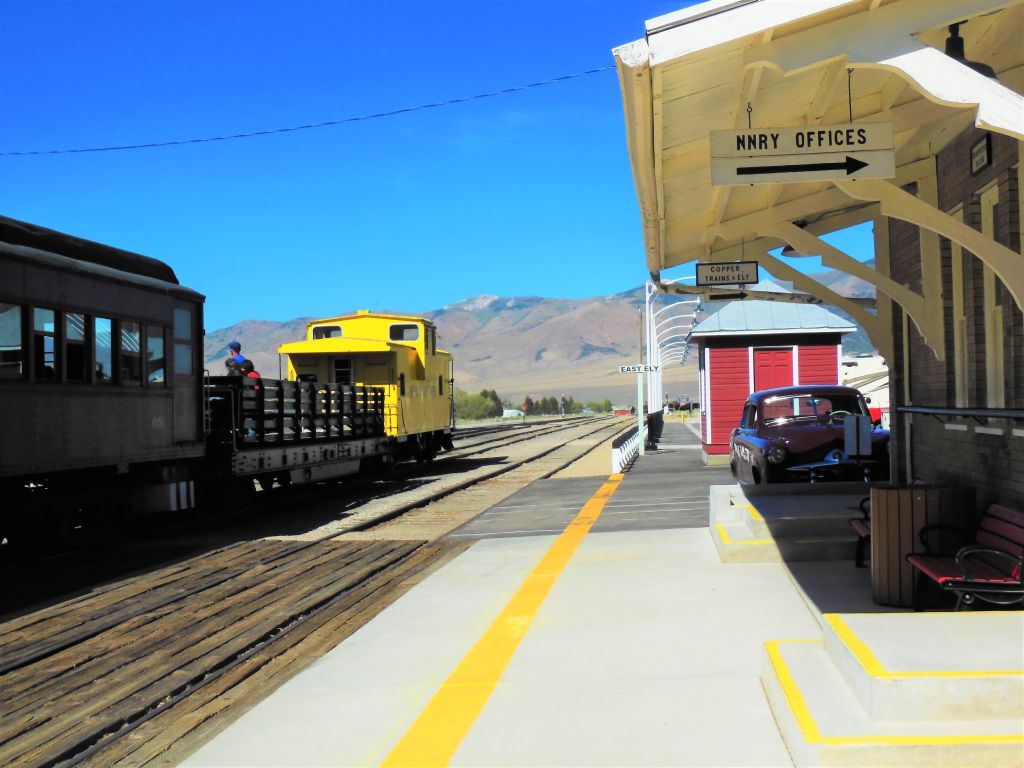
The train depot for the Northern Nevada Railway.
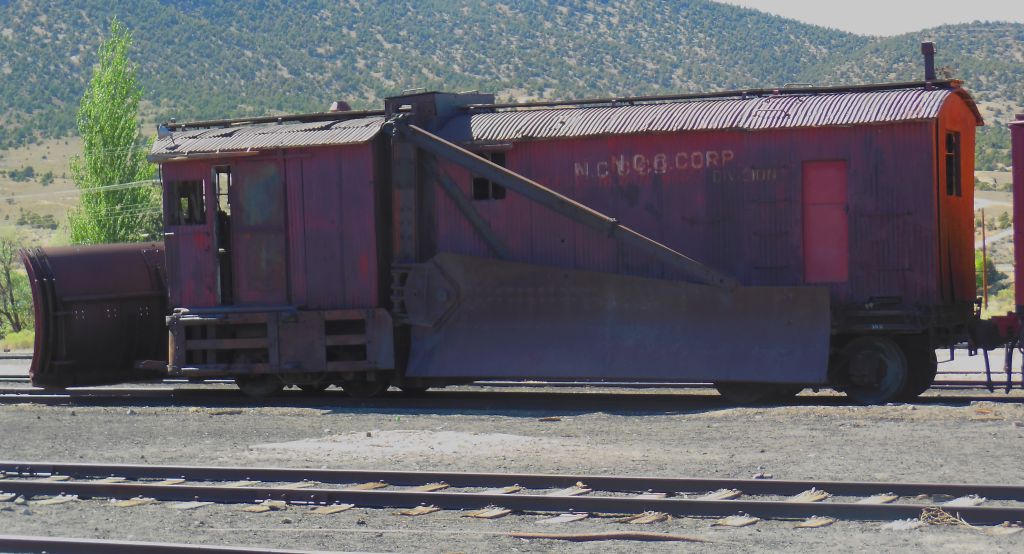
The elevation of Ely is 6,437 feet. In winter, this snowplow was used to clear the snow off the tracks.
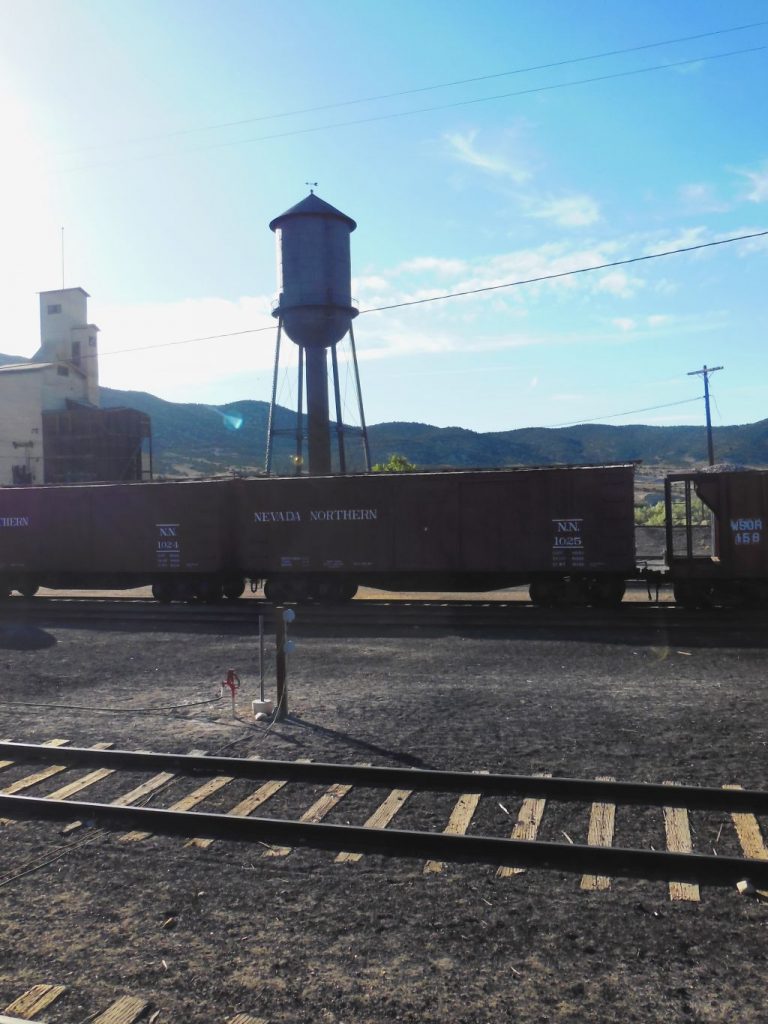
Water tower for Northern Nevada Railway.
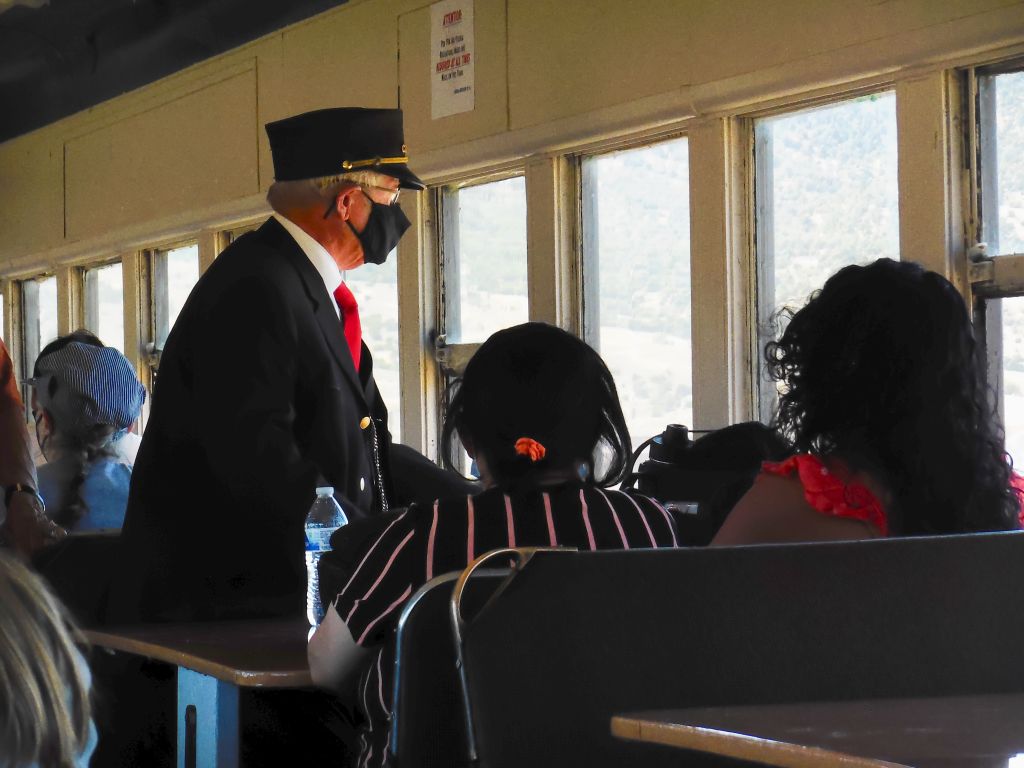
The conductor punches our tickets.

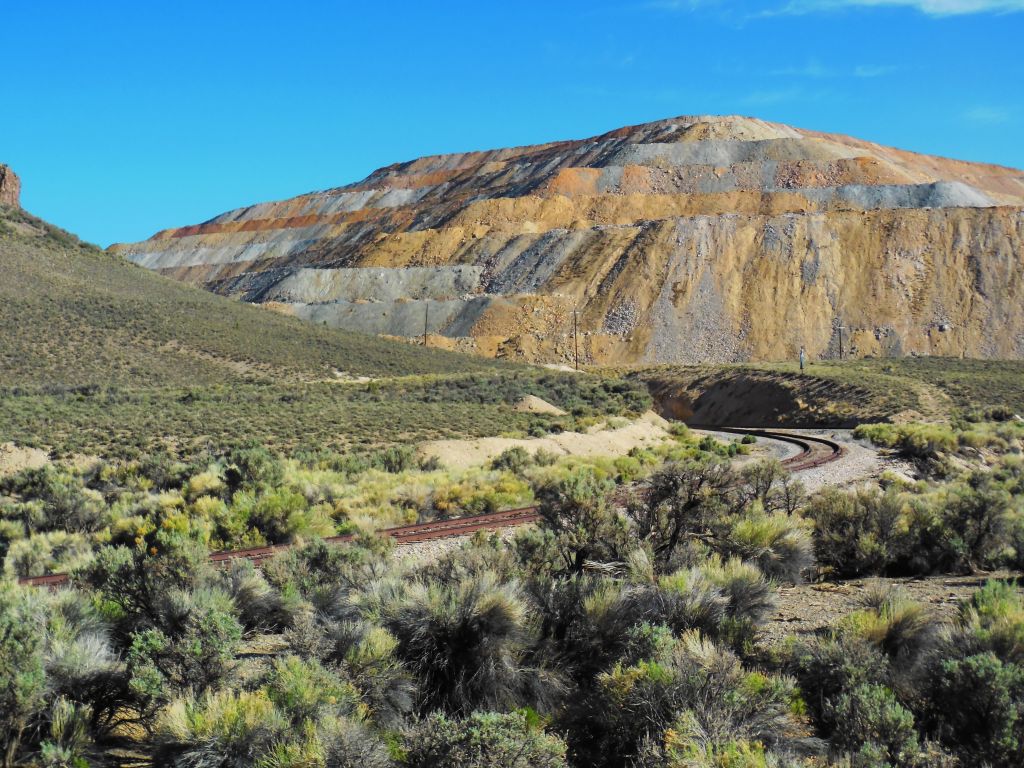
The ride took us through the hills around Ely to a large copper mine and back. Along the way we learned about local history.

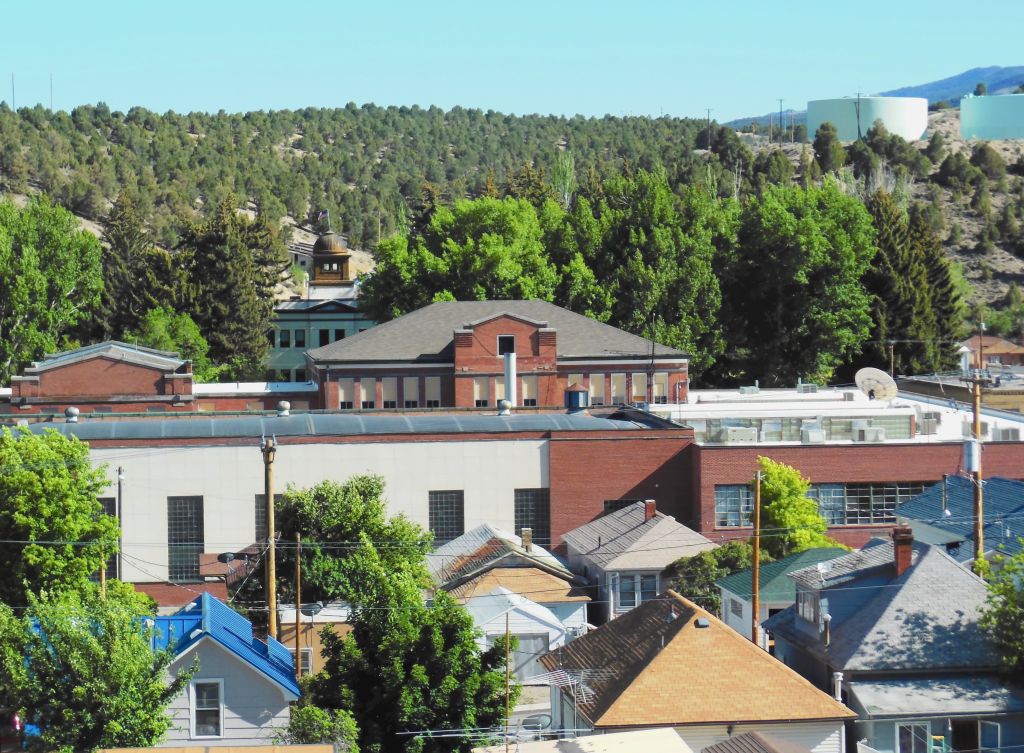
We view the historic town of Ely, Nevada, on our train ride out to the mine.

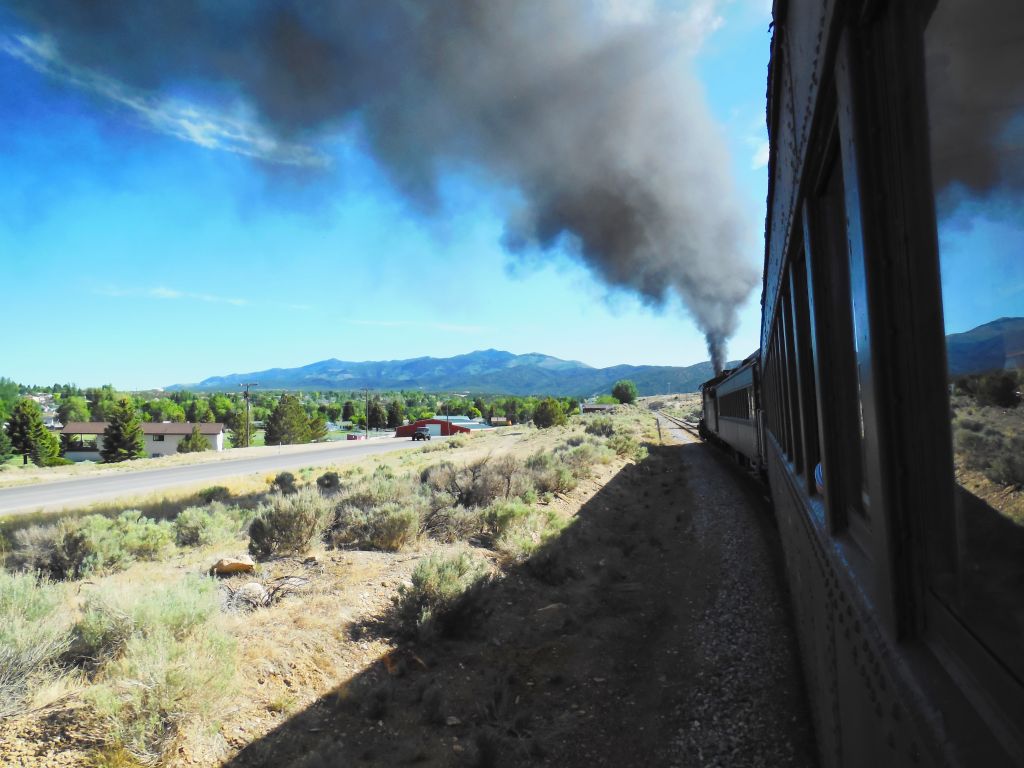
As we head out of town and uphill, the smoke gets blacker.

Northern Nevada Railway
Tailings from the Robinson copper mine.

Copper was used for wiring homes for electricity in the late 1890s. This was once a thriving mine and is still being mined today.

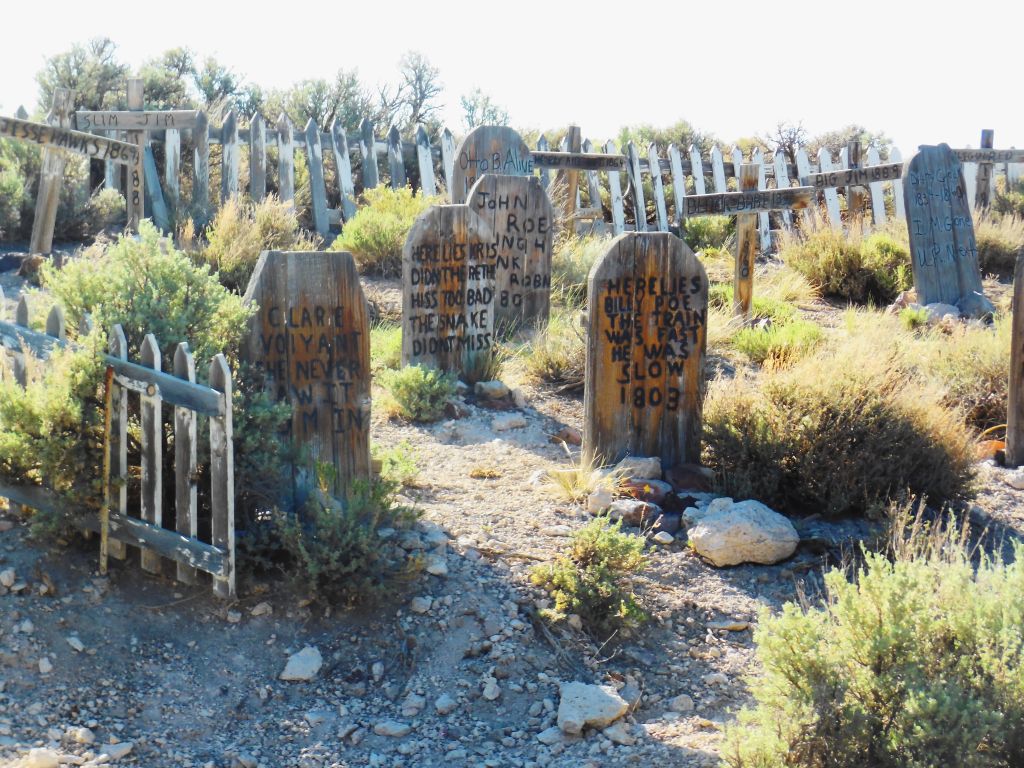
Humorous grave yard on the way to the Robinson copper mine.

On the way back, we were told that sometimes the train gets held up by bandits, but we didn’t see any that day. We did, however, see the graveyard and fake western town nearby.

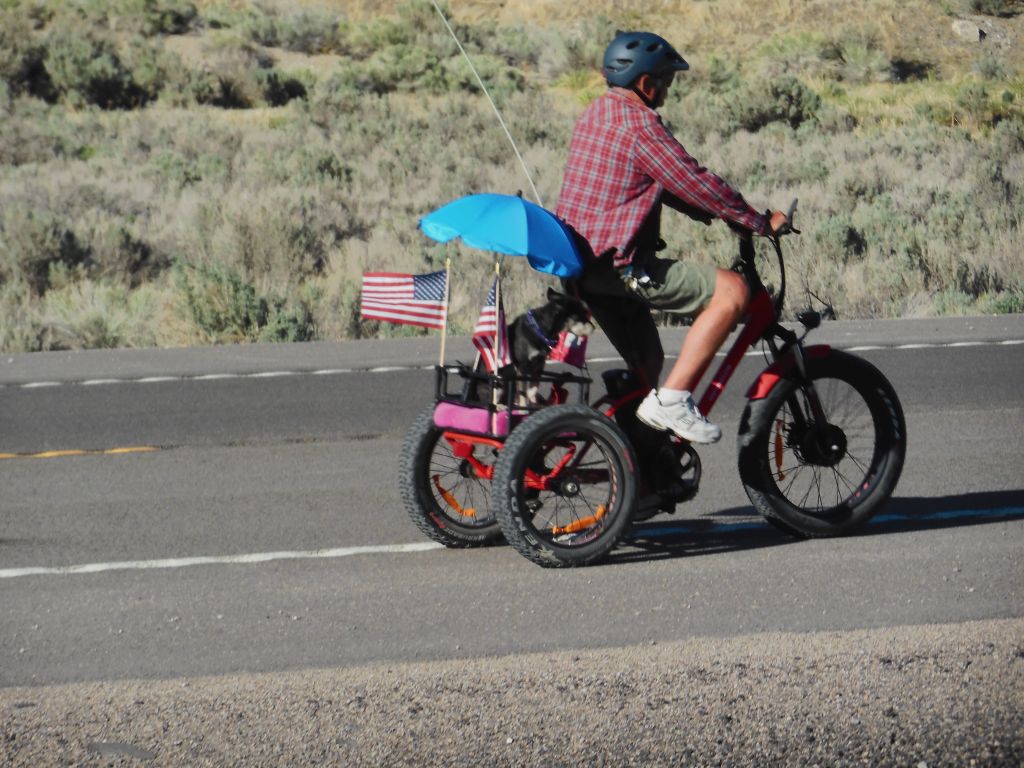
On our way there and back, this fellow with his little dog on the back rode along the highway parallel to the railroad track.

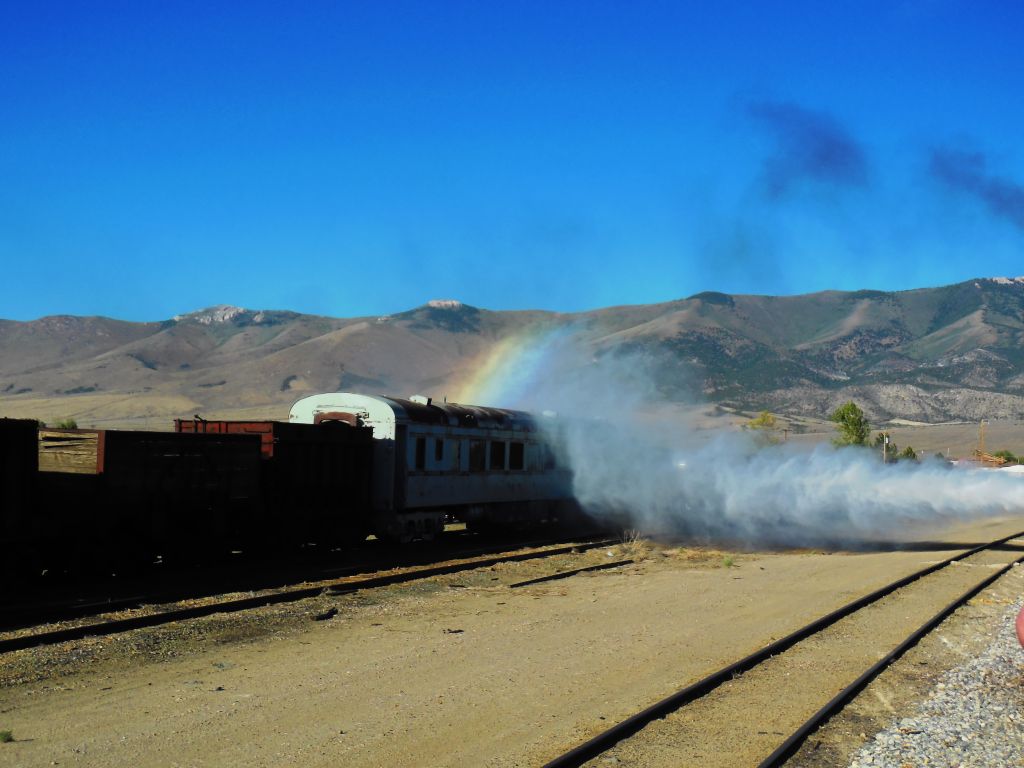
As we arrived back at the depot, we see the rainbow at our journey’s end as the locomotive lets off steam.

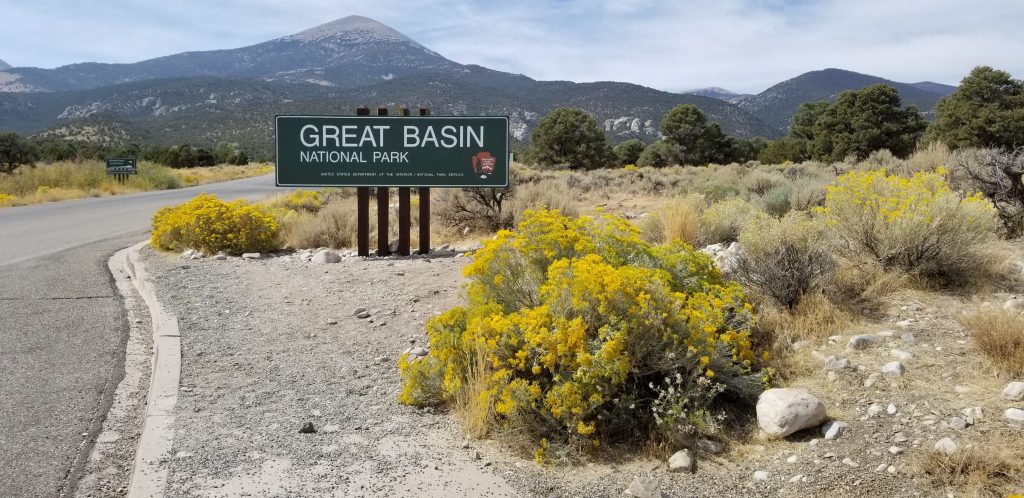
Great Basin National Park

September 22, 2020

A little town called Delta in the central western part of Utah was a nice little town where we stayed for a week. It was the closest we were going to get to Great Basin National Park on our 2020 journey, so we decided to take a day trip to add another National Park to our accomplishments. Even so, it was more than 100 miles to the park which is actually in Nevada. We packed a lunch and headed out in the morning. It was a pretty barren landscape until we got within 30 miles or so of the park. There’s a huge dry lake, Sevier Lake, that offers some views from the highway. It is an endorheic lake (a drainage lake with no out-flowing streams to other bodies of water).

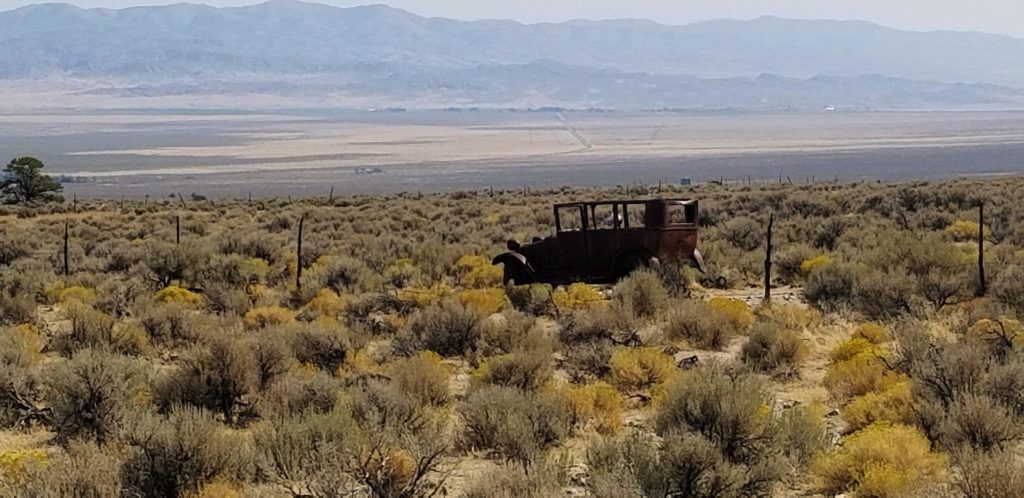
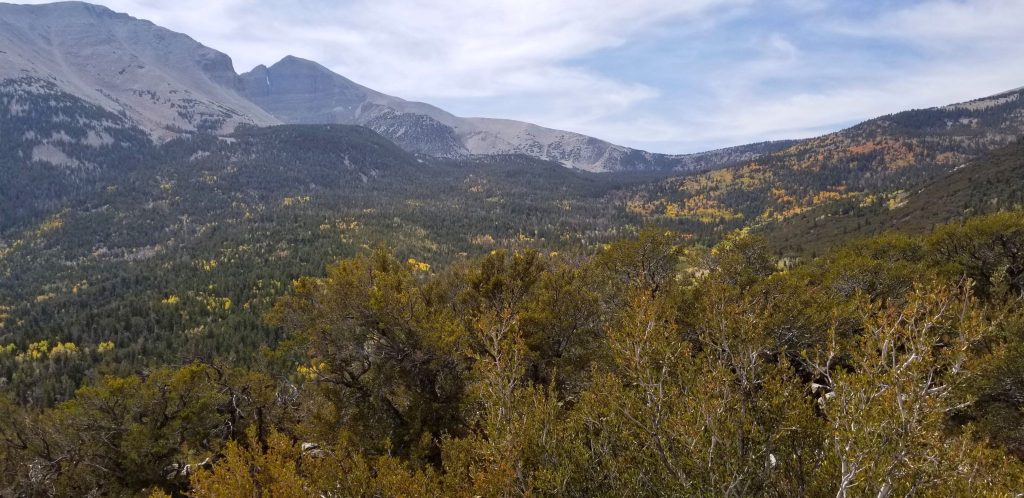
Before we drove far inside the park, we stopped at an outdoor exhibit. In the field beyond was an old car. It you look beyond it, you can see part of the Great Basin that the park is named after. According to Wikipedia, “the Great Basin is the largest area of contiguous endorheic watersheds in North America. It spans nearly all of Nevada, much of Oregon and Utah, and portions of California, Idaho, Wyoming and Baja California in Mexico.” It is a vast area. What is surprising is that the Great Basin National Park itself is mostly a road up a 13,000 foot mountain called Wheeler Peak, and the surrounding foothill areas. The park derives its name from the surrounding basin area.

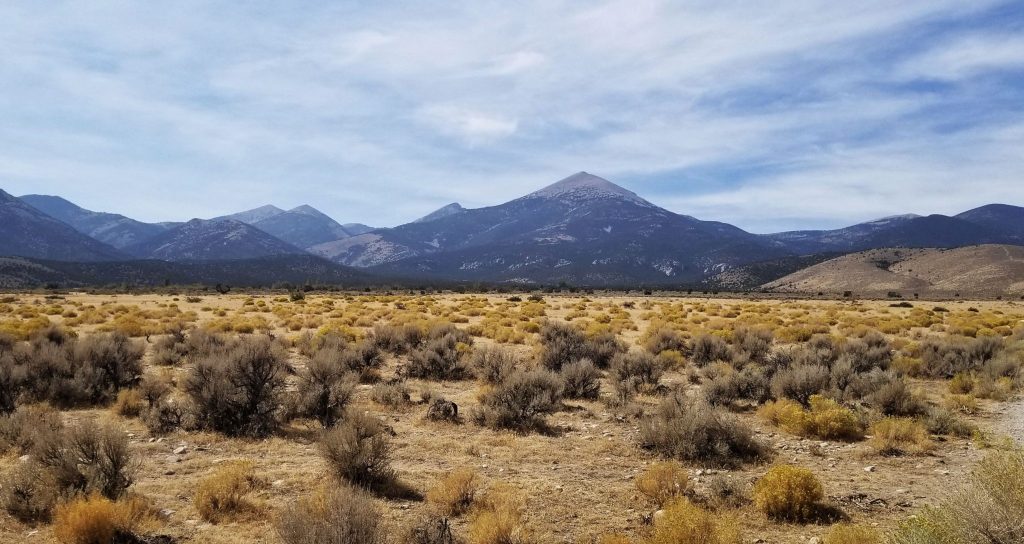
View of Wheeler Peak

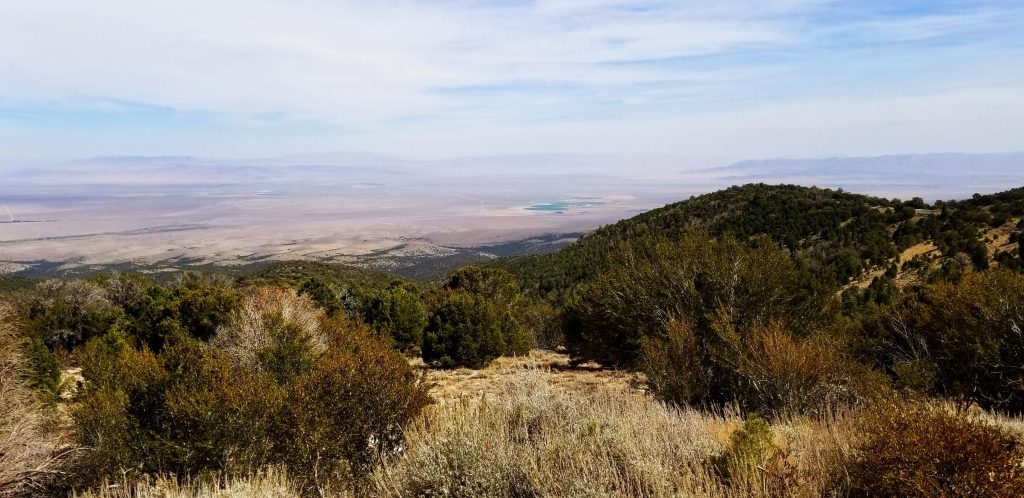
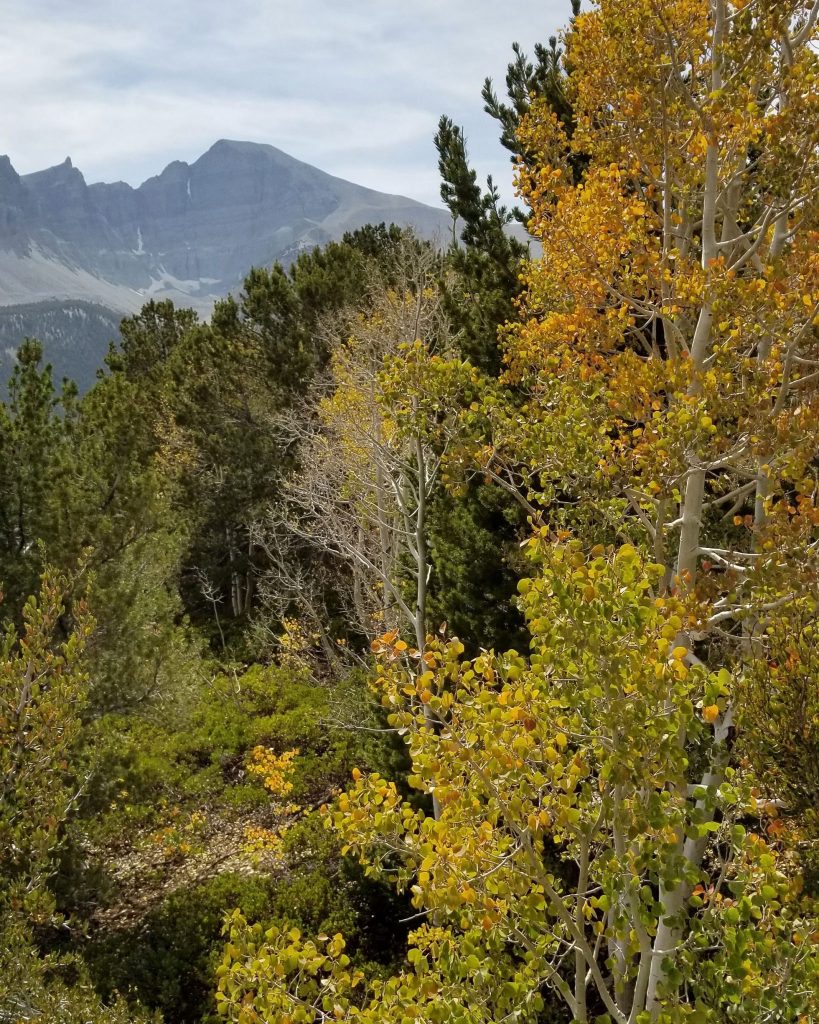
The drive up to Wheeler Peak was breath-taking. Right away you could look over the vast distances of the Great Basin below.  The smoke from the summer wildfires in the west obscured our view somewhat.

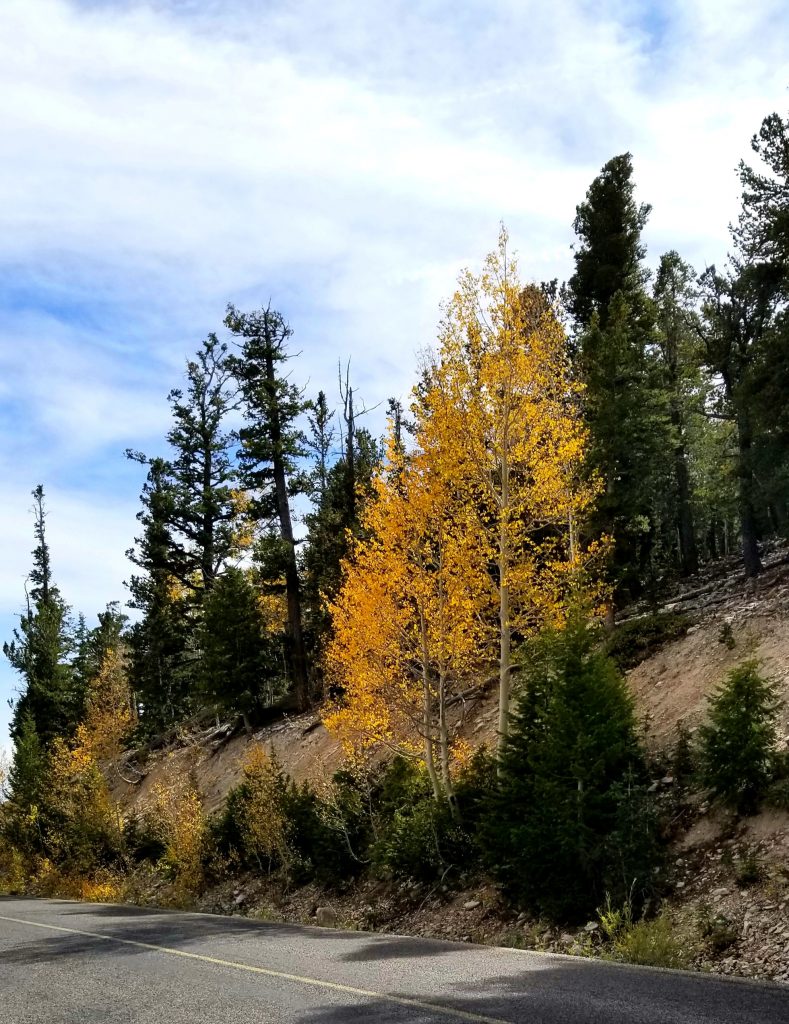
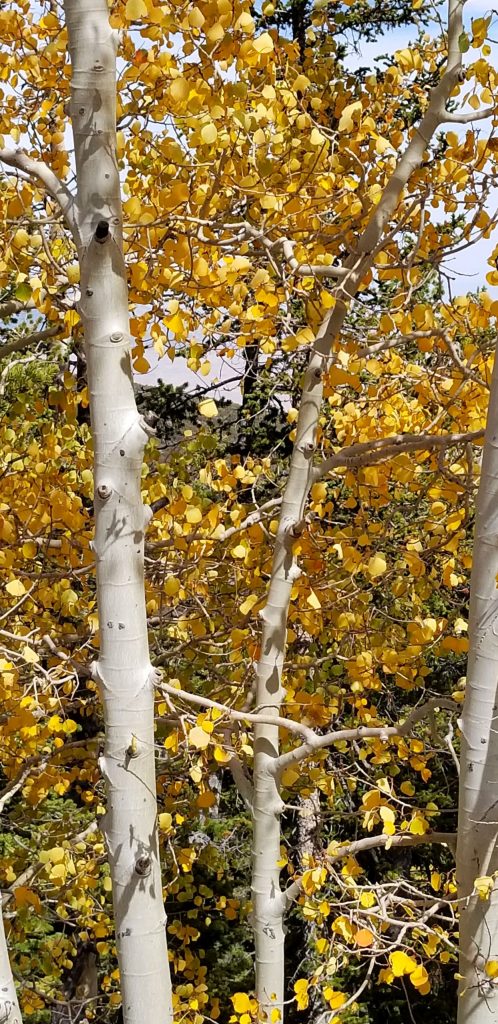
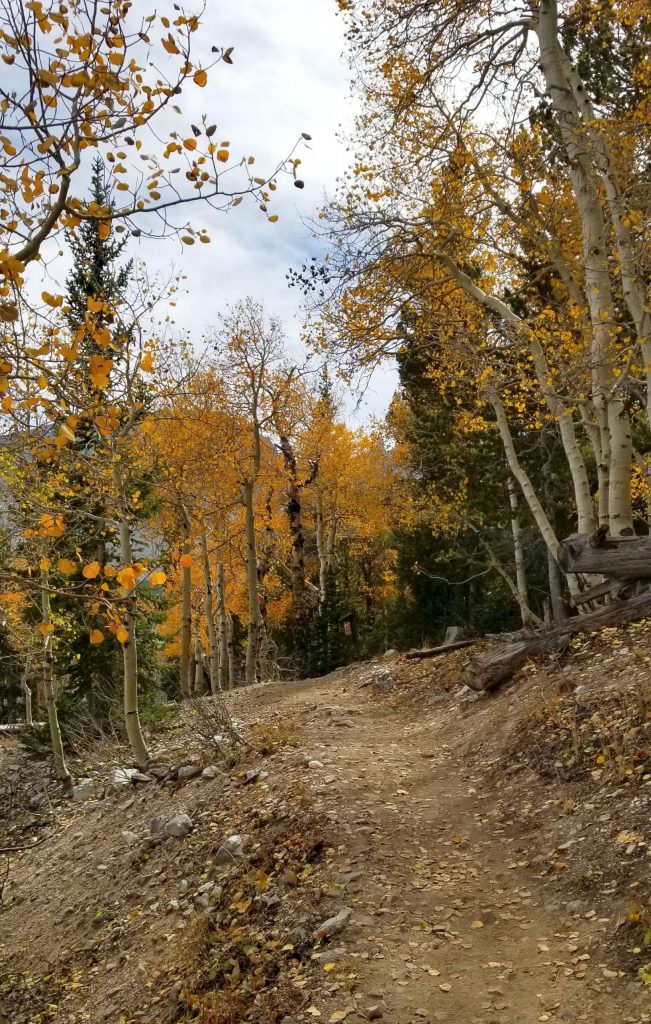
As we traveled further up the mountain, the aspen trees began to show their fall colors.

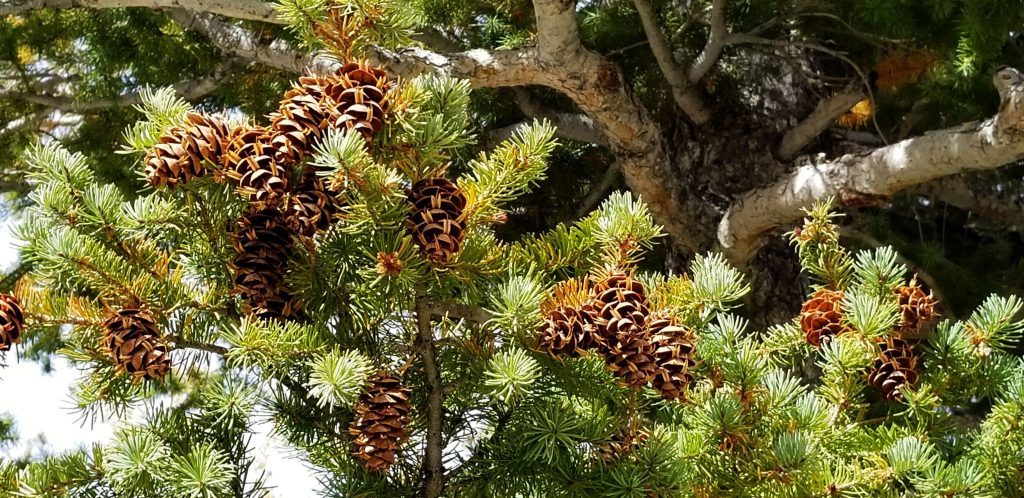
The road took us over 10,000 feet in elevation. At the top are the bristlecone pines, some of which are hundreds of years old. Looking up close at the pine cones, I realized why they are called “bristlecone” pines.

Here’s a closer view of Wheeler Peak. At the end of the road is a parking lot where there are trailheads for hiking trails to see ancient bristlecone pines and even one trail to the top of Wheeler Peak. The high elevation and thin air would deter me from such an adventure. On the day we went the parking lot was full, so we turned around and headed back.

Other items of interest to explore would be the alpine glaciers, Lexington Arch–a natural arch, Lehman caves, and the many trails around the park. This park is a hidden gem that I recommend exploring if you ever get the chance.

Categories: Airstream Travel, Utah Travel Tags: Bristlecone Pines, Fall colors, Fall colors in Utah, Fragrance, Full Time RVing, Great Basin National Park, Nevada travels, RVing, Utah travels

Nevada to Idaho

August 18, 2020

Wells, Nevada

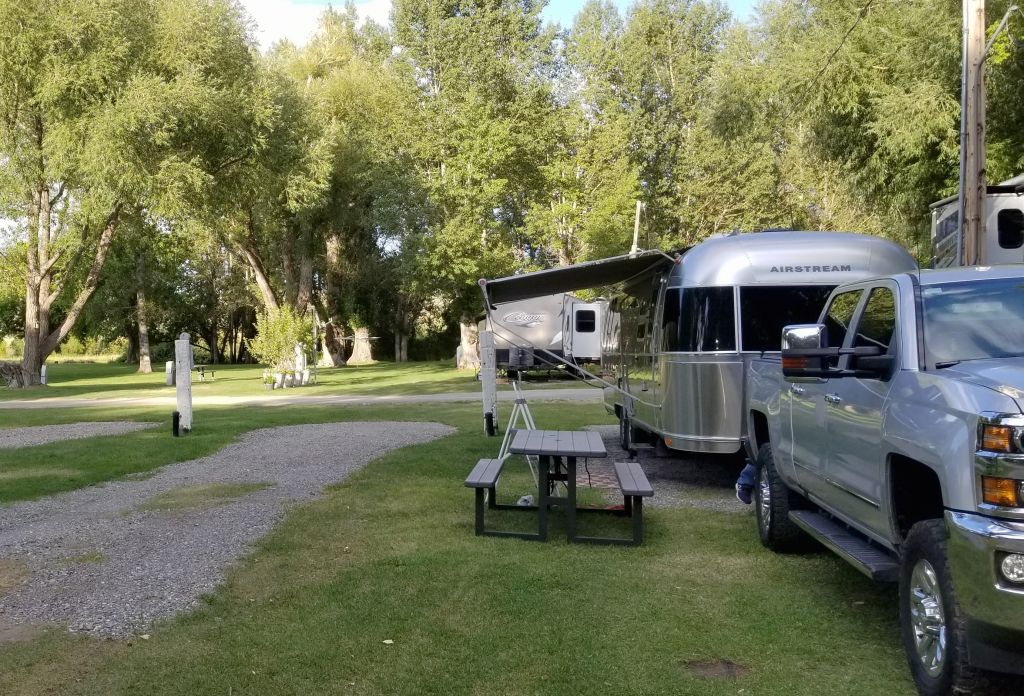
On our way to Idaho and Montana, we stayed at this pretty place in Wells, Nevada. The campground had an artesian well. The water comes from the nearby mountains from the rains and snow melt. All around the area is dry and arid, except for this small area where the water flows from the mountains and makes a green oasis, as you can see from the photo of the campground.

Welcome Station RV Park, Wells, Nevada
Our next stop was in Glens Ferry, Idaho. We only stayed one night there. We were on our way to Mountain Home, Idaho. The campground was actually 25 miles northeast of the town of Mountain Home. It was quite a bit higher in elevation and therefore had milder summer temperatures than the town of Mountain Home. We were following our GPS that suddenly had us driving down a dirt road. I asked Ray to call the campground to make sure we were on the right road. Yes. It turns out we were on the right road and had about a 3 mile drive to the campground. We had recently washed the truck and Airstream, but the campground turned out to be worth the drive.

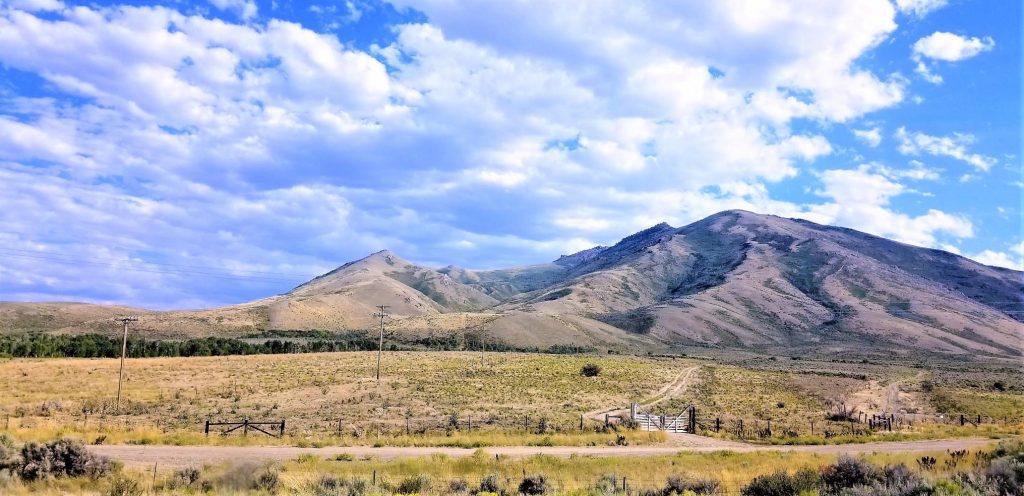
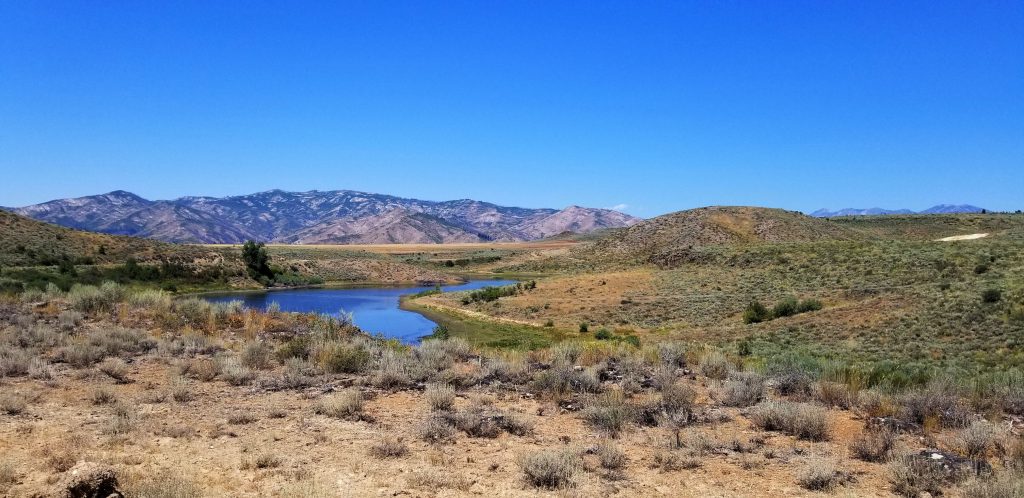
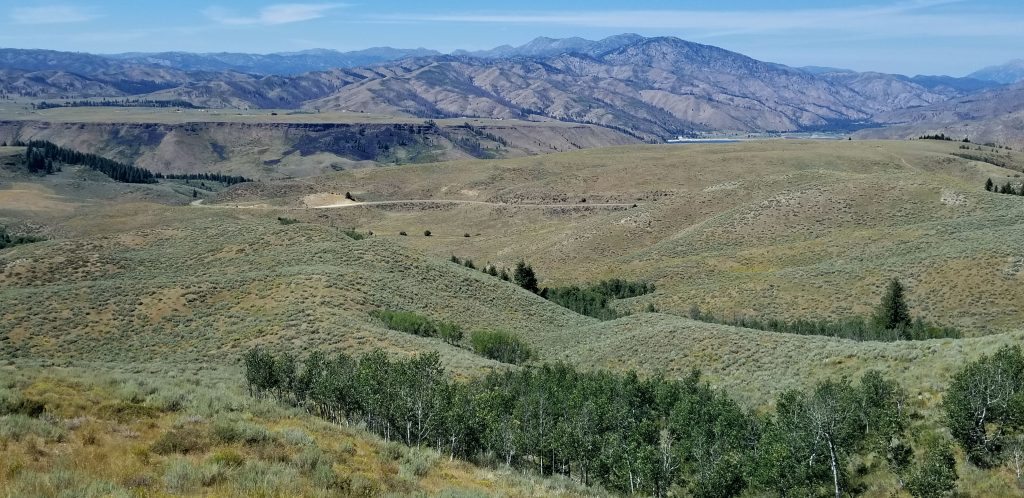
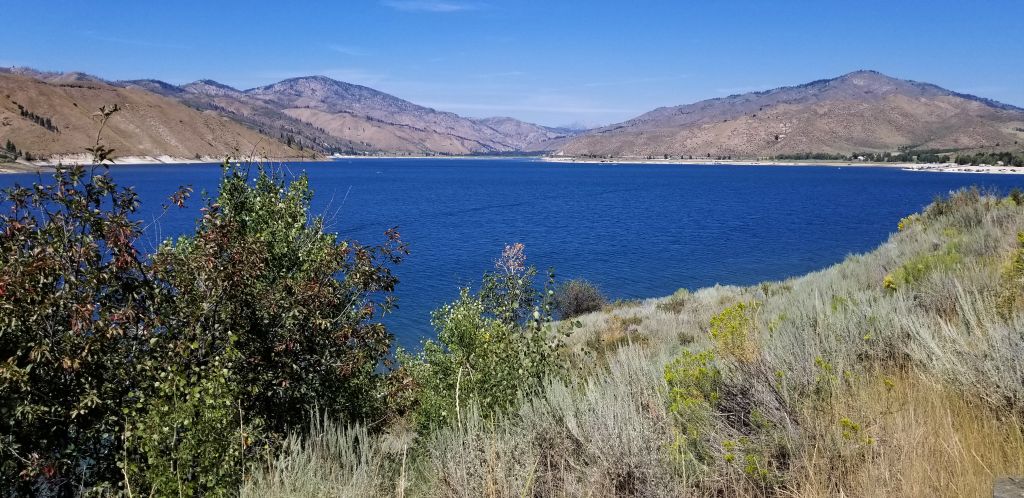
On the way there, we saw this reservoir with a view of the surrounding mountains.

Little Camus Reservoir

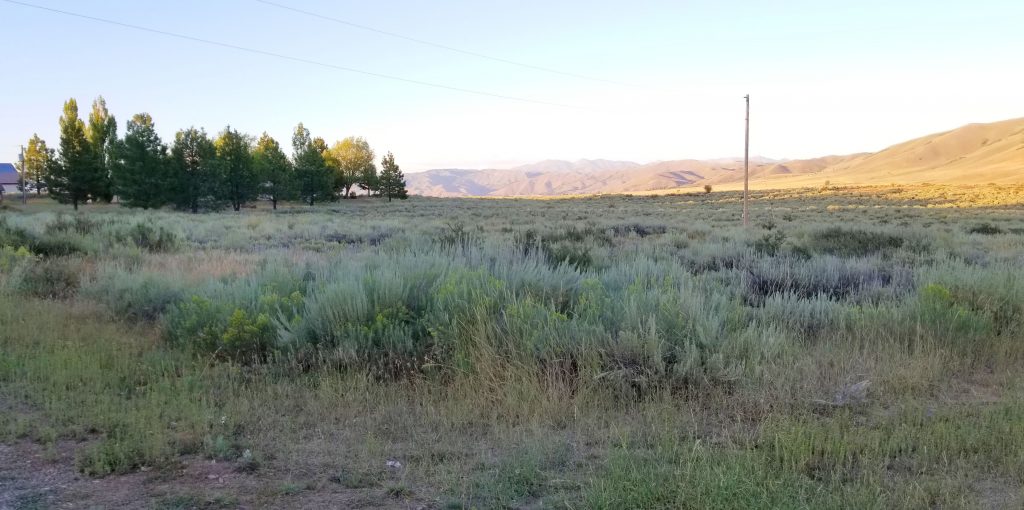
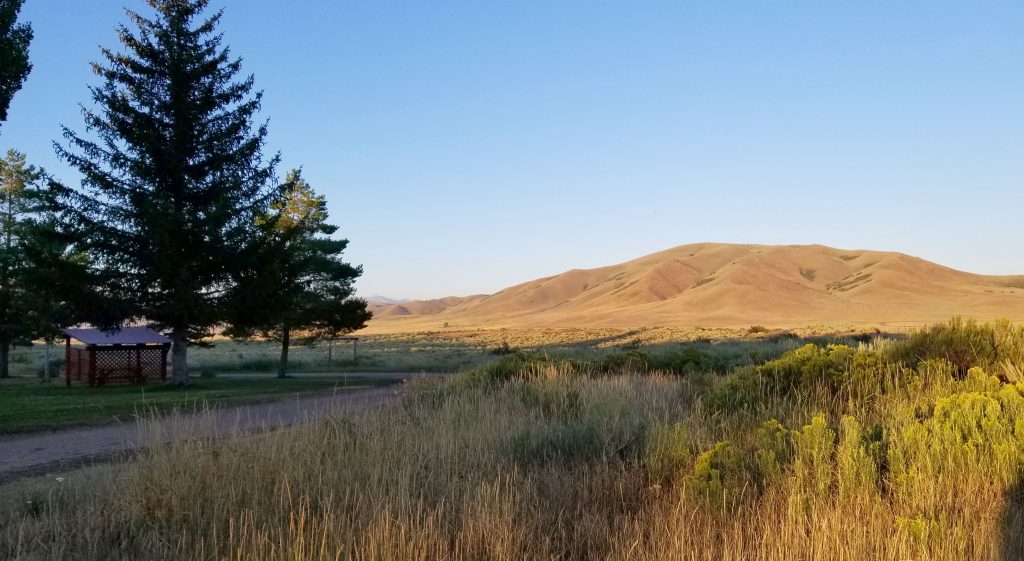
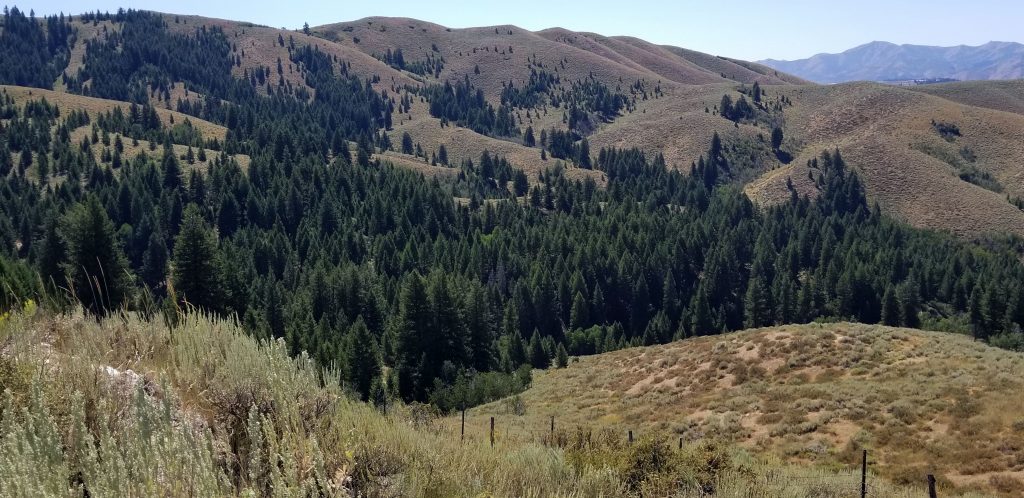
The campground itself was nestled in among pines and other trees in a beautiful mountain setting.

Fort Running Bear RV Resort

While we were there, we took some day trips to the surrounding areas. One of our trips was to Anderson Ranch Reservoir. It’s a scenic drive with a spectacular view when you approach it. We drove around it and saw the town of Pine and Featherville. To get back home, we turned around because the road was blocked due to a landslide further on.

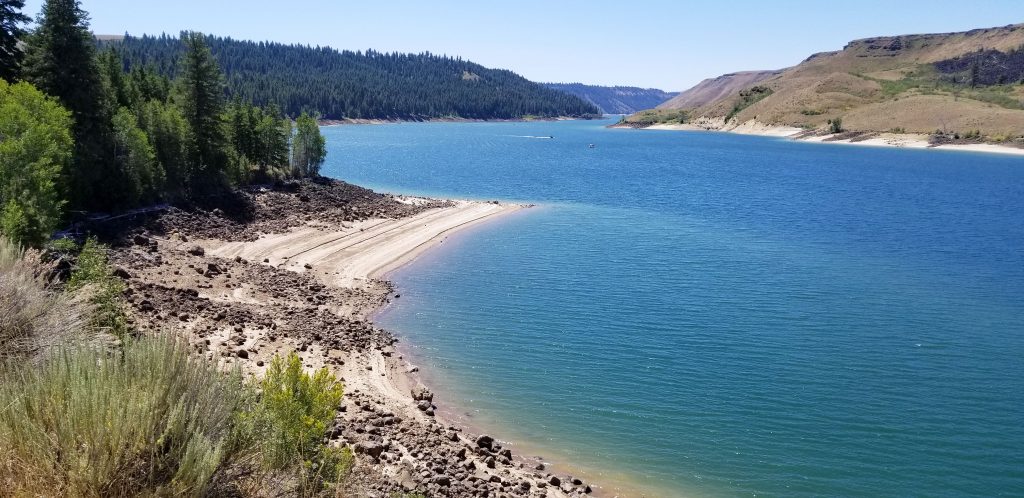
The first view of Anderson Reservoir

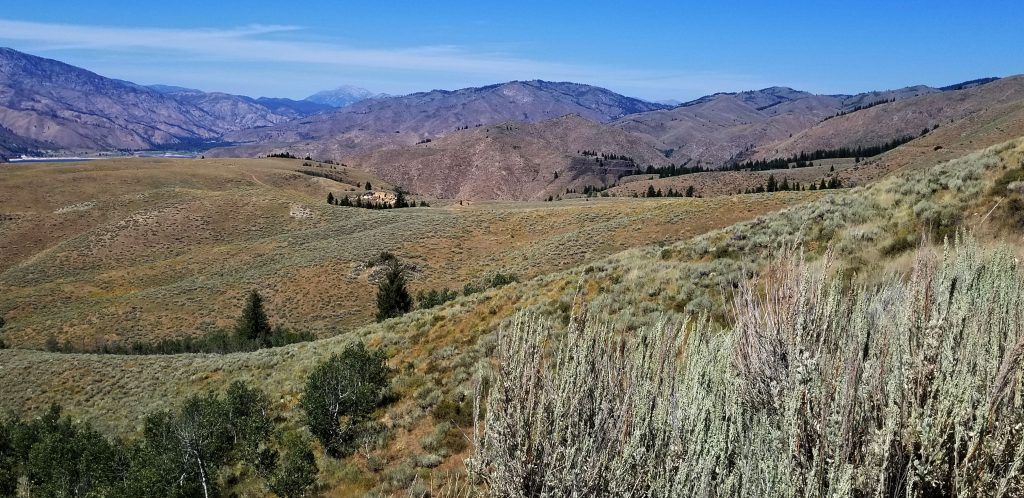
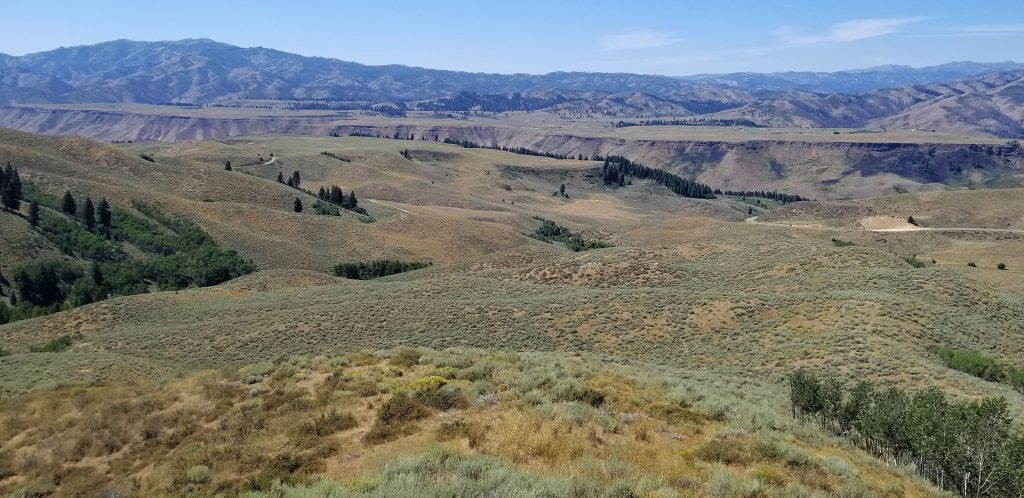
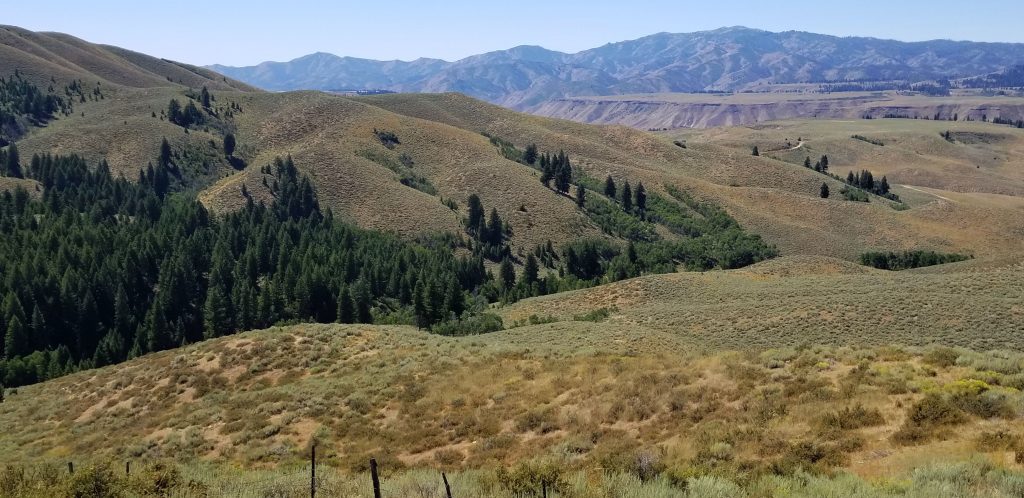
The following photos are a panoramic view counterclockwise.

As we got closer, were able to see more of the reservoir.

This is a popular summer recreation area with boating, water sports, fishing and camping. Many RVs were parked right near the water (dry camping).

As the Covid-19 restrictions were still preventing dining in, we ate sandwiches we packed with us. However, we did order french fries to-go that were delicious. Idaho potatoes make great fries!

Categories: Airstream Travel, RV Travel Tags: Anderson Ranch Reservoir, Fort Running Bear RV Resort, ID, Idaho, Idaho travel, Little Camus Reservoir, Mountain Home, Pine

National Automobile Museum

July 29, 2020

Reno, Nevada

 In the heart of downtown Reno, Nevada, lies one of America’s top ten automobile museums. It’s called the National Automobile Museum. It showcases more than 200 automobiles in the 100,000 square foot space. I’m not particularly interested in old cars, but this museum was a pleasant surprise. Each automobile has been restored in pristine condition. Just seeing that many old shiny cars is impressive. They are arranged in four separate but connected galleries. Some are in settings of a used car lot, or arranged on an old street scene.

There are makes of cars from the United States and other countries. Each car has a story, and you can take your time to read about each one, or wander around and read about the ones that catch your attention. If you take the time to read about each one, it will take you two or three hours easily. But if you just want to wander, allow yourself an hour and a half at least. The mission of the National Automobile Museum (The Harrah Collection) is to “collect and preserve the automobile for future generations, with an emphasis on vehicles collected by William Fisk “Bill” Harrah, to tell the story of the impact of the automobile on American society, and to perpetuate the legacy of Mr. Harrah as a renowned collector.”

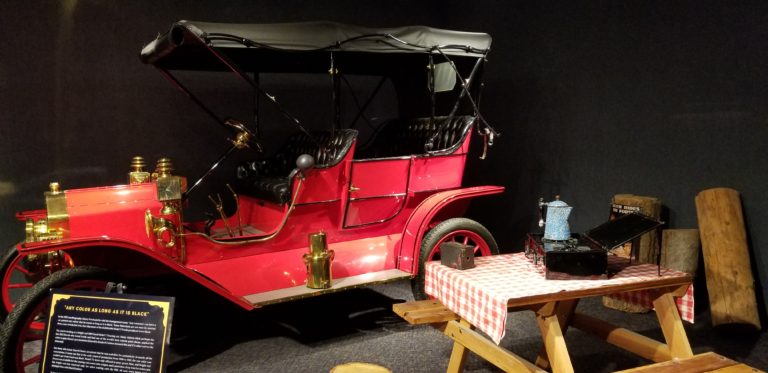
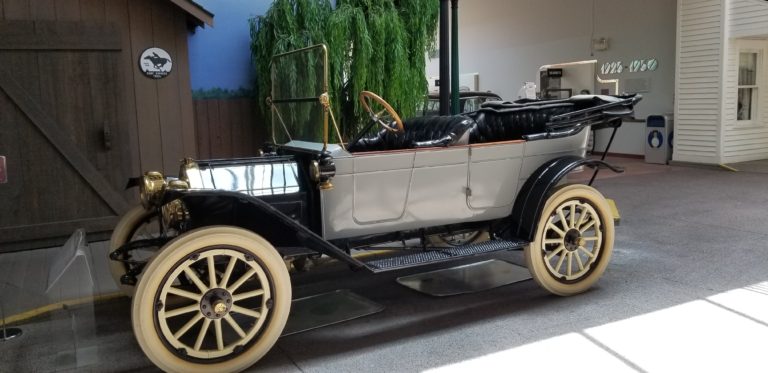
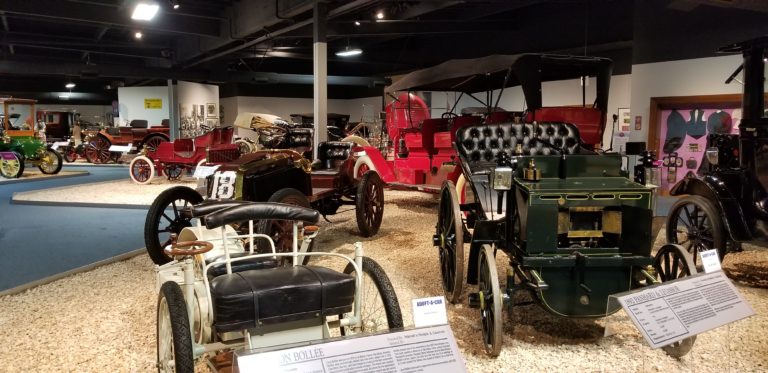
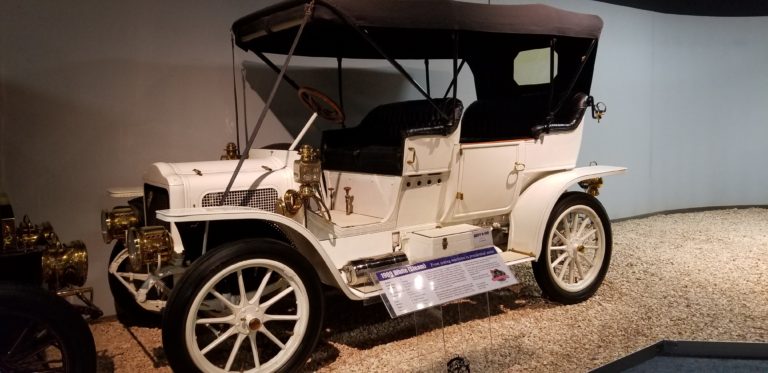
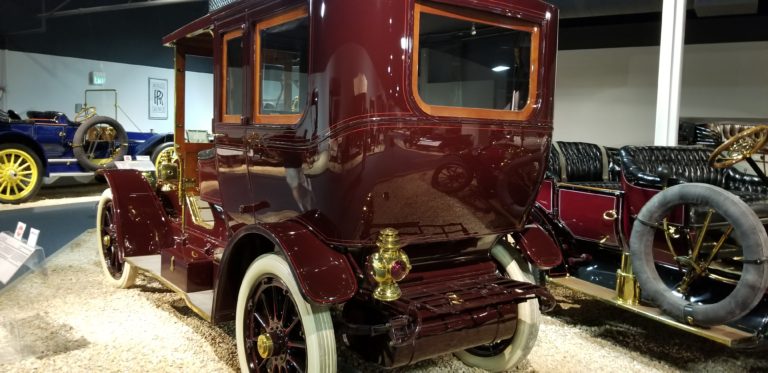
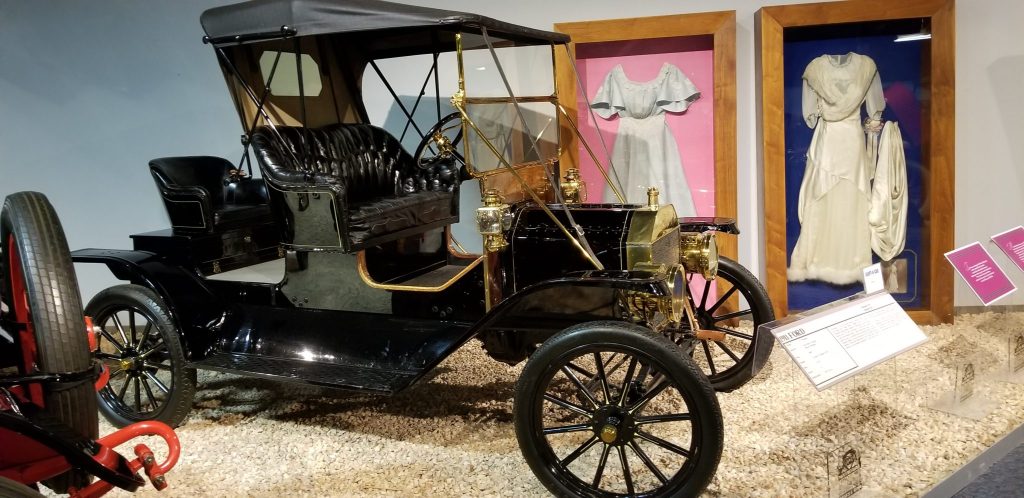
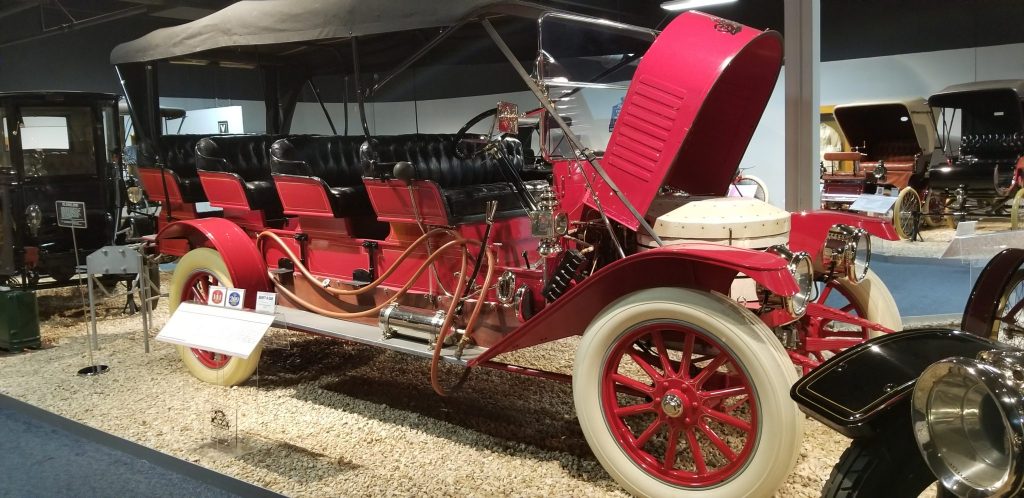
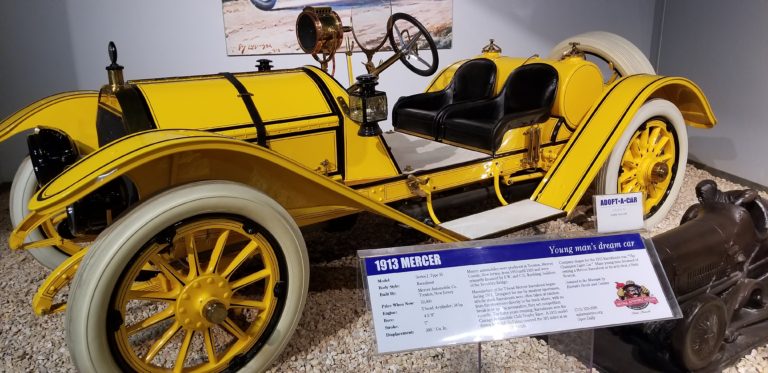
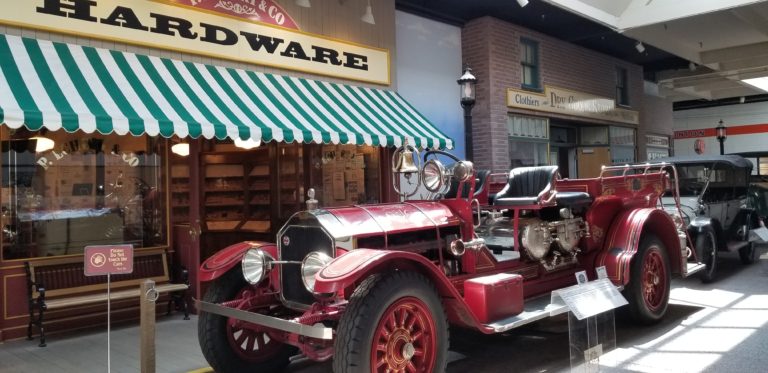
Here are some of the automobiles we saw.

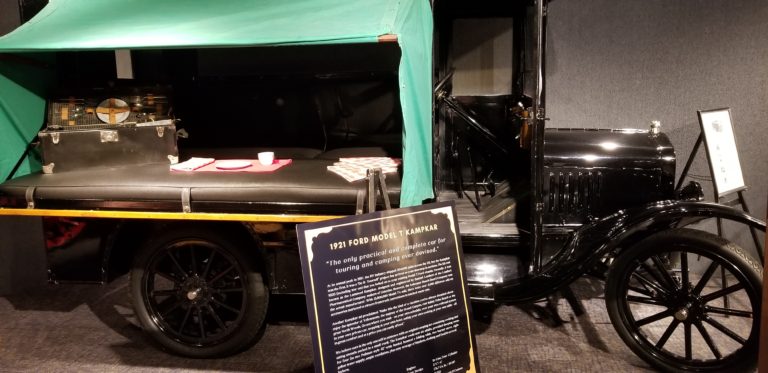
This next one was interesting because it made into a camper complete with tableware, a water tank with spigot.

There were also several display cases with garments worn in those days such as those you see below.

I like this next one because it reminds me of when we had a 4 seat van back when we had 5 kids at home.

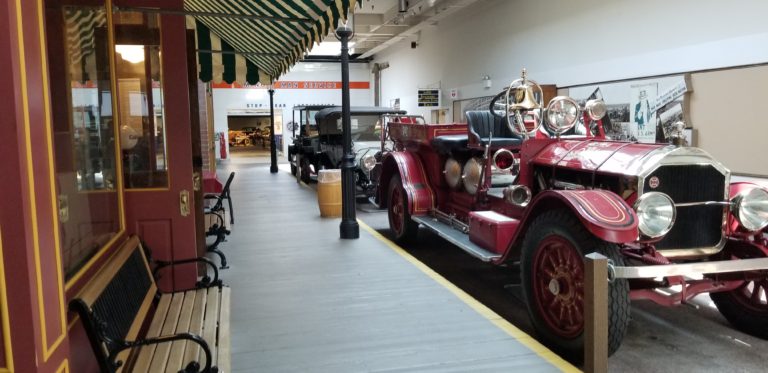
This next photos show the cars in a period street scenes. They also connect one gallery to another.

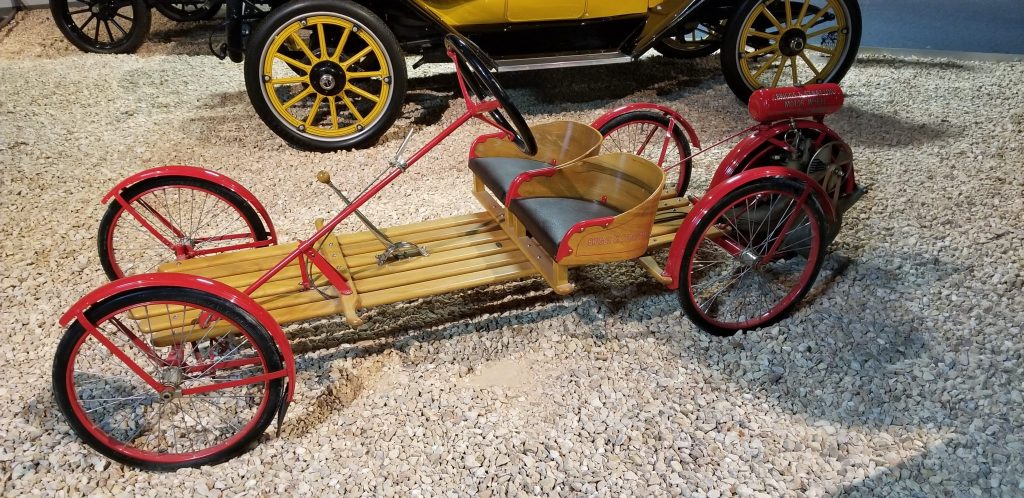
This next one is NOT a child’s car. It has a Briggs & Stratton motor.

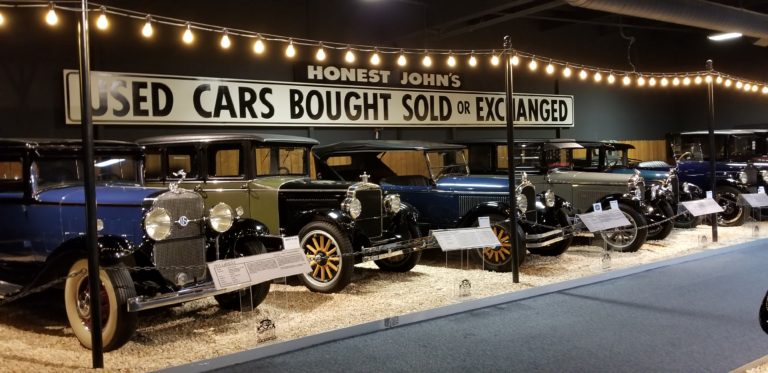
I thought this was a clever display showing these old cars in a used car lot.

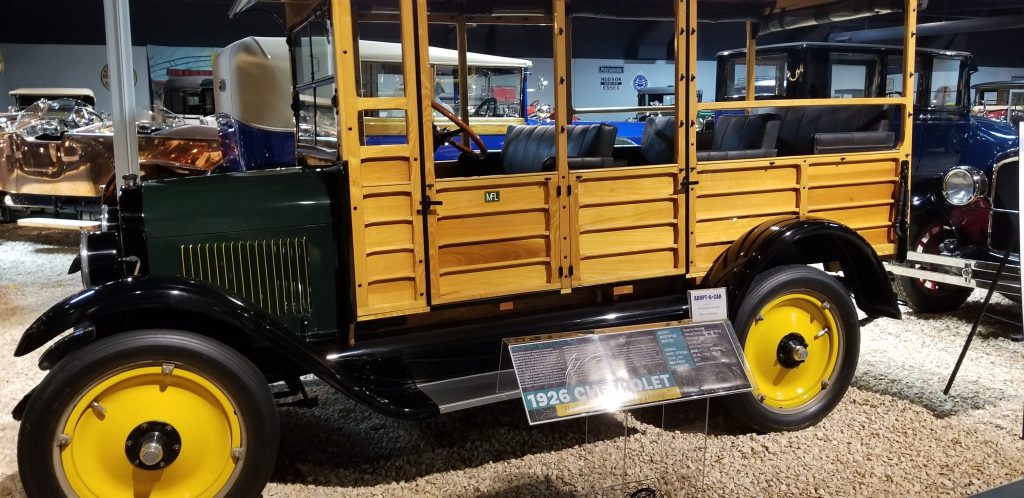
I think you might call this next one the first Chevy Suburban.

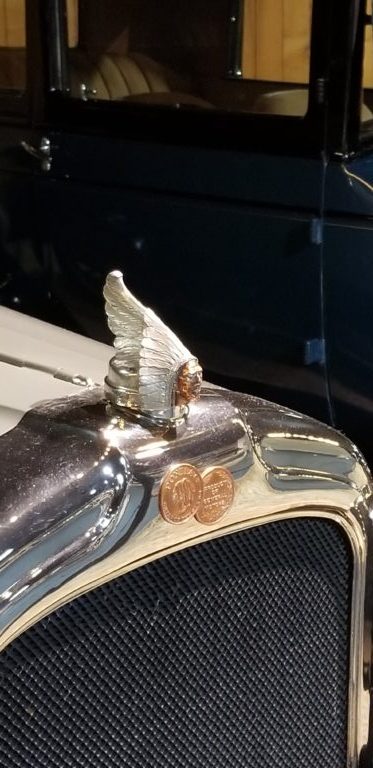
I like the hood ornament on this next one.

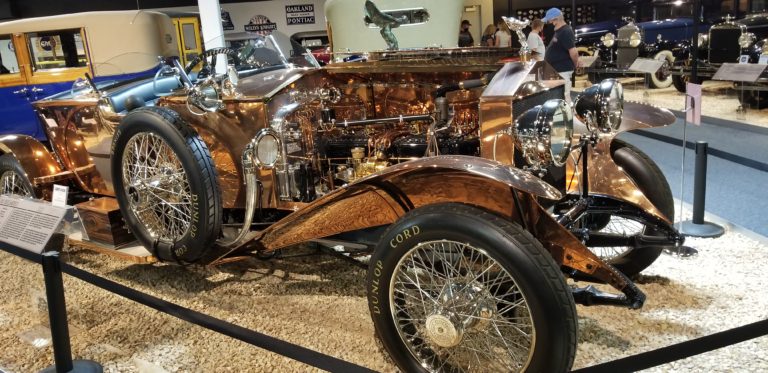
This next Rolls-Royce is all copper. Who gets to shine it every day, I wonder.

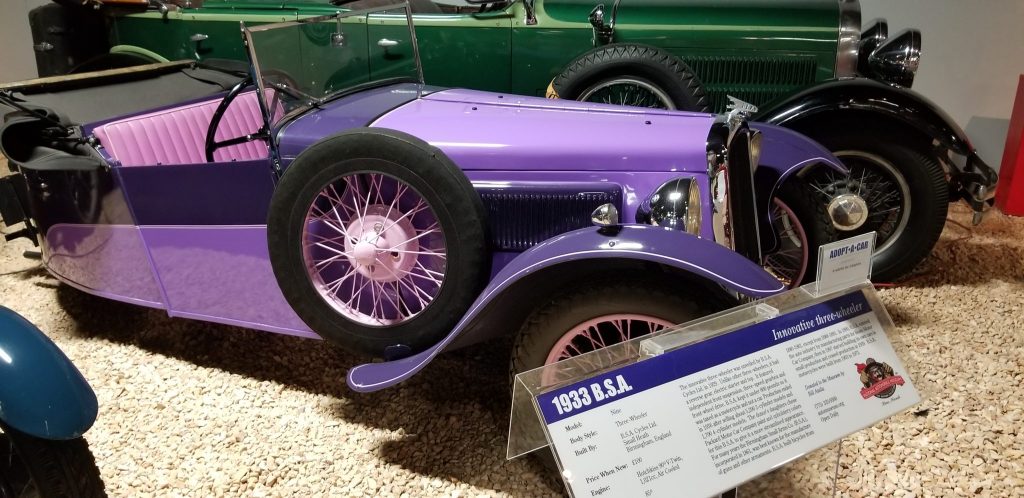
I like the color of this next one.

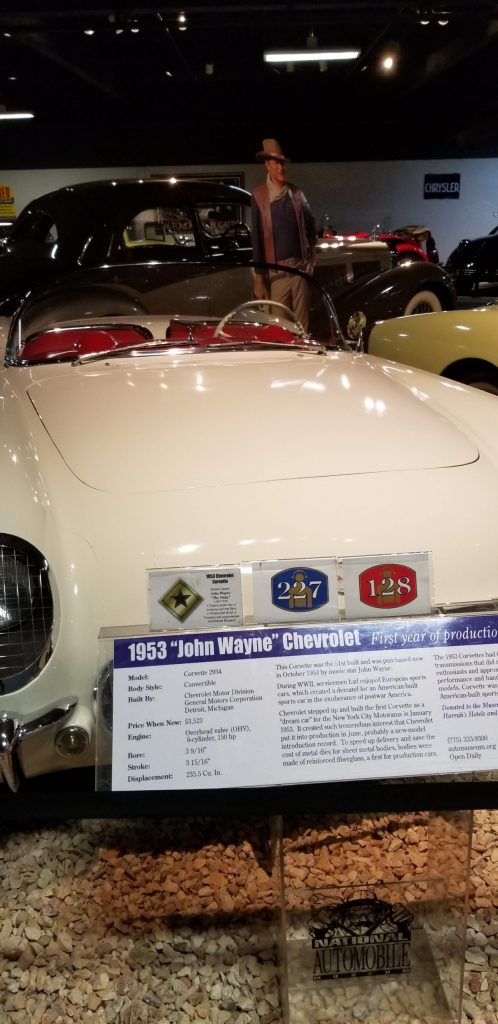
John Wayne’s car

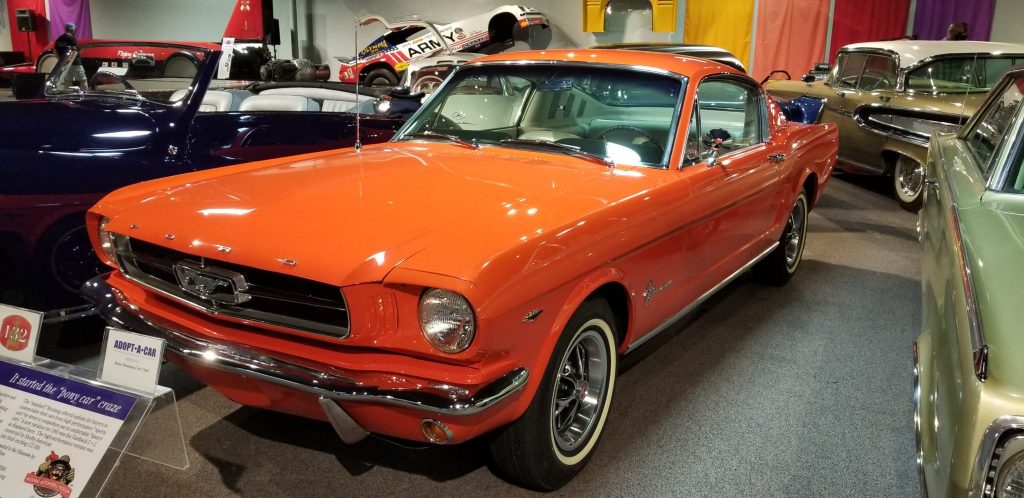
My all-time favorite car–the Mustang!


Categories: RV Travel Tags: Automobiles, National Automobile Museum, NV, Reno, Reno NV, Reno sites to see, Vintage autos, Vintage cars